Time for Dystopian Science Fiction?

Reader’s Alley, a nifty site for bargain eBook lovers, divides their science fiction offerings into sub-genres: sci-fi romance, sci-fi thriller, and science fiction, dystopian. While those first two descriptors would seem self-evident, the dystopian flavor is considered by some (mostly jaded members of academia) as the only serious science fiction. Typically, I avoid reading dystopias because they tend to be so darned depressing. But, with all that is happening in the news, which I also try to avoid, perhaps it is time to take a look at the genre.

One of the finest books about the history of science fiction is Brian Aldiss’ Trillion Year Spree, which covers science fiction literature from its beginnings to the early 1980s. Aldiss does discuss many sub-genres, but the thread of dystopia runs strongly throughout his encyclopedia of science fiction in printed form. The term, dystopia, is applicable to “a world in which everything is imperfect, and everything goes terribly wrong. Dystopian literature shows us a nightmarish image about what might happen to the world in the near future. Usually the main themes of dystopian works are rebellion, oppression, revolutions, wars, overpopulation, and disasters. On the other hand, Utopia is a perfect world – exactly opposite of dystopia.”

Science has, until recently, been viewed as a two edged sword; while it can make life much better, mis-use of science has been the root of all sorts of evils. Frankenstein, by Mary Shelley, is often considered to be the first science fiction novel, and the dark side of science is clearly the central theme of the novel. Dr. Heidegger’s Experiment and Rappacini’s Daughter, short stories by Nathaniel Hawthorne, also feature mis-use of science as their main themes. When teaching those stories, which used to be in many American Lit anthologies, one way to make it simple for students is to say, “Hawthorne is basically telling his readers, ‘don’t mess around with Mother Nature’.”

Later novelists fine tuned dystopian themes, with societies becoming more and more restrictive upon the populace. Aldous Huxley’s Brave New World and George Orwell’s 1984 share these themes, “including the consequences of totalitarianismmass surveillance, and repressive regimentation of persons and behaviours within society.” Kurt Vonnegut’s short story, Harrison Burgeron is one of the most widely read dystopian stories, due to its inclusion in anthologies for students, and I recently read a news story liking our current government policies to Vonnegut’s didactic work. Y’all, it is scary when dystopia becomes reality.

Of course, many fans of science fiction today seldom, if ever, read it. Instead, what they know of utopia and dystopia is presented via video. Early episodes of Star Trek explored both sides of the scientific divide. The Ultimate Computer, rather dated today, explored the man vs. machine conflict, using future war games as a setting for its rather disturbing premise. Various dystopian novels have been adapted to long form (movies) video, including everything from 1984 to Planet of the Apes. There are literally dozens of dystopian sci fi films. Some are rather laughable now (Mad Max?) but others are quite troubling.

My own fiction, which has many conflicts for characters to attempt to resolve, certainly isn’t “happily ever after, ” but it isn’t as dark as some of these works, and that’s because my outlook on life is more pragmatic. Hopefully, there will be some gravitation away from the totalitarian policies of modern politicians and administrators. But, when I consider what I am seeing when I do go out and about, I wonder. I really do. Remember this: In each fictional dystopia, the goal was to make things better for certain segments of the population, and bad outcomes are unhappy accidents. Be careful what you wish for—
The Crown— review and commentary

Which is which?

Netflix has some amazing original content, and one of its best efforts thus far has been The Crown, a somewhat fictional series based on the reign of Elizabeth II. Written and produced by Peter Morgan, this series begins while Elizabeth is still a youngster, but when her father takes over for his brother (who abdicated the throne so he could be with his “commoner/divorcé” lover) Elizabeth becomes the heir to the throne. From that time period, her father grooms her to serve the people and the royal family, a/k/a The Crown. Seasons 1 and 2 feature Claire Foy as Elizabeth, and former “Dr. Who” Matt Smith is Prince Philip. Perhaps the best performance in this award winning season goes to John Lithgow as an aging Winston Churchill, who guides and yet admires the young monarch as she works to live up to the responsibility thrust upon her when her father dies at a fairly young age.

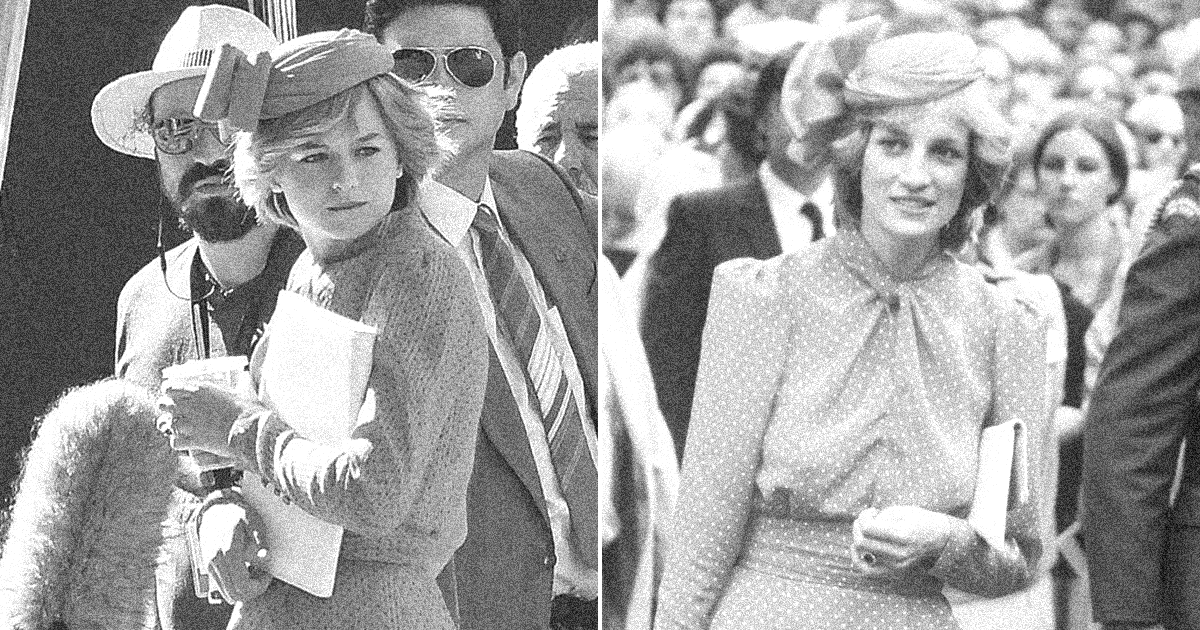
The Crown does a fantastic job of intertwining history and some suppostion, thus educating a new generation about some of the most important (or at least entertaining) events in United Kingdom in the past few decades. Each season spans several years, so the cast changes in order to better show the aging of the characters. For instance, while Claire Foy is Elizabeth in the first two seasons, the queen is portrayed by Olivia Coleman in seasons three and four. The latter dropped onto Netflix November 15, and Coleman does a really good job as the middle aged sovereign, as does Gillian Anderson as Margaret Thatcher. Another season four cast addition is Emma Corrin, who bears more than a passing resemblance to young Princess Diana. The series has been mostly been praised, but season four is a bit more controversial. Since this season portrays the “fairy tale romance” between Prince Charles and Diana, then quickly lays out the conflicted marital mess that ensued, because apparently Charles didn’t love Diana at all, but maintained his relationship with his former lover, Camilla Parker-Bowles, during most of the marriage, some viewers (and those close to the real people) have been a bit riled.

Of course, Prince Charles and Princess Diana separated then divorced, but younger fans apparently didn’t realize the “why” in the divorce until The Crown brought this back in a big way on the small screen. Recently, the social media accounts of Prince Charles and (now wife) Camilla have been inundated with snarky posts. Furthermore, officials in the U.K. have asked producers of The Crown to assure the public that the show is fictional.

History only works after the fact. Peter Morgan (series creator and chief writer) benefits from the many publications about the British royals, and is able to pick and choose what he presents to the audience in The Crown. Mostly the characterizations and storylines seem spot on, but those close to the royal family point to discrepancies, and no doubt some “fiction” does come in. Regardless of these points, The Crown has extraordinarily high production values. The cast is first rate, the scripts mostly entertaining; and the sets, costumes, and locations all contribute to the feeling of being an eyewitness to history. If you haven’t seen it yet, this series is one of the very best shows on Netflix.

Last Stand series by William Weber—review and commentary

Last Stand: The Complete Box Set

From time to time, I’m offered a “box set” of eBooks, which strikes me as funny as there is obviously no box, just a longer than normal eBook. While these often seem to be great values, I seldom read an entire series. Last Stand is different, because I did indeed read all four books, and while I enjoyed them, I liked each one a little less, but that’s just me and what I Prefer to read, rather than any flaws in the books themselves.

Book one, Surviving America’s Collapse, was so suspenseful that I read it in less than 24 hours. Apparently survivalist/prepper books are a sub-genre, but this is my first such book. Viewed simply as fiction, readers might be annoyed, as the narrative often becomes pedantic, teaching survivalist techniques to the reader, but I rather enjoyed those segments. In short, the story begins with the hero, former Army officer John Mack, being the only guy in his neighborhood who understands that the vehicles, phones, and other conveniences aren’t working because some entity set off an “EMP” device. Mack rescues his wife, then his children, thinking they will soon retreat to his survivalist hideaway cabin, but his wife convinces him to remain in their neighborhood, to assist their friends. This proves to be increasingly difficult, as resources dwindle and nefarious elements attempt to takeover their community.

Book two, Patriots, begins in the second setting, the Mack family hideaway. The canvas of conflict widens a bit in this book, as Mack realizes the scope of the attack upon America, and feels the need to take up arms not just to defend his family, but his country. Book three, Warlords, is a bit darker in tone, as the forces behind the attack upon America begin divvying up the country. Book four, Turning the Tide, is on a grander scale, as Mack is one cog in the military effort to fight back against the foreign powers that seem to have figured out how to conquer the United States.

Each of these books has a fictional story, but invariably the author uses his story to also instruct the reader. Those who like lots of details about the military and/or weaponry might like these books more than I did, but I did enjoy them. Some of the characterizations are fairly stereotypical, and sometimes the main characters are able to overcome situations which would probably be hopeless without the assistance of the author. So, suspending one’s disbelief a bit is a necessary skill for staying with the series. Still, the suspense is sufficient to keep the reader turning the pages.

Survivalists, military buffs, and those who enjoy suspense will all find something to like in Last Stand. As of this post, the price for the eBook set is three bucks, which is a down payment on a hamburger! I can’t think of anything as entertaining as these books for that price, so take a look. These books are also available in paperback and as audio books, and all have hundreds of ratings on Goodreads, mostly 4-5 stars.

Halt and Catch Fire—a series to catch on Netflix

As we aren’t “cable” subscribers, sometimes we miss a show that was commissioned for a network. Halt and Catch Fire is such a series, as it was originally shown on AMC. Honestly, the title is so weird that I would have never given it a thought, but one of those “Best things to watch on Netflix” lists gave it a good review, so hubby and I decided to give it a go.

Of late, it has been our favorite binge-watch. Usually, I wait until finishing a series before reviewing it, but Halt and Catch Fire ran for four seasons, and we are mostly through season three, so it’s time to let y’all in on this excellent period drama.

First off, the title has something to do with writing computer code, but I don’t remember what it means (and it probably doesn’t matter). I like computers; I’m typing on a MacBook Pro right now! This show is about the computer revolution, and how you view it might depend upon your age. If you are younger, this show will be a bit historical. But, if you are a somewhat chronologically gifted, you probably remember the first computers. As a classroom teacher, I remember begging to put computers into my classroom so we could edit copy for the yearbook. Back in the 80s, editorial changes for typewritten copy were costing us hundeds of dollars per year, so I managed to get a couple of surplus Apple IIe computers. They had green flashing characters and those big floppy drives, but they saved us some dough and were my intro into the modern age of publishing. Then I got a Mac SE that used smaller disks. That little machine was bequeathed to use from an administrator who felt some pity for the plebes in the classroom, and it was so different that I took it home over the summer to learn how to use it. I digress, but the 80s is the era where HACF begins.

The characters who come together in the first episode represent various aspects of the nascent computer business. In season one, the show is set in Texas (the Silicon Plain) but the group moves to Silicon Valley in later seasons. Joe is the super salesman who cut his teeth at IBM and wants to create a better personal computer. Gordon is an engineer who already made a better computer, but since the machine failed, he’s slogging along at Cardiff Electric, a company that produces software for mainframes and tries to compete with IBM. His wife, Donna, is a brilliant computer developer who is relegated to support work at the Texas Instruments learning division, because she and Gordon need to feed their family. The catalyst for change is Cameron, a female college drop out who writes code better than Shakespeare wrote plays. Cameron is recruited by Joe to come to work at Cardiff Electric, where he’s a recent hire. The company manager, John Bosworth (Boz), is just trying to make the owner happy and is baffled by the changes that are coming to the company as these players all work together to build a better computer.

This show is well-written and well-acted by the ensemble cast. As I wrote that summary, it sounds a bit boring. Not! While there are a few technical aspects that are necessary in a show about the informational technology revolution, this is a show about people—their hopes, their ambitions, as well as success and failure of people and businesses. The series is a blast from the past in terms of technology, but seeing how these fictional characters helped create the computers that we tend to take for granted is both entertaining and compelling.

If you didn’t watch Halt and Catch Fire the first time, catch it on Netflix before it goes away!

For All Mankind—on Apple TV

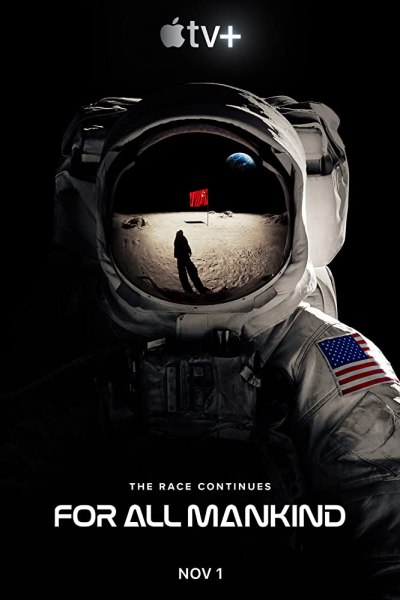
MankindWith the purchase of a new device from Apple comes a free subscription to their relatively new paid streaming platform. As hubby and I are often seeking a new television series to binge watch, we just finished For All Mankind on the Apple platform, and overall, we liked it quite a lot. However, I read several reviews, with criticisms being at least as numerous as the accolades, and often both are well deserved. The series was developed in part by Ronald D. Moore, who has a stellar (pun intended) reputation for writing and producing excellent science fiction, from Star Trek the Next Generation to Outlander, and with the simply superb reboot of Battlestar Galactica in between.
The scenario is quite promising: In an alternate history, the Soviet Union beats the United States to be the first nation to put a man on the moon, and the growing rivalry between nations causes the space program of the United States to flourish, rather than founder. Neither our citizens nor our politicians like being second best, so the need to catch up and surpass drives the plot. As an alternate history, many of the characters are based upon real people, but quite a few characters are inventions. Even those who are based upon real people have different adventures (or mis-adventures) due to the fictional nature of the series. The acting is good, as is the writing. The effects are very good, also. The sets, props, and costumes are really amazing—it’s truly a back to the 60s look. So far, so good.

But, as many negative reviewers have noted, the series is typical of our “social justice” modern agenda. Immigration, same sex relationships, race relations, and feminism are more than just sub-plots in this re-imagining of the space race. Each of these social justice themes has a story arc devoted to it, and these themes are every bit as strong as the “what if America had continued to send people to the moon?” theme that is the advertised plot line.

Alas, any subtle use of themes is no more. This alternate history is very good, but the social justice warriors are using a sledge hammer to right perceived wrongs. For All Mankind is just like many modern day productions in that regard. What could have been A+ for Apple’s streaming service is instead closer to a B-.

If you have Apple TV, check it out. If you don’t, I wouldn’t buy it for this series alone.

The Future of Learning for K-12

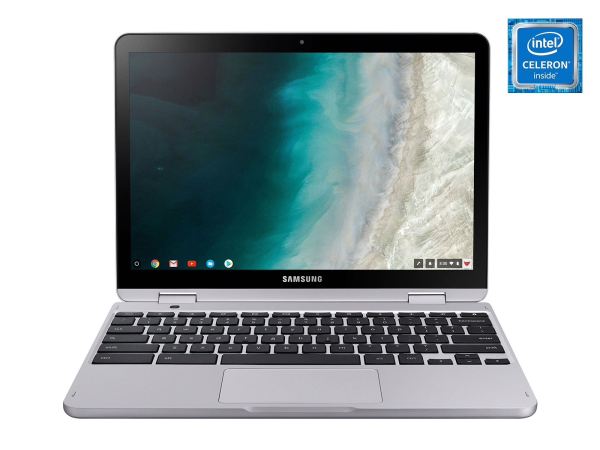
ChromebookNews organizations have truly embraced the old adage, “never let a crisis go to waste.” With every new pronouncement regarding the COVID-19 virus, the sky gets a bit closer to falling. Many of the public schools in my area have closed, but most of them are posting assignments online. Indeed, one of them has offered Chromebooks for check out if the family lacks a computer. This strikes me as a leap into the future of K-12 education.

Having taught both web enhanced and hybrid classes for the Technical College System of Georgia, I fully understand how to teach from my couch. In those classes, students had access to an online learning suite (either Blackboard or Angel, depending on the flavor of the year) wherein I listed assignments or offered online assessments. For those readers who are not chronologically gifted, the idea of closing schools seems unthinkable, but for anyone who has attended a post secondary school in the past decade, these fortnight long closures are no big deal. Indeed, I used to make jokes (during face-to-face class sessions at school) about teaching in my pajamas!

For younger students, such as those in K-12, however, quite a few of them have little experience with online learning, and some of their parents may not have experienced it at all. With a bit of coaching, both students and parents will come to see that much of what happens in a classroom can happen at home. In fact, in some cases, it is better to have online content. Forgot what happened to that important handout? Just print another one. Want to check the due date for an assignment? Just look at the online lesson plan. Need extra help? Email the teacher with your questions and concerns and you should get a prompt, personalized answer. Missed a class? Watch a recorded video session. In my experience, most college students eventually came to appreciate online resources, even if they didn’t embrace them. There is a learning curve, of course, as anything new requires some learning. Parents around here are about to embark on a new way of helping their kids with homework.

Who knows if the COVID-19 will actually be a serious threat to public health? Only the perspective of time will let us know that. However, this unprecedented interruption of business as usual in public education will demonstrate the power of online instruction. No doubt there will be some kinks in it, as this is new for some folks. But, the future of K-12 will be online, and this is just a preview of how it will work.