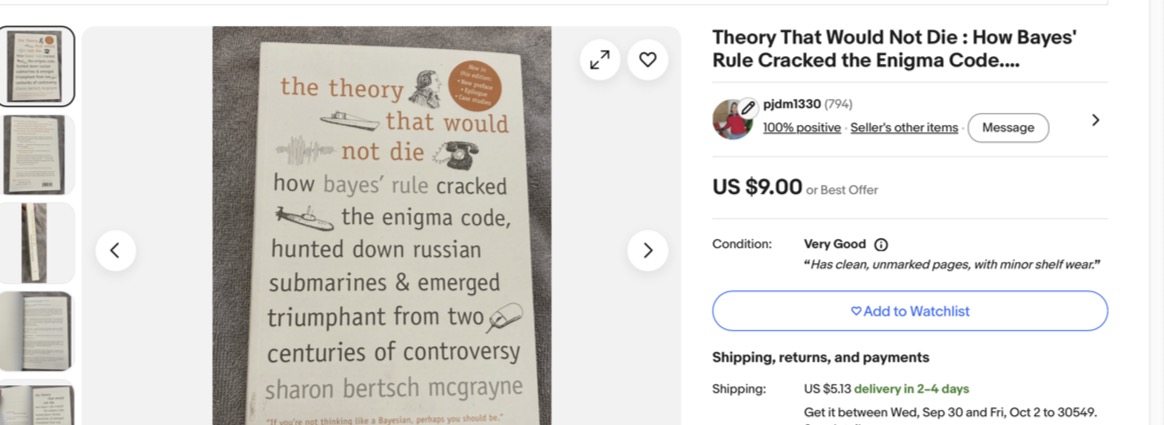
Johnny Cash once sang, “Don’t take your guns to town.” Well, for years and years, I have sold a few books on that 800 pound gorilla of selling stuff. However, from time to time, I have lost money by selling items there. Why? Because shipping is a uniform $3.99 for the customer, but USPS media mail fees start above $4, rising if the item weighs more than a pound or two. Also, big A always assesses a commission. So, old books must be priced high or the seller loses money.
Recently, I sold three books via big A and one via eBay. I got $6 and change in my bank account from eBay, but I got a charge on my credit card for $12 and change from big A, but nothing in my bank account. Will I eventually get a payment from Big A, which began as a sales platform for books? Probably, but in the mean time, I have to pay them. As a business plan, this sucks.
I hated to do it, but I spent a while removing all of my listings from big A. I’ve always wanted to put books into the hands of people who want them, rather than just dumping them on a charity. Because buyers begin there, it seemed to be the place to list them, but that is more work than boxing them up! Giving them away would seem to be a better plan, unless I resist them elsewhere.
Many people begin and end their search for a book with big A, but I urge customers to look at eBay or Pango or other vendors for vintage books. New books might be a different matter, but when it comes to used, big A isn’t a great place for sellers, so buyers will have to pay more. It’s just business.
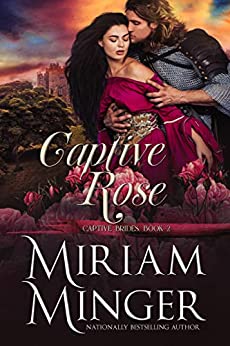
As I continue on my quest to read the eBooks that have been lingering in my “library” of such items, I ran across a trilogy entitled Captive Brides. What was I thinking when I acquired it? I don’t know, but apparently I either read or abandoned the first novel in the series. So, I began (again) with book two, Captive Rose. Warning: I don’t care about modern sensibilities, and that includes having slaves as minor characters. When this book was set, lots and lots of folks were slaves. Now, I have dealt with that, okay?
The title character has been reared as a Christian in Damascus, in the middle ages. She is summoned to assist her physician step-father to help care for a captured Crusader, who has been severely injured in battle. Her mother had been widowed when her husband died on a trip to the Holy Lands, and she ends up married to the best doctor in Damascus. Through out the novel, her daughter, Laila, is associated with the rose, from her perfume to her favorite plant in the gardens in the main settings.
The Crusader, Guy de Warenne, escapes custody, and he is grateful to the young woman who assisted in his care. Through medicine that would be unknown in his homeland, he not only lives, but is restored to health. He is also confused, because he believed her to be a Christian slave amongst the pagans, and he wants to pay her back by taking her home to England away from the infidels in Damascus. Unfortunately, she is not too happy about that, and much of the conflict between the characters falls back upon that misunderstanding.
Minger seems to have done quite a bit of meticulous research to bring each setting and the each of the main characters to life. This one has it all, y’all, from dungeons to jousting matches. While this book was not written recently (couldn’t have been, actually) I really, really enjoyed it. So, if you enjoy bodice rippers, you just might like Captive Rose.
First off, let me say that my favorite sub-genre of romance would be those set in the American West, while my second favorite is sci-fi romance. And, while I enjoy period pieces, I also enjoy modern westerns. Whether the romantic lead saddles up a Quarter Horse or a Ford F-150 doesn’t much matter to me. What matters in a romance is that the formula is there, but with some innovation or at least a bit of surprise here and there. Gotta keep things interesting, you know!
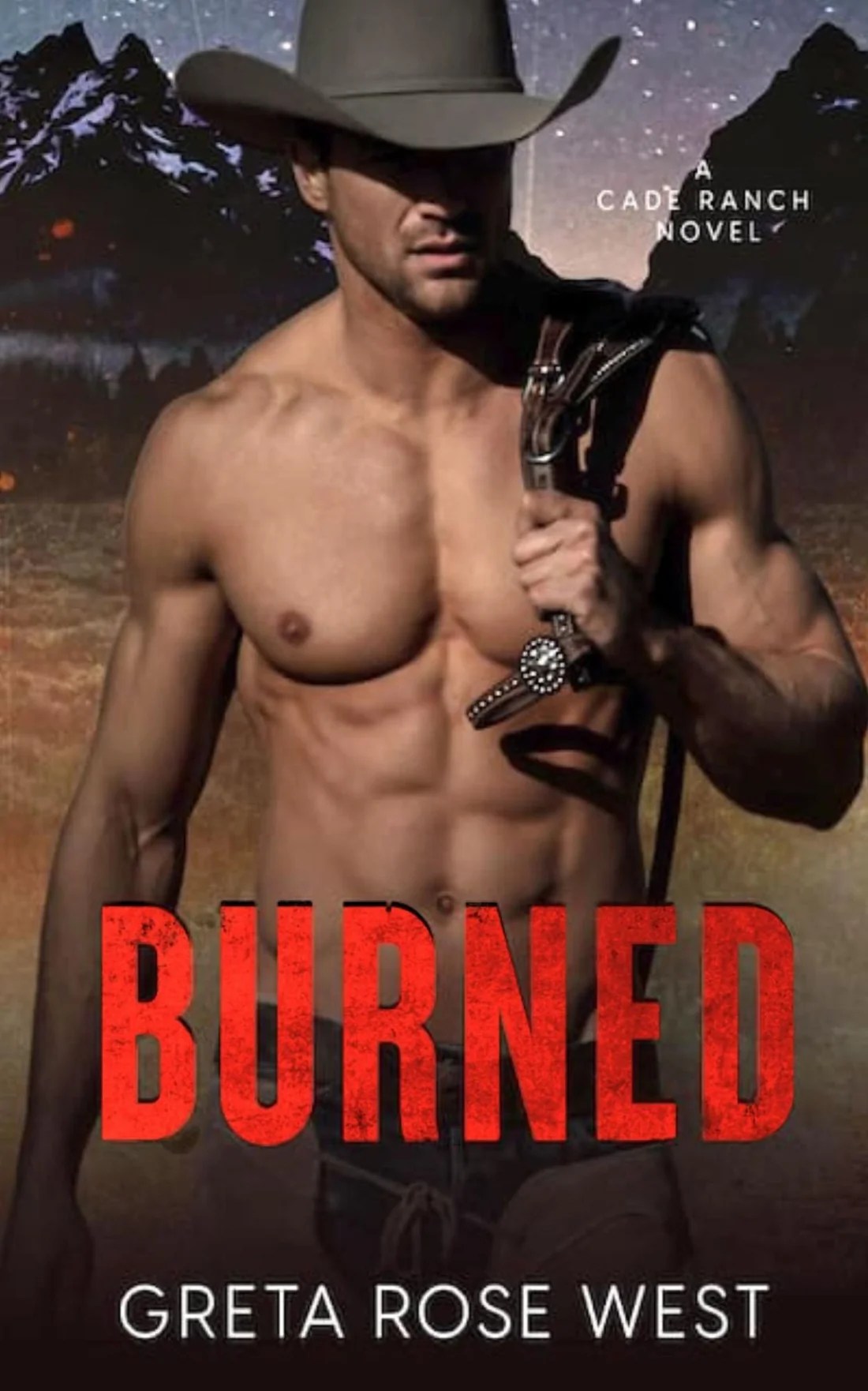
Burned, by Greta Rose West, entertained me until the last swipe of the page. In some ways, the book is standard fare: the romantic lead is a busy guy, with lots of problems, and he isn’t looking for love. The lady isn’t much of a lady, and she has a serious aversion to getting emotionally close to anyone. The point of view shifts with each chapter change, and the reader gets to know each party fairly quickly, which is necessary nowadays. Modern readers are not patient when it comes to character building or world building, for that matter.
In Burned, our male lead is Jackson Cade, the eldest brother and owner of a horse breeding operation. Yes, he is busy, and no, he isn’t wealthy, at least not in a monetary sense. He does have plenty of good company, as he lives with his four brothers, and he is the person on call for an elderly neighbor, Mrs. Mitchum. When she needs him to help her as she embarks on yet another course of cancer treatments, he responds to the call, despite his lack of time.
The female lead is Everlea, a volunteer at the local hospital, who has been tasked with assisting an elderly cancer patient. When Eve (short for Everlea) literally stumbles into Mrs. M’s room, giving herself a cut forehead and a concussion, Jackson ends up with two patients, Mrs. M, and her young helper, who isn’t to stay alone as she recovers from her concussion.
However, Everlea has secrets associated with a dark past, so she spends most of her waking moments trying to keep her lies straight. Perhaps this would be easy in a city situation, but the Cade ranch is on the fringe of the tiny town of Wisper, Wyoming, where everyone tends to know everyone else’s business. Before long, Jack realizes two things: Everlea isn’t what she seems, and he is falling in lust with her.
Since this is a western as well as a romance, there are horses to be born and named, there are scenic vistas to behold, and local decor is sometimes made of elk antlers. Everlea seems to enjoy it all, but she is ready to move on, with a packed “go bag” in her rented cottage. And, since this is also a mystery, there is a villain waiting to ruin Everlea, and he will enjoy killing anyone unfortunate enough to befriend her.
In hopes some of my readers will become West’s readers, I’ll skip the rest of the plot points and any spoilers. But it’s good, y’all.
After the epilogue, the author requests reviews. As an author, I get that. I’m not inclined to beg for those, but if more satisfied customers had written reviews, I would have been encouraged to write more books. So, Greta Rose West, here is a review by a very satisfied reader! Keep writing, please.
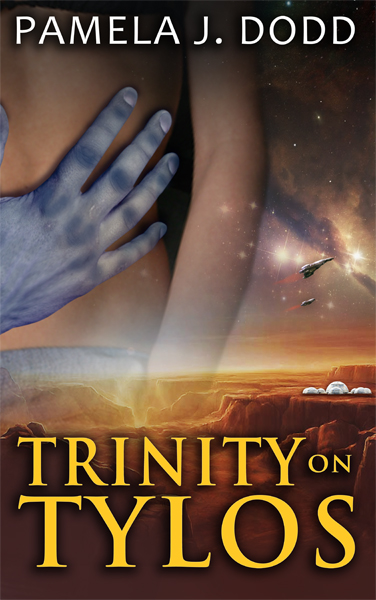
Recently, I came upon a forgotten file wherein I mapped out a possible sequel to my science fiction novel, Trinity on Tylos. The scenario took up a few pages, and I had also written an in media res opening for the new book. However, since so much time had passed since I even read this book, I re-read the ebook version which I published in 2014. The ebook formatting seemed a bit dated, so I decided to see how best to update it. Lo and behold, big A now has a downloadable program called Kindle Create, which is a little like riding a bike with training wheels, but I did enjoy giving this newer application a spin. I uploaded a “new” version of the manuscript, which had about ten minor corrections, into the Kindle Create interface. The program is a step by step process, from the title page, to the copyright, to the preface. The fun began with tools which created a table of contents, another which added a drop cap at the beginning of each chapter, and so forth. Once I thought the manuscript was updated and the formatting tweaked, I uploaded the new version of the novel to the Kindle Dashboard, and it will be updated within three days.
Then I noted the “create a paperback” button. Having once self-published a paperback (The Gift Horse) I was rather shocked that this option was no-cost for me. I can’t remember the exact price, but Booklocker did charge me for setup and my author copy price was about $10 per book, and that was in 2004. Also, there was a yearly maintenance fee to keep the files for printing the paperback, which is why it is only available as an ebook now. Should anyone want to buy a paperback copy of Trinity on Tylos, the price is set at $9.99, but the only cost to me was a similar price for a “proof copy” which is similar to being published by a conventional company, because Whiskey Creek Press sent me a proof copy before the novel was published by them. (I still have that copy, with its post it notes and highlighted errors.) If all goes well, I will have one paperback copy of the revised novel. I might be the only person to ever buy one, but hey, that’s a heck of a good price!
The cover art on this “new” book is the same as the ebook; hopefully, it will look great. I had forgotten that the cover artist who did the image above sent print and web versions of the image, so I didn’t have to buy or create a new cover.
Will I ever finish the new book? Gosh, I don’t know. But once a manuscript is written, Kindle Create is a good piece of software. The pricing at Big A is unbeatable, too. So, if I were to pull it together, I would certainly use this method of publishing.
Of course, self-publishing has brought many, many bad books into the ebook/print on demand marketplace. But it has also brought such books as Andy Weir’s The Martian into the market as well. I’m not expecting many sales of a book first published two decades ago, but I think I will enjoy having that proof copy as a souvenir.
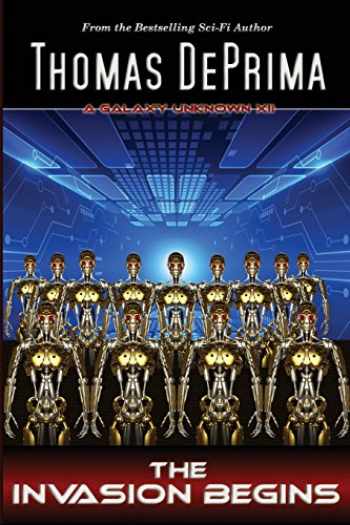
Recently, I re-read the Thomas DePrima novels I had purchased as eBooks, namely, the first nine of twelve titles in the “A Galaxy Unknown” series. Gosh, I had forgotten much of the detail, but I remembered that I really enjoyed them. As certain television series benefit from “binge watching”, such as Breaking Bad, I realized that reading those nine novels back to back was great fun, so I sought the other books in the series and found them on Apple’s reading app. I just finished the 12th book, which, darn it, ends with a cliff-hanger. Thus, I have two mysteries. First, how do Jenetta and Space Command once again save the known galaxy, and, second, what happened to Thomas DePrima? According to the end of book 12, The Invasion Begins, the adventure will continue, but that book was published almost a decade ago. According to my web research (thank you AI) DePrima hasn’t published anything since 2019.
For those who haven’t read this nifty space opera series, I reviewed some of these novels when I first read them, and those entries are summarized earlier in this blog.
Thomas DePrima’s A Galaxy Unknown series is a classic space opera infused with modern indie flair. Spanning twelve main novels (plus spin-offs like the Border Patrol and Colton James sub-series), it follows the meteoric rise of Jenetta Carver, a sharp, disciplined young Space Command officer whose destiny is nothing short of galactic. The series has an action packed beginning, with a few flaws in the writing, but nothing that keeps most readers from swiping those electronic pages to find out what will happen next. There’s enough science fiction to keep fans of that genre entertained, but the writing is not so technical that every day readers who enjoy a strong female character can’t enjoy each book. As the series goes on DePrima’s universe is ever more expansive and detailed. From the political tensions between Galactic Alliance sectors to the looming threats of alien species and interstellar crime syndicates, the author builds a rich backdrop for military intrigue and diplomacy.
The series isn’t without some minor imperfections, especially as the series progresses: some plotlines feel recycled—Jenetta foils yet another plot, saves the day, and gets another promotion. Her near-infallibility can reduce the suspense. Not since the video game version of Lara Croft has a female lead seemed so invincible. However, if you’re a fan of David Weber’s Honor Harrington, any early iteration of Star Trek, or any tale of righteous command in deep space, A Galaxy Unknown and its eleven sequels offers a satisfying and immersive experience.
That said, I wonder what happened to Thomas DePrima. According to Goodreads, he has over 20 books available, and most of them rate above 4 (out of 5) stars, with thousands of reviews of the earlier books, and hundreds for the later titles, which is amazing for an indie author. Various sources speculate that DePrima is a pen name (not so unusual) so maybe he has passed. Or, maybe he got tired of writing. Maybe he pivoted to another name and a new set of books. I have no idea, but I do wish that the series had some sort of denouement. Jenetta Carver and company are too cool to just leave hanging.
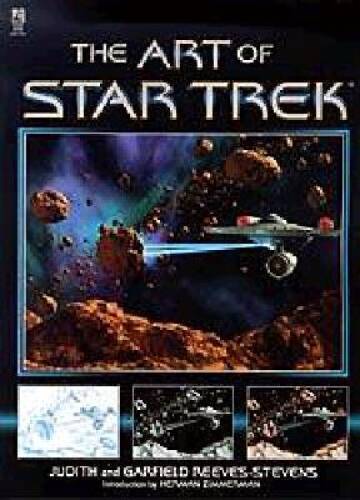
Review of The Art of Star Trek by Judith Reeves-Stevens and Garfield Reeves-Stevens
The Art of Star Trek is an expansive, visually rich tribute to one of the most iconic science fiction franchises in television and film history. Authored by Judith and Garfield Reeves-Stevens—veterans in the Star Trek literary universe—the book is both a meticulously researched chronicle and a celebration of the franchise’s visual imagination. Originally published in 1995, it captures the essence of Star Trek from The Original Series up to the early days of Deep Space Nine and Voyager, offering a deep dive into the creative process behind its legendary design work.
Content & Structure
The book is organized chronologically, walking readers through the development of each series and film, and highlighting the evolution of Starfleet’s aesthetic—from the colorful minimalism of the original USS Enterprise to the more militaristic tones of The Next Generation and Deep Space Nine. It covers not only starship and costume design but also alien worlds, species, props, matte paintings, and behind-the-scenes concept art.
What makes The Art of Star Trek stand out is its generous use of images—over 600 illustrations, including concept sketches, set designs, production photos, and storyboards. Many of these had not been widely published before, giving fans a rare glimpse into the franchise’s visual development.
Insights & Analysis
The authors provide thoughtful commentary throughout, not just presenting the art but contextualizing it within the creative and production challenges of each era. Interviews with production designers, concept artists, and series creators add depth, explaining how design choices supported storytelling themes, budget constraints, or advances in technology. There’s also insightful discussion about how the look and feel of the franchise shifted to reflect changing cultural attitudes, from the optimistic idealism of the 1960s to the more complex and politically nuanced narratives of the 1990s.
Strengths
Comprehensive Scope: Covers nearly three decades of design work across TV and film.
Rare Artwork: Features a treasure trove of previously unpublished art and design materials.
Historical Value: Serves as an excellent reference for both casual fans and serious scholars of media design or science fiction.
Limitations
Cutoff Point: As it was published in 1995, it doesn’t include Enterprise, the reboot films, Discovery, Picard, or any modern Star Trek series.
Print Quality (in some editions): Some readers have noted that certain editions could benefit from higher-resolution image reproduction.
Final Verdict
The Art of Star Trek is a must-have for any serious Trekkie or fan of cinematic design. It not only honors the visual legacy of the franchise but also captures the spirit of exploration, creativity, and vision that defines Star Trek. Even decades after its publication, it remains a definitive guide to how imagination was translated into one of science fiction’s most enduring worlds.
Rating: 9/10 A stunning archive and a passionate tribute, though in need of a sequel to cover the post-1995 era.
This is the book, which I read and enjoyed. Just for fun, I asked ChatGPT to write a review, and the text above is what it generated. While I don’t gush quite as much as the AI, mostly I agree with the review. For fans of the older television shows, there could be a bit more details. For fans of the full length features, the content is better. And, as it was published about the time Voyager was getting started, there is certainly plenty of art that must be found elsewhere. My rating would probably be more like a 7, if I were to give ratings up to 10. Still, seeing what the AI generated was so entertaining that I decided to share.