Missing Author?

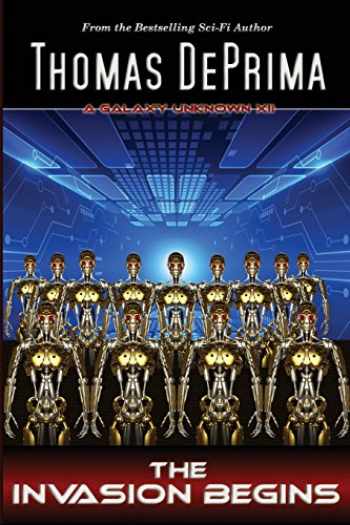
Recently, I re-read the Thomas DePrima novels I had purchased as eBooks, namely, the first nine of twelve titles in the A Galaxy Unknown” series. Gosh, I had forgotten much of the detail, but I remembered that I really enjoyed them. As certain television series benefit from “binge watching”, such as Breaking Bad, I realized that reading those nine novels back to back was great fun, so I sought the other books in the series and found them on Apple’s reading app. I just finished the 12th book, which, darn it, ends with a cliff-hanger. Thus, I have two mysteries. First, how do Jenetta and Space Command once again save the known galaxy, and, second, what happened to Thomas DePrima? According to the end of book 12, The Invasion Begins, the adventure will continue, but that book was published almost a decade ago. According to my web research (thank you AI) DePrima hasn’t published anything since 2019.

For those who haven’t read this nifty space opera series, I reviewed some of these novels when I first read them, and those entries are summarized earlier in this blog.

Thomas DePrima’s A Galaxy Unknown series is a classic space opera infused with modern indie flair. Spanning twelve main novels (plus spin-offs like the Border Patrol and Colton James sub-series), it follows the meteoric rise of Jenetta Carver, a sharp, disciplined young Space Command officer whose destiny is nothing short of galactic. The series has an action packed beginning, with a few flaws in the writing, but nothing that keeps most readers from swiping those electronic pages to find out what will happen next. There’s enough science fiction to keep fans of that genre entertained, but the writing is not so technical that every day readers who enjoy a strong female character can’t enjoy each book. As the series goes on DePrima’s universe is ever more expansive and detailed. From the political tensions between Galactic Alliance sectors to the looming threats of alien species and interstellar crime syndicates, the author builds a rich backdrop for military intrigue and diplomacy.

The series isn’t without some minor imperfections, especially as the series progresses: some plotlines feel recycled—Jenetta foils yet another plot, saves the day, and gets another promotion. Her near-infallibility can reduce the suspense. Not since the video game version of Lara Croft has a female lead seemed so invincible. However, if you’re a fan of David Weber’s Honor Harrington, any early iteration of Star Trek, or any tale of righteous command in deep space, A Galaxy Unknown and its eleven sequels offers a satisfying and immersive experience. 

That said, I wonder what happened to Thomas DePrima. According to Goodreads, he has over 20 books available, and most of them rate above 4 (out of 5) stars, with thousands of reviews of the earlier books, and hundreds for the later titles, which is amazing for an indie author. Various sources speculate that DePrima is a pen name (not so unusual) so maybe he has passed. Or, maybe he got tired of writing. Maybe he pivoted to another name and a new set of books. I have no idea, but I do wish that the series had some sort of denouement. Jenetta Carver and company are too cool to just leave hanging.

Where are you, Thomas DePrima?
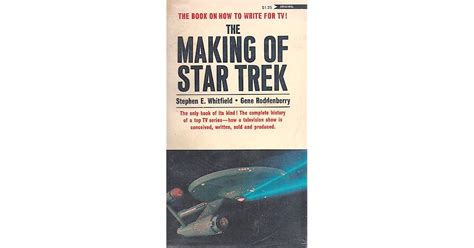
The Making of Star Trek by Stephen E. Whitfield—a retro review

Way long time ago, I borrowed a copy of The Making of Star Trek from a friend. After watching some episodes of The Original Series (TOS) on Pluto TV, I remembered the book, so I ordered a vintage paperback via eBay. Once I had it in hand, I could revisit a wonderful read, as well as wallow in some insider info once again. First printed in 1968, this book is both a history of Star Trek, with quite a few photos, and a “how to” guide to creating, producing, and writing a television series. However, as the book was written as the series was coming to a close, the legacy and cultural significance of Star Trek were not yet known to Whitfield (or Gene Roddenberry, who is listed as a co-author.) For more casual fans, there are other sources, from videos to more focused books.

When a ground breaking television series is created, there are thousand decisions to be made. From character names to methods of propulsion, this volume covers in detail how many of the concepts that make Star Trek work were developed, some visionary, such as the multi-cultural crew (unheard of in the mid-sixties) while others were merely practical, such as the “transporter” which was necessary as it would slow down the action if every port of call required a shuttle craft excursion (or worse, landing a huge space ship.) Within these pages are excerpts from memos to and from ST creator Roddenberry, quotes from NASA consultants, and preliminary sketches of possible ship configurations.

As this book was written alongside the filming of the series, there are glimpses of who wrote (and re-wrote) scripts, which actors were cast, and how the characters evolved. Letters from some of the actors, with insights into how their characters were to be portrayed, are included. Loosely organized chronologically, but with sections on such topics as “weaponry” and “the bad guys,” the reader sees how items familiar to TOS fans were developed over time.

Previously, I wrote a bit about a tour of The Neutral Zone Studios, where Star Trek Continues was filmed, and where fan films are still made. Our tour included some of the information in this book, but quite a bit of it was different, as the guides took a more hands on approach. Anyone planning a trip there might well read The Making of Star Trek prior to taking the tour. While the book does compliment Gene Roddenberry’s creative genius, many people helped create this vision of the future. Some of it has come to fruition (think folding cell phones) and some might never (Warp drive), but the influence that this one television series, which most deemed a failure when it ceased production, is difficult to minimize.

The Making of Star Trek is no longer in print, so it does require a bit of searching, but for fans, it is worth the effort.

Retro Review: Michael’s Wife by Marlys Millhiser

I’ve occasionally written about re-reading old favorites, and I recently turned my eyes to The Mirror by Marilys Millhiser, and beside it, Willing Hostage, residing on my “keeper” shelf. However, my favorite novel by Millhiser is Michael’s Wife. When I was in high school, I borrowed this novel from a friend who had checked it out of the local library and read the opening chapters during Spanish class. After class I begged to keep it but was rebuffed. No, I had to get on the waiting list at the library. Seems like I had to wait months before I got to read the book in its entirety. I loved it!

Michael’s Wife was published in 1972 so modern readers should consider it a period piece and be prepared to suspend a bit of disbelief as well as setting aside certain notions of proper behavior. The story opens with the main character awakening in a dry stream bed in the desert. She has no memory of who she is, nor why she is there. She is afraid, however, and her fear motivates her to walk swiftly toward a roadway. Shortly after she finds the road, she is offered a ride from a rough looking man named Harley McBride, who is willing to help her as long as she isn’t a hippie. She assures him she is not, but says nothing when asked her name. Somewhat amused, Harley calls her “Doe Eyes” because he says her brown eyes remind him of a doe he saw while hunting. When asked, Harley tells her that he shot the doe right between the eyes. (Remember, modern readers, this is a period piece.)

While visiting a restroom, our amnesiac main character finds something hidden in the waistband of her slacks: A slip of paper—“Captain Michael Devereaux, Luke A.F.B.” handwritten across it. With this clue, she asks Harley to take her to Luke Air Force Base. Harley supplies lunch and some information as they drive from Florence to Phoenix. Harley stops as a motel owned by his brother in Phoenix, and our POV sees a sign wanting a waitress. She offers to take the job in exchange for a room and Harley’s brother agrees. Once she has the privacy of the motel room, she calls Luke Air Force Base and finally reaches Captain Devereaux. After she utters a few halting phrases, he calls her Laurel and tells her to stay put, he will be there in half an hour.

Okay, I hate book reviews with spoilers. The summary here is only the first chapter. This novel has quite a few twist and turns, and although it was classified as romantic suspense when released, it is more suspense and any romance is secondary. There’s some violence, including sexual violence, so this story isn’t for the faint of heart. (Honestly, I can’t understand modern readers who quit reading when a character loses his temper, but can embrace 50 shades of bondage.) Some of the reviewers on Goodreads were unhappy that this novel is very different than The Mirror, which is a time travel yarn. I get that, but in my case I much prefer the plot of Michael’s Wife. Millhiser is a creative writer who crosses between genres, and she did write other supernatural yarns, such as Nella Waits.

Millhiser died in 2017, so I only felt minor guilt at re-reading Michael’s Wife on a freebie site. She leaves a legacy of 15 novels, and her later works were a series of mystery novels featuring a sleuth named Charlie Green. I might try one of those, or I might re-read Willing Hostage, as I have fond memories of that one as well.

Best of 2021

There’s a certain irony in the title of this post, as 2021 wasn’t a great year in some regards. Politics seemed crazy and crazier. People seemed to be getting over the virus, for the most part, but some were really sick or lost their lives. Healthcare providers seemed to get a handle on it, but not entirely. Oh, there were some bright spots in 2021, such as overall success for the stock market, and college football seemed almost normal.

And, entertainment, especially streaming video, always appreciated, became even more so. Everyone needs a break from reality. So, here’s some of the best books and shows I enjoyed in the past year:

On YouTube TV, hubby and I both very much enjoyed Yellowstone. This show is a modern western, with cowboys and rodeos, guns, big pickup trucks. The story reminds me of family shows of the past, such as “The Big Valley” which I saw in re-runs when I was much younger. However, the Dutton family is led by a patriarch instead of a matriarch, with Kevin Costner doing a fantastic job as the father of three grown children, and the head honcho of the ranch. His offspring are diverse and all interesting, if rather flawed. The Montana setting is certainly an important part of the series, and if you haven’t tried this show, unless you are extremely prudish or need a knight in shining armor to be the main character, I think you’ll like it.

Other streaming winners include the comedy series, Ted Lasso, which is now in its second season over on Apple TV, and Lost in Space in its third season on Netflix. Ted Lasso is a quirky story about an American football coach who is hired to coach a professional English soccer team. Lost in Space was originally a campy cult classic, but the modern iteration is more far more serious and has killer special effects along with good acting and quite a bit of suspense. The first season was amazing, the second season suffered from the sophomore blues, and season three is somewhere in the middle. Overall, it is one of the better space operas online, far surpassing any Trek or Star Wars recent entries that I have seen. (BTW, my son likes the Mandalorian, but I haven’t seen that, so the comment might not be entirely fair.)

The best book I read in 2021 was probably The Book of Lost Names, by Kristin Harmel. This novel is set in set in Europe, during World War II. In The Book of Lost Names, the point of view character remains the same, but there are some deliberate time skips as the story moves from 2005, wherein the main character, Eva, is quite elderly, and 1942-46, when a young Eva spent several months forging documents in order to save people from the Germans who were occupying France (and threatening all of civilization.) Eva’s story is a real page turner, as there are moments of suspense, of hardship, and (thankfully) success, both in saving children from the Nazi war on Jews, and in Eva’s growing affection for a fellow member of the resistance. While I don’t want to include any spoilers, the book in the title refers to a code added to an existing book in the library of the local Catholic church, and the code included the real names of children who were perhaps too young to remember their birth names, which had to be altered so they could travel using forged documents.

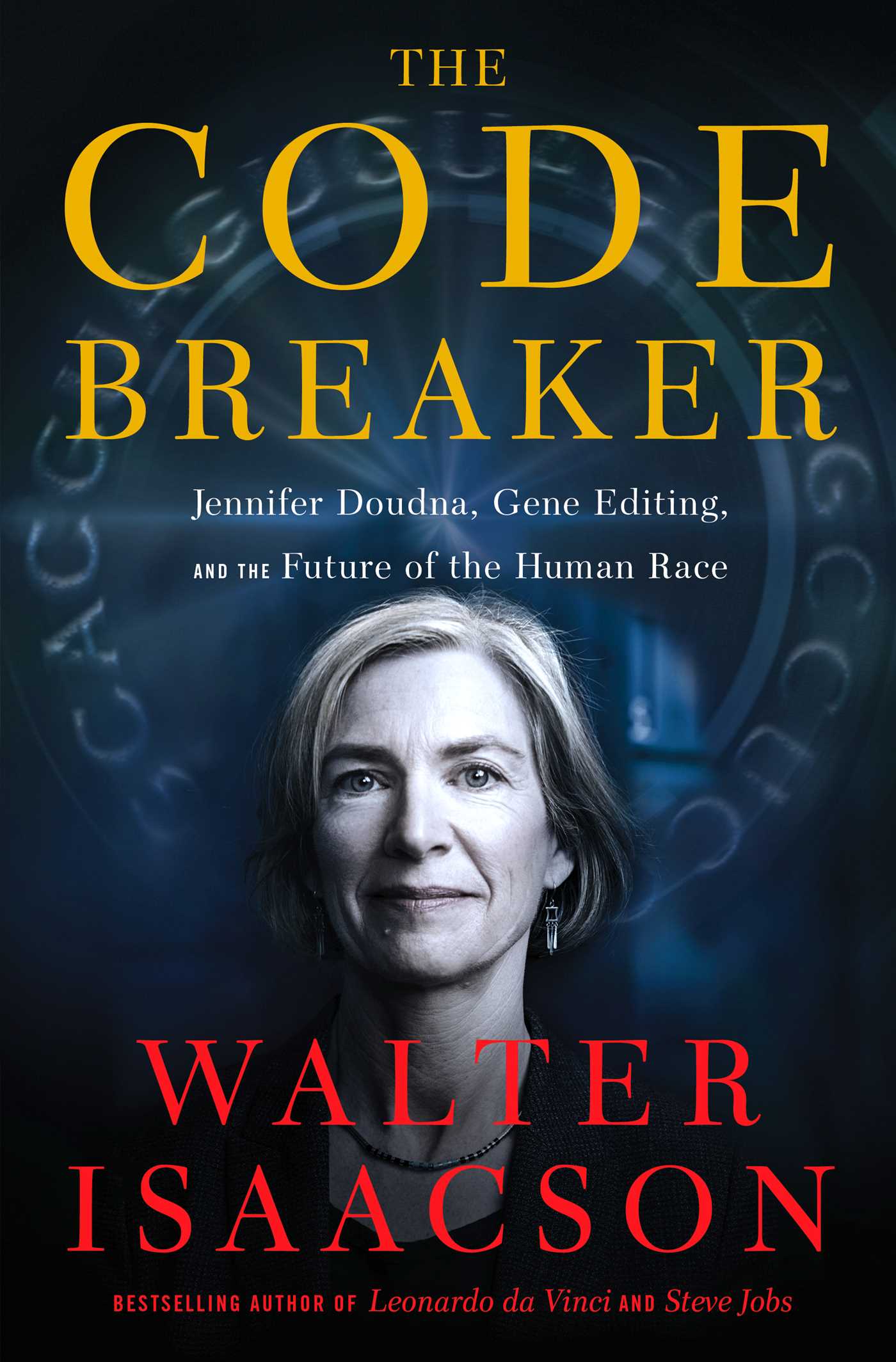
Other good reads included Walter Issacson’s The Code Breaker: Jennifer Doudna, Gene Editing, and the Future of the Human Race, which I reviewed on this site. And, since I didn’t read them until 2021, I will mention Inside Marine One by Colonel Ray L’Heureux and Star Trek Voyager: A Celebration. None of the honorable mention books are fiction, which is rather unusual for me, as I am primarily a fiction reader. My most oft used source for fiction these days is a daily email from BookBub. Depending on the taste (or tolerance) of the reader, many eBooks are free or very low in price. Reading hasn’t been this cheap since I used to go to the public library every two weeks.

Inflation may be raging, but between streaming and eBooks, entertainment is fairly inexpensive these days. Gas and groceries are skyrocketing, but being entertained is fairly easy. Welcome, 2022!

Walter Issacson’s The Code Breaker: Jennifer Doudna, Gene Editing, and the Future of the Human Race

This is a big book in so many ways. Walter Isaacson is known for in-depth biographies of such diverse people as Steve Jobs, Leonardo da Vinci, and Benjamin Franklin, so he is certainly a “big name” author. The book itself is 485 pages long, not including the notes, which brings the page count to 536. As the sub-title indicates, the central figure in this book is Jennifer Doudna, but many, many others have significant roles in this not so brief history of CRISPR (which can be loosely defined as a way to edit genes.)

Jennifer Doudna grew up in Hawaii, the eldest daughter of a college professor. Her father, who doted on her, once left her a copy of Watson’s book on DNA, The Double Helix, and she mentions this book as one of the reasons she pursued a career as a scientist, despite being told by her high school guidance counselor that “women don’t do science.” Rather obviously, she not only did science, but she has done it well enough to earn the Nobel Prize in 2020.

In The Codebreaker, Isaacson follows Doudna’s career, but intersperses it with pertinent information about the gradual unfolding of modern genetic studies, along with brief sketches of the scientists and scholars who influenced Doudna’s work. Two terms which come up over and over are RNA, which is the “worker bee” that carries out many functions in life, and CRISPR, which has to do with the structures which help organisms adapt to needed change (such as when bacteria “learns” to resist a virus.)

There are a lot of pages in this book devoted to what was discovered, by whom, when, and who managed to get published first. That’s the nature of academia. Then there’s the quest for patents and prize money, which is how some academic institutions manage to pay for enormous labs and pay their large supporting staff. Again, this is a book that is about more than a single researcher. Over and over, Isaccson stresses the importance of collaboration in modern science.

There are some really important concepts discussed in the later chapters, including the ethics of manipulating human genes. One researcher took it upon himself to edit the offspring of Chinese couples in an attempt to eliminate the possibility that they could have HIV, which is apparently quite shunned in modern Chinese culture. Other possible reasons to edit offspring would be to eradicate such conditions as Huntington’s disease, which ends in a horrible decline before inevitable death. Eliminating genetic diseases are worthy uses for CRISPR and other genetic engineering, where is the line? Should prospective parents be able to choose the genetic characteristics such as height, intellect, or even hair color of their offspring they way we might choose dishes in a cafeteria? A number of scientists, including Doudna, have had many meetings, discussing such topics, and these are summarized in The Code Breaker.

When the nasty CV hit, a situation that the author sometimes describes as “the plague year,” many of the scientists mentioned in this book, including Doudna, put aside their competition for prizes and first published honors, and collaborated to produce accurate and rapid tests for the pesky illness. Then, in short order, they turned to prevention, and the mRNA vaccines. Not only were these vaccines quick to develop, they also lay the groundwork for more to come, as the same techniques might be used to prevent other illnesses.

The Code Breaker is more than a biography, as the title states, and it is a longish, sometimes challenging book, but like other works by Walter Issacson, ultimately quite rewarding. It isn’t cheap to buy, compared to many of the books I read, nor is it “light reading.” Like a gourmet meal, it is complex, memorable, and enjoyable. Readers are urged to read, then think, and ultimately savor this work.

Shaken (Quake Runner Book 1) by Kevin Tumlinson— brief review and commentary

This is a pretty good novel. The main character, Alex Kayne, is sassy, super smart, and just vulnerable enough to avoid the “heroine can’t die” syndrome that afflicts almost all comic book super hero characters, or Lara Croft (heroine of the Tomb Raider games/films). Alex is a fugitive computer whiz who needs something to do as she hides from all the forces who want to either kill her or “bring her to justice”, so she kinda does her version of “The Equalizer” in that she helps people who have a specific need. The needy person in Shaken is a surfer/marine biologist named Abbey, who lost an arm to an encounter with a shark. Abbey received a prototype bionic arm, in part due to her high profile injury, and someone stole it. The arm and it’s charger, gone. Who the heck steals a limb from an amputee? (Literate folks might respond with another story, “Good Country People” by Flannery O’Conner, but I digress.)

So, we have Alex Kayne, who manages to change her appearance, her lodging, her cell phone, and her method of transportation more frequently than anyone in any spy novel I’ve ever read. In this book, she is mostly hiding out in Disney World. Other characters include Eric Symon, the FBI agent who nearly nabs fugitive Alex, Abbey who needs her arm back, and a cast of suspects or villains, depending on how the mystery unfolds. The action in this novel is well told, and not quite believable, but that’s part of the fun of it all.

Readers who enjoy puzzles and/or action heroines and want to be entertained for an evening (or two) should try Shaken (Quake Runner Book 1.)

Now, for the commentary. This was my first book by Kevin Tumlinson, but I certainly intend to try another. At the end of this book there’s a note wherein the author explains that he didn’t plan to self-publish this novel, intending to put it in the hands of an agent. However, he thought better of it and put it into his self-publishing stable of products. For many authors (yours truly included) self-publishing is better, due to control of the process and potential financial gain. That decision is understandable, but when the author said he wrote the book in roughly 15 days, I was shocked. Shocked.

Y’all, fifteen days is like two weeks. I can’t edit a book in two weeks, much less go from beginning to end. Wow. I had a whole new perspective on the novel after that. I thought it was a good, if not spectacular read, with very few errors. However, the very idea that such a book could be dreamed up and written in such a short time is simply hard to believe. However, as the author of Ecclesiastes says, “There is no new thing under the sun.” Shaken is a bit like that, in that the elements in the story have been used before, but perhaps not in precisely this manner. The author’s website is a feast for those who want to know more about marketing and branding, especially marketing self-published novels. Clearly, Tumlinson is not just prolific, but also understands how to get the product to customers, too.