So you want to be a successful author—

book and moneyWhile I am pretty sure I don’t qualify as successful in the author department, I made enough mistakes to write (or rant) about the topic. Here are some tips, in no certain order, for those who are writing with the intent to publish a book, or for those who have published but are lacking in sales.


First, write the best book you possibly can. Yes, that should go without saying, but writing is like photography or cooking in that no matter how good you have done it, you can get better. There is no such thing as perfect in any of those endeavors. However, don’t publish unless it is really ready. Mistakes in print are embarrassing!

Next, find a real publisher if you can. Not necessarily one of the big companies (although if that happens for you, whoo hoo!) There are a lot of small and micro presses that can get a book into print and into at least some distribution channels, which leaves more time for the author to help with promotional activities and keep writing. A small company, Whiskey Creek Press, published my second novel, and while my sales were low, any money I spent on promotion was voluntary. My debut novel was initially accepted by a micro press, but when it failed, I ended up using a self-publisher called Booklocker.

Third, if you end up self-publishing, do so at minimal cost. Many authors have published via the Amazon Kindle Direct program, which is free. Yep, that’s right, free. I published the second edition of Trinity on Tylos via KDP, and my only expense was a fancy new cover by Dawn Seewer (which was entirely optional.) I disliked the first cover, which was done by an artist at Whiskey Creek Press, and I thought the book deserved a better effort, and Dawn did a great job for me. Another self publishing program that I am considering is Smashwords, which offers many free services. For most self published authors, the distribution channels associated with Smashwords are fantastic.

Fourth, once the book is ready to debut, get the marketing plan in motion. There are lots of books on this topic, as well as a gazillion websites. I’ve had some success with using Facebook groups, such as Ebook Rave, Kindle Book Authors, and Sci Fi and Fantasy Authors . Those have worked well in conjunction with sales and freebie promos, but bear in mind that I have low cost Kindle titles. Under “links of interest” on this site I have a few other spots that I’ve used for promotion, including “Book Goodies” and “Goodreads.” Having an author page on such sites is not necessary, of course, but doing so usually offers links for anyone who “googles” your author name.

Finally, the most important pillar in promotion is reviews, and lots of them.  If friends and family will write a review on a vendor site, such as Amazon or Barnes and Noble, that’s great, but most of us don’t have that many friends. Also, such reviews don’t carry as much cashé as a professional or semi-professional site. Do send your books to as many of those as you can find and afford. Don’t ever pay for a review, beyond giving a copy of the book. Paying for reviews is wrong on both sides of the equation. If the author pays for a review, then there’s a bias that makes the review worthless for the reader. Unless the book is an eBook only, then there is some expense in distribution of the ARC (that’s advanced reading copy) or published book, so it is best to send the book(s) to appropriate sites, because some sites only review certain genres. There are any number of review sites, and these do come and go fairly frequently. My first novel, The Gift Horse, had several reviews online within a year or two of publication, but apart from those on Amazon and one archived on The Midwest Book Review, they are gone! Therefore, if you get an online review, don’t just save the link, but archive the content, too!

When I first published The Gift Horse, I was invited to do some speeches to local clubs, and I sold a few books via that avenue, but as publishing and self-publishing became more common place, those opportunities dried up faster than blackberries in late August. I also got a book signing at a book store after Trinity on Tylos came out, but it was a very lonely afternoon. If those opportunities come your way, enjoy them, but books and eBooks must be purchased via online vendors in order to make any real money, and that means social media marketing. If you are here, clearly you know what a blog is, of course, and having an author website is usually a good idea. Marketing is an ever changing field, but as of this post, you must get to know Twitter, Instagram, Facebook, and other modern means of communication in order to build an audience for your books.

Oh, and as footnote to “finally” when readers like a book, they usually look for another book by the same author, so you’d best be writing another book, too.


A few books on marketing:

How to Market a Book

Guerrilla Marketing for Writers

The Frugal Book Promoter

Book Marketing 411 for Authors

And a couple on having a book worth the effort:

Don’t Sabotage Your Submission

Writing the Breakout Novel

Want a book? Check eBay before you check out!

My daughter and I have been using eBay as our “go to” bookstore lately. As an eBay seller, I’ll assure you that the fees are far less when selling used items, including books, on eBay. When selling via the big A marketplace, the fees start at about $4, and go up incrementally. Obviously, selling anything other than textbooks or other high end items on the big A marketplace is not worthwhile. However, eBay’s current fee structure is 12% for books, which means sellers can offer better prices to customers. Also, big A has a flat fee of $3.99 to ship a book, unless the seller offers “free” shipping. As USPS offers “media mail” rates for smaller books, the shipping can be cheaper via eBay. Win-win, right?

Here’s an example of a book that I have placed on the marketplace for a client; basically big A gets $6 of the $17 price:

Amazon fee

The fee for that book on eBay would be $2.04. The difference between selling via eBay vs big A is 23%, which is about $4 on a book that costs $17.

Let’s say you’re a bottom feeder looking for a deal. Here’s what happens with a $5.50 book listed via the big A marketplace:

Amazon fee 2

The sale price is $5.50 and the fee for selling it via the marketplace is $4.21, which means the seller gets $1.29. Not many sellers will opt for such a small amount, which is bound to drive up the prices of used mass market paperbacks and/or popular hardcovers. By the way, as of this post, this same book is available for $3.34 on eBay, while the lowest possible price on big A is $4.75. Clearly, bottom feeders need to go to eBay for book purchases. And, while there, check out all the other goods available, from electronics, to clothing, to collectibles— often at better prices than you’ll find anywhere other than the neighborhood yard sale.

One reason buyers flock to big A is the user reviews. Unfortunately, those reviews are not particularly reliable. Big A is purported to fighting this issue, whether banning reviews by customers who have not purchased the item being reviewed, or attempting to  control “paid” reviewers. Lately, the issue with reviews on big A is a problem with “hijacked” reviews, where in a product’s reviews are actually for a different product. Certainly, if you must read those reviews, really read them, and don’t be fooled by the number of stars highlighted. All in all, while there may be more variety available on big A, the prices are probably better on eBay.

As a matter of full disclosure, I sell on both big A and eBay. My eBay store is here:

The Alternative Article

Free for Three promo

For those who prefer to shop at home on Black Friday, here’s an unbeatable deal—my science fiction novel, Trinity on Tylos, is free for three days. Why run it for free? That’s simple, really. More readers should mean more reviews and some word of mouth testimonial. So, here’s a link to the novel, which is free on November 29, 30, and December 1.

How much for a flu shot?

Mostly, I write about books, or maybe films. No doubt, I will do that again soon, but recently I have been experiencing various forms of health care, and my latest such visit was for the annual flu shot, so I’ll write a bit about that. For some years, I opted out of having this injection, but after hubby lost a week of work and felt terrible for even longer, I went back to getting the shot. After all, the couple of times I had influenza it was no fun at all.

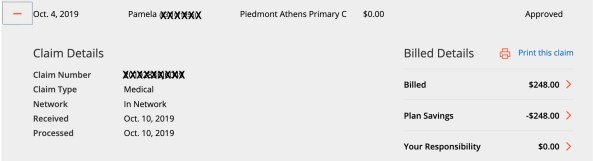
Current United States policy (via the Affordable Care Act) requires that insurance cover the flu shot as a preventative measure, without any co-pay from the patient. So, my doctor’s office has made a business decision to “stick it” to the insurance company—pun intended. See the attached screen shot of the EOB for this procedure:

Flu Shot

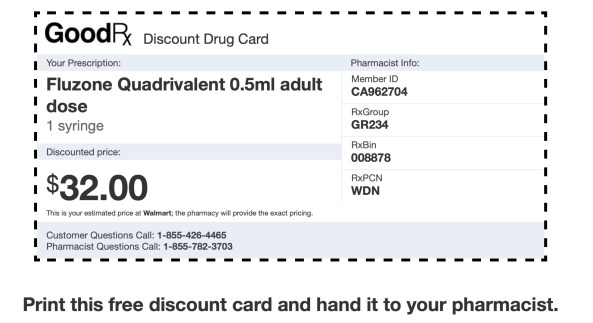
Now, thinking that $248 is a bit steep for this, I just looked at GoodRx (a nifty site if you have never used it) and it tells me that the estimated cost for the shot is $32 at Walmart.

GoodRx

Now, going to my doctor’s office was convenient and fast, but I’ve had flu shots at the grocery store or at a mini clinic, and neither of those were inconvenient. Bottom line, the doctor’s office knows that they can charge whatever for preventive procedures, and my insurance has to pay for it, so they are taking advantage of this. Kudos to Walmart for making this injection available for regular folks. If you don’t have insurance, or if you want to keep it real, just go to the GoodRx site and put in your zip code. The site automatically offers several locations and price points. BTW, the average when I looked was $32.

As for Piedmont Athens Primary Care, they’ve made me think, yet again, that when insurance premiums go up again, and they will, their approach to business is one reason for those hefty increases.


Impossible Burger at Burger King

impossibleThe other day, hubby and I were eating at a favorite restaurant near our home. While perusing the menu, I noted that they now serve the “Impossible Burger” for $15. To be fair, that includes “free” salad and a side, but it struck me as a high price for a fake burger. I’m actually a fan of a good black bean burger, but these new fangled burgers (such as the Impossible Burger and Beyond Meat) purport themselves to be equal in taste and texture to beef. But I wasn’t too keen on spending $15 when I could get a nice salmon fillet with two sides for $12, so we didn’t try it that day.

However, after church today, we went to a fast food restaurant. That’s quite unusual for us, but hey, I got to try an Impossible Burger for a possible price. The B&K palace we visited was one of a series of fast food joints along a busy highway, so they had customers, but not too many. We ordered the meal (a golly whopping 900+ calories) which includes a small drink and fries. BTW, neither the drink nor the fries didn’t seem all that small to me, but the gal at the counter seemed surprised that we didn’t take the 30 cent upgrade to medium.

Hubby looked a bit skeptical, but I dug in immediately. Low and behold  the Impossible “Whopper” tastes quite a lot like any old fast food burger—nothing outstanding, but just fine for the price paid. Anyway, the burger seemed a bit thinner than I remember for a whopper, but the condiments and bun made it a substantial sandwich, which we ate without cheese, as there seemed to be sufficient calories without that addition. The fries were good and crisp, and I ate half of them before shoving them across the table for hubby to finish.

My Fitness Pal tells me that I’ve just about eaten all I should for this day, but I can now say I’ve tried one of the latest innovations in food, and it is okay…as long as one has enough calories left to enjoy the thing. Oh, and I do recommend trying it at Burger King, because we both ate for the price of one at our local sit down and get waited on favorite.

One hand…the other hand…Amazon

handsWe’ve all heard the old saying that states it is not good when “one hand doesn’t know what the other hand is doing.” Basically, when an organization gets too big or too disconnected from itself, then there is at a minimum a loss of cooperation, and at worst, the organization works against itself.

A while back, I had to strip out all of the links to Amazon from this blog, due an email directive, and I have posted a screen shot of that message, which states plainly that I am no longer an Amazon Associate (a means of funding via promoting products.)

Screen Shot 2019-09-24 at 7.53.52 AM

Yesterday, I got another email from Amazon. It seems they no longer remember that my account was “terminated” and want help me sell their expletive deleted stuff.

Screen Shot 2019-09-24 at 7.54.04 AMHonestly, this is just on example of the problems at big A. Lots of articles have been published about problems there. The most troubling ones (for consumers) are the fake reviews and hijacked reviews.  I’ve mostly stopped shopping there, but hubby is addicted. However, the other day he was actually reading the reviews (and not just looking at the number of positive reviews) and realized that most of those reviews were not for the product he was wanting to buy. Fortunately, he didn’t buy from big A this time.

The bottom line is that Amazon is more and more a computerized “middle man” rather than a merchant, and buyers and sellers have little confidence that the platform is working for either side. Consumers should think about alternatives before using that one step purchase button. Sure, it is convenient, but it’s not good to get scammed.

As far as selling is concerned, lately, I’ve sold far more books via eBay than Amazon. More on that later.