Okay, this book is seriously vintage as it was published in 1995, but my hubby is recently retired, so he wants to do some traveling. But, when and where should we travel? A friend mentioned that a CBS news feature reporter who spent much of his career “on the road” discussed his favorite places to be in Charles Kuralt’s America, and the narrative relates his first year of retirement, where he spent time visiting them, at the best time of year to be in those spots. Despite the passage of time, the weather and scenery is no doubt much as it was in Kuralt’s retirement year, so the book is still relevant.
What’s special about this book is the magical prose that Kuralt employs to describe his series of destinations. In January, he spent time in New Orleans. As he is riding from the airport to his hotel in the French Quarter, he says, “I could have closed my eyes in the backseat of the taxi and known where I was purely by the pungent accent washing over me from up front.” I once worked with a lady from Louisiana, and the accent is unique, for sure. Kuralt further states that there are ” three main themes of the city: family, music, and food.” All three are the subject of his discourse, and apart from not actually tasting the jambalaya and crawfish étouffée, the reader feels as if he, too, had visited New Orleans. In February, Kuralt visited Key West, and again, he makes the reader feel like a participant in the trip. March’s destination was Charleston, a city that I’ve visited, but Kuralt stayed longer, met more natives, and has some interesting stories to share. In April, Kuralt ended up enjoying the emerging sign of spring, daffodils, which sounds incredibly boring, but it is not when Kuralt describes them.
In May, he is traveling again, and his destination is again in the south—Grandfather Mountain. His discussion of this scenic area of North Carolina includes everything from what makes the best barbecue to why one should make the drum of a banjo from squirrel skin. Kuralt packs more information into each chapter than I’ve read in several guide books for the area. June he spends in Ketchikan, Alaska; July in Ely, Minnesota; and August in Boothbay Harbor, Maine. Kuralt’s love of boating and fishing is apparent in all of these destinations, as it is in his September destination of Twin Bridges, Montana. For local color in October, Kuralt visits Woodstock, Vermont. As the weather in the north chills, he goes to Rio Grande Valley, New Mexico, soaking up history along with the sunshine. For December, he returns to the place where he made his home for many years, New York City. However, as Kuralt explains, people don’t live in New York; rather, they live in a neighborhood within the city. Again, he gives the reader several examples of people and places in the city, which is decorated for the holidays in his prose.
Charles Kuralt’s “On the Road” feature stories for CBS news on television were a part of my youth. His voice rings true in this rambling, but never unfocused, narrative. For those who remember him, this is a nostalgic read. For those who don’t know his work, the book could serve as an introduction to a time when people didn’t spend time on their smart phones and computers, but spent leisure time in scenic places, learning from the people who inhabit those places. I’m glad that my friend recommended this book so highly, because I certainly enjoyed savoring it.


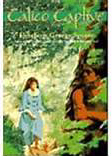 I was watching the grandkids play and perusing a shelf of older books. A title, Calico Captive by Elizabeth George Speare, caught my eye. Before long, I was reading and glancing over at the kids from time to time. When I taught middle grades (long, long ago) I used Speare’s The Witch of Blackbird Pond
 as one of my class novels. I’m not sure that all of the students liked it, but I did. Calico Captive, like “Witch” is an historical novel, with a young adult protagonist.
 to The Hunger Games (Book 1)to The Princess Diaries are squarely aimed at YA, but caught on with adults and movie audiences, too. Speare’s novels are very well written and could have a varied audience of entertained readers. Instead of re-cycling old television shows, maybe some film makers will decide to put Elizabeth George Speare’s tales into production. This novel would make a great movie!
 For me, the works of Pauline Baird Jones are hit and miss. My favorite of her stories is the first one I read (The Key, also known as Project Enterprise, Book 1). I’ve read several other of her novels, and her style is generally a blend of snappy dialogue, kick-butt heroines, romantic suspense, and sufficient action to keep the reader entertained.
 The title of this yarn isn’t particularly original, as it makes me think of Princess Leia, but the story doesn’t lean on Star Wars very much. As the book opens, with a war game going on, rather like Star Trek— The Wrath of Khan, I was wondering if the author was going to borrow heavily from that story, but not really. Actually, Bancroft uses lots of science fiction and fantasy elements, but this is theme and variation, then more variation. As a writer, a reader, and an occasional viewer of science fiction, I see this story as fairly original, and since there truly is “no new thing under the sun” that’s a complement.
 Having just read an article in Popular Science online about what a”
 Visions and Revisions