Missing Author?

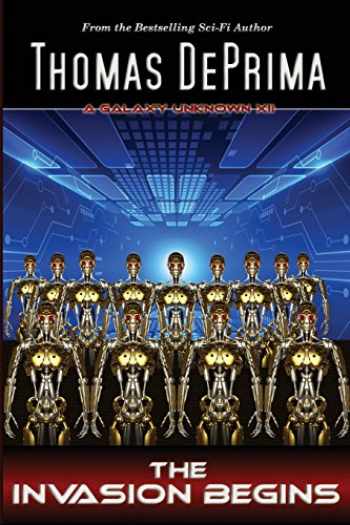
Recently, I re-read the Thomas DePrima novels I had purchased as eBooks, namely, the first nine of twelve titles in the A Galaxy Unknown” series. Gosh, I had forgotten much of the detail, but I remembered that I really enjoyed them. As certain television series benefit from “binge watching”, such as Breaking Bad, I realized that reading those nine novels back to back was great fun, so I sought the other books in the series and found them on Apple’s reading app. I just finished the 12th book, which, darn it, ends with a cliff-hanger. Thus, I have two mysteries. First, how do Jenetta and Space Command once again save the known galaxy, and, second, what happened to Thomas DePrima? According to the end of book 12, The Invasion Begins, the adventure will continue, but that book was published almost a decade ago. According to my web research (thank you AI) DePrima hasn’t published anything since 2019.

For those who haven’t read this nifty space opera series, I reviewed some of these novels when I first read them, and those entries are summarized earlier in this blog.

Thomas DePrima’s A Galaxy Unknown series is a classic space opera infused with modern indie flair. Spanning twelve main novels (plus spin-offs like the Border Patrol and Colton James sub-series), it follows the meteoric rise of Jenetta Carver, a sharp, disciplined young Space Command officer whose destiny is nothing short of galactic. The series has an action packed beginning, with a few flaws in the writing, but nothing that keeps most readers from swiping those electronic pages to find out what will happen next. There’s enough science fiction to keep fans of that genre entertained, but the writing is not so technical that every day readers who enjoy a strong female character can’t enjoy each book. As the series goes on DePrima’s universe is ever more expansive and detailed. From the political tensions between Galactic Alliance sectors to the looming threats of alien species and interstellar crime syndicates, the author builds a rich backdrop for military intrigue and diplomacy.

The series isn’t without some minor imperfections, especially as the series progresses: some plotlines feel recycled—Jenetta foils yet another plot, saves the day, and gets another promotion. Her near-infallibility can reduce the suspense. Not since the video game version of Lara Croft has a female lead seemed so invincible. However, if you’re a fan of David Weber’s Honor Harrington, any early iteration of Star Trek, or any tale of righteous command in deep space, A Galaxy Unknown and its eleven sequels offers a satisfying and immersive experience. 

That said, I wonder what happened to Thomas DePrima. According to Goodreads, he has over 20 books available, and most of them rate above 4 (out of 5) stars, with thousands of reviews of the earlier books, and hundreds for the later titles, which is amazing for an indie author. Various sources speculate that DePrima is a pen name (not so unusual) so maybe he has passed. Or, maybe he got tired of writing. Maybe he pivoted to another name and a new set of books. I have no idea, but I do wish that the series had some sort of denouement. Jenetta Carver and company are too cool to just leave hanging.

Where are you, Thomas DePrima?
A review I didn’t write

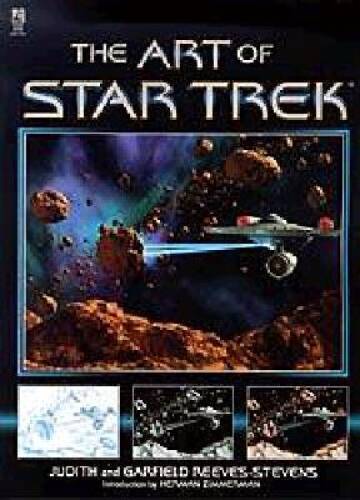
Review of The Art of Star Trek by Judith Reeves-Stevens and Garfield Reeves-Stevens

The Art of Star Trek is an expansive, visually rich tribute to one of the most iconic science fiction franchises in television and film history. Authored by Judith and Garfield Reeves-Stevens—veterans in the Star Trek literary universe—the book is both a meticulously researched chronicle and a celebration of the franchise’s visual imagination. Originally published in 1995, it captures the essence of Star Trek from The Original Series up to the early days of Deep Space Nine and Voyager, offering a deep dive into the creative process behind its legendary design work.

Content & Structure

The book is organized chronologically, walking readers through the development of each series and film, and highlighting the evolution of Starfleet’s aesthetic—from the colorful minimalism of the original USS Enterprise to the more militaristic tones of The Next Generation and Deep Space Nine. It covers not only starship and costume design but also alien worlds, species, props, matte paintings, and behind-the-scenes concept art.

What makes The Art of Star Trek stand out is its generous use of images—over 600 illustrations, including concept sketches, set designs, production photos, and storyboards. Many of these had not been widely published before, giving fans a rare glimpse into the franchise’s visual development.

Insights & Analysis

The authors provide thoughtful commentary throughout, not just presenting the art but contextualizing it within the creative and production challenges of each era. Interviews with production designers, concept artists, and series creators add depth, explaining how design choices supported storytelling themes, budget constraints, or advances in technology. There’s also insightful discussion about how the look and feel of the franchise shifted to reflect changing cultural attitudes, from the optimistic idealism of the 1960s to the more complex and politically nuanced narratives of the 1990s.

Strengths

  • Comprehensive Scope: Covers nearly three decades of design work across TV and film.
  • Rare Artwork: Features a treasure trove of previously unpublished art and design materials.
  • Historical Value: Serves as an excellent reference for both casual fans and serious scholars of media design or science fiction.

Limitations

  • Cutoff Point: As it was published in 1995, it doesn’t include Enterprise, the reboot films, DiscoveryPicard, or any modern Star Trek series.
  • Print Quality (in some editions): Some readers have noted that certain editions could benefit from higher-resolution image reproduction.

Final Verdict

The Art of Star Trek is a must-have for any serious Trekkie or fan of cinematic design. It not only honors the visual legacy of the franchise but also captures the spirit of exploration, creativity, and vision that defines Star Trek. Even decades after its publication, it remains a definitive guide to how imagination was translated into one of science fiction’s most enduring worlds.

Rating: 9/10
A stunning archive and a passionate tribute, though in need of a sequel to cover the post-1995 era.

This is the book, which I read and enjoyed. Just for fun, I asked ChatGPT to write a review, and the text above is what it generated. While I don’t gush quite as much as the AI, mostly I agree with the review. For fans of the older television shows, there could be a bit more details. For fans of the full length features, the content is better. And, as it was published about the time Voyager was getting started, there is certainly plenty of art that must be found elsewhere. My rating would probably be more like a 7, if I were to give ratings up to 10. Still, seeing what the AI generated was so entertaining that I decided to share.

Cover of The Art of Star Trek, book

Blind Spots by Marty Makary

Blind Spots: When Medicine Gets It Wrong and What It Means for Our Health

One of my favorite books in the past half decade is also by Dr. Makary, The Price We Pay, which was about how the healthcare system, especially hospitals, drives up prices and often bankrupts the patients. While that is still an issue, some policies and laws have been updated in an effort to stop fleecing the public. Clearly, Makary wants to shine his light on problems in healthcare, and propose positive changes.

Now, in Blind Spots, the author takes on fellow doctors, medical schools, academia, government, and especially professional publications. Why? Because medical dogma can make patients miserable or dead. Each chapter of this important, well-written, and well-researched book takes on various aspects of healthcare that got it wrong in the past or still gets it wrong. The author discusses why fearful pediatricians caused the peanut allergy problem in the United States, why fearful gynecologists quit prescribing hormone replacement therapy for many women, why some cardiologists still believe that eating cholesterol causes higher blood cholesterol (it doesn’t) and why so many babies were harmed or killed by accepted and bad practices in what he terms “the white coat era” of neonatal care. That chapter was hard to read. Really! Starving infants, blinded infants, tortured infants. I almost didn’t make it to the stories of doctors who intervened.

In addition to other dogmas, the author also takes on the problem of funding. I’ve known for quite some time that one reason chemo is the standard treatment for so many cancers is that other treatments fail to be funded, either by the government or by big pharma. That is just one small problem in the healthcare system, because doctors and researchers who do not adhere to accepted doctrine have their papers rejected, they lose their funding, their jobs, and in one state, their medical license. Apparently, censorship is costing a lot of money and a lot of lives.

Makary’s focus on these Blind Spots, with examples from the past as well as the present, is an attempt to get patients to ask more questions and for researchers to be more honest, rather than manipulating data to confirm previous bias. He has taken on a huge industry, but the stakes are very high. Your own life might well depend upon whether or not the doctor in the ER is up to speed on what really works and what is just protocol.

By Pamela/Pilar Posted in Amazon

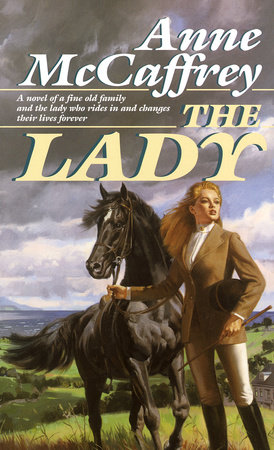
The Lady by Anne McCaffrey

Quite a while back, I decided to avoid writing reviews of living authors’ books, unless the author was either very famous (too famous to care what I thought) or dead. Anne McCaffrey is both super famous and dead. I’ve read several of her books, including some co-authored, but generally in her typical genre: science fiction. However, my daughter found this novel in her quest to find nifty vintage books, so she’s the reason I read The Lady.

I rather liked the retro feel of the novel, from the cover art to the characterizations to the plot. The novel is set in 1970, but according to the flyleaf, this book was originally published in 1987. The style seems more 70s than 80s, and that might be “off-putting” for modern readers. This is more of a “saga” than a typical novel, which was popular in the days of the mini-series on television.

Another aspect of the story is that it is about people who are seriously into horses. McCaffrey helps the reader with a glossary in the beginning of the book, which covers some Irish terms and some horse related terms, which helps a bit. The cast of characters (both human and horses) is sweeping, along with the names of the various horse shows. There’s a lot to keep up with, but the reader is rewarded with being able to escape into another time, when the telly was only briefly mentioned, and phones were attached to a wire.

The point of view character is Catriona Carradyne, a thirteen year old girl, who loves horses, which is both a blessing, because her father breeds, shows, and trains horses; and a curse, because her mother loathes horses and wants Catriona to grow up into a young lady. The setting, as I mentioned previously, is Ireland in 1970. One of the clients that boards her horse with the Caradynes, is Selena Healey, a stylish younger woman, who befriends Catriona, and mentors her through a very eventful time in her young life.

No spoilers here, I hope, but this novel is not just about horses, or about coming of age, although both of those are central to the story. There’s also loveless marriages and expectations of society and family. Some of the characters are well drawn, while others are mostly stereotypes, and the novel doesn’t move swiftly, nor is it filled with twists and turns. Nope, it is fairly predictable. The reader can figure out what will happen fairly early, so it is more “how” is the plot going to turn out rather than “what” will happen.

I can’t say this is the best book I’ve read lately, but it certainly kept me turning the pages. And, there’s that nice vintage feel about it, like listening to music from the 70s and 80s.

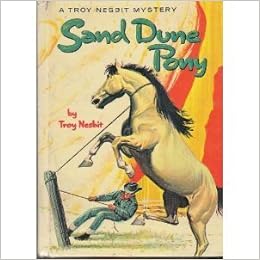
Sand Dune Pony— a retro review

Sand Dune Pony, by Troy Nesbit was one of my “annual reads” when I was a kid. The reader must suspend disbelief rather a lot, but I re-read it recently, and I still enjoyed it. Yes, there was a bit of nostalgia for me, but the story is fun.

When I perused a few reviews on Goodreads, I saw that some folks had the same affection for this little yarn that I have, while others took a modern view and were either skeptical or horrified. The plot, which is nothing like the AI garbage on big A’s site, is simple: A youngster named Pete has come to spend the summer at his uncle’s large ranch in Colorado. Pete had been looking forward to having his own horse for the summer, along with the promise of learning how to be a real cowpoke. However, his Uncle Lem and Aunt Clara lost their barn to a fire, so Lem has had to sell off almost all of his horses to cover the cost of replacing it. Pete is stuck doing chores and watching one of Lem’s hands try to break a stubborn horse, because there is no horse available for him to ride.

Kids have shorter attention spans, so Nesbit’s narrative moves swiftly. A new character, Hatsy, enters the picture in the second chapter, and the older gentleman takes an interest in Pete and his situation. Hatsy offers to take Pete along on a fishing trip, which Lem and Clara agree to, but the goal is not just catching fish. No, Hatsy has in mind catching a horse for Pete. No spoilers, but there’s a mystery interwoven with the finding a horse for Pete plot, and there is enough suspense to keep the pages turning.

Being somewhat chronologically gifted myself, I know that kids were not nearly as sheltered in the era of this tale as kids are today. Probably not many parents would allow an underage child do most of the things that happen in this book in the time it was written, and certainly not modern parents. No, today, Pete would have to play video games on an iPad and wait for Uber eats to deliver, instead of camping beside an old-fashioned covered wagon, eating canned corned beef warmed over a fire, while planning to capture a wild horse with a septagenarian mentor. Fortunately for the reader (and Pete) things were different in back then, and there are many details about the West, horses, and people sprinkled into the story. In short, this is an adventure, and safety isn’t much of a consideration.

Parents or grandparents could read this one aloud to younger kids, or just hand it to a third (or later) grade student. There’s a Kindle version available on big A’s website, for that kid who has a tablet instead of a horse. My daughter bought me a copy off of eBay, as a gift, when we were talking about books that we had enjoyed as children.

Honestly, I was amazed that the one I got looked so good, considering the 1952 copyright. Whitman Publishing books were inexpensive items for kids, so the quality of the binding and pages lacks that heirloom feel! While the cover looks good, the pages are darkened with age and crumble on the edges if the reader isn’t careful. This is an old book! There are several cover art versions, but I chose to display the cover on the book I lost decades ago, rather than the one I received.

When All Bleeding Stops—a brief review

All Bleeding Stops is a mostly autobiographical book written by an experienced trauma surgeon, Stephen M. Cohn. During the course of the book, the reader learns how a trauma surgeon differs from other surgeons, how being a military doctor influenced the author, and quite a bit about the different ways that people end up in an emergency room. Chapter titles include “What Exactly is a Trauma Surgeon” and “Dealing with the Worst Injuries” which are the main focus of the book, but the author also has chapters on “Preventing Injuries” and “Managing the Public” which includes the author being involved in a high profile case.

I chose this title, in part, due to a mishap wherein I ended up in an ER and had orthopedic surgery. As Dr. Cohn says, patients choose elective surgeons and develop a bit of a relationship prior to their procedure, but in an emergency, whoever is on call becomes the doctor. I certainly didn’t choose the guy who rebuilt my shoulder, as I certainly didn’t plan to break it into four pieces! Anyway, I identified with some of the patients described in this book.

While I’d like to say this is a five star read, the not-so-linear organization takes it down a notch for me. That said, I really enjoyed this book, as it provides many anecdotal stories about trauma surgery, not only those performed by the author, but also those he heard about from colleagues. Many of the cases described survive, but there are those who don’t make it, and there is a certain dispassionate tone in this narrative. That’s not intended as criticism, but an acknowledgement that doctors who deal with trauma must maintain some distance in order to remain sane.

Again, I enjoyed reading this book, and for those who want to know more about how lives are saved and people put back together after terrible trauma, this book is quite enlightening.