Missing Author?

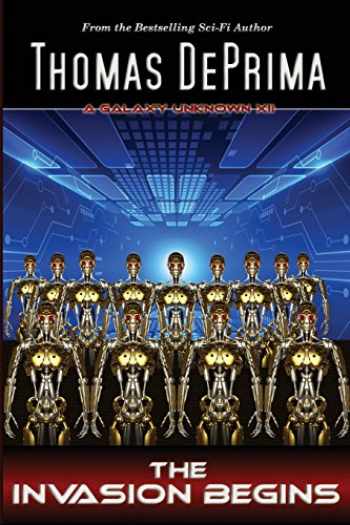
Recently, I re-read the Thomas DePrima novels I had purchased as eBooks, namely, the first nine of twelve titles in the A Galaxy Unknown” series. Gosh, I had forgotten much of the detail, but I remembered that I really enjoyed them. As certain television series benefit from “binge watching”, such as Breaking Bad, I realized that reading those nine novels back to back was great fun, so I sought the other books in the series and found them on Apple’s reading app. I just finished the 12th book, which, darn it, ends with a cliff-hanger. Thus, I have two mysteries. First, how do Jenetta and Space Command once again save the known galaxy, and, second, what happened to Thomas DePrima? According to the end of book 12, The Invasion Begins, the adventure will continue, but that book was published almost a decade ago. According to my web research (thank you AI) DePrima hasn’t published anything since 2019.

For those who haven’t read this nifty space opera series, I reviewed some of these novels when I first read them, and those entries are summarized earlier in this blog.

Thomas DePrima’s A Galaxy Unknown series is a classic space opera infused with modern indie flair. Spanning twelve main novels (plus spin-offs like the Border Patrol and Colton James sub-series), it follows the meteoric rise of Jenetta Carver, a sharp, disciplined young Space Command officer whose destiny is nothing short of galactic. The series has an action packed beginning, with a few flaws in the writing, but nothing that keeps most readers from swiping those electronic pages to find out what will happen next. There’s enough science fiction to keep fans of that genre entertained, but the writing is not so technical that every day readers who enjoy a strong female character can’t enjoy each book. As the series goes on DePrima’s universe is ever more expansive and detailed. From the political tensions between Galactic Alliance sectors to the looming threats of alien species and interstellar crime syndicates, the author builds a rich backdrop for military intrigue and diplomacy.

The series isn’t without some minor imperfections, especially as the series progresses: some plotlines feel recycled—Jenetta foils yet another plot, saves the day, and gets another promotion. Her near-infallibility can reduce the suspense. Not since the video game version of Lara Croft has a female lead seemed so invincible. However, if you’re a fan of David Weber’s Honor Harrington, any early iteration of Star Trek, or any tale of righteous command in deep space, A Galaxy Unknown and its eleven sequels offers a satisfying and immersive experience. 

That said, I wonder what happened to Thomas DePrima. According to Goodreads, he has over 20 books available, and most of them rate above 4 (out of 5) stars, with thousands of reviews of the earlier books, and hundreds for the later titles, which is amazing for an indie author. Various sources speculate that DePrima is a pen name (not so unusual) so maybe he has passed. Or, maybe he got tired of writing. Maybe he pivoted to another name and a new set of books. I have no idea, but I do wish that the series had some sort of denouement. Jenetta Carver and company are too cool to just leave hanging.

Where are you, Thomas DePrima?
Sand Dune Pony— a retro review

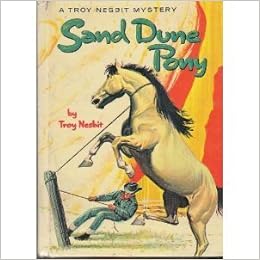
Sand Dune Pony, by Troy Nesbit was one of my “annual reads” when I was a kid. The reader must suspend disbelief rather a lot, but I re-read it recently, and I still enjoyed it. Yes, there was a bit of nostalgia for me, but the story is fun.

When I perused a few reviews on Goodreads, I saw that some folks had the same affection for this little yarn that I have, while others took a modern view and were either skeptical or horrified. The plot, which is nothing like the AI garbage on big A’s site, is simple: A youngster named Pete has come to spend the summer at his uncle’s large ranch in Colorado. Pete had been looking forward to having his own horse for the summer, along with the promise of learning how to be a real cowpoke. However, his Uncle Lem and Aunt Clara lost their barn to a fire, so Lem has had to sell off almost all of his horses to cover the cost of replacing it. Pete is stuck doing chores and watching one of Lem’s hands try to break a stubborn horse, because there is no horse available for him to ride.

Kids have shorter attention spans, so Nesbit’s narrative moves swiftly. A new character, Hatsy, enters the picture in the second chapter, and the older gentleman takes an interest in Pete and his situation. Hatsy offers to take Pete along on a fishing trip, which Lem and Clara agree to, but the goal is not just catching fish. No, Hatsy has in mind catching a horse for Pete. No spoilers, but there’s a mystery interwoven with the finding a horse for Pete plot, and there is enough suspense to keep the pages turning.

Being somewhat chronologically gifted myself, I know that kids were not nearly as sheltered in the era of this tale as kids are today. Probably not many parents would allow an underage child do most of the things that happen in this book in the time it was written, and certainly not modern parents. No, today, Pete would have to play video games on an iPad and wait for Uber eats to deliver, instead of camping beside an old-fashioned covered wagon, eating canned corned beef warmed over a fire, while planning to capture a wild horse with a septagenarian mentor. Fortunately for the reader (and Pete) things were different in back then, and there are many details about the West, horses, and people sprinkled into the story. In short, this is an adventure, and safety isn’t much of a consideration.

Parents or grandparents could read this one aloud to younger kids, or just hand it to a third (or later) grade student. There’s a Kindle version available on big A’s website, for that kid who has a tablet instead of a horse. My daughter bought me a copy off of eBay, as a gift, when we were talking about books that we had enjoyed as children.

Honestly, I was amazed that the one I got looked so good, considering the 1952 copyright. Whitman Publishing books were inexpensive items for kids, so the quality of the binding and pages lacks that heirloom feel! While the cover looks good, the pages are darkened with age and crumble on the edges if the reader isn’t careful. This is an old book! There are several cover art versions, but I chose to display the cover on the book I lost decades ago, rather than the one I received.

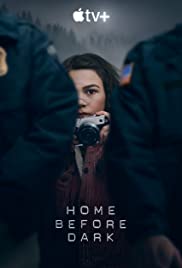
Home Before Dark—television for October or any time you want a mystery

After buying a new iPad, I got a freebie subscription to AppleTV and we’ve watched a couple of good things. However, my husband and I were both surprised by the appeal of “Home Before Dark,” which has a description that sounds a lot like Harriet the Spy blended with a modern gothic mystery. The first episode shows promise, but by the third, we were in “gotta see more” mode. Series television shows often have difficulty maintaining suspense, but this one does a darned good job of it.

Basically, the story follows an investigative reporter in New York, who has lost his job, and moves his family back to his hometown (and home) because his dad has had to move to a facility due to illness. As the family is in some financial distress, they have come to this small town because the house is free. The wife is a former public defender, and the couple has three daughters. The middle daughter has always wanted to be just like her dad, and she likes to carry a notebook and ask a lot of pointed questions. Before long, this daughter has found a cold case that dates back to her dad’s childhood, solved at the time by convicting a scapegoat whom the child comes to believe as innocent, and she emulates her dad by asking lots and lots of questions.

While I don’t want to spoil the story for potential viewers, suffice it to say that dad and mom get drawn into the investigation, while the older and younger daughters suffer the consequences of the backlash which comes from the townspeople, who don’t welcome the revival of interest in the case, which gets hotter with each episode.

Home Before Dark isn’t a show for kids, although older ones might enjoy the story, despite the nine year old point of view character. The script, the acting, and the setting are all top drawer, so ignore the “kiddy show” description, and enjoy a very good mystery leading up to Halloween!

Resources for Readers

DaVinciWhat to read? When I was young (a very long time ago) my mother took my sisters and me to visit the public library every week. This was “free” entertainment, and as we were fairly poor, it was a great deal. However, there was that day when I’d read everything of interest to me in the children’s and young readers category. Again, this was a long time ago, when “young adult” publications were not a big category. I remember her guiding me over to the adult fiction section (meaning not for kids, but nothing racy—it was a public library) and she suggested some titles. My first reads from that section were what mom would term “mysteries” although romantic suspense would be closer to the genre of that time. The authors were Phyllis A. Whitney and Mary Stewart, although I can’t remember the titles. So began my transition into reading for pleasure, an activity that is still a big part of my life.
Mom has been gone for a long time, as she had cancer and died before she should have, but there are plenty of other places to find recommendations for reading. I do belong to way too many Facebook Groups, and most of those have advertising that I largely ignore. For a time, Amazon was my favorite place to find books, and while it is a source for content, the weirdo reviews have made it less and less reliable for recommendations. Also, big A encourages authors to buy ads, making it even less relevant. If you are lonely and want to be inundated by promotional emails, there are lots of sites that promote books via that route, but by and large that content comes from paid ads, so it’s not reliable either. I read a lot of eBooks these days, and my public library has a few thousand titles, but I’ve noticed that far too many of them are “reprints” wherein established authors are giving their backlist titles new life, and I have either read those books are wasn’t interested the first time. So, what to do?

There are some solutions. First, check out Goodreads. It’s now owned by Amazon, but it seems to work quasi-independently from big A, so the reviews are more often by serious readers. Authors can have a “page” on Goodreads, too, which can be helpful. If you like a certain genre, typically there are blogs that feature books of interest. As a lover of science fiction romance, I like this blog: SFR Brigade. Some authors maintain a blog or a Facebook group, so check on a favorite writer’s web presence. Often writers will mention fellow writers or their own favorite reads. I’ve really enjoyed Susan Grant’s books and her blog, Come Fly with Me (now found via her website).

In addition to big A, readers sometimes leave reviews on traditional bookstore sites such as Barnes and Noble and Books a Million. As these sites primarily serve readers, the reviews tend to be written more literate customers. There may be fewer reviews, but I believe they are more reliable.

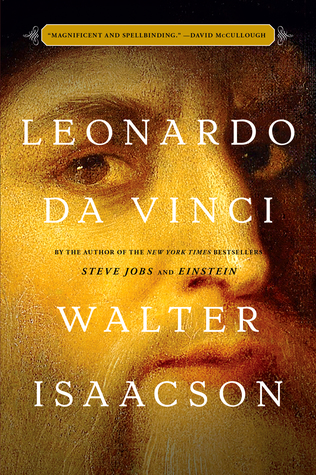
Also, if you know others who like to read, try forming a book club. My sister belongs to such a club, and members propose which books to read. She’s given me some suggestions of books that were well-received by her group, such as my current read: DaVinci, by Walter Issacs. It’s fascinating, and I would never have chosen it without the recommendation of that group over in Richmond, Virginia.


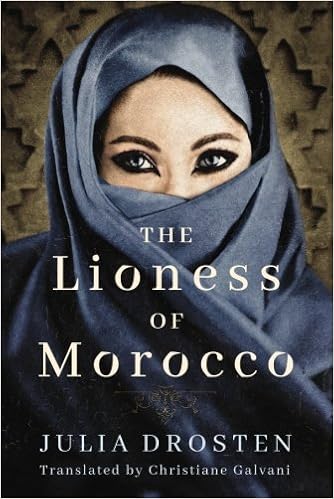
The Lioness of Morocco— review

The Lioness of Morocco is quite a saga. I mean that in a positive way, but some readers may not be ready for a yarn that covers this many years. I, on the other hand, relished it, like a home cooked meal after a long stint of eating fast food.

This story reminds me of the “mini-series” that were once a staple of television networks: a multi-part yarn that covers much of the adult life of an interesting main character, often with a lengthy list of co-stars. Such sagas usually combined romance, suspense, and mystery, and The Lioness of Morocco does that fairly well. The protagonist, Sibylla Spencer, is a good (if not fabulous) character, sufficiently well developed that readers should want to follow along with her travels and travails. Although the story begins in England, before long her adventuresome nature, combined with her father’s shipping business, leads her and her new husband to Mogador, Morocco, where she grows into an even more bold woman, sometimes called “The Lioness” in part due to her mane of golden hair.

< a few spoilers follow>

As an Englishwoman, Sibylla could either cling to all things British, from her clothing and her companions, to her language. Or, she could learn more about the Moorish population, learn their language, and (perhaps) do a bit of business with them. She follows the second course of action, which does cause her more straight-laced neighbors to be a bit put out with her. However, she is well-mannered and well-bred and manages to keep both sides of her world reasonably happy with her most of the time.

The novel is set in a tumultuous time, so there are plenty of plot twists, but the reader is never rushed, as this story happens over a number of years. Much of the Moroccan culture is revealed via detailed descriptions, which I genuinely enjoyed. Several crises occur, from the time her husband is accused of trafficking slaves to being the family being involved in trade wars and political wars. However, Sibylla and her children seem to rise to the occasion, whatever comes their way.

I did find this to be a very satisfying novel, rich in history and culture, if not a compelling read. For anyone who hasn’t enjoyed a saga recently, I suggest this novel. It is available as a paperback and in eBook form.