Missing Author?

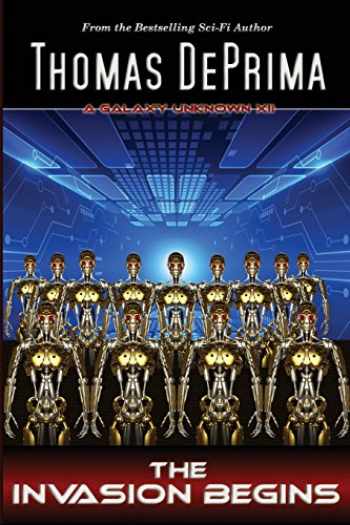
Recently, I re-read the Thomas DePrima novels I had purchased as eBooks, namely, the first nine of twelve titles in the A Galaxy Unknown” series. Gosh, I had forgotten much of the detail, but I remembered that I really enjoyed them. As certain television series benefit from “binge watching”, such as Breaking Bad, I realized that reading those nine novels back to back was great fun, so I sought the other books in the series and found them on Apple’s reading app. I just finished the 12th book, which, darn it, ends with a cliff-hanger. Thus, I have two mysteries. First, how do Jenetta and Space Command once again save the known galaxy, and, second, what happened to Thomas DePrima? According to the end of book 12, The Invasion Begins, the adventure will continue, but that book was published almost a decade ago. According to my web research (thank you AI) DePrima hasn’t published anything since 2019.

For those who haven’t read this nifty space opera series, I reviewed some of these novels when I first read them, and those entries are summarized earlier in this blog.

Thomas DePrima’s A Galaxy Unknown series is a classic space opera infused with modern indie flair. Spanning twelve main novels (plus spin-offs like the Border Patrol and Colton James sub-series), it follows the meteoric rise of Jenetta Carver, a sharp, disciplined young Space Command officer whose destiny is nothing short of galactic. The series has an action packed beginning, with a few flaws in the writing, but nothing that keeps most readers from swiping those electronic pages to find out what will happen next. There’s enough science fiction to keep fans of that genre entertained, but the writing is not so technical that every day readers who enjoy a strong female character can’t enjoy each book. As the series goes on DePrima’s universe is ever more expansive and detailed. From the political tensions between Galactic Alliance sectors to the looming threats of alien species and interstellar crime syndicates, the author builds a rich backdrop for military intrigue and diplomacy.

The series isn’t without some minor imperfections, especially as the series progresses: some plotlines feel recycled—Jenetta foils yet another plot, saves the day, and gets another promotion. Her near-infallibility can reduce the suspense. Not since the video game version of Lara Croft has a female lead seemed so invincible. However, if you’re a fan of David Weber’s Honor Harrington, any early iteration of Star Trek, or any tale of righteous command in deep space, A Galaxy Unknown and its eleven sequels offers a satisfying and immersive experience. 

That said, I wonder what happened to Thomas DePrima. According to Goodreads, he has over 20 books available, and most of them rate above 4 (out of 5) stars, with thousands of reviews of the earlier books, and hundreds for the later titles, which is amazing for an indie author. Various sources speculate that DePrima is a pen name (not so unusual) so maybe he has passed. Or, maybe he got tired of writing. Maybe he pivoted to another name and a new set of books. I have no idea, but I do wish that the series had some sort of denouement. Jenetta Carver and company are too cool to just leave hanging.

Where are you, Thomas DePrima?

When All Bleeding Stops—a brief review

All Bleeding Stops is a mostly autobiographical book written by an experienced trauma surgeon, Stephen M. Cohn. During the course of the book, the reader learns how a trauma surgeon differs from other surgeons, how being a military doctor influenced the author, and quite a bit about the different ways that people end up in an emergency room. Chapter titles include “What Exactly is a Trauma Surgeon” and “Dealing with the Worst Injuries” which are the main focus of the book, but the author also has chapters on “Preventing Injuries” and “Managing the Public” which includes the author being involved in a high profile case.

I chose this title, in part, due to a mishap wherein I ended up in an ER and had orthopedic surgery. As Dr. Cohn says, patients choose elective surgeons and develop a bit of a relationship prior to their procedure, but in an emergency, whoever is on call becomes the doctor. I certainly didn’t choose the guy who rebuilt my shoulder, as I certainly didn’t plan to break it into four pieces! Anyway, I identified with some of the patients described in this book.

While I’d like to say this is a five star read, the not-so-linear organization takes it down a notch for me. That said, I really enjoyed this book, as it provides many anecdotal stories about trauma surgery, not only those performed by the author, but also those he heard about from colleagues. Many of the cases described survive, but there are those who don’t make it, and there is a certain dispassionate tone in this narrative. That’s not intended as criticism, but an acknowledgement that doctors who deal with trauma must maintain some distance in order to remain sane.

Again, I enjoyed reading this book, and for those who want to know more about how lives are saved and people put back together after terrible trauma, this book is quite enlightening.

Inside Marine One by Colonel Ray L’Heureux

While I seldom read biography, when I do, I usually really enjoy it. Marine One: Four U.S. Presidents, One Proud Marine, and the World’s Most Amazing Helicopter is a really good read. The author, a retired Marine, knows his subject matter, of course, but the book’s organization, which is both linear yet focused, helps make it an engaging read.

After an opening which describes the “victory lap” circling Washington on Inauguration Day, which is a taste of one of the final “missions” that the author participated in, the usual chronological approach takes the reader back to the time when the author’s love of flying helped him choose a career path. Lacking the funds to pursue a private education in aviation, Ray L’Heureux (call sign “Frenchy”) decides to join the Marine Corps as a pilot. During his very successful training, he decides to fly helicopters rather than jet aircraft, which most of his fellow Marines sought as their specialty. While on duty in California, Frenchy is in the audience gathered to see President Reagan land at his base. As he is impressed with this unit, Frenchy decided that he wanted a tour of duty with HMX-1, which is the name of the part of the Marine Corps which provides helicopter transportation for the President.

L’Heureux actually served in HMX-1 twice during his thirty year career in the Marines, hence the “Four Presidents” in the sub-title. He was a junior officer during the Bush 41 and Clinton administrations, meaning that he was part of the group that planned the helicopter trips (called “lifts”) and occasionally flew as co-pilot for dignitaries. L’Heureux returned as commander of HMX-1 during the presidency of George W. Bush, with whom Frenchy became friends. When Bush 44’s term was over, the author was still the commander of HMX-1, thus he flew the Obamas for a few months before his assignment ended and the reins of HMX-1 went to another Marine pilot.

While not overly technical, L’Heureux lets the reader know quite a lot about how helicopters work. The focus of the book is on HMX-1 and their two sorts of helicopters, all painted dark green with white on the top, but the author also flew in other types of helicopters with other missions, and that’s of interest. However, the “inside” view is largely about how the military goes to great lengths to insure both the safety, comfort, and efficiency in providing transportation for the President, the Vice President, and heads of state of visiting nations. Whether the reader knows much about helicopters, the military, or just recent history, or not, there’s something for everyone in Frenchy’s book. According to the author, President Eisenhower was the first U.S. President to use helicopters for day to day transportation, as it was faster and far more convenient for everyone. Motorcades require a number of security measures, which, of course, takes time and impacts traffic. When the President boards one of the “white top” helicopters, he can be where he needs to be more quickly, and traffic is unimpeded. So, since Eisenhower, most Presidents have relied upon Marine One for quite a lot of their transportation, whether going to Andrews to board Air Force One, or just a short trip to the Presidential retreat, Camp David.

One of the aspects that I found quite interesting were the stories about Camp David, which is a 45 minute ride from the White House via helicopter. The author describes playing “Wallyball” with Bush 41. Later, L’Heureux, both an athletic guy and a Marine, was invited to ride mountain bikes with Bush 44, and that experience began their friendship. During his time of flying George W. Bush, the author was frequently at the ranch in Crawford, Texas, and helped build a bike trail on the ranch.

Another interesting aspect of the book is that when the U.S. President travels abroad, the helicopters go over first, so that the President is always flown by Marine pilots. The effort necessary to dismantle, load, unload, and reassemble and then test the helicopters before the arrival of the President is a bit mind boggling. In his memoir, L’Heureux describes flying Marine One over Normandy for D-Day anniversaries, landing in Germany so the President could meet with Angela Merkle, and even landing at Windsor Castle, so the President could have tea with Queen Elizabeth.

For readers who enjoy history, insider information, or just an entertaining read, do check out Inside Marine One.

Last Stand series by William Weber—review and commentary

Last Stand: The Complete Box Set

From time to time, I’m offered a “box set” of eBooks, which strikes me as funny as there is obviously no box, just a longer than normal eBook. While these often seem to be great values, I seldom read an entire series. Last Stand is different, because I did indeed read all four books, and while I enjoyed them, I liked each one a little less, but that’s just me and what I Prefer to read, rather than any flaws in the books themselves.

Book one, Surviving America’s Collapse, was so suspenseful that I read it in less than 24 hours. Apparently survivalist/prepper books are a sub-genre, but this is my first such book. Viewed simply as fiction, readers might be annoyed, as the narrative often becomes pedantic, teaching survivalist techniques to the reader, but I rather enjoyed those segments. In short, the story begins with the hero, former Army officer John Mack, being the only guy in his neighborhood who understands that the vehicles, phones, and other conveniences aren’t working because some entity set off an “EMP” device. Mack rescues his wife, then his children, thinking they will soon retreat to his survivalist hideaway cabin, but his wife convinces him to remain in their neighborhood, to assist their friends. This proves to be increasingly difficult, as resources dwindle and nefarious elements attempt to takeover their community.

Book two, Patriots, begins in the second setting, the Mack family hideaway. The canvas of conflict widens a bit in this book, as Mack realizes the scope of the attack upon America, and feels the need to take up arms not just to defend his family, but his country. Book three, Warlords, is a bit darker in tone, as the forces behind the attack upon America begin divvying up the country. Book four, Turning the Tide, is on a grander scale, as Mack is one cog in the military effort to fight back against the foreign powers that seem to have figured out how to conquer the United States.

Each of these books has a fictional story, but invariably the author uses his story to also instruct the reader. Those who like lots of details about the military and/or weaponry might like these books more than I did, but I did enjoy them. Some of the characterizations are fairly stereotypical, and sometimes the main characters are able to overcome situations which would probably be hopeless without the assistance of the author. So, suspending one’s disbelief a bit is a necessary skill for staying with the series. Still, the suspense is sufficient to keep the reader turning the pages.

Survivalists, military buffs, and those who enjoy suspense will all find something to like in Last Stand. As of this post, the price for the eBook set is three bucks, which is a down payment on a hamburger! I can’t think of anything as entertaining as these books for that price, so take a look. These books are also available in paperback and as audio books, and all have hundreds of ratings on Goodreads, mostly 4-5 stars.

Trinity is Free for Three (days)

Beginning at midnight on July 14, the giant-sized internet seller of books and other sundries will be offering the eBook version of my science fiction novel, Trinity on Tylos, for free! I’ve seldom used this option, but as their Prime Day promotions will be going on, I thought I might get a few people to download it. If I’m really lucky, I might get another positive review, too. Anyway, here’s the book cover; just click for a link to the sale.

ToT_cover_final_webLG

Here’s an excerpt of my favorite review of the novel:

TRINITY ON TYLOS… is instead a thought-provoking book that will challenge one’s beliefs about the importance of motherhood, duty, and sacrifice. At times, the choices made by Venice and even Allie are ones the reader will disagree with and perhaps even be angered by them. However, one of the trademarks of a well-written novel is its ability to inspire others to debate. TRINITY ON TYLOS accomplishes this and so much more. Pamela J. Dodd has truly demonstrated her gift as a writer with this stunning book.” —

The Apocalypse Troll by David Weber

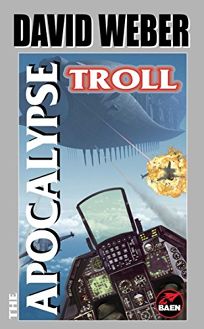
TrollI’ve been re-reading some titles that I have in my “Nook” library, as I am unsure of what will happen with that since Barnes and Noble has sold out. One of my all time favorite science fiction authors is David Weber, who is best known for his series writing, especially the books about Honor Harrington. However, early in his career he wrote a few stand alone books, including The Apocalypse Troll. It’s a thrilling story, well told, and very much showcases Weber’s knowledge of military tactics and the geography of North Carolina.

As the story opens, Colonel Ludmilla Leonova is assigned the task of attacking an instrument of the dreaded “Kangas” a Troll, slang for a human brain in a mechanized body. This brain, conditioned to fight and kill humans, is not quite indestructible, but very close. Leonova is both brave and determined, however. She’ll seek and destroy this enemy of humanity, through space and time itself.

Thus, Leonova ends up on earth in the year 2007, and as this book was released in 1999, a near future story when it was written. After her fighter crashes, she is rescued by Captain Dick Ashton, who is incredulous, but convinced by her steady demeanor and the advanced tech of her space suit and weapon that she had indeed traveled back in time in pursuit of a malevolent enemy. This sounds as if it very much strains the concept of suspended disbelief, but the captain also convinces the upper echaleons of United States military and the President himself that Leonova is who she says she is, and that the Troll is somewhere on the planet, ready to wreak havoc on humanity. Weber does this quite skillfully, introducing a panoply of characters, one of his trademarks.

All sorts of military hardware and personnel are put into play as the Troll uses a less than honorable religious leader to whip susceptible citizens of the southeastern U.S. into angry mobs, and western North Carolina becomes the battleground.

Weber’s story is a good one, and the reader isn’t left with that sense of “what next?” that accompanies series books. For fans of David Weber, this story is a treat, and for readers who haven’t yet read any of his military fiction, it is a good introduction. The book is still available used and an an eBook from the publisher, as well as other sources.