Missing Author?

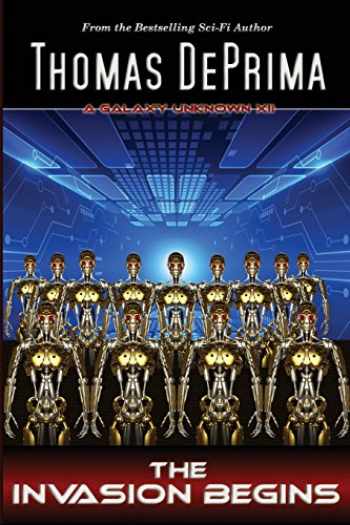
Recently, I re-read the Thomas DePrima novels I had purchased as eBooks, namely, the first nine of twelve titles in the A Galaxy Unknown” series. Gosh, I had forgotten much of the detail, but I remembered that I really enjoyed them. As certain television series benefit from “binge watching”, such as Breaking Bad, I realized that reading those nine novels back to back was great fun, so I sought the other books in the series and found them on Apple’s reading app. I just finished the 12th book, which, darn it, ends with a cliff-hanger. Thus, I have two mysteries. First, how do Jenetta and Space Command once again save the known galaxy, and, second, what happened to Thomas DePrima? According to the end of book 12, The Invasion Begins, the adventure will continue, but that book was published almost a decade ago. According to my web research (thank you AI) DePrima hasn’t published anything since 2019.

For those who haven’t read this nifty space opera series, I reviewed some of these novels when I first read them, and those entries are summarized earlier in this blog.

Thomas DePrima’s A Galaxy Unknown series is a classic space opera infused with modern indie flair. Spanning twelve main novels (plus spin-offs like the Border Patrol and Colton James sub-series), it follows the meteoric rise of Jenetta Carver, a sharp, disciplined young Space Command officer whose destiny is nothing short of galactic. The series has an action packed beginning, with a few flaws in the writing, but nothing that keeps most readers from swiping those electronic pages to find out what will happen next. There’s enough science fiction to keep fans of that genre entertained, but the writing is not so technical that every day readers who enjoy a strong female character can’t enjoy each book. As the series goes on DePrima’s universe is ever more expansive and detailed. From the political tensions between Galactic Alliance sectors to the looming threats of alien species and interstellar crime syndicates, the author builds a rich backdrop for military intrigue and diplomacy.

The series isn’t without some minor imperfections, especially as the series progresses: some plotlines feel recycled—Jenetta foils yet another plot, saves the day, and gets another promotion. Her near-infallibility can reduce the suspense. Not since the video game version of Lara Croft has a female lead seemed so invincible. However, if you’re a fan of David Weber’s Honor Harrington, any early iteration of Star Trek, or any tale of righteous command in deep space, A Galaxy Unknown and its eleven sequels offers a satisfying and immersive experience. 

That said, I wonder what happened to Thomas DePrima. According to Goodreads, he has over 20 books available, and most of them rate above 4 (out of 5) stars, with thousands of reviews of the earlier books, and hundreds for the later titles, which is amazing for an indie author. Various sources speculate that DePrima is a pen name (not so unusual) so maybe he has passed. Or, maybe he got tired of writing. Maybe he pivoted to another name and a new set of books. I have no idea, but I do wish that the series had some sort of denouement. Jenetta Carver and company are too cool to just leave hanging.

Where are you, Thomas DePrima?
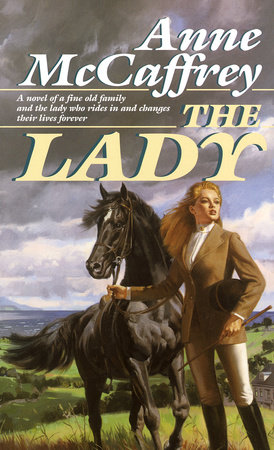
The Lady by Anne McCaffrey

Quite a while back, I decided to avoid writing reviews of living authors’ books, unless the author was either very famous (too famous to care what I thought) or dead. Anne McCaffrey is both super famous and dead. I’ve read several of her books, including some co-authored, but generally in her typical genre: science fiction. However, my daughter found this novel in her quest to find nifty vintage books, so she’s the reason I read The Lady.

I rather liked the retro feel of the novel, from the cover art to the characterizations to the plot. The novel is set in 1970, but according to the flyleaf, this book was originally published in 1987. The style seems more 70s than 80s, and that might be “off-putting” for modern readers. This is more of a “saga” than a typical novel, which was popular in the days of the mini-series on television.

Another aspect of the story is that it is about people who are seriously into horses. McCaffrey helps the reader with a glossary in the beginning of the book, which covers some Irish terms and some horse related terms, which helps a bit. The cast of characters (both human and horses) is sweeping, along with the names of the various horse shows. There’s a lot to keep up with, but the reader is rewarded with being able to escape into another time, when the telly was only briefly mentioned, and phones were attached to a wire.

The point of view character is Catriona Carradyne, a thirteen year old girl, who loves horses, which is both a blessing, because her father breeds, shows, and trains horses; and a curse, because her mother loathes horses and wants Catriona to grow up into a young lady. The setting, as I mentioned previously, is Ireland in 1970. One of the clients that boards her horse with the Caradynes, is Selena Healey, a stylish younger woman, who befriends Catriona, and mentors her through a very eventful time in her young life.

No spoilers here, I hope, but this novel is not just about horses, or about coming of age, although both of those are central to the story. There’s also loveless marriages and expectations of society and family. Some of the characters are well drawn, while others are mostly stereotypes, and the novel doesn’t move swiftly, nor is it filled with twists and turns. Nope, it is fairly predictable. The reader can figure out what will happen fairly early, so it is more “how” is the plot going to turn out rather than “what” will happen.

I can’t say this is the best book I’ve read lately, but it certainly kept me turning the pages. And, there’s that nice vintage feel about it, like listening to music from the 70s and 80s.

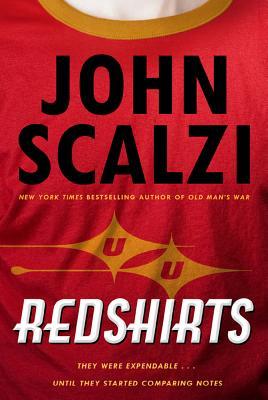
Redshirts by John Scalzi—a brief review and commentary

Fans of Star Trek, the original series, will immediately understand the premise of this very humorous novel. For the few folks who aren’t familiar with the show, there were a handful of officers who were the “stars” of Star Trek. In the show, the starship ventured from planet to planet. Often, one or more officers left the ship on “away” missions, and they were almost always dangerous. Those bridge officers were usually accompanied by security officers, and in the color scheme of the original series, security staff wore red shirts. As the show couldn’t lose any main cast members, the extras, playing security staff, would invariably be the ones to be maimed or killed.

In Redshirts, the author follows a young officer assigned to the Intrepid, the flagship of the Universal Union. Ensign Dahl is thrilled to be onboard, but soon becomes apprehensive, because he quickly realizes that when lowly crew members accompany the captain, its chief science officer, or its chief engineer, those lowly crew members would bear the brunt of any dangerous action. In other words, Ensign Dahl is a “red shirt” without actually wearing a red uniform. So, as a very intelligent young officer, Dahl must navigate the command structure of the Intrepid and learn how to stay alive. Quickly, he figures out that it is best to be anywhere other than on an “Away Mission.”

At times, Redshirts is laugh out loud funny. For instance, any attack on the ship will take out the lower decks, but the bridge always remains unscathed. And one young lieutenant has so many close calls, but he never dies, as he is a “main character.” Soon it becomes apparent that only a few characters will always survive. More experienced crew members seem to have figured out how to dodge being tapped for away missions, thus newbies like Ensign Dahl are more likely to end up dead. Rather than explain what they do and what the manage to figure out, I will simply say that the novel goes where the reader might not expect. And, while the novel really is funny, it is also a bit challenging.

Not since Galaxy Quest have I seen such a good parody of television space opera. Fans of the genre will certainly find something to like in Redshirts. And, for those few folks who have never seen Star Trek in any of its various iterations, this novel is still funny, but probably won’t resonate quite so well. However, the novel is rather, well, novel in that it doesn’t end at the end. Instead there are three sections after the end, called Codas. Some reviewers liked them, some did not. Hopefully, some of my readers will take up the challenge and try this book.

Science fiction fans tend to be smart, and it takes some smarts to appreciate this novel. That said, it is quite creative.

The Functional. Fragment. Celebrated. Or reviled.

ARC5Claimed (which may or may not also have the title of Rescued) came to me as an advanced review copy (ARC) which I read recently for a review site. Actually, I am glad to have the opportunity to review again, as it has been quite a while since I’ve done this. Most such sites really want a positive review, and I have written one. My comments for the site are true but censored a bit. What you’ll read here is more genuine.

First of all, sometimes minor mistakes are in an ARC, and I certainly understand that. The author used “fussed” for “fussy” for instance. That’s the kind of minor mistake that should be corrected before the final book is published. This book is a science fiction romance, with the emphasis on romance. For me, science fiction should have a bit science, but in Claimed/Rescued there aren’t many science fiction elements, apart from characters (lots of aliens) setting (a spaceship and a space station) and plot (alien abduction.) Apart from vivid descriptions of aliens, the other elements are not especially detailed.

Romance comes in several flavors these days, from very hot (nearly pornographic) to sweet (think Amish stories that talk about feelings rather than body parts.) Claimed/Rescued is skewed well on the sexy side of the continuum. For those who read romance for vicarious sex, this novel is a winner. From a science fiction standpoint, this yarn disappoints a bit. Okay, I don’t have to know how the ship goes or how the remote control on her wicked slave collar works, but a little more detail concerning the gadgets would be welcome. The most sci fi part of the book is the afore mentioned vast array of aliens, and those are described in varying levels of detail.

For me, the most annoying aspect of the book was the author’s reliance upon the “functional fragment.” Of course, lots of dialogue depends on the functional fragment. Think about one side of a phone conversation:

“Hey!”

“Oh yeah.”

“Really?”

“No kiddin’!”

I have no problem with the construction in that context. But. This author. Tends to write. Like. This. The words shared in this manner tend to be feelings or observations, such as “Handsome.” “Kindness.” “To Bond.” “To become as one.” “Tenderness.” “Aroused.” “Stay strong.” “Traumatized.” “Wary.” “Forever.” Y’all, I just listed a few of the functional fragments. Every once in a while, this could be an effective technique, but Claimed/Rescued is far too reliant upon these pseudo sentences.

No doubt Claimed/Rescued will be published, and there will be enough positive reviews that some science fiction romance fans will read it. And, those who want to experience sex vicariously may well enjoy it. But. All I seem to remember. Are. Those. Fragments.

Infinity Lost— a quick review

I’m in the midst of a semester of teaching writing, and I generally read and write less when faced with lots of student papers. However, I did spend a couple of evenings with Infinity Lost by S Harrison. The main character is Finn, the only child of a reclusive industrial tycoon. Finn is an innocent, but as the story unfolds, she is not just a teenage girl. Certainly, science fiction is a favorite genre, and this entry by a new-to-me author is quite interesting.

There are some neat concepts in this story. At times, it was a bit confusing, but mostly, the author does a very good job of describing interesting technology. there is quite a bit of suspense, too. Actually, I began thinking that this novel reads well, but it might be a better screen play than a novel. It is the first entry in a trilogy, and I suppose there might be a film in the making.

Unbroken– the book (review and commentary)

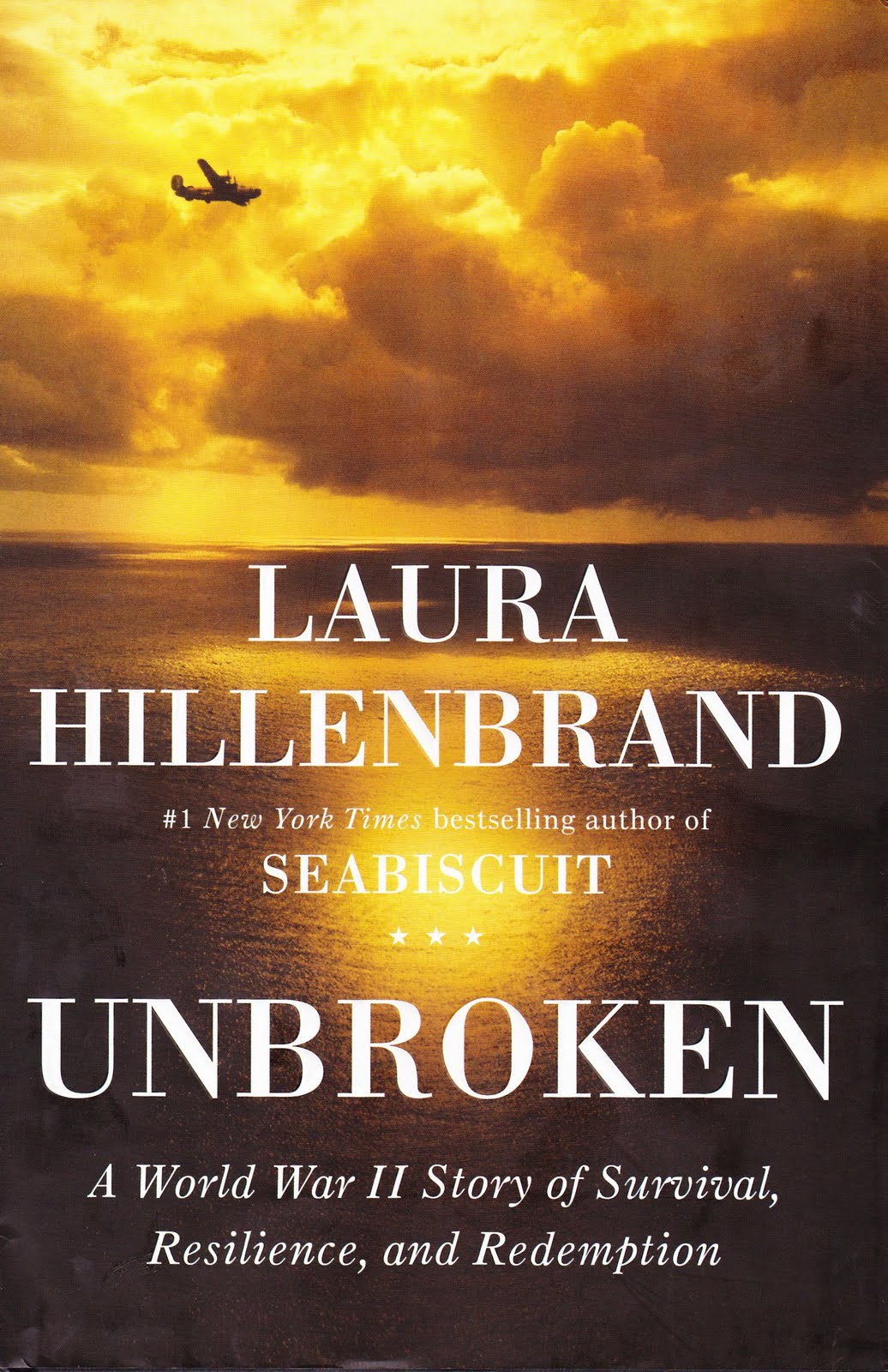
Unbroken coverWhen I was younger, one of the genres of movies and television that was quite popular was stories from World War II. While I wasn’t alive for it, of course, many in my parents’ generation had fought or knew those who had. Indeed, on a wall in my house is a framed picture of my uncle, A.L. Dodd, Junior, who was killed a few weeks before the end of the war in Europe; he was in Germany, in the Ruhr valley, when he was shot by a German machine gunner. So, the war was quite real to us. We enjoyed the stories, because they were entertainment, but knew that the war had affected most everyone in America.

After seeing the film Unbroken, directed by Angelina Jolie, I was telling my sister about it, and she said, “Clearly, you don’t know the whole story. Read the book.” And, with lots of other reading and a bit of teaching, it was almost six months after hearing that advice before I got around to reading the book by Laura Hillenbrand. OMG, why did I wait so long? The movie is very good, but the book is great. Maybe I waited, in part, because I don’t usually like biographies.

As told by Hillenbrand, Louis Zamperini was quite a character, from his earliest days. His parents didn’t quite know what to do with him, and he might be described as a juvenile delinquent. His brother convinced the school authorities to allow Louie to get involved in sports, and Louie was gifted in running. So gifted, in fact, that he became an Olympic runner, and a very good one. He might have known even more fame as a track star, but World War II got in the way. After his plane crashes in the Pacific, Louie and two other Army Air Force survivors were adrift for a very long time. Then, on the brink of death, they were captured by the Japanese. Yes, Louie was still alive, but he faced incredible brutality.

One of my elderly friends is a survivor of a Japanese POW camp in the Philippines. She was interned there as a child, one of several children of a missionary who fled there from China, because the parents thought that being in a U.S. territory was safer for their children. The treatment she and other family members endured was brutal, and toward the end of the war, the prisoners were scheduled to be executed before the Japanese withdrew. She was saved because some American volunteers broke down the fence and escorted the POWs to safety. My friend, to this day, cannot understand Americans can embrace Japan as our friends and allies. To her, they were a barbaric enemy, who starved her family and killed far too many non-combatants.

Hillenbrand does explain the brutality, through Louie’s account, and accounts by other prisoners. But she reinforces the brutal nature of the Japanese POW camps with survival statistics. According to Hillenbrand, only 1% of American POWs held by the Germans or Italians (the European theater) died, but in Japan 37% died. She also goes into the cultural differences which led to the cruelty, not as an excuse, but to let readers know more about the “why” which must come to the mind of her readers.

(spoilers)

The film, Unbroken, closes with the end of the war. That is a good stopping point for a Hollywood film; the audience can go home knowing Louie made it out alive and was welcomed home by his loving family. But, as my sister noted, there is more to the story. The book has a subtitle Unbroken: A World War II Story of Survival, Resilience, and Redemption and it is appropriate. While I do not fault Jolie for leaving out the “redemption” part, the story is incomplete without Louie’s problems adjusting to “normal” life after the horrific experiences he had in Japan and how finding religion gave him the peace he desperately needed. The author continues to cover multiple story lines, including “Phil” the pilot to “the Bird” who was the most sadistic of the Japanese prison guards.

The entire story is important, and those who watch the movie get only the middle, so I encourage readers to tackle the book by Laura Hillenbrand. While it isn’t a quick read, it is certainly worth your time.