Sanctuary

While studying English at Piedmont College, I read Donald Davidson’s Sanctuary, and it made quite an impression. Poems are crystalized thought, free of impurities and shining brightly. Some poems, although well-written, do not appeal to me, but this one did then, and it still does.

There are times, even now, when I want to withdraw and seek sanctuary in the mountains. I’ve been blessed with a husband who can provide a nice home, with material possessions, with children, and with a great church. But sometimes, I’d like to burn what I can’t take with me, not look back, and seek sanctuary away from my enemies.

For those who don’t have “Literature of the South” on your bookshelf, here is the text of Davidson’s masterful poem:

Sanctuary

You must remember this when I am gone,
And tell your sons – for you will have tall sons,
And times will come when answers will not wait.
Remember this: if ever defeat is black
Upon your eyelids, go to the wilderness
In the dread last of trouble, for your foe
Tangles there, more than you, and paths are strange
To him, that are your paths, in the wilderness,
And were your fathers’ paths, and once were mine.

You must remember this, and mark it well
As I have told it – what my eyes have seen
And where my feet have walked beyond forgetting.
But tell it not often, tell it only at last
When your sons know what blood runs in their veins.
And when the danger comes, as come it will,
Go as your fathers went with woodsman’s eyes
Uncursed, unflinching, studying only the path.
First, what you cannot carry, burn or hide.
Leave nothing here: for him to take or eat.
Bury, perhaps, what you can surely find
If good chance ever bring you back again.
Level the crops. Take only what you need:
A little corn for an ash-cake, a little
Side-meat for your three days’ wilderness ride.
Horses for your women and your children,
And one to lead, if you should have that many.
Then go. At once. Do not wait until
You see his great dust rising in the valley.
Then it will be too late.
Go when you hear that he has crossed Will’s Ford.
Others will know and pass the word to you 
A tap on the blinds, a hoot-owl’s cry at dusk.

Do not look back. You can see your roof afire
When you reach high ground.
Yet do not look. Do not turn. Do not look back.
Go further on. Go high. Go deep.

The line of this rail-fence east across the old-fields
Leads to the cane-bottoms. Back of that,
A white-oak tree beside a spring, the one
Chopped with three blazes on the hillward side.
There pick up the trail. I think it was
A buffalo path once or an Indian road.
You follow it three days along the ridge
Until you reach the spruce woods. Then a cliff
Breaks, where the trees are thickest, and you look
Into a cove, and right across, Chilhowee
Is suddenly there, and you are home at last.
Sweet springs of mountain water in that cove
Run always. Deer and wild turkey range.
Your kin, knowing the way, long there before you
Will have good fires and kettles on to boil,
Bough-shelters reared and thick beds of balsam.
There in tall timber you will be as free
As were your fathers once when Tryon raged
In Carolina hunting Regulators,
Or Tarleton rode to hang the old-time Whigs.
Some tell how in that valley young Sam Houston
Lived long ago with his brother, Oo-loo-te-ka,
Reading Homer among the Cherokee;
And others say a Spaniard may have found it
Far from De Soto’s wandering turned aside,
And left his legend on a boulder there.
And some that this was a sacred place to all
Old Indian tribes before the Cherokee
Came to our eastern mountains. Men have found
Images carved in bird-shapes there and faces
Moulded, into the great kind look of gods.
These old tales are like prayers. I only know
This is the secret refuge of our race
Told only from a father to his son,
A trust laid on your lips, as though a vow
To generations past and yet to come.
There, from the bluffs above, you may at last
Look back to all you left, and trace
His dust and flame, and plan your harrying
If you would gnaw his ravaging flank, or smite
Him in his glut among the smouldering ricks.
Or else, forgetting ruin, you may lie
On sweet grass by a mountain stream, to watch
The last wild eagle soar or the last raven
Cherish his brood within their rocky nest,
Or see, when mountain shadows first grow long,
The last enchanted white deer come to drink.

Image

The Other Side of Me

Other Side Cover

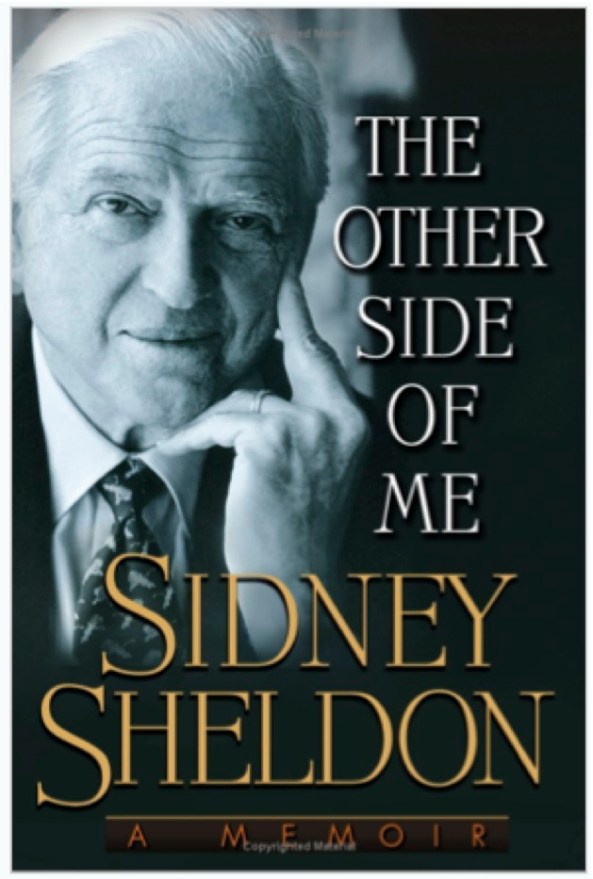
The Other Side of Me by Sidney Sheldon

I read this recently, because my elderly aunt literally thrust it into my hands. For a few weeks, it languished in my “to be read” stack of books, but I finally picked it up, and within a page or two, I was hooked. Why did I wait? Because I generally prefer fiction or “how-to” books. Maybe a bit of sociology. But not biography or autobiography.

And, if I had not enjoyed his novels so much, it might have remained unread by me. Like many readers, I enjoyed his best-selling novels, such as The Other Side of Midnight, Master of the Game, and If Tomorrow Comes. A glance at the flyleaf reminded me that he had also been a television writer and producer of such hits as I Dream of Jeannie and The Patty Duke Show. Before that, he wrote plays for Broadway.

Sheldon’s life, as many reviewers have noted, reads like a “tell” rather than “show” fiction narrative. Indeed, he devotes more pages to his early life and career, and the book almost devolves into name dropping as he relates his activities at the height of his career in Hollywood. By the time he reaches his years as a bestselling novelist, he skims over the details. But, avid readers of Sheldon’s books will no doubt recognize that he used his life as a basis for certain aspects of his novels. And Sheldon’s life was ultra-successful, but not free from adversity. Indeed, I came away from this book with the impression that his success can be attributed mostly to hard work, with liberal amounts of talent, help from his friends, and just plain good luck thrown in.

Younger readers are probably saying “Sidney who?” but those of us endowed with a few more years no doubt remember waiting for his newest book to hit the library shelves, or tuning in to yet another tv mini-series based on one of his famous yarns. For you, it is as my aunt Celeste predicted, you’ll like this book.

Goodbye to Anne McCaffrey

Each generation will pass, of course, but I am sad to know that another great fantasy and science fiction writer has died. Anne McCaffrey is best known for her Dragonriders of Pern series. However, she wrote far more than those, and her influence has helped shape modern science fiction. McCaffrey was the first woman to win both the Hugo and Nebula awards, which are the most prestigious in science fiction.

Her debut novel, Restoree, is a story about a woman who is abducted by aliens, placed into a new body, and set to work caring for a man who may not be ill at all, and that is just the set up.  Some say it was written, in part, as a response to the way writers used to portray women in science fiction. McCaffrey’s The Ship Who Sang was also a ground breaking work about severely handicapped children’s brains being used in living ships. Although that sounds terrible, the idea of cybernetic melding of human and machine has gone through many iterations, but McCaffrey’s take on this subject is fascinating.

As a fan of science fiction, far more so than fantasy, I enjoyed her Freedom series more than any other of her works. The four volume saga begins with Freedom’s Landing, which takes the main characters from Earth, via a sojourn as slaves on an alien world, and dumps the troublesome miscreants on a new world. The series is a bit like what happened in Australia, and the characters informally name their new colony “Botony” but it is set on an alien world. These yarns focus on building a society from scratch, but survival is always a driving force in these tales as well. This series is so readable that young adult readers should enjoy it, too.

Another interesting science fiction novel from McCaffrey is Nimisha’s Ship, which blends space-based intrigue with survival skills. McCaffrey often collaborated with other writers, in both science fiction and fantasy genres, and Sasinak is my favorite of those team efforts.

In a side note, one of my science fiction writer friends mentioned that in her later years McCaffrey used a scooter to get around the huge venue known as DragonCon in Atlanta. My friend said that if you saw her, you’d best get out of the way! Maybe her speedy ways on Earth enabled her to write about flying dragons….

By Pamela/Pilar Posted in writing

Beauty and the Beast, Revisited

Ah, don’t cha love Netflix?

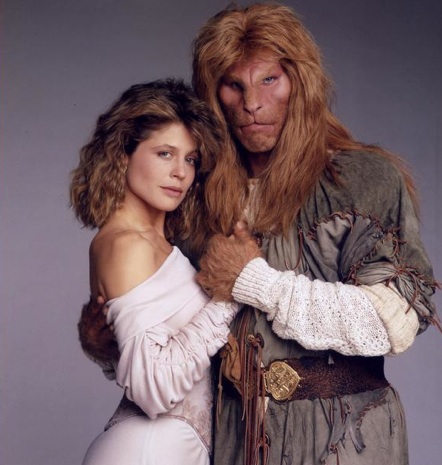
I do, and one reason I love it so much is that I can revisit past favorites. Lately, I have been watching Linda Hamilton’s Beauty opposite the impeccable Ron Perlman’s Beast. While the short-lived television series made each of them famous, Perlman’s career has been more varied and probably more lucrative. In a recent interview, he stated he had been in 15 films this year. Of course, Hamilton repeated her Sarah Conner role in Terminator 2—Judgment Day, as well as successful films such as Dante’s Peak.

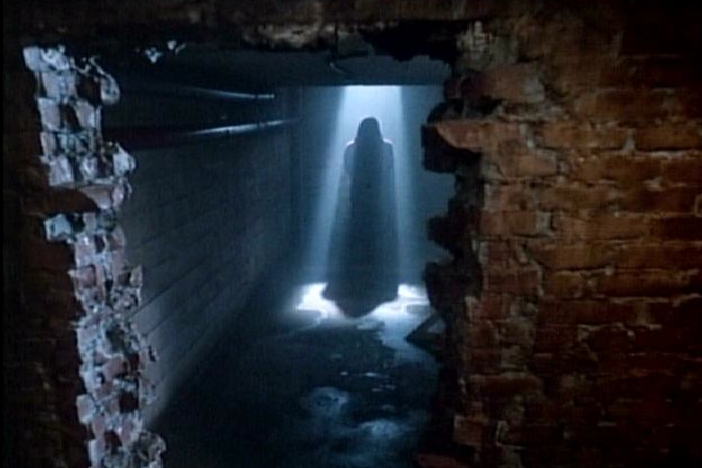
The pilot for this modern treatment of the fairy tale sets up the story, as lovely lawyer Catherine Chandler is the victim of a savage attack. Vincent, the Beast who lurks in darkness, saves the the damsel in distress, and introduces her to a labyrinth of tunnels below New York City, and to the people who dwell there. Although I knew the series was set in New York City, but I did not realize how much New York is not just the setting, but a via shining cityscapes and location shots, it is really a co-star. When Vincent needs to rescue Catherine, a frequent occurrence, he rides atop subway trains and traverses tunnels beneath the city. As an assistant district attorney, Catherine alternately assists the downtrodden and fights to rid the streets of criminals; indeed, some of the plots are drawn from issues facing NYC in the late 80s, such as corporate harassment of tenants in rent controlled apartment buildings.

The scripts for Beauty and the Beast are by George R. R. Martin, a well-known scifi/fantasy writer, and fantasy elements abound. From the first episode, Vincent feels a “bond” for Catherine, and he knows when she is in danger, a necessary aspect to keep him in the above ground action. When I originally saw the series, the cinematography was impressive for television. While it has not aged well, there are still some impressive shots, painting the setting with light. Catherine’s extensive wardrobe and make-up help create her “Beauty” persona. Linda Hamilton’s Sarah Conner character in the Terminator films was not nearly so glamorous. Perlman no doubt spent many hours in the make-up chair to portray Vincent, but the results are still impressive. When he roars at attackers, his leonine look and rugged wardrobe are quite beastly, but his soft voice and precise diction when he reads poetry are enough to melt my crotchety old English teacher’s heart.

Online, there are numerous sites for fans to visit, and I was especially impressed with the artistic renderings of Vincent and Catherine posted to various sites, but those are generally not for reposting. There is also fan fiction, and a few conventions have been held, too. Obviously, I am not the only one who enjoys this modern fantasy.

The Brilliant Mr. Jobs is gone

Once, at a family gathering, my nephew the IT dude told me that he would not hire me, because I am not technologically proficient. He is a Microsoft guy, and I am a Mac user. Thankful that I wasn’t looking for a job, I just smiled and changed the subject.

Steve Jobs, co-founder and visionary at Apple, has been behind so many technical devices and concepts that I and countless others use every day. My nephew was right— I live and work in a technologically sophisticated world, with little understanding of exactly how all of this stuff functions. Mr. Jobs and company created the devices, the software, and the slick interfaces that have made it just as easy to operate computers, music players, smart phones, and other items without being able to crawl under the hood and fix them. Just as I drive my Honda, without knowing its valve clearances and final drive ratio, I can create a web page, edit a movie, or share music without understanding the inner workings of my iPad, Mac, or Airport Express. The beauty of all things Apple is that they operate intuitively, with no need to read the manual or hire a member of the Geek Squad.

During his career, Steve Jobs has repeatedly been able to see what people wanted, then create devices that did those things. Moreover, his company went beyond that, and created hardware and apps which I didn’t even know I wanted— until I saw them in action.

I am saddened that his family lost him at such an early age, 56, and I am also sorry that his passionate vision has been cut short. Just today, Apple announced the introduction of software that lets customers verbally interface with the newest iPhone, a technology that promises to change everything, one more time. And in Apple stores across the globe, customers are seeing this new feature, and thinking, what will they think of next?

Ironically, a more important question might be who will think of these new things, now that the “insanely great” Steve Jobs is no longer with us?

By Pamela/Pilar Posted in writing

One More Commentary on 911

Most sources of information are having some sort of commemoration of the ten-year anniversary of the terrorist attacks on September 11, 2001. And, like many people, I have thought about where I was as I heard the news. I’d been at a Bible study, and had no idea that there had been an attack until I heard my sister’s voice on my answering machine, telling me to turn on my television.

Even after all this time, I do remember our conversation that day, and in the days right after the horrific events. As the wife of a private pilot, and as a woman who has taken enough flying lessons to have done solo flights, my sister’s perspective was a bit different, because what amazed her as much as anything was the swift shutdown of American air space. Because the FAA did not know the extent of the plot, they did the only logical thing, and that was an immediate halt on take-offs, and for those in the air, the instructions were to set down at the closest airport and stay there.
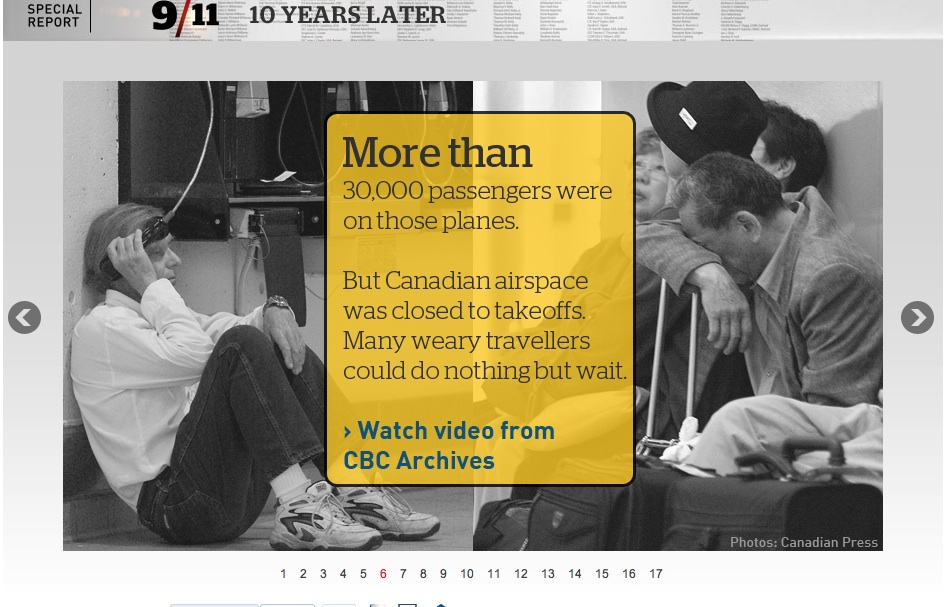
The United States of America has numerous airports, and some of the busiest air space on the planet, but that all came to a stop on 9/11 Therefore, the international flights bound for the U.S. had to land elsewhere. Some 200 flights, with roughly 30,000 passengers, landed in Canada. One town, with a population of 10,000 had 6,500 unexpected visitors land, and those visitors were not going to be leaving in just a few hours, either. There is a feature on the CBC website which follows some of the stories, and the new friendships, which resulted from the extended sojourn that many of those passengers had in Canada, a decade back.
The Osama bin Laden plot did succeed, for the most part, because the only plane which did not destroy its target was the one that crashed in Pennsylvania. The story doesn’t end there, fortunately. Based on the choice of targets, one goal for the terrorists was the shut down of the American economy, and it did not happen. Yes, the stock market closed for a few days, and business slowed for a bit, but our way of life did not change substantially. In fact, bad banking practices and real estate development gone wrong have done far more damage to the U.S. economy than the terrorist plots did.
Instead, for a time, Americans joined together, with patriotism trumping partisanship, and Americans were more appreciative than they had been. And, apparently many of them found some new friends across the northern border.
 
By Pamela/Pilar Posted in writing