Best Advice I Did Not Follow

From time to time, someone asks me about my writing.

“Are you still writing?”

Well, kinda.

“Any more books since Trinity on Tylos?”

Well, not published.

“Are you going to write a sequel to The Gift Horse?”

Well, I should, but I made so many people mad with the first one, that I dunno.

When I think about writing for publication, I think about the best advice I was given, and it is advice I should follow, even today. That gem of wisdom is simply this: Write something short to give yourself some traction. To explore ideas vs. marketability. To build a resumé.

That is good advice. Really. If I had written a story or two about exploited women, and had them rejected, as they undoubtedly would have been, I might have canned the whole idea of finishing The Gift Horse and putting it out as a debut novel. If I had written some science fiction short stories, and if they ended up in anthologies, I might have had more reasons to be selected as a guest at science fiction conventions. And, as a bonus, shorter works take less time to write, and often less time to publication.

Note that I did not say it is easier, because it isn’t. Or it shouldn’t be easier. The shorter the piece, the more polished it should be. Poetry, for instance, is generally far more polished than prose. And fiction is usually more polished than non-fiction. Do you doubt me? Then read the instructions that came with your last purchase; those are often an indictment of the state of non-fiction writing in our times.

For those who have not published, or have not published recently, the best answer might be an article, a short story, or a paid blog entry. Keeping it short is a good idea, but giving it away is probably not. People love freebies, and they don’t like it when they have to pay, especially after they had been reading for free.

Middle School Mentality

Since the video of bus monitor Karen Klein was posted on YouTube, there has been much written about the incident, but not much written about the mentality of the students who tormented her. If you haven’t seen the video or read any of the news stories associated with it, a brief summary of the incident is in order. In a video shot by a fellow student, a group of boys are heard calling an older female bus monitor fat, discussing what it would be like to stab her, and saying that her family would want to commit suicide because of their association with her. Klein does dissolve into tears, but never strikes back at her juvenile tormenters.

As a former teacher, and one who spent years working with students in the middle grades, I sadly state that this video is not so shocking to me. First, I will state that although I was sometimes the target of some taunts, my position as a teacher gave me more authority, and so I never dealt with anything so horrible. But, that said, parents and the public must understand the “middle school mentality” does include more than a bit of viciousness. More than once, I have described middle school students as being similar to a pack of rabid dogs. Individually, they are usually okay, but when grouped together, it is not uncommon to get some really bad chemistry. If there is an age where homeschooling is more appropriate, I believe it is the middle grades. When kids lose their need to impress adults, but before they become accountable, there is a danger zone, and grades 5-9 tend to be the rough ones, for the students as well as for the teacher and staff members.

My own children suffered bullying at that age; in fact, I was blessed to have a husband with a high enough position in the community that he could literally call up the superintendent of schools and ask him to personally intervene in a bad situation that was causing our daughter to go through emotional turmoil.

I have little doubt that the parents of those students in the video do not have to endure constant profanity and threats at home. Actually, I would imagine that the parents were probably shocked at the video of Klein being tormented. While the parents are partially responsible, the students are of an age to take responsibility for their actions. However, putting such students with so little control together, and giving those in authority no real power to keep the students in line, is the real problem.

If these students were in a homeschool, being responsible to one or two adults, and entrusted with assisting younger students, they simply would not get into a situation where they would have nothing better to do than torment others. Anyone who had read Lord of the Flies knows that it is not a new problem.

I’m sorry for Karen Klein, but not shocked. She has stated that if she had retaliated, she would have been fired. If any aspect of this incident is shocking, it is that society doesn’t realize what goes on when middle school mentality is allowed to run amok.

Because it is the right thing to do.

Once upon a time, I owned an iBook, so well-used that I was on my third keyboard when the hinge broke, damaging the case as it blew out. Having purchased AppleCare, I was not too upset, until some Apple Genius told me that I had dropped it and caused the damage, and Apple wouldn’t pay for accidental damage. After a few days of phone calls, trips to Apple service centers, emails to various officials at Apple, and many hours of trying to get my computer fixed (at no charge) some guy named Steve called me from Apple. He listened to my tale of woe, and said that Apple was not contractually obligated to pay for my computer, but that they were going to do so anyway, “because it is the right thing to do.” And so they did.

Since the dude on the phone didn’t use his last name, I don’t know for sure if I spoke with the head honcho of Apple or not, but after having read Job’s biography, I wonder. At several points in the book, Steve Jobs did what he believed to be right, even if everyone else thought it was wrong. Despite being a jerk, he was a person who wanted to produce great products and put them in the hands of people. Each iteration of Macintosh computers have been simple to use and as elegantly designed as possible, because Steve Jobs had a vision of what the personal computer should be. The iPod and the iTunes store work together seamlessly, because Jobs loved music. The iPhone is unparalleled because Jobs wanted a phone that was better than what he could buy. The iPad is mobile computing at its best, because  Jobs made the deals that made it possible. Indeed, Jobs had several talents, and even some of his personality flaws contributed to his success. Like a coach who is both loved and feared, Jobs was able to get people to do more than they ever dreamed possible. Apple, despite being the most valuable company in the world, continued to have the flexibility to capitalize on opportunities, because there was one strong mind at the helm.

Was he a genius? I think so. Was he a jerk? At times. Was he a criminal? Some tabloids say he was, but I view him as merely eccentric. Did he have a real life? I hope so, but Walter Issacson’s biography of Jobs is roughly 75% about Apple (and Next), and what Jobs did there, including too much information about office politics. Perhaps another 10% is about his time as  head of Pixar.  Since Jobs’ widow and offspring were no doubt in the midst of mourning when this book was released, I suppose that it is too much to ask for more details about his family life. Was he in the delivery room when his kids were born? I don’t know. Did he ever attend a PTA meeting? I don’t know.

Having read quite a number of articles and even a few books about Apple and its products, I found some of Issacson’s book to be tedious. But, for anyone who didn’t know much about Jobs, the biography is quite enlightening. Jobs’s adoptive father was a strong influence on him, but so was his interest in eastern religion. He’s one of the more famous college dropouts of his era, and that, too, is relayed in terms of how it helped him at Apple. Jobs was more artist than engineer, more salesman than CEO, but his insistence on doing things his way was more often “right” than “wrong” and the world is a far different place than it would have been had he not lived. No, really. Imagine our world with clunky IBM based computers, no iPod, iPhone, iTunes, iPad, and no products which copy those technologies. Steve Jobs said he wanted to change the world, and he did.

That’s quite a legacy, and one worth reading about. If you haven’t yet read Walter Isaacson’s biography of Steve Jobs, it is well worth the time it takes.

Best Short Stories

Not too long ago, I heard a real life tale of woe which reminded me of “The Necklace” by Guy de Maupassant. For anyone who didn’t read it during school, this little gem has a memorable main character, a setting in old Paris, both internal and external conflict, and a plot which can be either satisfying or disturbing. Oh, and its strong point is its cautionary theme. I’ve read any number of novels which did not have as many literary elements as “The Necklace.” Is it the best short story ever? I don’t know, but I’d put it in the running.

So, what’s the competition for best short story? There are many, but some my favorites include Frank Stockton’s “The Lady or the Tiger?” which is long on plot, but it also has a nifty historical setting and enough characterization to keep readers interested. Others which have great plots include “The Most Dangerous Game” by Richard Connell, a marvelous adventure story which has often been the springboard for a number of movies. Any time the plot of a movie or television show includes a human being hunted by another, I always think of Connell’s version. Another story which has a dramatic plot is Shirley Jackson’s “The Lottery.” A longer, plot driven short story, but one with far more character development, as well as a beautifully rendered setting is “The Birds” by Daphne du Maurier. Most people who hear the title, The Birds, think of the Alfred Hitchcock movie, which is very loosely based on the short story, but I like du Maurier’s version better.

The stories I’ve mentioned thus far are frequently anthologized, so I posted links to them. But, before I leave the topic of best short stories, I must include some science fiction, which is a favorite genre, but one which doesn’t usually make it into anthologies. My favorite sci fi short stories include the thematically strong “There will Come Soft Rains” by Ray Bradbury and “Feeding Time” by James E. Gunn. I love ironic plot twists, and the Gunn story has a perfect ending.

By and large, I prefer to read novel length fiction, but the short story has its place. Many writers have been masters of the short story, such as Poe and O’Henry. Like poetry, the short story is a more compressed format, so the writer has to do more with less, and that can be difficult. There are any number of ho-hum short stories, but when the author gets it right, the result is a masterpiece.

White Roses

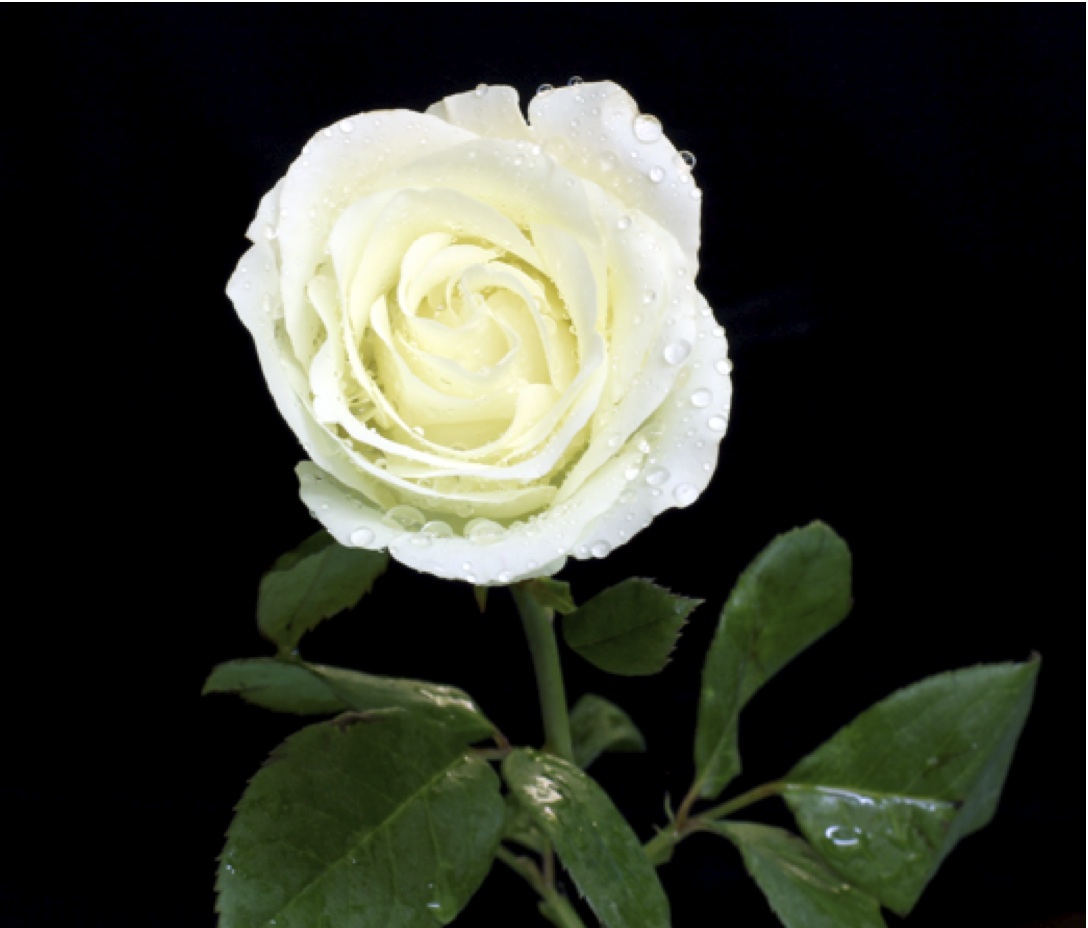
When I was a young girl, my mother always went into our yard and plucked roses for us to wear on Mother’s Day. Until I reached my tenth birthday, she wore a red rose, as I did. But that year, she went to another bush and selected a delicate white rose with just a hint of pink. As a curious youngster, I asked her why she did not wear one of “Nanny’s roses” since our red rose bush had grown from a cutting of the ones which graced my paternal grandmother’s yard.

She gently reminded me that Grandma Blackstock had died, so she was now supposed to wear a white rose. My red one told the world, or our small church, that my mother lived.

Fast forward more than forty years, and I stood in church today, the same church, but in a much larger building with a congregation ten times larger; and after hearing our three ministers all tout the virtues of motherhood, I looked around to see if anyone was wearing a rose. Across three rows of pews, I saw two ladies wearing florist created white corsages. None of the ladies around me wore roses, of any color, and my yard does not even have a white rose bush. My jacket today was a mosaic of white roses, but I rather doubt that anyone noticed.

Maybe I should plant a white rose bush, because I can’t live through a mother’s day without remembering my wonderful mother, who wore a white rose out of respect for her mom.

All Books— $4

News stories about publisher prices come and go; the latest has the U.S. attorney general going after Apple’s iBooks prices. Let me key that in again… Apple’s iBooks prices. Not the New York big six; not Amazon. While I do believe that book prices are as artificial as aspartame, I don’t really believe that Apple is the culprit in price fixing. The attorney general is just doing some election year grandstanding.

As I have stated in previous blog posts, the 800 pound gorilla in book sales in the U.S. is Amazon. Even when Amazon begins charging sales taxes, and that will happen because our government’s spending is out of control; Amazon will still have the lion’s share of new book sales, due to its ubiquitous internet presence and its killer Kindle app. But, increasingly, Amazon is the best way to sell used books, and that is the reason all books will eventually be around four bucks.

I’ve been selling off my home library for a few months now, but I still have the bulk of it, because I have not found a way to compete with the “power sellers” who offer thousands of used books for a penny, plus Amazon’s $3.99 shipping. Thus, virtually any used book is available for a mere $4.

Having moved recently, I packed many, many boxes of books, and I usually check the price for anything that I don’t want to own forever. Most of them are only a penny on Amazon. I can’t make any money on that sale. Here is how the math works for me:

Book price .01

Shipping fees to me 3.99

Commission(s) to Amazon -$1.00 (transaction fee) and -.80 (minimum commission)

Postage to customer -$3.15 (for a book weighing between 1 and 2 pounds).

Thus, I lose $.95 per book, or more if I use packaging that I purchased, if the book sells at the going rate of $4.00. Heavier books will result in a greater loss, because Amazon’s shipping fees do not adjust for heavier items.

So, most of my books either end up parked on a shelf or in the “yard sale” pile. And, I do know that most of those won’t sell at a yard sale, either, so they’ll end up being donated to charity. Therefore, the owner of a used book must either want to keep it, or be ready to toss it.

Tis sad, but all physical books will become used books. So, if you don’t like the publisher’s price, just wait. Eventually, most any book will be available for four bucks.