Best Buy or Worst Buy?

Last week, I needed to recycle a television. Our local government sponsors recycling, and they’ll take old paint and motor oil, but they won’t take a television. Knowing that e-waste is a huge problem for our planet, I got hubby and son to put the malfunctioning behemoth in my van, to the only local spot for television recycling— Best Buy. It took talking to five different people to get the television out of my van and into the store, because each person I spoke with told me to see someone else.

After I finally got my ten dollar “gift card” which is what I got when I paid ten dollars in federal reserve notes for them to take the television, I looked for something to buy with it, because I didn’t know anyone that I dislike enough to give them a gift card from BB. Finding anything to buy was really difficult, it seems that Best Buy really doesn’t have many good buys. I asked yet another of the blue clad employees, if there might be a cheaper case for an iPad than the thirty dollar one I finally found. The response was, “You just said Apple and ‘cheap’ in the same sentence. Hah!” I guess they don’t like Apple products. Or price conscious customers. So, I took the case to check-out. After all, it was only twelve dollars more than at Amazon, so it was one of the better buys in the store. It snapped on as it should, and since it has no electronic parts, it should serve its purpose.

Actually, I am just glad that I didn’t need a repair. Over the years, I have been fortunate that my Apple products don’t need much repair, and when they do, the Geek squad doesn’t work on Apple computers. Thank goodness.

Any of you seen this one yet?

Computer Repair expose

Or this one?

Computer Repair expose

Or this one?

By Pamela/Pilar Posted in writing

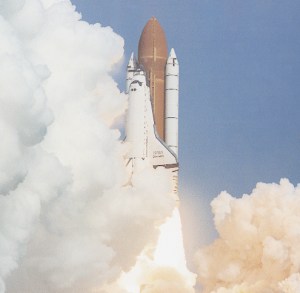
The Last Shuttle Launch

The last space shuttle launch occurred last week. Although NASA claims to be working on a new vehicle, it is years (or decades) away from launching, if it does launch at all.

Having grown up during the space program’s heyday, I see this as just another symptom of America’s declining health. A Democrat president declared that America would not be left behind in the conquest of space, and through administrations led by both parties, NASA put men and satellites into orbit, then sent men and machines to the moon.

As a percent of total federal dollars spent, the space program peaked in 1966, at 5.5% of all U.S. spending. Three years later, I, along with most other Americans, sat spellbound as the first men stepped onto the surface of the moon. Critics of the space program would probably say we got some pictures and a few rocks out of the deal (and we did) but myriad technologies were first used in the space program, including the foundations of modern computers and software. Each year, NASA publishes a list of “spinoff” technologies, by-products of space related tech. If there had been no space program these technologies would either not exist, or would have developed later:

• cordless tools
• memory foam
• gps navigation
• medical implants, including some artificial joints and cochlear implants
• polymers used in firefighting gear
• advanced firefighting oxygen delivery systems
• lithium batteries (yes, like the ones in your phone and in your computer)
• LEDs and LCDs
• industrial robots

There are many more, some of which my spotty understanding of science does not let me fully understand, but suffice it to say that even social program loving critics of NASA probably enjoy talking on cellular phones, watching satellite television on LCD screens, and finding their way with gps navigation.

If this program has been so valuable to our nation, why is it in decline? Perhaps, because the government caters to the selfish. Critics of NASA tend to say something like, “Let’s solve our problems here, before we go into space.” So, the United States government has put more and more dollars into the hands of the so-called poor, the educators, and buying medical care for an aging population.

Despite being the source of new technologies and national price, NASA seems to be in a death spiral. From that high point of 5.5% of federal revenues, NASA was down to .58% in 2007. Current spending on our space program is roughly equal to what was spent in 1960. To put that in perspective, the cost of social security was 30 times greater than NASA’s costs in 2007.

Social programs, although well-meaning, have ruined certain segments of American society, and turned the greatest generation into the “gimme” generation. No outlay of funds is sufficient to provide the poor with what they want. Only work can do that; but with a sputtering economy and a no confidence vote from business, there are fewer and fewer jobs. Elected officials tend to vote to please the electorate which put them into office, and government paychecks trump rockets.

With the space shuttles decorating museums, what will happen to the satellites that provide us with spying capabilities, gps navigation, and Entertainment Tonight? As long as the satellites remain functional, we won’t know the difference. But, with no means of launching new satellites, we will be like Cuba. In Castro’s country, streets are dotted with fifty year old America autos, because there are no new ones coming into the country. After NASA, our satellites will be just like those ancient autos.

Maybe my children will see the first Martian colonists. Or maybe, they won’t see anything, because the satellites will have fallen from the sky.
By Pamela/Pilar Posted in writing

Ne’er Do Well Boys, or a Failed Education System

This is a tough review to write, but it needs to be told. A decade ago, I was serving as a parent representative on a Southern Association of Colleges and Schools committee to evaluate the local elementary school. I was a “plant” because I had been a classroom teacher for some twenty years, as well as being the mother of two students in the school. Despite what I knew about education, I learned a great deal from the experience. The other parent rep made an astute observation, which I will no doubt misquote due to the years which have passed, but he said, “I see a lot of boys in the community and none of them are interested in school. Something needs to be done.” And a light went on in my brain. Okay, as an English teacher, I knew that many of the males in my classes had not had much fun, but that is because boys like math and science better, right?

Wrong. Boys, or at least a majority of them, don’t like anything in school. Or they only like one or two classes, such as physical education, shop, or ROTC. That means many, many hours of misery. Worse, it means that boys either drop out of school or graduate with such poor skills that they don’t make it through college. Nowadays, colleges are 65/35 female. The never quite ending recession has shown how vulnerable marginally educated men are to long term unemployment. Years ago, boys had a better chance in school than their female counterparts, but those days are long gone. Now, it is boys who suffer. But why?

Since I first was made aware of the depth of this problem, by that fellow parent, I have read some articles and a few books about the gender gap in education. Although it is now considered flawed, I view many of the points raised by Christa Hoff Sommers in her book, The War Against Boys: How Misguided Feminism is Harming Our Boys, as factors. Or, as my favorite talk radio personality puts it, “the wussification of America.” When having a tool such as a penknife results in permanent expulsion from school, boys are clearly being emasculated by the system. But, the gains by girls are taking place in other countries, where boys can still be boys, so the feminization of education is clearly not the only issue.

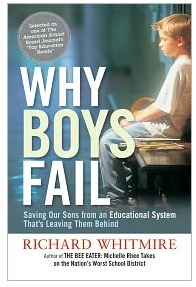
A newer take on the problem is Why Boys Fail: Saving Our Sons from an Educational System That’s Leaving Them Behind by Richard Whitmire. Instead of putting the blame on the rise of female leadership in education, reporter Whitmire suggests that the push toward early literacy leaves boys behind the more verbal girls, and those boys are turned off to education before they become ready to read. This book is quite readable; instead of being written for a scholarly audience, feature reporter Whitmire uses real people to illustrate the statistics which are troubling to anyone who cares about the male half of the population.

Lest any readers of Pam’s Pages think, who cares? I will offer some reasons to care. The days when a man could work with his hands and not be especially literate are waning. If our daughters are to have a mate worth marrying, in terms of intellect and in terms of earning power, then we need educated males. Of course, that argument won’t work for some, so consider this: When males can’t earn a living, they may turn to crime. The number of males in prison seems to reflect that, doesn’t it? Most of us would not be in favor of an education system which produces criminals. If you think that is overstating the matter, just do a web search for the phrase “school to prison pipeline.”

How can we address this problem? As Whitmire goes to some length to explain, the education system needs to acknowledge that there is a problem. By and large it does not. Thus, I propose a simple first step to do that. In my state, all sorts of test stats are reported in the newspaper. By law, these figures must be printed in local newspapers, but there is no breakdown by gender. So, I am going to write to my local representatives and ask that this small change be made to our state’s laws. The best way to solve a problem is to get started, and this problem must be put before the public. Reporting the scores of boys and girls side-by-side should show the general public that there is a real problem to be addressed.

The more I read, and the longer I serve in education, the more I realize that society may think that boys are being bad, instead of recognizing that they are being short-changed by the megalithic education system. ’Tis sad.

By Pamela/Pilar Posted in writing

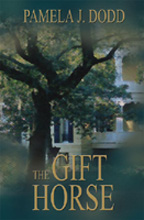
New Contract for The Gift Horse

Publishing has made a significant change in the past couple of years. I’ve long loved the convenience of ebooks, and I have touted them to folks in person and online. A decade ago, I read books from now defunct publishers, on computers which have been recycled. I listened to my CDs on my computer, too. And, yes, I have watched a few DVDs on my laptop. Some would call me an “early adopter” but I don’t think so. Rather than that, I read a great deal, and having to lug around a stack of books (plus a radio and a television) does not appeal to me.

But, just as it was possible to listen to music via a computer, which did not really “catch on,” reading books and watching DVDs on a computer did not “catch on” either. The iPod was the device which made digital music easy to use, and the iTunes store made it cheap and convenient to purchase content. Record stores largely disappeared, and the music industry changed. Netflix, with its inexpensive streaming video content has made digital movies easy to access as well, and my children never watch television; instead they watch Netflix, YouTube, or other web-based video.

Amazon introduced the Kindle in 2007, and that device has been tweaked a bit since then. But, just as Apple did not invent the iPod and not supply content, Amazon’s Kindle store has made the difference. I read Kindle books on an iPad, and the experience is amazing. Look for a book you want, and you can download it in seconds, with “one-click” from Amazon’s Kindle store. The book is then searchable, as well as being easily read. My iPad has several titles on it, and it weighs less than one hard cover book.

Apparently others believe this is great way to buy and read as well. According to Business Insider, the sale of Kindle books at Amazon outpaced hard covers by July 2010; six months later, the sale of Kindle books has surpassed paperback as well. Amazon now sells 105 Kindle editions for every 100 print books. And, thus far, Amazon is selling three times as many Kindle books in 2011 as it did in 2010. Amazon now has 950,000 titles for the Kindle, and that includes The Gift Horse. I recently renegotiated the contract for my debut novel, and it is now part of the $2.99 promotional price package of books offered by its publisher. This is a great price for a full length novel, of course.

Other ebook sellers are offering the The Gift Horse at the same price point, so here are the links:

Amazon:
http://www.amazon.com/dp/B0053DUK4A

Barnes and Noble:
http://search.barnesandnoble.com/Gift-Horse/Pamela-J-Dodd/e/2940012901996

iBookstore:
http://itunes.apple.com/us/book/isbn9781614340836

BookLocker.com:
http://www.booklocker.com/books/1482.html

By Pamela/Pilar Posted in writing

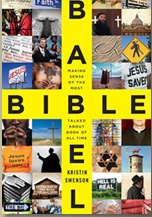
Bible Babel— a review

Last Christmas, one of my sisters gave me an autographed copy of Kristin Swinson‘s latest book, Bible Babel, Making Sense of the Most Talked About Book of All Time. Professor Swinson’s goal is to make some sense of what the Bible says, and what people say about it. That’s an almost impossible task, but the author makes a good effort, and the result is a highly readable book with a really interesting cover. One of my favorite passages is in the introduction:

“…many think that the Adam and Eve story in Genesis equates its talking snake with Satan, that the fateful fruit was specifically an apple, and that to this day men have one less rib than women. None of these are true…”

Some books are to be read at a fast pace, such as the latest thriller on someone’s best seller list, but others are worthy of more thought, and Bible Babel falls into that category. With a blend of pop culture usage (think DaVinci Code in the movies), and common concepts and misconceptions used as a springboard for topics, the author attempts to blend history, linguistics, scholarly research, and the good book itself to explain what it says, and why everyone seems to think it says something else. The table of contents reflects the varied topics she addresses, including “As It Is Written” History and the Bible….” and “Quotes and Misquotes….” and even “Flora, Fauna, Etcetera….”

As one of the best selling books of all time, and one of the least read, the Bible is constantly alluded to, but many of those who say, “it says in the Bible ________” could not give a book, chapter, and verse for the rest of the sentence. That’s because their “reading” isn’t reading at all, but they have heard something, somewhere, which was purported to have come from the Bible. Those readers who believe, for instance, that the Bible says, “God helps those who help themselves” are not Bible readers, but are instead, have been educated by proxy. Bible Babel is written for such readers, as an introduction to what the Bible does say, and in what context. Those who have read and studied the Bible may be bored with passages which explain that the Jewish Bible is the basis for the Christian Bible, or that Paul is the author of much of the New Testament. And those Christians who believe that Jesus spoke in Elizabethan English, as recorded in the King James Version, will be a bit disappointed as well.

But, for those who are religious, the author is quite respectful. For those who are skeptical, there is plenty of fuel for their skepticism. While I fall into the former category, my brain is still working, so I enjoyed both aspects of this book. If you have ever wondered why the scripture seems to be in conflict with itself, at least some of the time, or if you simply want to know more about one of the foundations of western world literature, then do read Bible Babel. Just carve out some time, because, like its subject matter, it is worthy of more than a casual reading.

By Pamela/Pilar Posted in writing

Reading (rather than writing)

Since my last post, I have been reading, reading, reading. First there were research papers, and while that is work, it is work I mostly enjoy. Over the four going on five years I have taught at the post secondary level, I have read papers on welding, auto repair, hair coloring, the history of perfumes, heat pumps, dirigibles, the physics of guitars, and even drag racing. There is much to learn in life, and those who stop learning must be really sad people. Anyway, I learn quite a lot when I read student papers.

When the quarter break came, we did some historical traveling, including a visit to the “Little White House” in Warm Springs, and the POW museum at Andersonville. At each of these spots, there are, of course, many many plaques and brochures to read, so I just kept on with my reading. Among the things I needed a refresher on were the vast number of progressive programs which began under FDR, including the “Rural Electrification Act.” Most everyone associates social security and with Roosevelt’s New Deal, but how many realize that without his direct input, farmers might have gone for many more decades without affordable electrical power? Another stop was the Currahee Military Museum in Toccoa, Georgia. There, visitors can see a number of artifacts from WWII, including a reconstructed stable, which housed troops in England, prior to the invasion of Normandy.

Also, a writer’s group in North Georgia has asked me to judge a category in their annual contest, which means more reading. While these entries won’t be like my research papers, I do look forward to reading the submissions.

Yes, I am really behind on writing, but I’ve been reading like crazy, and some writing will follow. (I hope so, anyway.)

By Pamela/Pilar Posted in writing