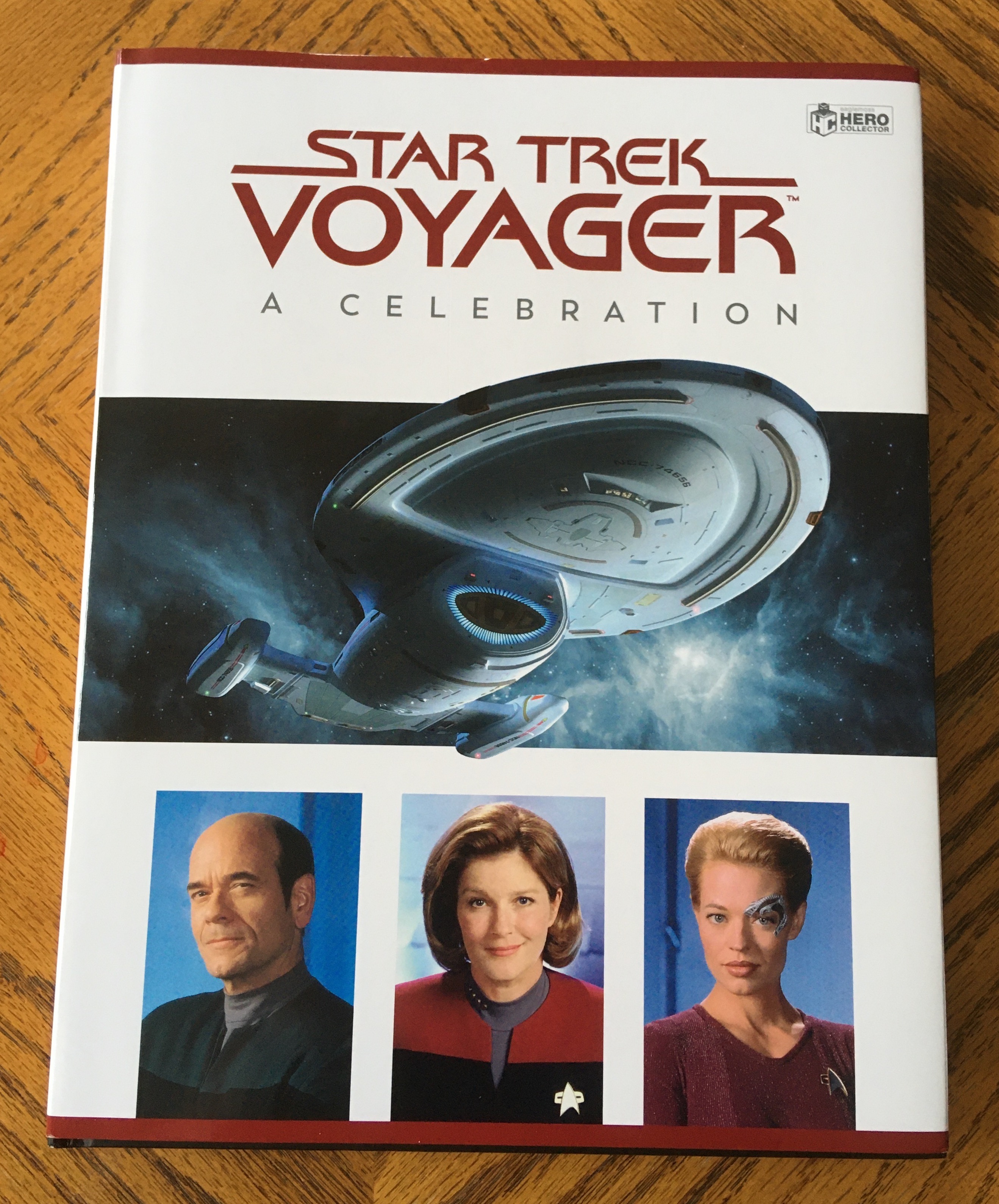
Star Trek Voyager: A Celebration

While all Star Trek series are worthy, some are just more interesting than others. Deep Space Nine has some great characters and acting, but initially suffered from being “stationary” rather than zipping around like the Star Trek ( the original series) or Star Trek: The Next Generation. As Roddenberry’s vision had sharpened and the syndication model freed him from many constraints, probably TNG is the overall best series. Certainly, the acting is amazing and the scrips are often really great, too. But, as special effects have become better and better, TNG suffers a bit in that area. Enter Star Trek: Voyager, which had a seriously huge void to fill, as it debut was a mere six months after TNG ended its seven year run. I also reviewed a book, Star Trek Voyager, A Vision of the Future, written during Voyager’s run, which is good, but last year, this volume, written as an anniversary edition, does a much better job of explaining the series as a whole, from development to the two part ending episode, “End Game.”

Upon receiving the book, I thought it would be one of those “coffee table” books, long on pictures and short on words. Nope, although there are many pictures. Indeed, the use of now decades old still pictures from the series is sometimes a weak point. However, there are drawings, pictures of behind the scenes contributors, and plenty of text. Overall, I really enjoyed the book, which is written in short segments which can be quickly read, but there are many sections, and these don’t necessarily need to be read in any fixed order.

The book begins, logically, with series development, and then there’s a short (two page) section devoted to the title sequence. I had no idea that this part (often “skipped” while streaming) was nominated for an Emmy award. Interspersed with the more technical aspects of the series are longer passages about the characters, beginning, of course, with Captain Janeway. The authors (two principal and two others, along with a general editor and a sub-editor) rely upon previously published material as well as newly conducted interviews with some cast members, as well as writers, producers, artist, and a host of others. Kate Mulgrew, who played Janeway, is among those who share memories in this book, and she discusses how much pressure was upon her as the first female captain of a Star Trek series, and how she approached the character as well as learning the scientific language necessary in this sort of show.

As there were many episodes (16 the first season, and 26 in each of the following six seasons) not all of them are featured, but sections devoted what are termed “key” episodes are mixed in with the other segments. The first, “Caretaker” is the two part pilot, and some of the other key episodes include “Tuvix” a character created by a transporter accident in which Neelix and Tuvok are blended into one individual. Each character gets a section, and most of multi episode villains do also. There are a couple of segments about the ship, one about the Delta Flyer, which is a smaller ship built by the Voyager crew about halfway through their journey, as well as segments about the special effects department, the makeup artists, the costumers, the writers, and the directors. As a fan of Voyager since it originally was broadcast, I knew quite a bit about the series, but there’s a lot of new material. For instance, I knew that some of the actors directed certain episodes, but I did not know that Star Trek actually fostered this by holding a “director in training” program. Roxann Dawson, who played Lt. Torres, directed a couple of episodes of Voyager, but went on to become a sought after director. She states that the program changed her life.
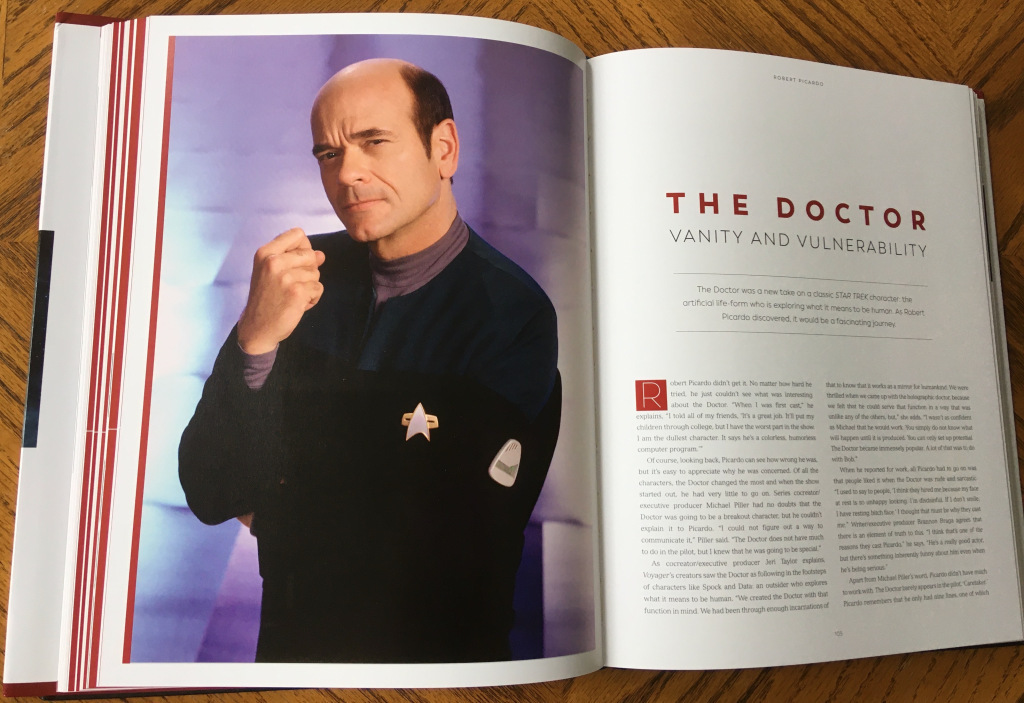
Bob Picardo took advantage of the DIT program and directed episodes of Voyager, but he also gets a writing credit, as he pitched a story line which was used, and he co-wrote the script. Robbie McNeil, who played Tom Paris, also directed multiple episodes of Voyager and went on to direct other projects.

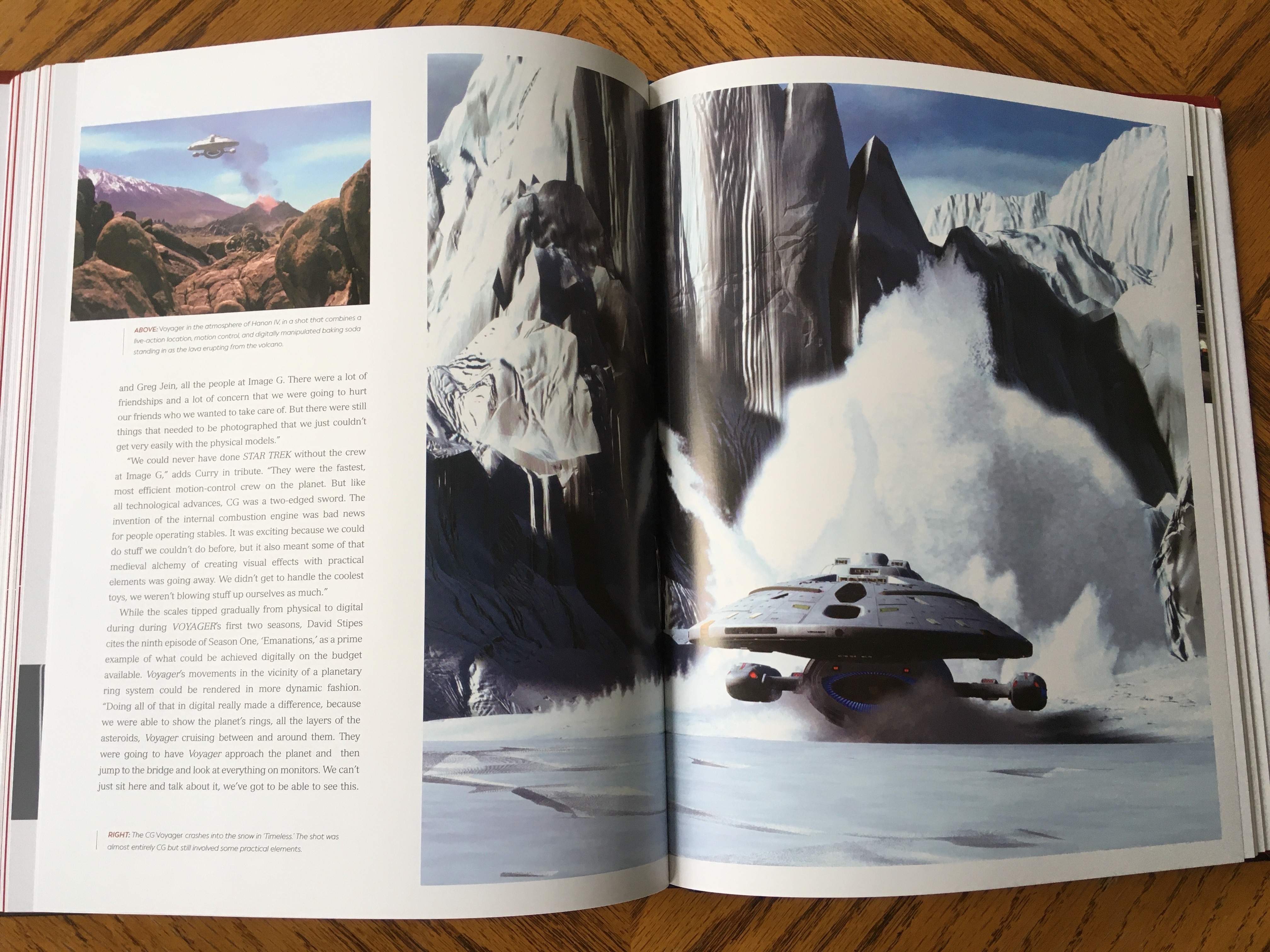
When TNG was in production, many of the special effects were done with models, but by the time Voyager was being produced, digital graphics were beginning to be more cost effective, as well as allowing more creative shots, so as the seven seasons went by, more and more VFX were done digitally. However, in the show’s 100th episode, “Timeless”, the ship is depicted as crashing into a snow and ice covered planet. The visual effects crew found that digital snow wasn’t working, so they ended up doing a practical shot with a model crashing into a tray of baking soda. I’ve seen that episode several times, and I am amazed by how good it looks on the screen.
For fans of Star Trek Voyager, this book is a real treat. For readers interested in television, particularly directing, writing, and special effects, it is worthy. Casual readers or those who just “look at the pictures” might be a tad disappointed in this book, but I read it cover to cover, with a couple sections earning a second reading. For now, it has a spot on my “keeper” shelf, too.
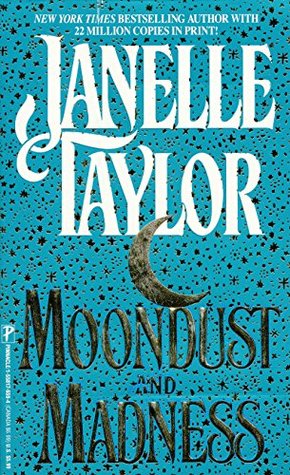
Retro Review: Moondust and Madness by Janelle Taylor

MoondustA friend (a generation older than I am) recommended books by Janelle Taylor, saying she is a prolific series romance writer from Georgia.  That’s true. Goodreads lists lots and lots of titles by Taylor, and apparently she sold quite a few books in her heyday. The series my friend recommended was “western” but as I am a science fiction fan, I chose to read book one in the Moondust series, Moondust and Madness.
Reviews for the ebook, which I read, are not plentiful, but are mostly positive. However, a deeper dive into those reveal that the positive reviews are mostly by readers who remembered this yarn from way back, whereas younger, first time readers are not impressed. I understand both points of view.

Moondust and Madness is a traditional 80s bodice ripper novel, which just happens to be set in space. Heroine Jana Greyson is a scientist who is abducted by an alien gathering up human mates for a large system of planets in another galaxy. These alien abductions are sanctioned by the alien powers that be due to the devastation of an engineered virus which caused a lack of fertility amongst the alien females. BTW, these aliens look just like humans, and can breed with them, so the only thing Jana (and her five hundred companions) need is an inner ear translation device and some brainwashing to help her get ready for her new life. Much of the science fiction trappings seem to have been lifted from Star Trek, from “Star Fleet” to transporters. That could be viewed as “ripping off” Trek, but I think it was more to give readers some familiar science fiction props. This is a romance novel, so there are very few explanations of how gadgets or space ships work.

Lots of political intrigue and the on-again off-again romance between Jana and her captor, Varian Saar, make up the more than five hundred pages of this novel, which begins a series featuring other characters set in the same universe. While I liked the book at times, it is just too retro for most readers. I won’t continue the series, but I did finish it.

For readers who like alien abduction and then fall in love plots, Myra Nour used this same basic plot for her much better novel, Love’s Captive. And, if you want a dose of reality wherein the heroine doesn’t fall in love with her captor, try my novel, Trinity on Tylos.


Star Trek Picard—review and commentary


Ryan in Trek

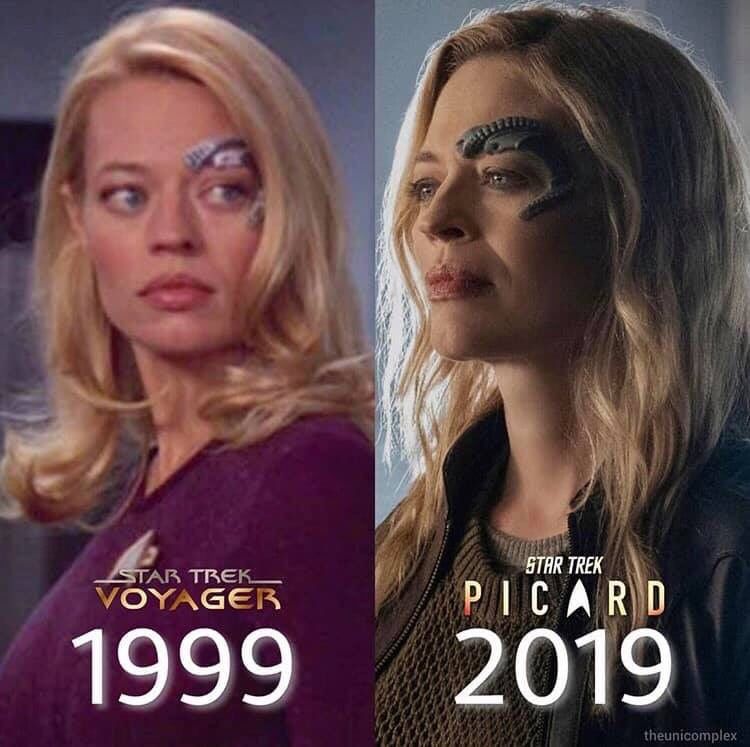
Then and now— Seven of Nine


Star Trek
is an integral part of American culture
and a controversial view of the future of humanity. It began with Gene Roddenberry’s concept for a serious science fiction television series, a novel idea in the early 60s, and it has continued to evolve for fifty years. As America has changed, as science fiction has changed, as television has changed, Star Trek has changed, too.

Picard is set two decades after the feature film, Nemesis, and is based upon the series Star Trek The Next Generation, which ran for seven years on television. Later, four of the feature films were based upon the characters from TNG series. Picard has ten episodes in season one, but the second and third seasons are planned for CBS All Access, which is how hubby and I watched the first season.

This made for the web series has very high production values—the sets and effects rival feature films. Sir Patrick Stewart is still an amazing actor, although the pace of the series (slow!) seems to be partially dictated by the age of its principal character. Viewers who prefer space battles and fisticuffs will probably be a bit disappointed. Casual viewers may also find the editing, with its rapid cuts from scene to scene, confusing. Honestly, I don’t like that aspect at all, but this is apparently in line with Picard‘s sister show, Star Trek Discovery.

Spoiler alert—

We both thought the first few episodes were confusing and lacking in characters, apart from Jean Luc Picard himself, with whom we could empathize. The writers made a good decision in embracing the age of the main character. Anything else would insult the viewer, as Patrick Stewart looks and sounds old. For us, as fans of Star Trek Voyager, the show got better when Jeri Ryan pops in, as an older and less “Borg” version of Seven of Nine. Ryan is still riveting to watch, even without the cat suit that made her fodder for lots of magazine pictures in the late 1990s. In the seventeen years since her character graced the small screen, Seven has become much more human—in her speech pattern, in her attire, and in part due to suffering losses associated with years of living in a deteriorating society.

A key word here is suffering. One of the better aspects of Trek in its first few decades was  its optimistic view of the future of humanity. Although Roddenberry sought to put serious science fiction onto television, and therefore into lots of living rooms, his vision was seldom dark. However, much of serious science fiction—in print, in film, in gaming, and even in graphic forms—has embraced the dystopian view of the future of humanity. A utopia is an idealized society in which social and technical advances serve to make all things better for humanity. Yes, I did say it was idealistic! A dystopia is the polar opposite, in which “advances” in society and technology make things worse. For some examples of dystopian literature/film, think of Orwell’s 1984 or the film Blade Runner, based upon the work of Phillip K. Dick.

Alas, Picard‘s greatest weakness isn’t its slow pace or its rather confusing editing. Nor is it the “flashbacks” in which the characters look just as old as they do in the current timeline, no doubt due to the unforgiving nature of high def photography. Nope, the core problem for many fans of Star Trek will undoubtedly be the dark vision of the future embraced by the writers. Picard is a dystopia. Beloved characters from the previous Trek series will suffer, and some will die. New characters suffer and some of them die, too. And, by and large, those deaths may very well be without purpose, meaning, and certainly without honor.

Star Trek Picard has some strengths, including dazzling cinematography, a rich background of material from which the writers can draw inspiration, and an aging but talented main character. Guest stars include characters from TNG and Voyager, and the development of Seven of Nine, the former Borg, works well. Enjoy the series, but temper your expectations. This is post-modern Star Trek.


My video is reaching students!

NASA nebula

A still shot from NASA

Way back I took classes in “podcasting” and “movie-maker.” Afterward, I came home and practiced what we’d learned in class. I made three videos, which are a lot closer to Powerpoint presentations, if the truth be told. Anyway, one of them has had a bit of success—”A Brief History of Science Fiction.” This video was designed with a few still images, mostly screen shots from NASA such as the one I featured on this post, and two audio tracks. We’d been warned in class about using commercial music, so I downloaded a freebie track that I thought sounded dramatic. The second audio track is my voice, reading story boards, in my rather strong Southern U.S. accent. I did write the story boards, based upon my study of the science fiction genre, my training in English literature, and what of that matched up with the still images that I managed to acquire at the time.

Science fiction is an ever changing literary and film genre (with more than a dash of animation) so my video is already a bit dated. Still, I was most gratified when reading a very valid complaint about the loud musical soundtrack. The complainant stated that my little YouTube video was required for class. Gosh darn! My Brief History of Science Fiction is required by a teacher (somewhere?) for a class (in something?) I’m flattered. Really.

If you don’t mind hearing that awful musical track, head over to YouTube and see A Brief History of Science Fiction. While you are there, the link to my “book trailer” for The Gift Horse is still live also.

Free for Three promo

For those who prefer to shop at home on Black Friday, here’s an unbeatable deal—my science fiction novel, Trinity on Tylos, is free for three days. Why run it for free? That’s simple, really. More readers should mean more reviews and some word of mouth testimonial. So, here’s a link to the novel, which is free on November 29, 30, and December 1.

Trinity is Free for Three (days)

Beginning at midnight on July 14, the giant-sized internet seller of books and other sundries will be offering the eBook version of my science fiction novel, Trinity on Tylos, for free! I’ve seldom used this option, but as their Prime Day promotions will be going on, I thought I might get a few people to download it. If I’m really lucky, I might get another positive review, too. Anyway, here’s the book cover; just click for a link to the sale.

ToT_cover_final_webLG

Here’s an excerpt of my favorite review of the novel:

TRINITY ON TYLOS… is instead a thought-provoking book that will challenge one’s beliefs about the importance of motherhood, duty, and sacrifice. At times, the choices made by Venice and even Allie are ones the reader will disagree with and perhaps even be angered by them. However, one of the trademarks of a well-written novel is its ability to inspire others to debate. TRINITY ON TYLOS accomplishes this and so much more. Pamela J. Dodd has truly demonstrated her gift as a writer with this stunning book.” —