I’m looking forward to the further adventures on Honor Harrington in this new medium.

I’m looking forward to the further adventures on Honor Harrington in this new medium.
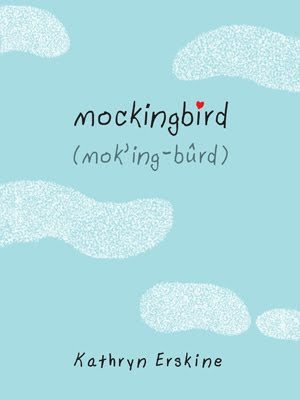 My local library doesn’t have an available copy of Harper Lee’s new/old Go Set a Watchman available just yet, so I chose a novel that I first learned about when taking a graduate level course in improving reading in secondary schools, Mockingbird by Kathryn Erskine. The premise in this YA novel is that our narrator, Caitlyn, is a fifth-grader with Asperger’s Syndrome. I have a family member with a similar diagnosis, so this novel interests me on more than one level. Caitlyn had been quite dependent on an older brother, Devon, but he is not with her any longer. For anyone who does not know, the vast majority of symptoms of Asperger’s are associated with communications skills. Caitlyn exhibits many of the classic symptoms, but there is both humor and pathos in her approach to life. Her father seems to want to help her and connect with her, but he is suffering from a different malady. As the exposition unfolds, the reader learns that Devon was killed in a school shooting and their mother died of cancer a couple of years prior to the events of the novel. So the father is reeling emotionally, and Caitlyn is struggling with adjusting to these losses and with trying to develop empathy for other people. Other players in this novel include young Caitlyn’s teacher, counselor, and her fellow students. Try as she might, Caitlyn has trouble “getting” what others seem to understand with little trouble. This, too, is typical for Aspies.
Mockingbird derives its title from the many references to the movie/book To Kill a Mockingbird, and I do not believe that the novel would resonate nearly as well if the reader had not either seen TKAM or read it. But, with most readers knowing a bit about the famous story by Harper Lee, it is fairly safe to say that most readers will “get” the references. Indeed, I really, really enjoyed the novel, but I did need some tissue toward the end— it is that kind of story.
Reading YA lit is more and more common these days, because big publishing is far more open to publishing those stories. Getting a contract is rather difficult for new writers of adult fiction, but YA sells well, so it is becoming a crowded field. I don’t want to spoil it for potential readers, but I do want to encourage fans of TKAM to read Mockingbird. Although it could be read by upper elementary on up, it is a touching story for readers of any age.
 When I was younger, one of the genres of movies and television that was quite popular was stories from World War II. While I wasn’t alive for it, of course, many in my parents’ generation had fought or knew those who had. Indeed, on a wall in my house is a framed picture of my uncle, A.L. Dodd, Junior, who was killed a few weeks before the end of the war in Europe; he was in Germany, in the Ruhr valley, when he was shot by a German machine gunner. So, the war was quite real to us. We enjoyed the stories, because they were entertainment, but knew that the war had affected most everyone in America.
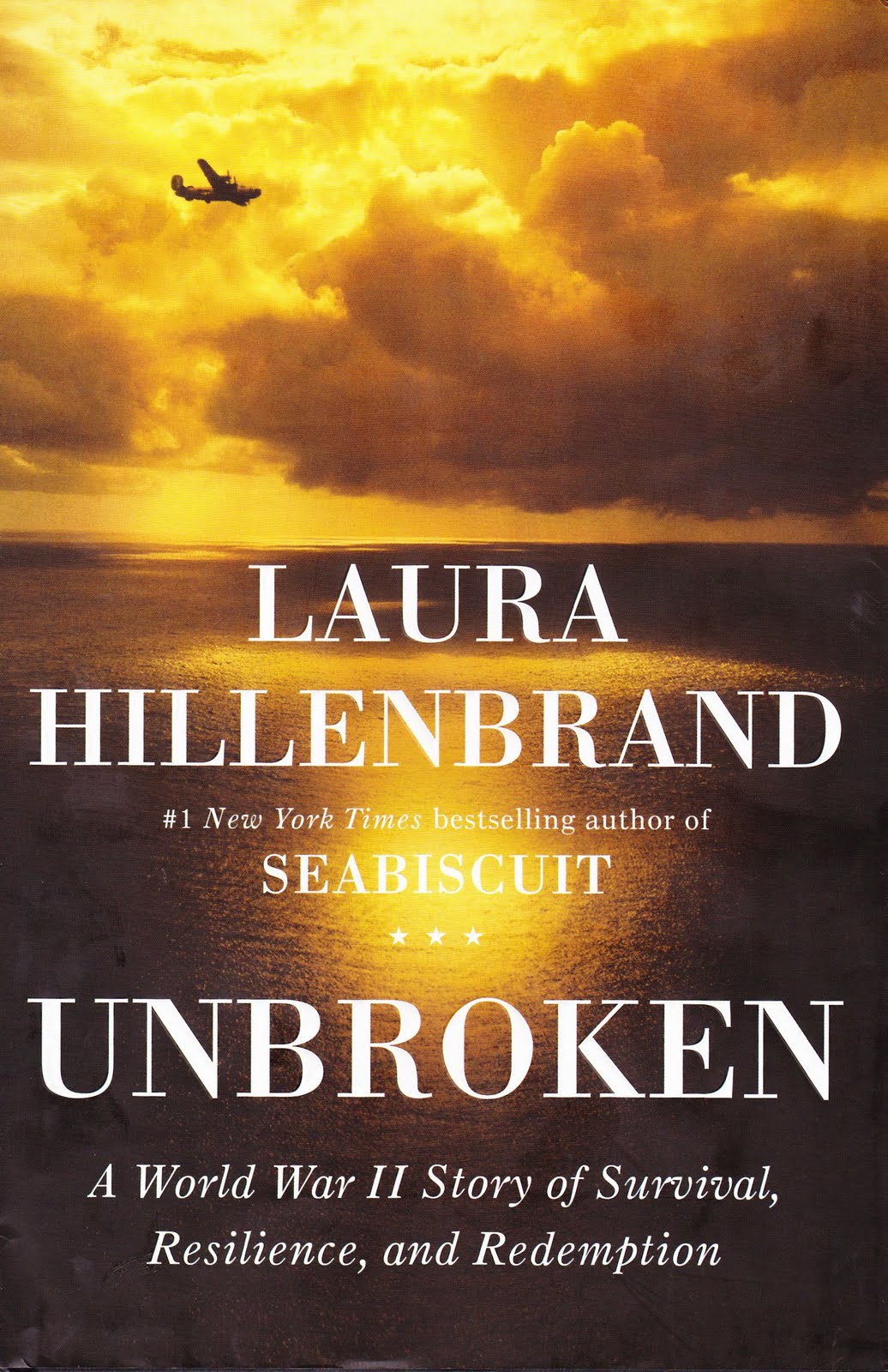
After seeing the film Unbroken, directed by Angelina Jolie, I was telling my sister about it, and she said, “Clearly, you don’t know the whole story. Read the book.” And, with lots of other reading and a bit of teaching, it was almost six months after hearing that advice before I got around to reading the book by Laura Hillenbrand. OMG, why did I wait so long? The movie is very good, but the book is great. Maybe I waited, in part, because I don’t usually like biographies.
As told by Hillenbrand, Louis Zamperini was quite a character, from his earliest days. His parents didn’t quite know what to do with him, and he might be described as a juvenile delinquent. His brother convinced the school authorities to allow Louie to get involved in sports, and Louie was gifted in running. So gifted, in fact, that he became an Olympic runner, and a very good one. He might have known even more fame as a track star, but World War II got in the way. After his plane crashes in the Pacific, Louie and two other Army Air Force survivors were adrift for a very long time. Then, on the brink of death, they were captured by the Japanese. Yes, Louie was still alive, but he faced incredible brutality.
One of my elderly friends is a survivor of a Japanese POW camp in the Philippines. She was interned there as a child, one of several children of a missionary who fled there from China, because the parents thought that being in a U.S. territory was safer for their children. The treatment she and other family members endured was brutal, and toward the end of the war, the prisoners were scheduled to be executed before the Japanese withdrew. She was saved because some American volunteers broke down the fence and escorted the POWs to safety. My friend, to this day, cannot understand Americans can embrace Japan as our friends and allies. To her, they were a barbaric enemy, who starved her family and killed far too many non-combatants.
Hillenbrand does explain the brutality, through Louie’s account, and accounts by other prisoners. But she reinforces the brutal nature of the Japanese POW camps with survival statistics. According to Hillenbrand, only 1% of American POWs held by the Germans or Italians (the European theater) died, but in Japan 37% died. She also goes into the cultural differences which led to the cruelty, not as an excuse, but to let readers know more about the “why” which must come to the mind of her readers.
(spoilers)
The film, Unbroken, closes with the end of the war. That is a good stopping point for a Hollywood film; the audience can go home knowing Louie made it out alive and was welcomed home by his loving family. But, as my sister noted, there is more to the story. The book has a subtitle Unbroken: A World War II Story of Survival, Resilience, and Redemption and it is appropriate. While I do not fault Jolie for leaving out the “redemption” part, the story is incomplete without Louie’s problems adjusting to “normal” life after the horrific experiences he had in Japan and how finding religion gave him the peace he desperately needed. The author continues to cover multiple story lines, including “Phil” the pilot to “the Bird” who was the most sadistic of the Japanese prison guards.
The entire story is important, and those who watch the movie get only the middle, so I encourage readers to tackle the book by Laura Hillenbrand. While it isn’t a quick read, it is certainly worth your time.
Author Bertrice Small’s obituary in the New York Times piqued my interest in her writing. I’m not sure if I read any of her books back when I read historical romance, but somewhere in a stack of books that a friend passed along to me is her Skye O’Malley. Quite honestly, it is on a shelf downstairs, with a lot of other books that I may never get around to reading. However, a brief look at Small’s book list led me to begin with her debut novel, a “harem” romance called The Kadin. I downloaded it from the Kindle store, and there are a few rough spots where the file didn’t translate too well, but over all, it was in good shape.
I was prepared to not like the novel. The reviews on Goodreads (something like 1900 plus) were mostly good, but there were any number of bad ones. Actually, the reasons for the bad reviews are some of the aspects that I liked best. Instead of being a slice of life, The Kadin is the whole life of Lady Janet Leslie; at least from the age of four, when her father legitimizes her, the offspring of an affair with a local peasant; until her death. Thus, it is far more than a romance. When our main character is a young teenager, her father is appointed ambassador to some obscure Middle Eastern nation and while there she is abducted and sold as a slave. Her purchaser is the chief eunuch of a harem, and young Janet, renamed Cyra, is groomed to be the young sultan’s favorite. For the most part, the eunuch’s plan goes well, but there is sufficient political intrigue between Cyra and her Selim, as well as Cyra and the other harem inhabitants that the plot never really drags, and the novel is some 400 plus pages.
Bertrice Small has the reputation of writing rather sexual romances, but The Kadin precedes that aspect of her writing. While her main character is very strong, she is swept away into the role of harem slave and never really protests that. Modern readers often bring modern mores into their analysis of fiction. Some of those one and two star reviewers seem to expect Janet/Cyra to rebel and somehow turn the sixteenth century into the twentieth at least, which amuses me. Others believe Small’s portrait of harem life, while quite fictional, has too many details. Who cares what they ate or wore? Well, actually, I care. Details help readers get into the story, and I really enjoyed getting into this novel. If it reminded me of anything, it has a lot in common with Angelique in Barbary, but that’s an even older story and is the best “harem slave” story I have ever read.
The Kadin is more than a romance and is almost diametrically opposed to modern chick lit. My time with it was a bit like watching great old movie that I had somehow missed seeing the first time around. I enjoyed it, and while it isn’t a great book, it is a really, really good one.
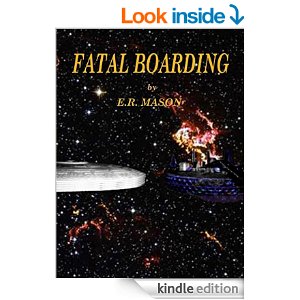
Fatal Boarding is better than the cover would suggest.
Recently, I read E.R. Mason’s science fiction novel, Fatal Boarding, via the Kindle app. As of this writing, it is a bargain because it is free. And, normally, if I don’t particularly like a freebie, I do not review it. I did review this one, on Amazon, and I am going to do so in a more elaborate manner here, because I did like it, but with reservations.
Why did I “buy” it in the first place? The cover is pretty bad, I think, but the number of reviews and stars is impressive. Also, you can’t beat free. So, I added it to my Kindle library, and I did manage to finish it, although I thought of abandoning the effort more than once. The main character isn’t likable, at least not a first, but he did grow on me. The situation is interesting, and the author does a good job of putting in details to help the reader visualize both settings and characters. Actually, the plot line isn’t all that fresh. However, just about every story has been told by now, so all we readers (and writers) have left is theme and variation.
Adrian Tarn, main character, is an experienced spacer, currently serving as security officer on a ship that has a boring task, mapping. He signed on because he lost too much money gambling, and at least a portion of his grumbling is probably intended as foreshadowing. Anyway, his rather boring job is interrupted when his ship goes a tad off course to investigate a derelict alien vessel. The reason this other ship is abandoned is a bit of a mystery, and solving this mystery becomes imperative when Adrian’s ship has malfunction heaped upon malfunction, apparently all due to the close proximity of the mystery ship. Then, folks start dying, as the title indicates. So, this is a space mystery, which evolves along expected lines, as Adrian and his fellows begin to figure out how and why both vessels are dead in space.
Overall, I did enjoy the story, but the most troubling aspect is the lack of proper grammar, spelling, and/or editing. As a writer, I know it is hard to catch every little thing, especially when working on one’s own manuscript. But, Fatal Boarding suffers myriad problems, making this a distracting book to read. The author confuses “loose” and “lose” several times, and there are missing quotation marks, missing commas, odd paragraphing, and other issues. At times, I had to back up to be certain what was happening or who was speaking.
Yet, 145 reviewers have rated this effort 5 stars, and another 87 give it 4 stars. That’s 228 more reviews than my space story, Trinity on Tylos, has garnered during 8 years of publication.
I’m doing something wrong….
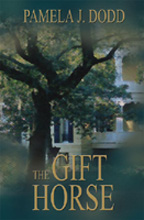 My debut novel was written over the course of several years; I have laughingly called it “my stress relief book” because when I had a bad day at work, I would stay up late at night and make sure my main character, Angie, had a worse day! Anyway, while I don’t view it as my best work, I have a strong affection for this twisted tale of misguided affection.
Here’s the “blurb” from the back cover:
If Angela Donalson – a young woman, orphaned, living in poverty, with brains and ambition – were granted three wishes, she would want wealth, an education, and a family.
Marc Avery has always had everything he ever wanted. Now he wants a girl for his pleasure, a girl no one will miss.
When, in a bizarre twist of fate, Angie is abducted and held at Avery’s remote Tennessee estate, she initially tries to thwart her captors. Unable to gain her freedom, Angie finds herself trading her morals to meet the challenges presented to her each day. As she comes to know the man behind her abduction, and comes to recognize that he can provide her with more than she ever dreamed possible, Angie faces dilemmas which will determine not only how she lives, but if she lives at all.
Combining a dynamic plot, remarkable characters, and a setting in the deep South, Pamela J. Dodd takes her readers for a wild ride on The Gift Horse.
After I did some minor edits to the original published version of Trinity on Tylos, which is now exclusively an Amazon Kindle title, I decided to do the same thing with my debut novel, The Gift Horse. Before I put it out to pasture, I really would like to do some web 2.0 marketing for it. However, the nice folks at Booklocker suggested that I pull the print version but leave the eBook alone. Since The Gift Horse is available on multiple eBook platforms (pdf, Nook, as well as Kindle) folks who want it should not have any trouble purchasing it. Of course, the few print copies that are still around (I have a few in a box somewhere) are all that will be printed. So, if you own one of the print copies, it might be worth something some day.
Until then, the original tale is available for $2.99, which is less than the price of a deluxe hamburger.
 Visions and Revisions