Inside Marine One by Colonel Ray L’Heureux

While I seldom read biography, when I do, I usually really enjoy it. Marine One: Four U.S. Presidents, One Proud Marine, and the World’s Most Amazing Helicopter is a really good read. The author, a retired Marine, knows his subject matter, of course, but the book’s organization, which is both linear yet focused, helps make it an engaging read.

After an opening which describes the “victory lap” circling Washington on Inauguration Day, which is a taste of one of the final “missions” that the author participated in, the usual chronological approach takes the reader back to the time when the author’s love of flying helped him choose a career path. Lacking the funds to pursue a private education in aviation, Ray L’Heureux (call sign “Frenchy”) decides to join the Marine Corps as a pilot. During his very successful training, he decides to fly helicopters rather than jet aircraft, which most of his fellow Marines sought as their specialty. While on duty in California, Frenchy is in the audience gathered to see President Reagan land at his base. As he is impressed with this unit, Frenchy decided that he wanted a tour of duty with HMX-1, which is the name of the part of the Marine Corps which provides helicopter transportation for the President.

L’Heureux actually served in HMX-1 twice during his thirty year career in the Marines, hence the “Four Presidents” in the sub-title. He was a junior officer during the Bush 41 and Clinton administrations, meaning that he was part of the group that planned the helicopter trips (called “lifts”) and occasionally flew as co-pilot for dignitaries. L’Heureux returned as commander of HMX-1 during the presidency of George W. Bush, with whom Frenchy became friends. When Bush 44’s term was over, the author was still the commander of HMX-1, thus he flew the Obamas for a few months before his assignment ended and the reins of HMX-1 went to another Marine pilot.

While not overly technical, L’Heureux lets the reader know quite a lot about how helicopters work. The focus of the book is on HMX-1 and their two sorts of helicopters, all painted dark green with white on the top, but the author also flew in other types of helicopters with other missions, and that’s of interest. However, the “inside” view is largely about how the military goes to great lengths to insure both the safety, comfort, and efficiency in providing transportation for the President, the Vice President, and heads of state of visiting nations. Whether the reader knows much about helicopters, the military, or just recent history, or not, there’s something for everyone in Frenchy’s book. According to the author, President Eisenhower was the first U.S. President to use helicopters for day to day transportation, as it was faster and far more convenient for everyone. Motorcades require a number of security measures, which, of course, takes time and impacts traffic. When the President boards one of the “white top” helicopters, he can be where he needs to be more quickly, and traffic is unimpeded. So, since Eisenhower, most Presidents have relied upon Marine One for quite a lot of their transportation, whether going to Andrews to board Air Force One, or just a short trip to the Presidential retreat, Camp David.

One of the aspects that I found quite interesting were the stories about Camp David, which is a 45 minute ride from the White House via helicopter. The author describes playing “Wallyball” with Bush 41. Later, L’Heureux, both an athletic guy and a Marine, was invited to ride mountain bikes with Bush 44, and that experience began their friendship. During his time of flying George W. Bush, the author was frequently at the ranch in Crawford, Texas, and helped build a bike trail on the ranch.

Another interesting aspect of the book is that when the U.S. President travels abroad, the helicopters go over first, so that the President is always flown by Marine pilots. The effort necessary to dismantle, load, unload, and reassemble and then test the helicopters before the arrival of the President is a bit mind boggling. In his memoir, L’Heureux describes flying Marine One over Normandy for D-Day anniversaries, landing in Germany so the President could meet with Angela Merkle, and even landing at Windsor Castle, so the President could have tea with Queen Elizabeth.

For readers who enjoy history, insider information, or just an entertaining read, do check out Inside Marine One.


More from D.A. Boulter— One Trade Too Many and Trading for War

Some years ago, I discovered D.A. Boulter’s ebook series about a family of traders who traveled via space going vessels to various ports of call. Recently, I bought a couple more entries in the series, books 3 and 4, with the respective titles above.

As I previously touched upon earlier books in the series, here are links to Courtesan, Trading for the Stars, and Trading for a Dream. I’ve also read some of his stand alone books and other series, but the Yrden Chronicles remain my favorites in his growing booklist.

In One Trade Too Many, the Clay and Colleen Yrden are doing what their family does, traveling, trading, and raising their kids onboard one of the combo passenger and cargo ships, Blue Powder. During this entry, the Captain of Blue Powder (Clay Yrden) asks the head of security, Adrian Telford, to play passenger in an attempt to ferret out a possible saboteur, and one of the passengers, a widow, begins stalking Mr. Telford. While not boring, the story takes a while to build, but there is significant suspense toward the end of this third volume of the Trading series, and it has a cliff hanger ending. Some folks hate such endings, but as I purchased books 3 and 4 at the same time, I just swiped on over and read Trading for War. The latter is largely about warfare, and focuses on Colleen Yrden, who has a host of problems: her husband is missing, her son is growing into manhood with revenge on his mind, her family’s business is being disrupted by pirates and mercenaries, and her two mothers hate each other’s guts.

Nowadays, authors tend to follow other forms of media and rely upon bad language, sensuality, and inorganic plot twists to entertain readers. D.A. Boulter’s stories do not have any of those characteristics. Indeed, while not written for kids, or even young adults, these stories are entertaining but almost squeaky clean. Honestly, it is quite refreshing to read Boulter’s stories, which rely more upon world building, character evolution, and wholesome themes than anything shocking.

Fans of science fiction and multi volume stories should take a look at the works of D. A. Boulter. He’s one of the first eBook authors I ever read, and he remains a favorite a decade after I discovered his work.

Re-reading, Goddess by Mistake

Recently, I got my hands on a used copy of a book I loaned and lost, Goddess by Mistake by P.C. Cast. Often, books are so similar that I don’t remember them well enough to write a decent review a week or two after I have finished them. Goddess by Mistake was memorable for me, so much so that I remembered it almost two decades after my first reading of it, so when I scored a used one on eBay, I put it at the top of to be read pile. The story still seems fresh, but the sassy narrator is the main reason I liked it then, and why I still like it. For those who want to know more, here’s a link to my “old” blog.

http://pamspages.blogspot.com/2007/08/

Searching for Shelter: Aftermath Book 1—a brief review

In short, this is a disaster upon disaster yarn.

Searching for Shelter is actually a pretty good book. I was a bit surprised that it holds together as well as it does, with three authors listed. While I haven’t done a collaboration novel, most of them involve a “big name” author lending a helping hand to a newbie, or one author does an outline while another does the grunt work. I have no idea how these three folks did it, but Searching for Shelter gets better as it goes along, and it goes along at a good pace.

As a southerner, and one who has travelled in Mississippi, I appreciated the setting and the types of characters that populate the novel. Or maybe I liked it because I grew up in the era when “disaster movies” such as The Poseidon Adventure and The Andromeda Strain were blockbusters at the theatre. Anyway, this novel is in the genre of “you need to be a prepper to survive into the next book” that seems to be growing in popularity. While not as pedantic as the last “prepper” novel I read, this one does have some instruction interwoven into the plot.

A rather large cast of characters, in the Mississippi delta region, are introduced in the early chapters. They include a young couple (Edward and Maria) and their midwife (April), as their first child is about to be born in the midst of the biggest hurricane anyone in that hurricane prone area has ever seen. Indeed, the storm is labeled a category six (and there are only cat 1-5 storms now, so that lets the reader know just how bad this rascal is going to be for the landscape and its citizens.) Another main character is Rita Sloan, a young lady with a very troubled past, desperate to get home, who ultimately seeks shelter in a mechanic’s garage, along with the owner of the shop and his nephew. Other important characters include prisoners at the state penitentiary, as those are invariably built in rural areas. The storm first knocks down almost every building, then the storm surge floods all but the highest ground. In short, this is a disaster upon disaster yarn. As this is a novel about being prepared, or not, most characters have a skill or a stash, or want to take something from someone else. For instance, Edward and Maria have lots of food stores, as they are farmers, while April desperately wants to get home to her stash, which includes a good supply of medical items, from medicine to bandages. Even Rita has her “go bag” in the car and manages to hang onto it through the entire book.

Like the Johnny Cash song, eventually all of these characters, and a slew of others, are goin’ to Jackson. However, each one’s journey is fraught with peril, from ne’er do wells looting and stealing to gators looking for their next meal. And, once the characters reach the city, the devastation is so great and the population so ill prepared, that the shelter they are seeking remains elusive. Thus, while some plot lines are resolved, many are left for the successive novels to explore.

I haven’t decided to purchase books 2 and 3, but they are definitely on my “maybe” list.

Nowadays, there’s just so much free and cheap reading available. And, I’m a total reading glutton. For real!

Remember when journalism was compelling reading?

Hubby and I have been watching Manhunt: Unabomber on Netflix, and since the storyline is anything but linear, we both looked for articles to help us understand the story. As we are chronologically gifted, we remember the case being in the news, but as it happened some 25 years ago, we wanted a refresher. Hubby looked at Wikipedia, because, as always, it comes up first on search engines. I went a bit farther and looked at the source material for that article and chose a piece in the NY Times archives. Oh, wow, is that a great article. A hell of a great read, and it helped me know more about the Unabomber case than I ever knew way back when. Also, it was a glaring reminder of how far the standards of good journalism have fallen.

Unabomber

One of my sisters is a journalism major, and she still thinks that journalists do a reasonable job. Oh, sure, she says, there are some bad ones, and some hacks, but that’s always been the case. My other sister works in communications and believes modern journalists are often poor writers managed by even poorer editors who are more interested in how many times articles are shared or clicked upon than actual quality. After reading the simply superb article about Ted Kaczynski in the NYTimes, I tend to agree with the sister that says journalism has fallen on hard times.

Manhunt: Unabomber is a good show if you haven’t seen it, and I recommend it, but the filmmakers do jump from scene to scene, sometimes with only a brief graphic telling the date, too quickly. In part, this seems to be an effort to create a bit of suspense, which is always tricky when telling a tale wherein the outcome is known by the audience. The folks behind the show do an excellent job of portraying the very complex man who chose to bomb those he deemed hostile to him or to his vision for the advancement of society, and it reveals the mis-steps of the initial profilers of the suspect labeled UNABOM because his targets were associated with universities or airlines. The NY Times story mentions Kaczynski’s failed attempt at getting articles (or rants, depending on one’s viewpoint) published. Indeed, only the Unabomber’s success at getting his “manifesto” published in a national newspaper actually caused him to be captured, and the FBI had a tip or it wouldn’t have happened at all.

The story in the NYT is not entirely linear either, as it jumps from witness to witness, but the story is primarily based upon a long interview with David Kaczynski the bomber’s brother, who ultimately helped the FBI identify the bomber. Still, the article is far more informative, if not as dramatic, as the television show. In particular, I was struck with the tremendous dilemma in that David had, because he knew that other instances of FBI vs. a long sought suspect ended in a firestorm (such as the Branch Davidians in Waco and the stand off at Ruby Ridge) so he was concerned. With the support and prompting of his wife, he supplied materials to support his suspicions and approached the FBI. Despite being assured that his role would be anonymous, someone in the investigation leaked it to CBS news. Nowadays, it is no secret that the FBI is more of a political organization than a crime fighting one, but even then, the younger Kaczynski brother was very wise be concerned, and even wiser to have an attorney.

One aspect of the NYT story that helps it be fascinating reading is the focus on Ted Kaczynski, from childhood on, and the use of excerpts from the manifesto. Despite being mentally unbalanced, the brilliant former math professor did have some profound observations about the deleterious effects of advancing technology on people and society. He attempted to wall off those technological intrusions by living as he did, off the grid, in Montana. For whatever reasons, whether one deems it mental illness or just plain evil, Kaczynski did try to fight technology by writing and bombing. His life, and those of his victims, would have been far better if he had written more, been a little less clueless about getting published, and never made those bombs, however.

The television series Manhunt has two seasons available. Season one is about the Unabomber and season two, entitled Deadly Games, is about Eric Rudolph and Richard Jewell, one of whom made bombs, and one of whom was falsely accused. Both shows are worthy of viewing. Sadly, I don’t think anything published in the New York Times today is as nearly as good as “PRISONER OF RAGE — A special report.;From a Child of Promise to the Unabom Suspect.”

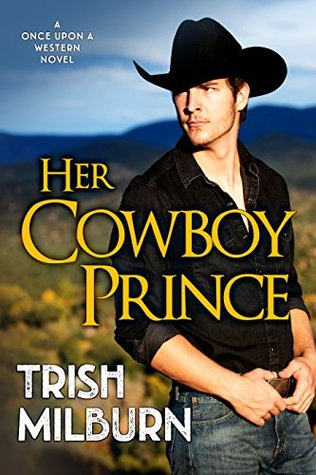
Trish Milburn’s “Her Cowboy Prince” review

For readers who want an up to date romance about courtship, then this book merits your attention.

Modern romances are often more about sex than the “getting to know you” that dominated romances in previous decades. Nowadays, it is not uncommon for the first kiss to be followed by sexual fulfillment, and that often happens a third of the way through the narrative. Thus, many modern romances are about the sexual relationship, not about courtship. Her Cowboy Prince is old fashioned, but it is a recent publication, and I liked it very much for that reason. Another reviewer called it “clean” and that’s fair, I suppose. All too often, I’ve downloaded a romance with a recent publication date, only to find references to commonalities from decades ago, such as cassette tapes or pay phones. It may be fun to read an author’s backlist, but please don’t re-release books that are decades old and pretend they are new! In Her Cowboy Prince, the neighbor disturbs Melody by playing video games at all hours; the heroine up cycles items she purchases at thrift stores using techniques she garnered from watching HGTV; the resort uses its website to attract customers for their newest events, and so forth. Yep, this story’s not recycled material, which is refreshing.

Her Cowboy Prince has a cute title and stock cover cute guy on the cover, but the plot is a bit more serious. Melody Shaw is a housekeeper at a spa/resort in Montana, but she is there because she has had to go into witness protection after she testified against her stepmother, who had her father killed and managed to deprive Melody of ownership of the pharmaceutical company that he founded. Oh, and for good measure, Melody’s step-sister tried to have her murdered, so Melody has reasons to keep a very low profile. The housekeeper job across the country from her former home in Atlanta should be safe, but Melody can’t quite keep from looking over her shoulder at everyone.

Justin McQueen, a newly eligible bachelor since he figured out that his latest fiancée was a gold digger out to get everything he owned, runs the resort where Melody works. Before long, the attractive and way too smart for her job housekeeper attracts his attention. The author could have them jump each other’s bones in one of the guest rooms, but she restrains her characters. They plan events for the resort. They run into each other at a local cafe. She rescues his dad from a highway accident. As he takes her home from work, he stops to show her the stars. In short, they develop a romantic relationship. However, Justin is aware that there’s something mysterious in her reluctance to enjoy his company, while Melody is continually afraid of breaking her cover and inviting her troubled past into her new digs in Montana.

Author Trish Milburn does a better than average job using her settings, scenic Montana and metro Atlanta, to help create an interesting story. While the plot is somewhat predictable, there are no jarring moments when the reader just can’t suspend disbelief. The characters are mostly engaging, from the ever suspicious heroine and the diligent hero, to the displaced southern thrift shop owner and the poor but proud video game playing neighbor whom Melody befriends. The villains are mostly off stage, but the threat is sufficient to provide suspense for the reader, along with Melody and Justin.

For readers who want to experience vicarious sex, this book would not be appropriate, but for readers who want an up to date romance, about courtship, then this book merits your attention.

BTW, I am reviewing the book because I liked it, not because I got a free copy for review purposes.