Guest Author Interview

catching-raven-volume-1-by-cb-tuckerFor a change from my usual topics, I am posting an interview with CB Tucker, an author who lives in northeastern Georgia. Tucker has been to approximately 132 countries and lived in 10. He believes that his worldly experiences beg to be placed into a book. Tucker is a Vietnam veteran, who was also in Iraq where he backpacked for 10 months from the Saudi border all the way to Kirkuk. During his career he has seen the horrors of war and the strains of peace and both heroism and cowardice. Tucker worked in the computer industry for several years. Prior to retirement, he spent six years working in diplomatic security with the State Department of the United States. 

Tucker is the author of Catching Raven: Volume I, Catching Raven Volume II, and Catching Raven: Elizabeth Raven Coming Into Her Own.


When did you first realize you wanted to be a writer?

While I was living in Virginia Beach with my first wife and three daughters, I realized that (including the female cat and dog), I was the only man swimming in a house of estrogen. I began writing stories about my daughters, figuring this was cheaper than therapy. The final push came when I was stationed in Dakar, Senegal, and my wife was sent home for medical reasons. Senegal has some of the most beautiful black people I have ever seen: Picture walking around Dakar and everywhere you look are Halle Barry clones. I decided that it would be wiser to stay in my apartment and write rather than go out. So I began writing. I had no idea what I was going to write, or where it was going. My ideas warped several times into the story that I have today.

What books have most influenced your life most?

The Bible. I was a computer tech for 30 years and had little time to read for pleasure. When I was stationed in Islamabad, Pakistan, I wasn’t able to go out, so I decided to down load books to my Kindle app on my tablet. I had no idea what book to start with, no idea of authors to read, so I decided to check the best sellers list, which was an obvious plan of action. The same book was on top of three different lists: 50 Shades of Grey. (I did say I was in Pakistan by myself.) There were parts I couldn’t bring myself to read, but I did enjoy the book for the interplay between the two main characters. Soon, I was reading one book a week. As time passed, I came to realize that my favorite author was David Baldacci.

How long does it take you to write a book?

I began writing Catching Raven in 2014, and I really didn’t finish it until 2016. I have follow-up books, and they took about two months each, but the characters are established. I actually write the book in my mind before I sit down to the keyboard, and then I iron out the flaws.

What was one of the most surprising things you learned in creating your books?

How much I enjoy coming up with my own story. I find many of the stories I see on TV and in the movies to be stupid. When I write a story, I try to keep things logical and real. I want the reader to believe that what is happening is possible.

Is there a message in your novel(s) that you want readers to grasp?

In the Bible the book of Job is the story of a pious man who believed in God. The devil decided to test him and took away his family, his possessions, and all he had. Even living with the beggars with sores all over his body, he refused to deny God. For his steadfast determination to remain loyal to God, he was rewarded tenfold. That, in a sense, is what Samantha Raven goes through in my novel. She was steadfast in her belief that her daughter was a present from God and Tip, who is the young man she met at Wake Forest and fell in love with; he is the father of Elizabeth Raven. In the novel, Samantha spends her life doing right by her daughter. She remained steadfast and her mission was doing everything she for her daughter, including building a life without having her daughter’s father present. What I would like people to take from this book is the determination to do what is right and proper. In the end, Samantha, too, is rewarded tenfold.

How realistic are your books?

I hope everyone can believe what happened in this book. Can a man become a billionaire and go back to find the woman he impregnated as a young man? Can that woman be true to herself and him? Can a desk lamp warp into a chandelier? Most of what I describe, I hope can happen. I tried to write a book that can believed, even though it is fiction.

Are experiences based on someone you know, or events in your own life?

Yes! I have traveled to 132 countries and I have lived in 10. I have lived in socialist and Muslim countries. When I was young, I studied martial arts and have belts in Taekwondo, Hap Kido, and Sansui. I’m not a bad ass, but I have had experiences in many facets of life; therefore, I know what people can do if they are driven to achieve it. When I was in diplomatic security, I was trained how to drive and shoot. I received training concerning human trafficking and the customs of different societies that I would experience. I try to incorporate all that knowledge and experience into my books.

What makes you passionate about being an author?

Hopefully, when people read one of my stories and come away with new knowledge and appreciation of something that they were never aware of, they will have new knowledge. Did you know that you could drive 60 mph in reverse? Did you know that even a one hundred pound girl could take down a two hundred pound man if she knows how? I hope readers realize that the core of every society is the family. We, as a society, need to protect families and help them succeed. It is those age-old truths that are often disparaged but when followed do succeed: Honor your parents, work hard, and get all the knowledge you can when you can. And don’t quit a job until you have a better one. Be true to yourself, and what you believe.


Thank you, CB Tucker for your detailed answers!

Why do writers need editors?

editing-apps-800x600Before you say, “Duh!” please remember that some people have lots of self-confidence. Others can crawl off into a mental state and ignore the world around them, which can be considered a skill in the writing biz, but conformity is comforting to readers. Other writers seem to think that the rules don’t apply to them, like ee cummings. A few insist on ignoring the red and green squiggles that the word processor uses to offer help in eliminating common mistakes. Writers suffer from any of those problems, or have other idiosyncrasies that make editing necessary. Yes, I considered dealing with editors to be something of a pain, because I am self confident and not afraid to break a few rules.

However, I have learned quite a lot from writing teachers and editors. Friends and family will offer a few tips, but if those friends really like you, brutal honesty is off the table. Sometimes the distance combined with authority that goes along with having an editor is transformative. My first novel was a hot mess when it finally got a full length reading at the micro press that ultimately put it through line editing. My second novel was better, but still needed a lot of work in the editorial phase, beginning at conceptual, then line by line, and finally, proofreading. At that time, WCP did not pay proofreaders, instead relying upon volunteers, which was a bad business decision. My work suffered from that lack, as a few errors made it into the printed work, and sales were less than optimal.

Publishers seldom take on a fiction manuscript that isn’t complete, which leaves out the project development phase. Once the novel is finished, most writers will attempt to put it into the hands of either an agent or a publisher. Problems with style or continuity may crop up at this stage, but if the work is compelling, those can be addressed. What most people consider editing is copy or line editing, which is a line by line examination of grammar, spelling, mechanics, and style. Any “big changes” in the manuscript probably occur at this stage. The back and forth over details can be annoying or even funny, but most problems in the work are solved at this phase. Once, an editor challenged me on a detail where I described a man wearing a glen plaid suit. I thought it descriptive, but she thought it was a weird description that no reader would understand. Ultimately, the description remained, but that is the kind of thing that comes up in line edits.

Before printing comes proofreading, when any style or content changes have been addressed—so what’s left is a last look at spelling, capital letters, and adjustments to make the page layout work. I remember the copy editor at Whiskey Creek Press had to substantially change one sentence to avoid a page with a single word on it, and I was okay with her changes.

A good editor makes printed work better—by questioning, suggesting changes, and insisting on being absolutely correct. Real editing makes the author’s work shine, without the distractions of mistakes or inconsistencies. Nowadays, many people think that word processors have made editors obsolete. Unfortunately, that is simply wrong, and writing is suffering mightily. Errors abound, and the solution is a great editor who reads and corrects. Technology is advancing, but it cannot replace editorial expertise.

So you want to be a successful author—

book and moneyWhile I am pretty sure I don’t qualify as successful in the author department, I made enough mistakes to write (or rant) about the topic. Here are some tips, in no certain order, for those who are writing with the intent to publish a book, or for those who have published but are lacking in sales.
First, write the best book you possibly can. Yes, that should go without saying, but writing is like photography or cooking in that no matter how good you have done it, you can get better. There is no such thing as perfect in any of those endeavors. However, don’t publish unless it is really ready. Mistakes in print are embarrassing!

Next, find a real publisher if you can. Not necessarily one of the big companies (although if that happens for you, whoo hoo!) There are a lot of small and micro presses that can get a book into print and into at least some distribution channels, which leaves more time for the author to help with promotional activities and keep writing. A small company, Whiskey Creek Press, published my second novel, and while my sales were low, any money I spent on promotion was voluntary. My debut novel was initially accepted by a micro press, but when it failed, I ended up using a self-publisher called Booklocker.

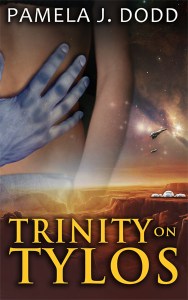
Third, if you end up self-publishing, do so at minimal cost. Many authors have published via the Amazon Kindle Direct program, which is free. Yep, that’s right, free. I published the second edition of Trinity on Tylos via KDP, and my only expense was a fancy new cover by Dawn Seewer (which was entirely optional.) I disliked the first cover, which was done by an artist at Whiskey Creek Press, and I thought the book deserved a better effort, and Dawn did a great job for me. Another self publishing program that I am considering is Smashwords, which offers many free services. For most self published authors, the distribution channels associated with Smashwords are fantastic.

Fourth, once the book is ready to debut, get the marketing plan in motion. There are lots of books on this topic, as well as a gazillion websites. I’ve had some success with using Facebook groups, such as Ebook Rave, Kindle Book Authors, and Sci Fi and Fantasy Authors . Those have worked well in conjunction with sales and freebie promos, but bear in mind that I have low cost Kindle titles. Under “links of interest” on this site I have a few other spots that I’ve used for promotion, including “Book Goodies” and “Goodreads.” Having an author page on such sites is not necessary, of course, but doing so usually offers links for anyone who “googles” your author name.

Finally, the most important pillar in promotion is reviews, and lots of them.  If friends and family will write a review on a vendor site, such as Amazon or Barnes and Noble, that’s great, but most of us don’t have that many friends. Also, such reviews don’t carry as much cashé as a professional or semi-professional site. Do send your books to as many of those as you can find and afford. Don’t ever pay for a review, beyond giving a copy of the book. Paying for reviews is wrong on both sides of the equation. If the author pays for a review, then there’s a bias that makes the review worthless for the reader. Unless the book is an eBook only, then there is some expense in distribution of the ARC (that’s advanced reading copy) or published book, so it is best to send the book(s) to appropriate sites, because some sites only review certain genres. There are any number of review sites, and these do come and go fairly frequently. My first novel, The Gift Horse, had several reviews online within a year or two of publication, but apart from those on Amazon and one archived on The Midwest Book Review, they are gone! Therefore, if you get an online review, don’t just save the link, but archive the content, too!

When I first published The Gift Horse, I was invited to do some speeches to local clubs, and I sold a few books via that avenue, but as publishing and self-publishing became more common place, those opportunities dried up faster than blackberries in late August. I also got a book signing at a book store after Trinity on Tylos came out, but it was a very lonely afternoon. If those opportunities come your way, enjoy them, but books and eBooks must be purchased via online vendors in order to make any real money, and that means social media marketing. If you are here, clearly you know what a blog is, of course, and having an author website is usually a good idea. Marketing is an ever changing field, but as of this post, you must get to know Twitter, Instagram, Facebook, and other modern means of communication in order to build an audience for your books.

Oh, and as footnote to “finally” when readers like a book, they usually look for another book by the same author, so you’d best be writing another book, too.


A few books on marketing:

How to Market a Book

Guerrilla Marketing for Writers

The Frugal Book Promoter

Book Marketing 411 for Authors

And a couple on having a book worth the effort:

Don’t Sabotage Your Submission

Writing the Breakout Novel

Free for Three promo

For those who prefer to shop at home on Black Friday, here’s an unbeatable deal—my science fiction novel, Trinity on Tylos, is free for three days. Why run it for free? That’s simple, really. More readers should mean more reviews and some word of mouth testimonial. So, here’s a link to the novel, which is free on November 29, 30, and December 1.

Trinity is Free for Three (days)

Beginning at midnight on July 14, the giant-sized internet seller of books and other sundries will be offering the eBook version of my science fiction novel, Trinity on Tylos, for free! I’ve seldom used this option, but as their Prime Day promotions will be going on, I thought I might get a few people to download it. If I’m really lucky, I might get another positive review, too. Anyway, here’s the book cover; just click for a link to the sale.

ToT_cover_final_webLG

Here’s an excerpt of my favorite review of the novel:

“TRINITY ON TYLOS… is instead a thought-provoking book that will challenge one’s beliefs about the importance of motherhood, duty, and sacrifice. At times, the choices made by Venice and even Allie are ones the reader will disagree with and perhaps even be angered by them. However, one of the trademarks of a well-written novel is its ability to inspire others to debate. TRINITY ON TYLOS accomplishes this and so much more. Pamela J. Dodd has truly demonstrated her gift as a writer with this stunning book.” —

The Princess Diarist by Carrie Fisher— brief review and commentary

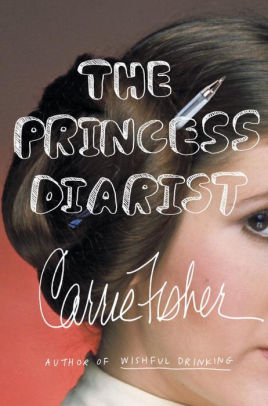
DiaristI’ve met a few people who have never seen Star Wars or any of its prequels and sequels. Weird, huh? For me, when it premiered in 1977, it was the best science fiction film I’d ever seen, and to this day, it ranks among my favorites. The characters leapt off the screen and into the pop culture of the United States. Even those unfortunate folk who mistakenly believe the film has nothing for them are probably familiar with some of its tag lines, such as, “May the Force be with you.” Literary critics sometimes opine that writers can tap into themes that go far beyond what they, as writers, envisioned, and I do believe that George Lucas managed that with Star Wars. Much has been published about his source material, from Saturday morning serials to Joseph Campbell’s Hero with a Thousand Faces. Yes, the film has some flaws, but it gets a lot of things right, including setting, plot, and especially character. Casting a young Harrison Ford as the scoundrel Han Solo was a great choice, as was Sir Alec Guinness as Obi-wan Kenobi, and Mark Hamill certainly looks the part of a young man on a heroic quest. Perhaps the most controversial choice would be casting the very young Carrie Fisher as a princess, but who else could have blended innocence, sass, and strength the way Fisher did?

For some forty years, Fisher was both herself and Princess Leia. Video of interviews and even stage performances document how much the role influenced her career and her life. But, Fisher was also an able writer; indeed, she wrote multiple books and was often called upon to assist screen writers as a “script doctor.” Her last book, published shortly after her death, is a witty and poignant recollection of the filming of Star Wars, a three month interval that she documented via journaling.

The Princess Diarest includes both journal entries and some poetry, mostly about Fisher’s affair with co-star Harrison Ford. The framework, that is her introduction and conclusion, are far more interesting to me, as they benefit from the wisdom and perspective of those forty years after the filming of Star Wars. While the diary entries can be interesting, mostly they reflect the infatuation of youth. The framework, however, was fascinating, just like the author.

Some people never saw her performance in Star Wars, but it’s likely that they heard her voice, as she did quite a bit of voice work, or saw her in other roles. The world lost an icon when Fisher died in 2017. Her talents were many, but some roles can’t be left behind, and Princess Leia Organa was such a role.