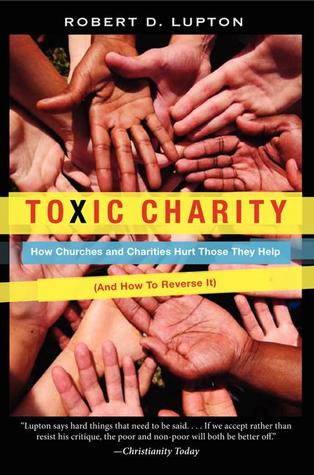
Toxic Charity: How Churches and Charities Hurt Those They Help— review and commentary

ToxicA friend who works on the staff of a large church recommended this book to me, and while it lacks sufficient support for some of the concepts, the principles are sound. Basically, the title says it pretty well—whether just throwing money or a week of unpaid labor at poverty—this act of charity might do more harm than good.

Author Robert D. Lupton has plenty of experience in urban ministry, and he cites many examples from his experience in Atlanta, Georgia, which is where he lives and works. But, as I have seen lots of churches gather a group of volunteers for week long “mission trips” I was fascinated by the story of a church in Mexico that was painted six times during one summer, by six different sets of volunteers. Indeed, what the author terms “religious tourism” is big business. He states that in 2005, $2.4 billion was spent by 1.6 million Americans, who traveled abroad for short term mission trips. My favorite statistic: “The Bahamas, it is estimated, annually receives one short-term missionary for every fifteen residents.” Okay, I have never traveled abroad on a mission trip, but the Bahamas sounds like a great place to visit. (My daughter mentioned knowing of a local church that did a mission trip to Ireland. Sounds heavenly!)

Lest readers get the idea that all Lupton does is make the good hearted look either mis-guided or just plain stupid, he does mention that many people set out on these trips with good intentions. Then he explains that in the third world, a little bit of money spent properly can do quite a lot. He explains the use of “micro loans” which can give a struggling person a needed hand up. For example, a $50 loan to a woman in Nicaragua allowed her to buy a sewing machine so she could ramp up her production of baby clothes. Once she paid off the loan, she still had the increased earning capacity.

In the U.S. many churches and other charities give away certain items. One example was giving holiday presents to needy families, but the fathers in such situations are often embarrassed that they can’t match the generosity of the well meaning givers, and are thus emasculated in front of their wives and children. Another example was a food bank, wherein the recipients had come to view the handouts as entitlements, which the author then contrasted with a food co-op, where members paid a small ($3) membership fee, and the members then gathered food from free or discounted sources, set their own rules for distribution, and so forth. The co-op helped the members but did not demean them or destroy their work ethic.

Toxic Charity is a bit controversial, but the U.S.A. is one of the most generous nations which has ever graced this planet. Unfortunately, just throwing money at problems can actually make things worse. This book is a must read for anyone who is involved in charity work, faith based or not, because it explains the problem but gives some good guidelines for better ways to help without hurting the recipient or wasting effort and money.
ARC review—Edge of Extinction by Kim Borg

EdgeOfExtinction_CVR_SMLI read Kim Borg’s debut novel as an ARC, and published public reviews on Big A and Goodreads, and I stand by that review. This one is going to be a bit different, however, and there are gonna be a few spoilers, so if that bothers you, go read the Goodreads version.
Science fiction is a modern art form, which probably begins with Mary Shelley’s Frankenstein, although there is some debate on that. Actually, there is also debate as to the exact definition of science fiction, along with what works should be classified as science fiction. For instance, many works of horror and some that are largely fantasy end up in the SF basket. As I don’t especially like either of those genres, that bothers me, but the lines are often blurred. Anyway, science fiction generally takes what is known (science fact) and extrapolates that is some manner (the fiction part.) I like to say it this way, science fiction asks “What if______?” In this case, we have a novel which poses several questions.

Borg’s novel is set in 2086, when Teslas drive themselves, which isn’t much of a stretch, and population control is a world-wide mandate, which extrapolates a bit more. Oh, and the Earth is a polluted mess, and rather than clean it up, at least one rich and famous guy  is looking to find a new spot to colonize. Apart from the one child per couple population control, which China tried a while back, none of this is much of a mental stretch.

However, after a few more scenes, the point of view characters, Dr. Amber Lytton and Dr. Joel Carter, become members of a space going team who board a ship called the Hermes, launch into space, and rely on a Phoenix drive to take them to the pristine Earth type planet, Arcadia. During their training, the couple learns that they are actually the second team to venture to the planet to assess it as a possible location for colonization. Once there, the travelers must dodge aliens of various sizes and levels of ferocity, while looking for clues as to the fate of their predecessors. Problems, both external and within the group, complicate the mission. Borg’s debut novel has quite a bit of suspense, a good character development, and lots of world building. The gadgets, although present, don’t over-power the story, either, which I like.

As in many worthy stories, the bad guys (or critters) aren’t all bad, and the good guys aren’t all good. There are a lot of questions to answer, such as will the villain who is only along to steal a valuable hunk of mineral get away? Will our point of view characters both live through the conflict between species which rule Arcadia? Is Arcadia a parallel planet to Earth, wherein the dinosaurs were never killed off? And, perhaps most important, are humans too wicked to trust to colonize any planet? This novel reminds me of some excellent science fiction writers, especially Jules Verne and Pierre Boulle (Planet of the Apes.) The ending isn’t quite a cliff hanger, but it opens the door for sequels, and I hope the author continues the story line in other novels.

Edge of Extinction is skillfully written and worth the reader’s time. Kim Borg states in her acknowledgements at the end of the novel that her goal is to both educate and entertain the reader, and while she certainly tries to educate, she does entertains. Borg is a new author for fans of classic science fiction to watch.


Retro Review: Moondust and Madness by Janelle Taylor

MoondustA friend (a generation older than I am) recommended books by Janelle Taylor, saying she is a prolific series romance writer from Georgia.  That’s true. Goodreads lists lots and lots of titles by Taylor, and apparently she sold quite a few books in her heyday. The series my friend recommended was “western” but as I am a science fiction fan, I chose to read book one in the Moondust series, Moondust and Madness.
Reviews for the ebook, which I read, are not plentiful, but are mostly positive. However, a deeper dive into those reveal that the positive reviews are mostly by readers who remembered this yarn from way back, whereas younger, first time readers are not impressed. I understand both points of view.

Moondust and Madness is a traditional 80s bodice ripper novel, which just happens to be set in space. Heroine Jana Greyson is a scientist who is abducted by an alien gathering up human mates for a large system of planets in another galaxy. These alien abductions are sanctioned by the alien powers that be due to the devastation of an engineered virus which caused a lack of fertility amongst the alien females. BTW, these aliens look just like humans, and can breed with them, so the only thing Jana (and her five hundred companions) need is an inner ear translation device and some brainwashing to help her get ready for her new life. Much of the science fiction trappings seem to have been lifted from Star Trek, from “Star Fleet” to transporters. That could be viewed as “ripping off” Trek, but I think it was more to give readers some familiar science fiction props. This is a romance novel, so there are very few explanations of how gadgets or space ships work.

Lots of political intrigue and the on-again off-again romance between Jana and her captor, Varian Saar, make up the more than five hundred pages of this novel, which begins a series featuring other characters set in the same universe. While I liked the book at times, it is just too retro for most readers. I won’t continue the series, but I did finish it.

For readers who like alien abduction and then fall in love plots, Myra Nour used this same basic plot for her much better novel, Love’s Captive. And, if you want a dose of reality wherein the heroine doesn’t fall in love with her captor, try my novel, Trinity on Tylos.


The Functional. Fragment. Celebrated. Or reviled.

ARC5Claimed (which may or may not also have the title of Rescued) came to me as an advanced review copy (ARC) which I read recently for a review site. Actually, I am glad to have the opportunity to review again, as it has been quite a while since I’ve done this. Most such sites really want a positive review, and I have written one. My comments for the site are true but censored a bit. What you’ll read here is more genuine.
First of all, sometimes minor mistakes are in an ARC, and I certainly understand that. The author used “fussed” for “fussy” for instance. That’s the kind of minor mistake that should be corrected before the final book is published. This book is a science fiction romance, with the emphasis on romance. For me, science fiction should have a bit science, but in Claimed/Rescued there aren’t many science fiction elements, apart from characters (lots of aliens) setting (a spaceship and a space station) and plot (alien abduction.) Apart from vivid descriptions of aliens, the other elements are not especially detailed.

Romance comes in several flavors these days, from very hot (nearly pornographic) to sweet (think Amish stories that talk about feelings rather than body parts.) Claimed/Rescued is skewed well on the sexy side of the continuum. For those who read romance for vicarious sex, this novel is a winner. From a science fiction standpoint, this yarn disappoints a bit. Okay, I don’t have to know how the ship goes or how the remote control on her wicked slave collar works, but a little more detail concerning the gadgets would be welcome. The most sci fi part of the book is the afore mentioned vast array of aliens, and those are described in varying levels of detail.

For me, the most annoying aspect of the book was the author’s reliance upon the “functional fragment.” Of course, lots of dialogue depends on the functional fragment. Think about one side of a phone conversation:

“Hey!”

“Oh yeah.”

“Really?”

“No kiddin’!”

I have no problem with the construction in that context. But. This author. Tends to write. Like. This. The words shared in this manner tend to be feelings or observations, such as “Handsome.” “Kindness.” “To Bond.” “To become as one.” “Tenderness.” “Aroused.” “Stay strong.” “Traumatized.” “Wary.” “Forever.” Y’all, I just listed a few of the functional fragments. Every once in a while, this could be an effective technique, but Claimed/Rescued is far too reliant upon these pseudo sentences.

No doubt Claimed/Rescued will be published, and there will be enough positive reviews that some science fiction romance fans will read it. And, those who want to experience sex vicariously may well enjoy it. But. All I seem to remember. Are. Those. Fragments.

The Future of Learning for K-12

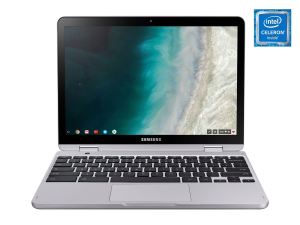
ChromebookNews organizations have truly embraced the old adage, “never let a crisis go to waste.” With every new pronouncement regarding the COVID-19 virus, the sky gets a bit closer to falling. Many of the public schools in my area have closed, but most of them are posting assignments online. Indeed, one of them has offered Chromebooks for check out if the family lacks a computer. This strikes me as a leap into the future of K-12 education.
Having taught both web enhanced and hybrid classes for the Technical College System of Georgia, I fully understand how to teach from my couch. In those classes, students had access to an online learning suite (either Blackboard or Angel, depending on the flavor of the year) wherein I listed assignments or offered online assessments. For those readers who are not chronologically gifted, the idea of closing schools seems unthinkable, but for anyone who has attended a post secondary school in the past decade, these fortnight long closures are no big deal. Indeed, I used to make jokes (during face-to-face class sessions at school) about teaching in my pajamas!

For younger students, such as those in K-12, however, quite a few of them have little experience with online learning, and some of their parents may not have experienced it at all. With a bit of coaching, both students and parents will come to see that much of what happens in a classroom can happen at home. In fact, in some cases, it is better to have online content. Forgot what happened to that important handout? Just print another one. Want to check the due date for an assignment? Just look at the online lesson plan. Need extra help? Email the teacher with your questions and concerns and you should get a prompt, personalized answer. Missed a class? Watch a recorded video session. In my experience, most college students eventually came to appreciate online resources, even if they didn’t embrace them. There is a learning curve, of course, as anything new requires some learning. Parents around here are about to embark on a new way of helping their kids with homework.

Who knows if the COVID-19 will actually be a serious threat to public health? Only the perspective of time will let us know that. However, this unprecedented interruption of business as usual in public education will demonstrate the power of online instruction. No doubt there will be some kinks in it, as this is new for some folks. But, the future of K-12 will be online, and this is just a preview of how it will work.

Resources for Readers

DaVinciWhat to read? When I was young (a very long time ago) my mother took my sisters and me to visit the public library every week. This was “free” entertainment, and as we were fairly poor, it was a great deal. However, there was that day when I’d read everything of interest to me in the children’s and young readers category. Again, this was a long time ago, when “young adult” publications were not a big category. I remember her guiding me over to the adult fiction section (meaning not for kids, but nothing racy—it was a public library) and she suggested some titles. My first reads from that section were what mom would term “mysteries” although romantic suspense would be closer to the genre of that time. The authors were Phyllis A. Whitney and Mary Stewart, although I can’t remember the titles. So began my transition into reading for pleasure, an activity that is still a big part of my life.

Mom has been gone for a long time, as she had cancer and died before she should have, but there are plenty of other places to find recommendations for reading. I do belong to way too many Facebook Groups, and most of those have advertising that I largely ignore. For a time, Amazon was my favorite place to find books, and while it is a source for content, the weirdo reviews have made it less and less reliable for recommendations. Also, big A encourages authors to buy ads, making it even less relevant. If you are lonely and want to be inundated by promotional emails, there are lots of sites that promote books via that route, but by and large that content comes from paid ads, so it’s not reliable either. I read a lot of eBooks these days, and my public library has a few thousand titles, but I’ve noticed that far too many of them are “reprints” wherein established authors are giving their backlist titles new life, and I have either read those books are wasn’t interested the first time. So, what to do?

There are some solutions. First, check out Goodreads. It’s now owned by Amazon, but it seems to work quasi-independently from big A, so the reviews are more often by serious readers. Authors can have a “page” on Goodreads, too, which can be helpful. If you like a certain genre, typically there are blogs that feature books of interest. As a lover of science fiction romance, I like this blog: SFR Brigade. Some authors maintain a blog or a Facebook group, so check on a favorite writer’s web presence. Often writers will mention fellow writers or their own favorite reads. I’ve really enjoyed Susan Grant’s books and her blog, Come Fly with Me (now found via her website).

In addition to big A, readers sometimes leave reviews on traditional bookstore sites such as Barnes and Noble and Books a Million. As these sites primarily serve readers, the reviews tend to be written more literate customers. There may be fewer reviews, but I believe they are more reliable.

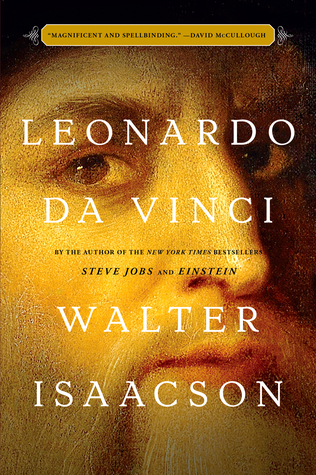
Also, if you know others who like to read, try forming a book club. My sister belongs to such a club, and members propose which books to read. She’s given me some suggestions of books that were well-received by her group, such as my current read: DaVinci, by Walter Issacs. It’s fascinating, and I would never have chosen it without the recommendation of that group over in Richmond, Virginia.