 For a change from my usual topics, I am posting an interview with CB Tucker, an author who lives in northeastern Georgia. Tucker has been to approximately 132 countries and lived in 10. He believes that his worldly experiences beg to be placed into a book. Tucker is a Vietnam veteran, who was also in Iraq where he backpacked for 10 months from the Saudi border all the way to Kirkuk. During his career he has seen the horrors of war and the strains of peace and both heroism and cowardice. Tucker worked in the computer industry for several years. Prior to retirement, he spent six years working in diplomatic security with the State Department of the United States.
Tucker is the author of Catching Raven: Volume I, Catching Raven Volume II, and Catching Raven: Elizabeth Raven Coming Into Her Own.
When did you first realize you wanted to be a writer?
While I was living in Virginia Beach with my first wife and three daughters, I realized that (including the female cat and dog), I was the only man swimming in a house of estrogen. I began writing stories about my daughters, figuring this was cheaper than therapy. The final push came when I was stationed in Dakar, Senegal, and my wife was sent home for medical reasons. Senegal has some of the most beautiful black people I have ever seen: Picture walking around Dakar and everywhere you look are Halle Barry clones. I decided that it would be wiser to stay in my apartment and write rather than go out. So I began writing. I had no idea what I was going to write, or where it was going. My ideas warped several times into the story that I have today.
What books have most influenced your life most?
The Bible. I was a computer tech for 30 years and had little time to read for pleasure. When I was stationed in Islamabad, Pakistan, I wasn’t able to go out, so I decided to down load books to my Kindle app on my tablet. I had no idea what book to start with, no idea of authors to read, so I decided to check the best sellers list, which was an obvious plan of action. The same book was on top of three different lists: 50 Shades of Grey. (I did say I was in Pakistan by myself.) There were parts I couldn’t bring myself to read, but I did enjoy the book for the interplay between the two main characters. Soon, I was reading one book a week. As time passed, I came to realize that my favorite author was David Baldacci.
How long does it take you to write a book?
I began writing Catching Raven in 2014, and I really didn’t finish it until 2016. I have follow-up books, and they took about two months each, but the characters are established. I actually write the book in my mind before I sit down to the keyboard, and then I iron out the flaws.
What was one of the most surprising things you learned in creating your books?
How much I enjoy coming up with my own story. I find many of the stories I see on TV and in the movies to be stupid. When I write a story, I try to keep things logical and real. I want the reader to believe that what is happening is possible.
Is there a message in your novel(s) that you want readers to grasp?
In the Bible the book of Job is the story of a pious man who believed in God. The devil decided to test him and took away his family, his possessions, and all he had. Even living with the beggars with sores all over his body, he refused to deny God. For his steadfast determination to remain loyal to God, he was rewarded tenfold. That, in a sense, is what Samantha Raven goes through in my novel. She was steadfast in her belief that her daughter was a present from God and Tip, who is the young man she met at Wake Forest and fell in love with; he is the father of Elizabeth Raven. In the novel, Samantha spends her life doing right by her daughter. She remained steadfast and her mission was doing everything she for her daughter, including building a life without having her daughter’s father present. What I would like people to take from this book is the determination to do what is right and proper. In the end, Samantha, too, is rewarded tenfold.
How realistic are your books?
I hope everyone can believe what happened in this book. Can a man become a billionaire and go back to find the woman he impregnated as a young man? Can that woman be true to herself and him? Can a desk lamp warp into a chandelier? Most of what I describe, I hope can happen. I tried to write a book that can believed, even though it is fiction.
Are experiences based on someone you know, or events in your own life?
Yes! I have traveled to 132 countries and I have lived in 10. I have lived in socialist and Muslim countries. When I was young, I studied martial arts and have belts in Taekwondo, Hap Kido, and Sansui. I’m not a bad ass, but I have had experiences in many facets of life; therefore, I know what people can do if they are driven to achieve it. When I was in diplomatic security, I was trained how to drive and shoot. I received training concerning human trafficking and the customs of different societies that I would experience. I try to incorporate all that knowledge and experience into my books.
What makes you passionate about being an author?
Hopefully, when people read one of my stories and come away with new knowledge and appreciation of something that they were never aware of, they will have new knowledge. Did you know that you could drive 60 mph in reverse? Did you know that even a one hundred pound girl could take down a two hundred pound man if she knows how? I hope readers realize that the core of every society is the family. We, as a society, need to protect families and help them succeed. It is those age-old truths that are often disparaged but when followed do succeed: Honor your parents, work hard, and get all the knowledge you can when you can. And don’t quit a job until you have a better one. Be true to yourself, and what you believe.
Thank you, CB Tucker for your detailed answers!
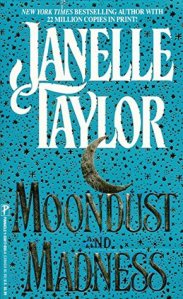 A friend (a generation older than I am) recommended books by Janelle Taylor, saying she is a prolific series romance writer from Georgia. That’s true. Goodreads lists lots and lots of titles by Taylor, and apparently she sold quite a few books in her heyday. The series my friend recommended was “western” but as I am a science fiction fan, I chose to read book one in the Moondust series, Moondust and Madness.
 Claimed (which may or may not also have the title of Rescued) came to me as an advanced review copy (ARC) which I read recently for a review site. Actually, I am glad to have the opportunity to review again, as it has been quite a while since I’ve done this. Most such sites really want a positive review, and I have written one. My comments for the site are true but censored a bit. What you’ll read here is more genuine.
 News organizations have truly embraced the old adage, “never let a crisis go to waste.” With every new pronouncement regarding the COVID-19 virus, the sky gets a bit closer to falling. Many of the public schools in my area have closed, but most of them are posting assignments online. Indeed, one of them has offered Chromebooks for check out if the family lacks a computer. This strikes me as a leap into the future of K-12 education.
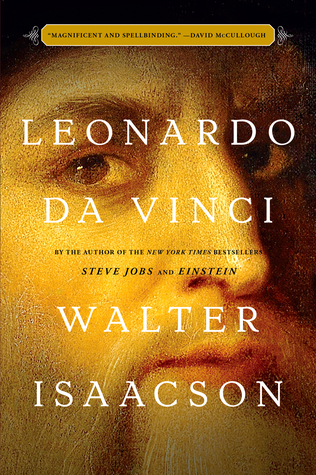 What to read? When I was young (a very long time ago) my mother took my sisters and me to visit the public library every week. This was “free” entertainment, and as we were fairly poor, it was a great deal. However, there was that day when I’d read everything of interest to me in the children’s and young readers category. Again, this was a long time ago, when “young adult” publications were not a big category. I remember her guiding me over to the adult fiction section (meaning not for kids, but nothing racy—it was a public library) and she suggested some titles. My first reads from that section were what mom would term “mysteries” although romantic suspense would be closer to the genre of that time. The authors were Phyllis A. Whitney and Mary Stewart, although I can’t remember the titles. So began my transition into reading for pleasure, an activity that is still a big part of my life.
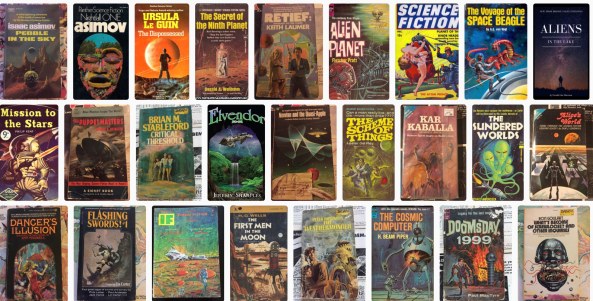 Over my almost two decades of writing and (occasionally) publishing, I’ve learned some stuff. Lots of stuff, actually. Some of what I learned (such as a great place to buy a box for a manuscript) is out of date. However, there are some resources that budding writers should utilize that are still quite relevant, so here goes—
 Visions and Revisions
