Missing Author?

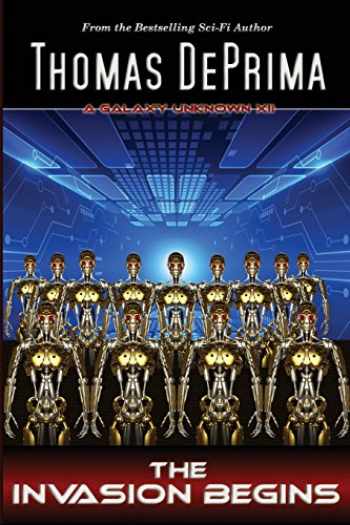
Recently, I re-read the Thomas DePrima novels I had purchased as eBooks, namely, the first nine of twelve titles in the A Galaxy Unknown” series. Gosh, I had forgotten much of the detail, but I remembered that I really enjoyed them. As certain television series benefit from “binge watching”, such as Breaking Bad, I realized that reading those nine novels back to back was great fun, so I sought the other books in the series and found them on Apple’s reading app. I just finished the 12th book, which, darn it, ends with a cliff-hanger. Thus, I have two mysteries. First, how do Jenetta and Space Command once again save the known galaxy, and, second, what happened to Thomas DePrima? According to the end of book 12, The Invasion Begins, the adventure will continue, but that book was published almost a decade ago. According to my web research (thank you AI) DePrima hasn’t published anything since 2019.

For those who haven’t read this nifty space opera series, I reviewed some of these novels when I first read them, and those entries are summarized earlier in this blog.

Thomas DePrima’s A Galaxy Unknown series is a classic space opera infused with modern indie flair. Spanning twelve main novels (plus spin-offs like the Border Patrol and Colton James sub-series), it follows the meteoric rise of Jenetta Carver, a sharp, disciplined young Space Command officer whose destiny is nothing short of galactic. The series has an action packed beginning, with a few flaws in the writing, but nothing that keeps most readers from swiping those electronic pages to find out what will happen next. There’s enough science fiction to keep fans of that genre entertained, but the writing is not so technical that every day readers who enjoy a strong female character can’t enjoy each book. As the series goes on DePrima’s universe is ever more expansive and detailed. From the political tensions between Galactic Alliance sectors to the looming threats of alien species and interstellar crime syndicates, the author builds a rich backdrop for military intrigue and diplomacy.

The series isn’t without some minor imperfections, especially as the series progresses: some plotlines feel recycled—Jenetta foils yet another plot, saves the day, and gets another promotion. Her near-infallibility can reduce the suspense. Not since the video game version of Lara Croft has a female lead seemed so invincible. However, if you’re a fan of David Weber’s Honor Harrington, any early iteration of Star Trek, or any tale of righteous command in deep space, A Galaxy Unknown and its eleven sequels offers a satisfying and immersive experience. 

That said, I wonder what happened to Thomas DePrima. According to Goodreads, he has over 20 books available, and most of them rate above 4 (out of 5) stars, with thousands of reviews of the earlier books, and hundreds for the later titles, which is amazing for an indie author. Various sources speculate that DePrima is a pen name (not so unusual) so maybe he has passed. Or, maybe he got tired of writing. Maybe he pivoted to another name and a new set of books. I have no idea, but I do wish that the series had some sort of denouement. Jenetta Carver and company are too cool to just leave hanging.

Where are you, Thomas DePrima?
Sand Dune Pony— a retro review

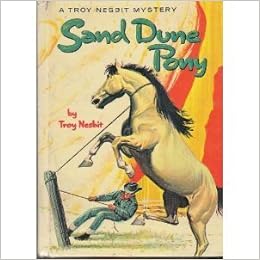
Sand Dune Pony, by Troy Nesbit was one of my “annual reads” when I was a kid. The reader must suspend disbelief rather a lot, but I re-read it recently, and I still enjoyed it. Yes, there was a bit of nostalgia for me, but the story is fun.

When I perused a few reviews on Goodreads, I saw that some folks had the same affection for this little yarn that I have, while others took a modern view and were either skeptical or horrified. The plot, which is nothing like the AI garbage on big A’s site, is simple: A youngster named Pete has come to spend the summer at his uncle’s large ranch in Colorado. Pete had been looking forward to having his own horse for the summer, along with the promise of learning how to be a real cowpoke. However, his Uncle Lem and Aunt Clara lost their barn to a fire, so Lem has had to sell off almost all of his horses to cover the cost of replacing it. Pete is stuck doing chores and watching one of Lem’s hands try to break a stubborn horse, because there is no horse available for him to ride.

Kids have shorter attention spans, so Nesbit’s narrative moves swiftly. A new character, Hatsy, enters the picture in the second chapter, and the older gentleman takes an interest in Pete and his situation. Hatsy offers to take Pete along on a fishing trip, which Lem and Clara agree to, but the goal is not just catching fish. No, Hatsy has in mind catching a horse for Pete. No spoilers, but there’s a mystery interwoven with the finding a horse for Pete plot, and there is enough suspense to keep the pages turning.

Being somewhat chronologically gifted myself, I know that kids were not nearly as sheltered in the era of this tale as kids are today. Probably not many parents would allow an underage child do most of the things that happen in this book in the time it was written, and certainly not modern parents. No, today, Pete would have to play video games on an iPad and wait for Uber eats to deliver, instead of camping beside an old-fashioned covered wagon, eating canned corned beef warmed over a fire, while planning to capture a wild horse with a septagenarian mentor. Fortunately for the reader (and Pete) things were different in back then, and there are many details about the West, horses, and people sprinkled into the story. In short, this is an adventure, and safety isn’t much of a consideration.

Parents or grandparents could read this one aloud to younger kids, or just hand it to a third (or later) grade student. There’s a Kindle version available on big A’s website, for that kid who has a tablet instead of a horse. My daughter bought me a copy off of eBay, as a gift, when we were talking about books that we had enjoyed as children.

Honestly, I was amazed that the one I got looked so good, considering the 1952 copyright. Whitman Publishing books were inexpensive items for kids, so the quality of the binding and pages lacks that heirloom feel! While the cover looks good, the pages are darkened with age and crumble on the edges if the reader isn’t careful. This is an old book! There are several cover art versions, but I chose to display the cover on the book I lost decades ago, rather than the one I received.

When All Bleeding Stops—a brief review

All Bleeding Stops is a mostly autobiographical book written by an experienced trauma surgeon, Stephen M. Cohn. During the course of the book, the reader learns how a trauma surgeon differs from other surgeons, how being a military doctor influenced the author, and quite a bit about the different ways that people end up in an emergency room. Chapter titles include “What Exactly is a Trauma Surgeon” and “Dealing with the Worst Injuries” which are the main focus of the book, but the author also has chapters on “Preventing Injuries” and “Managing the Public” which includes the author being involved in a high profile case.

I chose this title, in part, due to a mishap wherein I ended up in an ER and had orthopedic surgery. As Dr. Cohn says, patients choose elective surgeons and develop a bit of a relationship prior to their procedure, but in an emergency, whoever is on call becomes the doctor. I certainly didn’t choose the guy who rebuilt my shoulder, as I certainly didn’t plan to break it into four pieces! Anyway, I identified with some of the patients described in this book.

While I’d like to say this is a five star read, the not-so-linear organization takes it down a notch for me. That said, I really enjoyed this book, as it provides many anecdotal stories about trauma surgery, not only those performed by the author, but also those he heard about from colleagues. Many of the cases described survive, but there are those who don’t make it, and there is a certain dispassionate tone in this narrative. That’s not intended as criticism, but an acknowledgement that doctors who deal with trauma must maintain some distance in order to remain sane.

Again, I enjoyed reading this book, and for those who want to know more about how lives are saved and people put back together after terrible trauma, this book is quite enlightening.

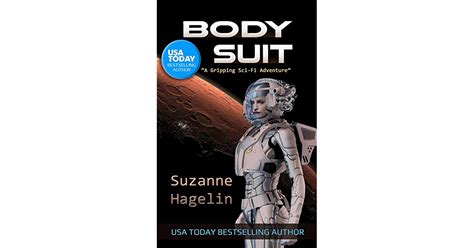
Body Suit by Suzanne Hagelin

Titles are important, as is the case with this trilogy opening novel’s title, but I almost didn’t read this one. Body Suit? Sounds like a fashion mistake from my youth. Once I began, the narrative style didn’t grab me from the outset, as the point-of-view characters switched back and forth between a soon to be indentured servant/colonist and a rather prissy seller of space suits. Hold on, y’all, because it gets better! Or maybe the author’s style grew on me. Anyway, the switching back and forth continues as the two-fold adventure develops, but each character fleshes out so well that I genuinely enjoyed each character’s time as POV.

The purchaser of the body suit, Silvariah Frandelle, initially travels to a space station called Guam, where she learns both how to navigate being a servant (called a Contractor in the book) and how to use the fancy body suit of the title, and then to Mars, as a miner at the new Resnik colonial facility. Back on Earth Walter Cuevas, who sold the suit for far less than its MSRP in exchange for some tips on how the suit performs, learns to act on the suggestions that the business savvy Sil Frandelle communicates to him. His fortunes grow by leaps and bounds as Sil helps him get lucrative advertising deals, then offers tips on which stocks to purchase based on her observations while in space.

Both Sil and Walter must deal with Artificial Intelligence entities, too. Sil is introduced to the Companion while on Guam, and the AI is also present with her on Mars. The Companion is really her Taskmaster, but the programmers chose a more benevolent title for the AI, as its job is multifunctional, assessing (or perhaps spying on) her, while also directing her industrial activities on behalf of those who own her contract. Walter, as he grows more wealthy entrusts Daisy, a personal assistant AI who is styled as a young female human, to assist him in his business matters as well as being a loyal and undemanding companion, unlike his ex-wife. But, like any program, even a personal assistant can be hacked….

There are almost too many minor characters to keep straight, quite a bit of action, and sufficient suspense to keep the reader swiping the pages. Sil’s stay on Mars only starts out boring. The plot moves along quite well, actually. I really liked this story, once I got into it, and I am tempted to buy the rest of the trilogy, although the book stands alone well-enough.

Body Suit is science fiction, obviously, but in the manner of great sci-fi, because it delves into some really controversial aspects of the role of artificial intelligence in society. As programs such as Chat-GPT are growing in popularity, the moral questions broached in this novel are timely. Without spoiling the suspense with specifics, the novel also touches on how eugenics might change society, too. But, more than that, there are some interesting word choices in this novel, which let the reader know that some thought went into this one! I highly recommend it.

Retro Review: Michael’s Wife by Marlys Millhiser

I’ve occasionally written about re-reading old favorites, and I recently turned my eyes to The Mirror by Marilys Millhiser, and beside it, Willing Hostage, residing on my “keeper” shelf. However, my favorite novel by Millhiser is Michael’s Wife. When I was in high school, I borrowed this novel from a friend who had checked it out of the local library and read the opening chapters during Spanish class. After class I begged to keep it but was rebuffed. No, I had to get on the waiting list at the library. Seems like I had to wait months before I got to read the book in its entirety. I loved it!

Michael’s Wife was published in 1972 so modern readers should consider it a period piece and be prepared to suspend a bit of disbelief as well as setting aside certain notions of proper behavior. The story opens with the main character awakening in a dry stream bed in the desert. She has no memory of who she is, nor why she is there. She is afraid, however, and her fear motivates her to walk swiftly toward a roadway. Shortly after she finds the road, she is offered a ride from a rough looking man named Harley McBride, who is willing to help her as long as she isn’t a hippie. She assures him she is not, but says nothing when asked her name. Somewhat amused, Harley calls her “Doe Eyes” because he says her brown eyes remind him of a doe he saw while hunting. When asked, Harley tells her that he shot the doe right between the eyes. (Remember, modern readers, this is a period piece.)

While visiting a restroom, our amnesiac main character finds something hidden in the waistband of her slacks: A slip of paper—“Captain Michael Devereaux, Luke A.F.B.” handwritten across it. With this clue, she asks Harley to take her to Luke Air Force Base. Harley supplies lunch and some information as they drive from Florence to Phoenix. Harley stops as a motel owned by his brother in Phoenix, and our POV sees a sign wanting a waitress. She offers to take the job in exchange for a room and Harley’s brother agrees. Once she has the privacy of the motel room, she calls Luke Air Force Base and finally reaches Captain Devereaux. After she utters a few halting phrases, he calls her Laurel and tells her to stay put, he will be there in half an hour.

Okay, I hate book reviews with spoilers. The summary here is only the first chapter. This novel has quite a few twist and turns, and although it was classified as romantic suspense when released, it is more suspense and any romance is secondary. There’s some violence, including sexual violence, so this story isn’t for the faint of heart. (Honestly, I can’t understand modern readers who quit reading when a character loses his temper, but can embrace 50 shades of bondage.) Some of the reviewers on Goodreads were unhappy that this novel is very different than The Mirror, which is a time travel yarn. I get that, but in my case I much prefer the plot of Michael’s Wife. Millhiser is a creative writer who crosses between genres, and she did write other supernatural yarns, such as Nella Waits.

Millhiser died in 2017, so I only felt minor guilt at re-reading Michael’s Wife on a freebie site. She leaves a legacy of 15 novels, and her later works were a series of mystery novels featuring a sleuth named Charlie Green. I might try one of those, or I might re-read Willing Hostage, as I have fond memories of that one as well.

Why Medicare Advantage Plans are Bad by David W. Bynon

Right after my last post, I was injured, quite badly, in a fall. While I had read the title above, hubby had convinced me that Medicare Advantage was the way to go, because “we are healthy.” And, I was, until I broke my shoulder and damaged the nerves which traverse the Brachial Plexus. Within a month of my fall, I tested Medicare Advantage and soon found that I wish I had opted for traditional Medicare.

In Why Medicare Advantage Plans are Bad the author begins by explaining Medicare and Medicare Advantage. Even the name sounds good, right? They call it Medicare Advantage because there are certain perks, which vary depending on which insurance company provides coverage. For instance, mine has vision benefits, which I have used, and gym benefits, which I have not. This book also has a chapter explaining why the government actually prefers that people choose Medicare Advantage.

For those about to reach the age to file, this book, especially the opening chapters, would be most helpful. Also very helpful now (although I wasn’t concerned prior to my accident) is the 6th Chapter, which explains the downside of Medicare Advantage plans for those with chronic illness. The answer is quite simple: co-pays. As a holder of Medicare Advantage, I have to pay $25 (or more) every time I visit a healthcare facility. Right now I am seeing multiple therapists every week. Some days I pay $25 to the hand therapist, then walk to another therapist in the same complex and pay $25 again. Then I do it again a couple of days later. Medicare requires that medically necessary therapy be covered for unlimited visits. Medicare would not require those co-pays, however.

Perhaps I will get “better” although I have pretty much given up on being “well.” But, with multiple providers for everything from therapy to tests, this journey will be expensive. I wish I had read Bynon’s book before I signed up for Medicare Advantage. And, although I read this book, I probably wouldn’t have reviewed it if I had not become a victim of what a nurse in the ER described as a “life changing” event. I started out quite healthy, but that can change, and quickly.

For those who are just going down this path, this book is certainly worth reading.