The Crown— review and commentary

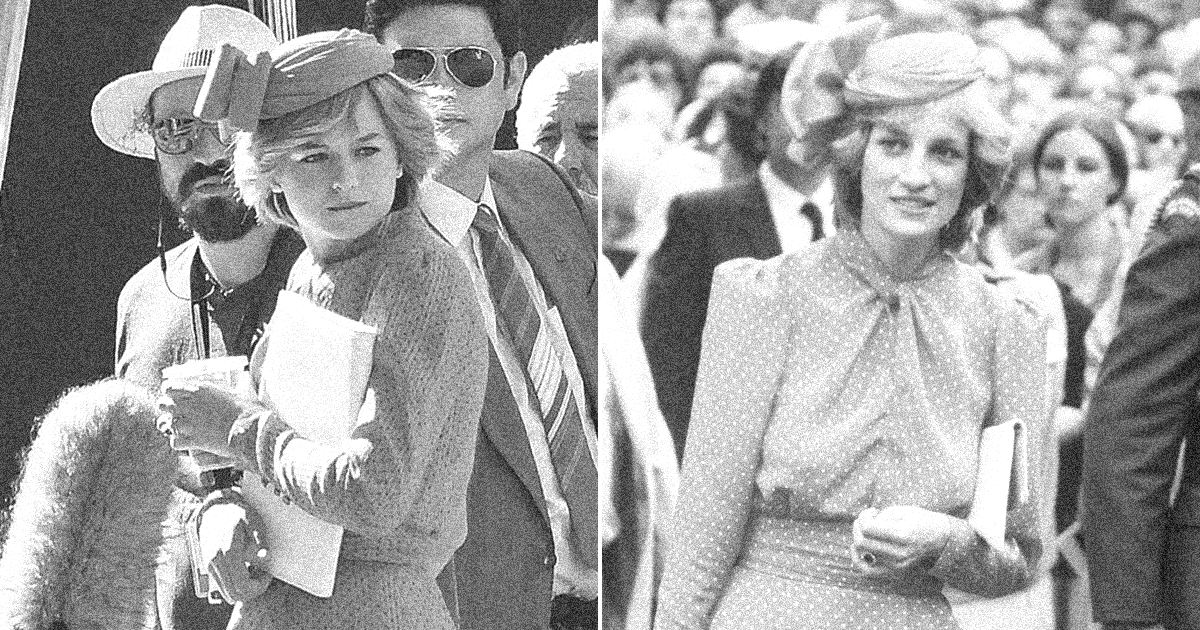
Which is which?

Netflix has some amazing original content, and one of its best efforts thus far has been The Crown, a somewhat fictional series based on the reign of Elizabeth II. Written and produced by Peter Morgan, this series begins while Elizabeth is still a youngster, but when her father takes over for his brother (who abdicated the throne so he could be with his “commoner/divorcé” lover) Elizabeth becomes the heir to the throne. From that time period, her father grooms her to serve the people and the royal family, a/k/a The Crown. Seasons 1 and 2 feature Claire Foy as Elizabeth, and former “Dr. Who” Matt Smith is Prince Philip. Perhaps the best performance in this award winning season goes to John Lithgow as an aging Winston Churchill, who guides and yet admires the young monarch as she works to live up to the responsibility thrust upon her when her father dies at a fairly young age.

The Crown does a fantastic job of intertwining history and some suppostion, thus educating a new generation about some of the most important (or at least entertaining) events in United Kingdom in the past few decades. Each season spans several years, so the cast changes in order to better show the aging of the characters. For instance, while Claire Foy is Elizabeth in the first two seasons, the queen is portrayed by Olivia Coleman in seasons three and four. The latter dropped onto Netflix November 15, and Coleman does a really good job as the middle aged sovereign, as does Gillian Anderson as Margaret Thatcher. Another season four cast addition is Emma Corrin, who bears more than a passing resemblance to young Princess Diana. The series has been mostly been praised, but season four is a bit more controversial. Since this season portrays the “fairy tale romance” between Prince Charles and Diana, then quickly lays out the conflicted marital mess that ensued, because apparently Charles didn’t love Diana at all, but maintained his relationship with his former lover, Camilla Parker-Bowles, during most of the marriage, some viewers (and those close to the real people) have been a bit riled.

Of course, Prince Charles and Princess Diana separated then divorced, but younger fans apparently didn’t realize the “why” in the divorce until The Crown brought this back in a big way on the small screen. Recently, the social media accounts of Prince Charles and (now wife) Camilla have been inundated with snarky posts. Furthermore, officials in the U.K. have asked producers of The Crown to assure the public that the show is fictional.

History only works after the fact. Peter Morgan (series creator and chief writer) benefits from the many publications about the British royals, and is able to pick and choose what he presents to the audience in The Crown. Mostly the characterizations and storylines seem spot on, but those close to the royal family point to discrepancies, and no doubt some “fiction” does come in. Regardless of these points, The Crown has extraordinarily high production values. The cast is first rate, the scripts mostly entertaining; and the sets, costumes, and locations all contribute to the feeling of being an eyewitness to history. If you haven’t seen it yet, this series is one of the very best shows on Netflix.

Last Stand series by William Weber—review and commentary

Last Stand: The Complete Box Set

From time to time, I’m offered a “box set” of eBooks, which strikes me as funny as there is obviously no box, just a longer than normal eBook. While these often seem to be great values, I seldom read an entire series. Last Stand is different, because I did indeed read all four books, and while I enjoyed them, I liked each one a little less, but that’s just me and what I Prefer to read, rather than any flaws in the books themselves.

Book one, Surviving America’s Collapse, was so suspenseful that I read it in less than 24 hours. Apparently survivalist/prepper books are a sub-genre, but this is my first such book. Viewed simply as fiction, readers might be annoyed, as the narrative often becomes pedantic, teaching survivalist techniques to the reader, but I rather enjoyed those segments. In short, the story begins with the hero, former Army officer John Mack, being the only guy in his neighborhood who understands that the vehicles, phones, and other conveniences aren’t working because some entity set off an “EMP” device. Mack rescues his wife, then his children, thinking they will soon retreat to his survivalist hideaway cabin, but his wife convinces him to remain in their neighborhood, to assist their friends. This proves to be increasingly difficult, as resources dwindle and nefarious elements attempt to takeover their community.

Book two, Patriots, begins in the second setting, the Mack family hideaway. The canvas of conflict widens a bit in this book, as Mack realizes the scope of the attack upon America, and feels the need to take up arms not just to defend his family, but his country. Book three, Warlords, is a bit darker in tone, as the forces behind the attack upon America begin divvying up the country. Book four, Turning the Tide, is on a grander scale, as Mack is one cog in the military effort to fight back against the foreign powers that seem to have figured out how to conquer the United States.

Each of these books has a fictional story, but invariably the author uses his story to also instruct the reader. Those who like lots of details about the military and/or weaponry might like these books more than I did, but I did enjoy them. Some of the characterizations are fairly stereotypical, and sometimes the main characters are able to overcome situations which would probably be hopeless without the assistance of the author. So, suspending one’s disbelief a bit is a necessary skill for staying with the series. Still, the suspense is sufficient to keep the reader turning the pages.

Survivalists, military buffs, and those who enjoy suspense will all find something to like in Last Stand. As of this post, the price for the eBook set is three bucks, which is a down payment on a hamburger! I can’t think of anything as entertaining as these books for that price, so take a look. These books are also available in paperback and as audio books, and all have hundreds of ratings on Goodreads, mostly 4-5 stars.

Halt and Catch Fire—a series to catch on Netflix

As we aren’t “cable” subscribers, sometimes we miss a show that was commissioned for a network. Halt and Catch Fire is such a series, as it was originally shown on AMC. Honestly, the title is so weird that I would have never given it a thought, but one of those “Best things to watch on Netflix” lists gave it a good review, so hubby and I decided to give it a go.

Of late, it has been our favorite binge-watch. Usually, I wait until finishing a series before reviewing it, but Halt and Catch Fire ran for four seasons, and we are mostly through season three, so it’s time to let y’all in on this excellent period drama.

First off, the title has something to do with writing computer code, but I don’t remember what it means (and it probably doesn’t matter). I like computers; I’m typing on a MacBook Pro right now! This show is about the computer revolution, and how you view it might depend upon your age. If you are younger, this show will be a bit historical. But, if you are a somewhat chronologically gifted, you probably remember the first computers. As a classroom teacher, I remember begging to put computers into my classroom so we could edit copy for the yearbook. Back in the 80s, editorial changes for typewritten copy were costing us hundeds of dollars per year, so I managed to get a couple of surplus Apple IIe computers. They had green flashing characters and those big floppy drives, but they saved us some dough and were my intro into the modern age of publishing. Then I got a Mac SE that used smaller disks. That little machine was bequeathed to use from an administrator who felt some pity for the plebes in the classroom, and it was so different that I took it home over the summer to learn how to use it. I digress, but the 80s is the era where HACF begins.

The characters who come together in the first episode represent various aspects of the nascent computer business. In season one, the show is set in Texas (the Silicon Plain) but the group moves to Silicon Valley in later seasons. Joe is the super salesman who cut his teeth at IBM and wants to create a better personal computer. Gordon is an engineer who already made a better computer, but since the machine failed, he’s slogging along at Cardiff Electric, a company that produces software for mainframes and tries to compete with IBM. His wife, Donna, is a brilliant computer developer who is relegated to support work at the Texas Instruments learning division, because she and Gordon need to feed their family. The catalyst for change is Cameron, a female college drop out who writes code better than Shakespeare wrote plays. Cameron is recruited by Joe to come to work at Cardiff Electric, where he’s a recent hire. The company manager, John Bosworth (Boz), is just trying to make the owner happy and is baffled by the changes that are coming to the company as these players all work together to build a better computer.

This show is well-written and well-acted by the ensemble cast. As I wrote that summary, it sounds a bit boring. Not! While there are a few technical aspects that are necessary in a show about the informational technology revolution, this is a show about people—their hopes, their ambitions, as well as success and failure of people and businesses. The series is a blast from the past in terms of technology, but seeing how these fictional characters helped create the computers that we tend to take for granted is both entertaining and compelling.

If you didn’t watch Halt and Catch Fire the first time, catch it on Netflix before it goes away!

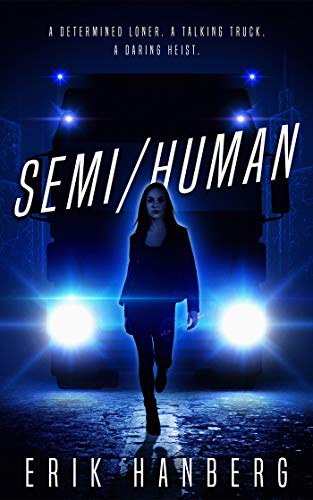
Semi/Human by Erik Hanberg—review and commentary

A Y/A science fiction yarn

As the pandemic has continued to plague businesses, many of them are accelerating their transition to robots and artificial intelligence, thus replacing or supplementing their all too frail human employees. Semi/Human is set in the near future, and in this novel Silicon Valley has finally written an adaptable code that makes most human employees obsolete. Vehicles drive themselves, dealers in Vegas are all robots, police have been replaced by armed drones, and so forth.

Main character Pen(ney) Davis is more than depressed, because like most other human jobs, her intern job at a Silicon Valley computer firm has been eliminated. However, Pen has come up with a less than practical scheme to steal a ridiculously expensive treasure from her former employer and get rich enough to care a lot less about being unemployed.

As Alexander Pope once observed, “A little bit of learning is a dangerous thing,” and recent intern Pen re-writes the code of a self-driving truck, intending to hijack it for a trip across the country, but ends up making the aforementioned truck autonomous instead. Fortunately for Pen, the truck, Lara B, is both friendly and grateful.

Lest I ruin this tale for readers, let me just say that this yarn is cogent, examining the societal damage which would ensue if gainful employment ceased, as well as the ethics of dealing with a self-aware, nearly omniscient super computer. There’s a dash of economic reality sprinkled in as well, because with no work, there’s no money coming in for the vast majority of the populace, so they end up fighting over whatever is left behind in the technological revolution.

There’s also more than a little suspense, as Pen and Lara B join forces to accomplish the original mission, wherein Pen hopes to acquire both riches and revenge in one fell swoop. Semi/Human is one of those rare books that blends a cautionary theme with an entertaining plot. Most of the characters are well drawn, and there is sufficient description of settings to keep the reader entertained but the plot never bogs down.

As a frequent reader of science fiction, it is rare for me to call a novel memorable, but for me Semi/Human is such a book. Perhaps I simply read it a the right time, or perhaps the book is really that good. If you like youthful, sassy heroines, self-aware computers (and trucks) along with a suspense filled story line, you really should try Semi/Human.

Home Before Dark—television for October or any time you want a mystery

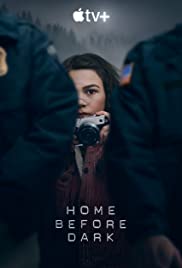
After buying a new iPad, I got a freebie subscription to AppleTV and we’ve watched a couple of good things. However, my husband and I were both surprised by the appeal of “Home Before Dark,” which has a description that sounds a lot like Harriet the Spy blended with a modern gothic mystery. The first episode shows promise, but by the third, we were in “gotta see more” mode. Series television shows often have difficulty maintaining suspense, but this one does a darned good job of it.

Basically, the story follows an investigative reporter in New York, who has lost his job, and moves his family back to his hometown (and home) because his dad has had to move to a facility due to illness. As the family is in some financial distress, they have come to this small town because the house is free. The wife is a former public defender, and the couple has three daughters. The middle daughter has always wanted to be just like her dad, and she likes to carry a notebook and ask a lot of pointed questions. Before long, this daughter has found a cold case that dates back to her dad’s childhood, solved at the time by convicting a scapegoat whom the child comes to believe as innocent, and she emulates her dad by asking lots and lots of questions.

While I don’t want to spoil the story for potential viewers, suffice it to say that dad and mom get drawn into the investigation, while the older and younger daughters suffer the consequences of the backlash which comes from the townspeople, who don’t welcome the revival of interest in the case, which gets hotter with each episode.

Home Before Dark isn’t a show for kids, although older ones might enjoy the story, despite the nine year old point of view character. The script, the acting, and the setting are all top drawer, so ignore the “kiddy show” description, and enjoy a very good mystery leading up to Halloween!

Star Trek Picard—review and commentary


Ryan in Trek

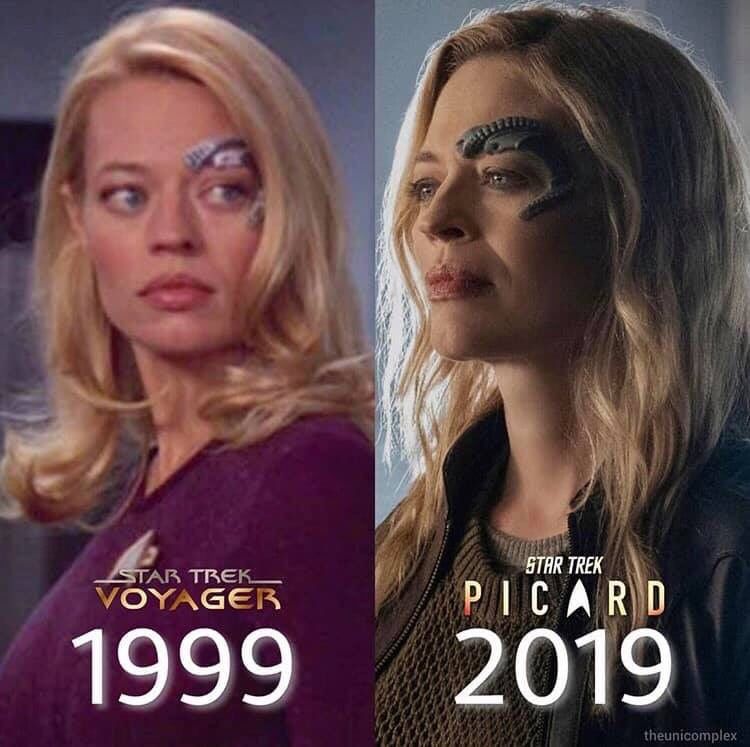
Then and now— Seven of Nine


Star Trek
is an integral part of American culture
and a controversial view of the future of humanity. It began with Gene Roddenberry’s concept for a serious science fiction television series, a novel idea in the early 60s, and it has continued to evolve for fifty years. As America has changed, as science fiction has changed, as television has changed, Star Trek has changed, too.

Picard is set two decades after the feature film, Nemesis, and is based upon the series Star Trek The Next Generation, which ran for seven years on television. Later, four of the feature films were based upon the characters from TNG series. Picard has ten episodes in season one, but the second and third seasons are planned for CBS All Access, which is how hubby and I watched the first season.

This made for the web series has very high production values—the sets and effects rival feature films. Sir Patrick Stewart is still an amazing actor, although the pace of the series (slow!) seems to be partially dictated by the age of its principal character. Viewers who prefer space battles and fisticuffs will probably be a bit disappointed. Casual viewers may also find the editing, with its rapid cuts from scene to scene, confusing. Honestly, I don’t like that aspect at all, but this is apparently in line with Picard‘s sister show, Star Trek Discovery.

Spoiler alert—

We both thought the first few episodes were confusing and lacking in characters, apart from Jean Luc Picard himself, with whom we could empathize. The writers made a good decision in embracing the age of the main character. Anything else would insult the viewer, as Patrick Stewart looks and sounds old. For us, as fans of Star Trek Voyager, the show got better when Jeri Ryan pops in, as an older and less “Borg” version of Seven of Nine. Ryan is still riveting to watch, even without the cat suit that made her fodder for lots of magazine pictures in the late 1990s. In the seventeen years since her character graced the small screen, Seven has become much more human—in her speech pattern, in her attire, and in part due to suffering losses associated with years of living in a deteriorating society.

A key word here is suffering. One of the better aspects of Trek in its first few decades was  its optimistic view of the future of humanity. Although Roddenberry sought to put serious science fiction onto television, and therefore into lots of living rooms, his vision was seldom dark. However, much of serious science fiction—in print, in film, in gaming, and even in graphic forms—has embraced the dystopian view of the future of humanity. A utopia is an idealized society in which social and technical advances serve to make all things better for humanity. Yes, I did say it was idealistic! A dystopia is the polar opposite, in which “advances” in society and technology make things worse. For some examples of dystopian literature/film, think of Orwell’s 1984 or the film Blade Runner, based upon the work of Phillip K. Dick.

Alas, Picard‘s greatest weakness isn’t its slow pace or its rather confusing editing. Nor is it the “flashbacks” in which the characters look just as old as they do in the current timeline, no doubt due to the unforgiving nature of high def photography. Nope, the core problem for many fans of Star Trek will undoubtedly be the dark vision of the future embraced by the writers. Picard is a dystopia. Beloved characters from the previous Trek series will suffer, and some will die. New characters suffer and some of them die, too. And, by and large, those deaths may very well be without purpose, meaning, and certainly without honor.

Star Trek Picard has some strengths, including dazzling cinematography, a rich background of material from which the writers can draw inspiration, and an aging but talented main character. Guest stars include characters from TNG and Voyager, and the development of Seven of Nine, the former Borg, works well. Enjoy the series, but temper your expectations. This is post-modern Star Trek.