
 Having just read an article in Popular Science online about what a”Generation Ship” might look like, I was gratified to see that some of the core concepts in my science fiction novel, Trinity on Tylos, are firmly rooted in science.
The article speculates about what challenges the multi-generation inhabitants of a colonizing venture (based on an extrapolation of current space technology) might face. Topics addressed include propulsion, medical issues, livestock, and robot workers.
In Trinity on Tylos, the alien captain of the Archeonite III has a big problem: his colony of survivors died out, but he has the ability to grow little Archeons from stored genetic material. He just needs some baby mamas, and my characters Venice Dylenski and Alathea Duke end up with the task. In the Popular Science article, We Could Move to Another Planet with a Spaceship Like This, the author mentions that “speculators say it’ll take 20,000 souls to start a healthy population on a new world. One space-saving tip: Bring frozen embryos and people to diversify the gene pool upon arrival.” That’s right out of my novel, where Azareel and his android medical team design the embryos that Venice and Alathea gestate.
As in the Popular Science article, robots are probably going to be the grunt workers of the future. In my novel, the Archeons use robots (as they take the form of their makers, I call them androids) as workers. A limited but technologically proficient population would no doubt employ robotic workers, freeing the populace to supervise or take on tasks that require a more creative mind.
Trinity on Tylos is a complex story, because it goes beyond being just a space opera and delves into human relationships, made more complicated by the limited number of people with whom the characters interact. Also, it is a story of surviving on a somewhat hostile planet, solving such issues as having enough water to irrigate crops. The Popular Science article mentions farming as one of the most necessary activities once the generation ship reaches a new planetary home. Indeed, when I wrote Trinity on Tylos, I remembered the words of William Bradford, a leader of the pilgrims who settled Massachusetts, who wrote “what could they see but a hideous and desolate wilderness, fall [sic] of wild beasts and wild men—and what multitudes there might be of them they knew not.” Survival is not easy, and the Popular Science article, although very positive in outlook, does not ignore the difficulties that might face the future generations of humans whose journey began with some adventuresome ancestors.
Technological progress and science fiction often go hand in hand, because what writers dream up, engineers can (sometimes) make happen. However, the reverse is also true— when creating a science fiction story, there must be some science blended in with the fiction. Trinity on Tylos is science based fiction, and it is available for your Kindle reader or Kindle enabled device; just click on the cover art.
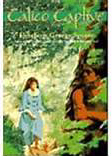 I was watching the grandkids play and perusing a shelf of older books. A title, Calico Captive by Elizabeth George Speare, caught my eye. Before long, I was reading and glancing over at the kids from time to time. When I taught middle grades (long, long ago) I used Speare’s The Witch of Blackbird Pond


 For me, the works of Pauline Baird Jones are hit and miss. My favorite of her stories is the first one I read (The Key, also known as Project Enterprise, Book 1). I’ve read several other of her novels, and her style is generally a blend of snappy dialogue, kick-butt heroines, romantic suspense, and sufficient action to keep the reader entertained.
 The title of this yarn isn’t particularly original, as it makes me think of Princess Leia, but the story doesn’t lean on Star Wars very much. As the book opens, with a war game going on, rather like Star Trek— The Wrath of Khan, I was wondering if the author was going to borrow heavily from that story, but not really. Actually, Bancroft uses lots of science fiction and fantasy elements, but this is theme and variation, then more variation. As a writer, a reader, and an occasional viewer of science fiction, I see this story as fairly original, and since there truly is “no new thing under the sun” that’s a complement.
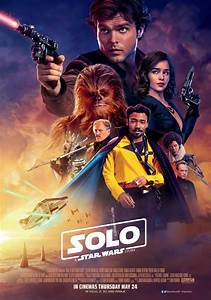 Our son is a big time Star Wars fan, and he initially said he planned to skip this movie. Based on the box office stats, apparently a lot of folks felt the same way. However, a friend apparently convinced him to go see it, and he came back raving about how much better it is than Star Wars Episode VIII. Last evening, hubby and I went with him to our very small local theatre to see Solo- A Star Wars Story before it closes up and leaves for cable and the Red Box.
 star
star  star
star  . Example: Han Solo proudly tells Obi Wan Kenobi that the Millennium Falcon made the Kessell run in 12 parsecs. How? When? And why was that important? Solo fills in all those blanks. How did Han and Chewy meet? Again, this film supplies some answers. Overall, the script writers (father and son Kasdan and Kasdan) performed a minor miracle in getting so much into two action packed hours.


 Having just read an article in Popular Science online about what a”
