My video is reaching students!

NASA nebula

A still shot from NASA

Way back I took classes in “podcasting” and “movie-maker.” Afterward, I came home and practiced what we’d learned in class. I made three videos, which are a lot closer to Powerpoint presentations, if the truth be told. Anyway, one of them has had a bit of success—”A Brief History of Science Fiction.” This video was designed with a few still images, mostly screen shots from NASA such as the one I featured on this post, and two audio tracks. We’d been warned in class about using commercial music, so I downloaded a freebie track that I thought sounded dramatic. The second audio track is my voice, reading story boards, in my rather strong Southern U.S. accent. I did write the story boards, based upon my study of the science fiction genre, my training in English literature, and what of that matched up with the still images that I managed to acquire at the time.

Science fiction is an ever changing literary and film genre (with more than a dash of animation) so my video is already a bit dated. Still, I was most gratified when reading a very valid complaint about the loud musical soundtrack. The complainant stated that my little YouTube video was required for class. Gosh darn! My Brief History of Science Fiction is required by a teacher (somewhere?) for a class (in something?) I’m flattered. Really.

If you don’t mind hearing that awful musical track, head over to YouTube and see A Brief History of Science Fiction. While you are there, the link to my “book trailer” for The Gift Horse is still live also.

Free for Three promo

For those who prefer to shop at home on Black Friday, here’s an unbeatable deal—my science fiction novel, Trinity on Tylos, is free for three days. Why run it for free? That’s simple, really. More readers should mean more reviews and some word of mouth testimonial. So, here’s a link to the novel, which is free on November 29, 30, and December 1.

How much for a flu shot?

Mostly, I write about books, or maybe films. No doubt, I will do that again soon, but recently I have been experiencing various forms of health care, and my latest such visit was for the annual flu shot, so I’ll write a bit about that. For some years, I opted out of having this injection, but after hubby lost a week of work and felt terrible for even longer, I went back to getting the shot. After all, the couple of times I had influenza it was no fun at all.

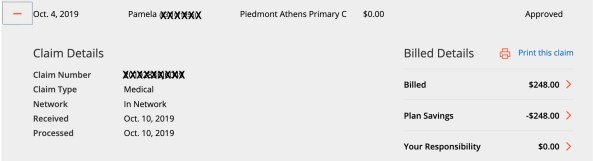
Current United States policy (via the Affordable Care Act) requires that insurance cover the flu shot as a preventative measure, without any co-pay from the patient. So, my doctor’s office has made a business decision to “stick it” to the insurance company—pun intended. See the attached screen shot of the EOB for this procedure:

Flu Shot

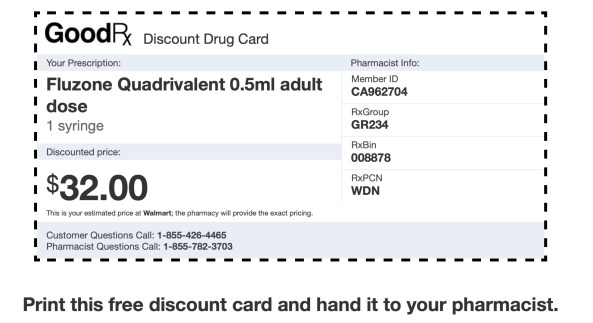
Now, thinking that $248 is a bit steep for this, I just looked at GoodRx (a nifty site if you have never used it) and it tells me that the estimated cost for the shot is $32 at Walmart.

GoodRx

Now, going to my doctor’s office was convenient and fast, but I’ve had flu shots at the grocery store or at a mini clinic, and neither of those were inconvenient. Bottom line, the doctor’s office knows that they can charge whatever for preventive procedures, and my insurance has to pay for it, so they are taking advantage of this. Kudos to Walmart for making this injection available for regular folks. If you don’t have insurance, or if you want to keep it real, just go to the GoodRx site and put in your zip code. The site automatically offers several locations and price points. BTW, the average when I looked was $32.

As for Piedmont Athens Primary Care, they’ve made me think, yet again, that when insurance premiums go up again, and they will, their approach to business is one reason for those hefty increases.


Overdignosed— a brief review and commentary

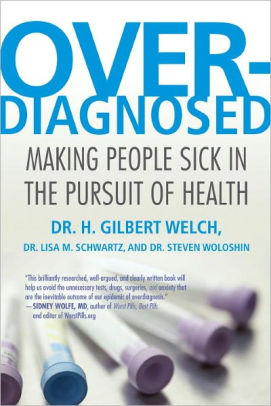
OverdiagLike many people in the USA, I am concerned about the state of our health care. Don’t get me wrong, I’m grateful to live in a country that has lots of great medical facilities and practitioners. But, I’ve watched people go through some pretty difficult situations, too, so I read Over-diagnosed: Making People Sick in the Pursuit of Healthcare in hopes that I’d learn more about what sometimes goes wrong with our healthcare system. This book offers some first hand insights from three physician authors, and I learned a great deal from it.

Many of the chapters have a “case study” to frame the discussion. One of the most memorable is the story of an older gentleman with a borderline diagnosis of diabetes. In the interest of keeping those blood sugar numbers in the optimal range, the principal author (Dr. H. Gilbert Welch) prescribed medication. Unfortunately, the gentleman’s blood sugar dropped, causing him to lose control of his car, resulting in an accident that broke his neck. The gentleman survived, but he had to wear a halo brace for many weeks while his neck healed. When it was all over, the doctor and patient agreed that the best practice in his case would be to forgo the diabetes medication. This anecdote is a great way to illustrate how over diagnosis can make people sick!

Each chapter explains how modern testing, coupled with ever changing standards for “normal,” have resulted in more and more people being diagnosed with something. The approach is cautionary, explaining that many times a diagnosis might be correct, but if the condition is unlikely to cause the patient any reduction in quality of life, or end the patient’s life early, then it is far better to not treat the disease. However, once diagnosed, both the patient and most physicians will be reluctant to “watchfully wait.” Indeed, the principal author states in the introduction that he does not have routine checkups, even though he works in healthcare and could easily do so. Instead, he waits for something to go wrong. As the old saying goes, “If it ain’t broke, don’t fix it.”

The mammogram is probably the first test that my doctor wants me to have done, but our author states that for most women, they do more harm (due to radiation) than good. Aggressive cancers can develop in the one to two year interval between tests, but slow growing cancers can result in over-reaction by doctors and patients. Also, many women go through the “false positive” situation, which might mean more testing, including a breast biopsy. I’ve known several women who had that done, only to find out that the mammogram was incorrect (or incorrectly interpreted.)

Another interesting story is a conversation between the author and a pharmaceutical rep. The latter was touting the benefits of a drug for women with bone density issues. After a friendly discussion, the drug company rep admitted that the greatest risk for these women is mostly hip fractures, which can lead to all sorts of problems, including premature death. The author states that helping women prevent falls, though physical therapy and other practical measures, would be much more useful. And the testing phase of the drug was eventually discontinued due to subjects developing bone cancer.

The author is firm in his stance that patients are often over-tested and over-diagnosed. He believes that many doctors do this out of an interest in finding answers for their patients, and not merely in making more money. He is also firm that the threat of a law suit can be a driver for hyper testing and the end result of over-diagnosis. I’m all for people having the right to seek redress in the case of gross malpractice, but doctors who have been the defendant in a case, win or lose, will often err on the side of caution and order tests that probably aren’t needed and will refer cases that are only marginal. The costs of this mind set are not negligible, as tests can costs hundreds or even thousands, and that doesn’t include the costs of treating a condition that might not need any treatment. Nor does it address the mental stress of having a chronic “condition.”

Common sense is sorely lacking these days. Certainly many aspects of modern America are getting totally weird, so I guess it is not unusual that medicine is affected. I am grateful to Dr. Welch and his fellow authors for this very cogent discussion of the problem of over diagnosis. I am seriously contemplating what to say at my next doctor visit, when I will face that computerized list of items that modern medicine says I need, but just might result in me joining the long list of those who are “over-diagnosed.”


Born with Teeth—A Memoir; review and commentary

Born Mulgrew

Kate Mulgrew’s Memoir

My guess is the first I heard of Kate Mulgrew was when she starred in Mrs. Columbo, but that’s not a certainty. Like many fans of all things Star Trek, I was both thrilled and a bit concerned when Mulgrew was very publicly named the newest captain in the fourth iteration of that television franchise, Star Trek Voyager. And, I was rather amazed to by her character in Orange is the New Black, in a role that is far from her roots as a distinctive and attractive leading lady.

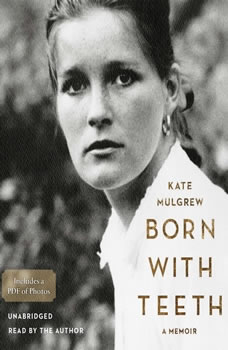
Regardless of when one first noticed Kate Mulgrew, she is a force on the screen. Recently, I read her memoir, which has the curious title Born with Teeth. Apparently, she was indeed born with teeth, which were extracted so she could feed properly. For Mulgrew’s fans , there may not be all that much new information, but the style of her prose does illuminate readers on her perspective in regards to matters that matter most. The narrative is mostly linear, although she skips a lot of years and events. First, the reader learns just how dedicated she is to her craft and how much work it has been. Second, readers will become better acquainted with Kate’s large family, and see how they have influenced her. One of my favorite passages is when, as a schoolgirl, Kate invited her artist mother to hear her recitation of poems she had written. Upon learning about the program, Kate’s mom, Joan, gives her a copy of a poem (The White Cliffs of Dover) to read, and during the school program young Kate not only read her poems, but she read the classic poem so well that her audience was almost in tears. Afterward, Kate’s mom told her that she could either be a bad poet or a great actress. Apparently, Kate took those words to heart, because from that early age, she put all of her effort into becoming an actress.

Fans of Ryan’s Hope (a soap opera that was Kate’s first big break in television) or Star Trek Voyager (perhaps her most influential role) will find a few gems, but she doesn’t concentrate on those stints. Instead, what Mulgrew writes about is relationships. While filming Ryan’s Hope, Kate became pregnant, and as she was not married and quite young, she assumed she’s have to leave her job. Instead, the pregnancy was written into the show, and her character gave birth a few days after Kate did it in real life. The Mary Ryan character kept her baby, but Kate gave up her daughter for adoption. Later, she expends both time and money in an attempt to find her biological daughter, and that search is a focal point of the memoir.

Certainly, Mulgrew has experienced quite a lot of grief, as one of her sister’s died of a brain tumor and another succumbed to pneumonia. Romance has not always been easy, either. Mulgrew also writes of her loves—her first husband, Robert Egan, and the sons that he fathered, and how divorce affected her and the boys. Later, she reveals how her love for her second husband, Tim Hagan, endured a rather on again then off again period. The memoir ends as she meets her daughter and her relationship with Hagan finally settles into marriage.

I’m a science fiction fan (and writer) so I was just a tad disappointed in this memoir. I’d love it if Kate would do as Shatner has done and publish a book about her time portraying Captain Janeway. Perhaps she will, when she has more time, for she does seem to be one busy lady.