Lincoln— the film


I’m not sure why we didn’t watch it when it was new, but hubby and I were perusing a list of the best films available for streaming on Netflix, and we chose to view Steven Spielberg’s ode to the controversial president. Gosh, there’s been so much written about this man. Historians can easily demonstrate how controversial and even unpopular Abraham Lincoln was during his lifetime, but since then his stature has ridden the waves of popularity, sometimes to heroic heights and then again to be mostly forgotten.

I’ve read some of the books and articles on Lincoln, but there’s many, many more that I haven’t. Still, the film version has much to offer viewers, regardless of their prior knowledge of the civil war era leader. For the two hours plus of runtime, the film focuses on the struggle to pass the 13th amendment to the U.S. Constitution, the one which prohibits slavery, except as punishment for criminal behavior. Daniel Day-Lewis does a remarkable job of portraying the title character. Sally Field is also very good as the mercurial Mary Lincoln, and the supporting cast is peppered with famous and talented actors. When we paused the streaming version for a pantry raid, hubby and I commented that it was as if the script had been tailored to showcase some aging but remarkable players, including Tommy Lee Jones and David Spader.

Mostly, this is a really good film, but the beginning, although dramatically effective, leads a well-read viewer to question its authenticity. The soldiers who quote from Lincoln’s now famous address at Gettysburg seem so sincere, but it is quite unlikely that war weary soldiers would know by memory that speech, as it was not considered to be much good when it was delivered. History has given those words their significance.

Although I don’t remember the source of the recommendation to watch this film, I, too, endorse it. While the outcomes are not really suspenseful, the film holds the viewer’s interest. No biopic is entirely historically accurate, of course, but the spirit of truth is certainly present. Watch (or re-watch) and enjoy!

Some Science Behind My Science Fiction

Having just read an article in Popular Science online about what a”Generation Ship” might look like, I was gratified to see that some of the core concepts in my science fiction novel, Trinity on Tylos, are firmly rooted in science.

The article speculates about what challenges the multi-generation inhabitants of a colonizing venture (based on an extrapolation of current space technology) might face. Topics addressed include propulsion, medical issues, livestock, and robot workers.

In Trinity on Tylos, the alien captain of the Archeonite III has a big problem: his colony of survivors died out, but he has the ability to grow little Archeons from stored genetic material. He just needs some baby mamas, and my characters Venice Dylenski and Alathea Duke end up with the task. In the Popular Science article, We Could Move to Another Planet with a Spaceship Like This, the author mentions that “speculators say it’ll take 20,000 souls to start a healthy population on a new world. One space-­saving tip: Bring frozen embryos and people to diversify the gene pool upon arrival.” That’s right out of my novel, where Azareel and his android medical team design the embryos that Venice and Alathea gestate.

As in the Popular Science article, robots are probably going to be the grunt workers of the future. In my novel, the Archeons use robots (as they take the form of their makers, I call them androids) as workers. A limited but technologically proficient population would no doubt employ robotic workers, freeing the populace to supervise or take on  tasks that require a more creative mind.

Trinity on Tylos is a complex story, because it goes beyond being just a space opera and delves into human relationships, made more complicated by the limited number of people with whom the characters interact. Also, it is a story of surviving on a somewhat hostile planet, solving such issues as having enough water to irrigate crops. The Popular Science article mentions farming as one of the most necessary activities once the generation ship reaches a new planetary home. Indeed, when I wrote Trinity on Tylos, I remembered the words of William Bradford, a leader of the pilgrims who settled Massachusetts, who wrote “what could they see but a hideous and desolate wilderness, fall [sic] of wild beasts and wild men—and what multitudes there might be of them they knew not.” Survival is not easy, and the Popular Science article, although very positive in outlook, does not ignore the difficulties that might face the future generations of humans whose journey began with some adventuresome ancestors.

Technological progress and science fiction often go hand in hand, because what writers dream up, engineers can (sometimes) make happen. However, the reverse is also true— when creating a science fiction story, there must be some science blended in with the fiction. Trinity on Tylos is science based fiction, and it is available for your Kindle reader or Kindle enabled device; just click on the cover art.


Humor

The history of writing funny stuff stretches back into the earliest times. Humor comes in certain time honored forms: slapstick, exaggeration (a/k/a hyperbole), sarcasm, irony, and puns. Most any humorous work relies on one or more of these techniques. Until recent times, that is. Now, vulgarity seems to have overtaken all of these.

Hubby and I have been watching an HBO show called Veep and, while there are a couple of decent running gags, I have not been laughing much. After subjecting ourselves to four episodes, neither of us is sure if we want to continue. I’m not so easily offended, but this show doesn’t strike me as funny, and it is clearly supposed to be a comedy. The actors seem to be working very hard at maintaining a frantic pace, which may indeed be how things are in the White House, but there is no slapstick, little irony, few plays on words, and less sarcasm than one might expect in a political drama.

Oh, I do like the bit with the staffer who has an imaginary dog. That’s funny and a bit ironic. Also amusing is the main character (Selina Meyer) hoping that the president will actually need her (thus far he hasn’t.) The character (Tony?) who doesn’t even bother whispering a brief description of everyone the VP meets and does not actually know is a bit of exaggeration and his remarks sometimes make me smile. And, the pace seems so fast that perhaps the intent is hyperbole, but it is more intense than humorous.

So, what’s left? Lots and lots of cussing, and at least fifty percent of it is a verb/expletive that might be labeled as “for unusual carnal knowledge.” Not funny. It just isn’t. I guess the writers are lazy or haven’t ever seen anything funny.

It’s sad really. A re-run of I Love Lucy can still make me laugh, but Veep doesn’t.

Spring into action

NortonAs one of my Works in Progress is a text on motorcycling, for spring I am sharing a cool updated article on getting started in motorcycling.  This list is an effort to name some current bikes that should appeal to new riders. Quite honestly, I think some of the “beginner bikes” in this list are too heavy, powerful, and/or expensive, but it is a good place to begin, should any readers want to try two-wheeled transportation.
Thanks to the editors of Ride Apart for this nifty list.

See the WIP Ride to Eat tab for more about my riding book to be.

Star Trek Poetry

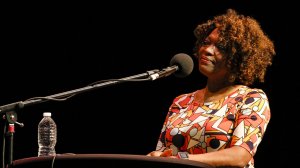
ritadoveA friend who knows of my love of science fiction in general, and Star Trek in particular, mentioned hearing a show called “Ask Me Another” on NPR where a poet (Rita Dove) was challenged to identify characters based upon reworking of famous poems with Star Trek: the Next Generation in mind. Those of you who like Star Trek will no doubt be intrigued by the puzzles presented to the poet. Anyone who likes poetry and Trek should truly enjoy this show. I certainly did!
Signs of Spring?

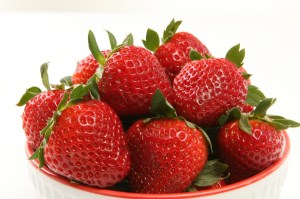
strawberries1This is a bit of wishful thinking, actually. Here in northeastern Georgia, we are going to have some “normal” weekend weather after having a couple of days of school closings and tricky driving due to an inch or two of snow. But, I saw a local farm’s Facebook post stating that they were 100 days away from harvesting strawberries, hence the picture of some luscious berries. Yep, according to our local producers, in just about three months, we can once again delight in that most delicate of all tastes fresh strawberries!

In the meantime, I will keep reading, sometimes writing, and teaching. As for food, winter is a good time to eat chili and lentil soup, which is on the menu tonight. Here’s a link to my favorite recipe for lentil soup. If you like heat, add a tiny bit of red pepper!

By Pamela/Pilar Posted in writing