Missing Author?

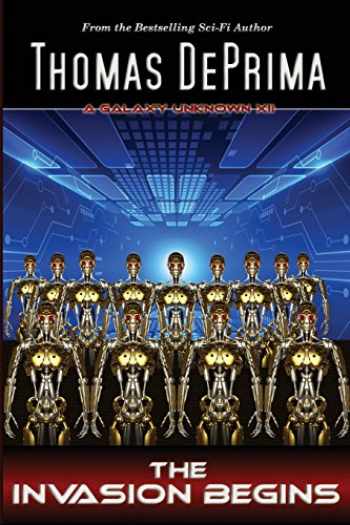
Recently, I re-read the Thomas DePrima novels I had purchased as eBooks, namely, the first nine of twelve titles in the A Galaxy Unknown” series. Gosh, I had forgotten much of the detail, but I remembered that I really enjoyed them. As certain television series benefit from “binge watching”, such as Breaking Bad, I realized that reading those nine novels back to back was great fun, so I sought the other books in the series and found them on Apple’s reading app. I just finished the 12th book, which, darn it, ends with a cliff-hanger. Thus, I have two mysteries. First, how do Jenetta and Space Command once again save the known galaxy, and, second, what happened to Thomas DePrima? According to the end of book 12, The Invasion Begins, the adventure will continue, but that book was published almost a decade ago. According to my web research (thank you AI) DePrima hasn’t published anything since 2019.

For those who haven’t read this nifty space opera series, I reviewed some of these novels when I first read them, and those entries are summarized earlier in this blog.

Thomas DePrima’s A Galaxy Unknown series is a classic space opera infused with modern indie flair. Spanning twelve main novels (plus spin-offs like the Border Patrol and Colton James sub-series), it follows the meteoric rise of Jenetta Carver, a sharp, disciplined young Space Command officer whose destiny is nothing short of galactic. The series has an action packed beginning, with a few flaws in the writing, but nothing that keeps most readers from swiping those electronic pages to find out what will happen next. There’s enough science fiction to keep fans of that genre entertained, but the writing is not so technical that every day readers who enjoy a strong female character can’t enjoy each book. As the series goes on DePrima’s universe is ever more expansive and detailed. From the political tensions between Galactic Alliance sectors to the looming threats of alien species and interstellar crime syndicates, the author builds a rich backdrop for military intrigue and diplomacy.

The series isn’t without some minor imperfections, especially as the series progresses: some plotlines feel recycled—Jenetta foils yet another plot, saves the day, and gets another promotion. Her near-infallibility can reduce the suspense. Not since the video game version of Lara Croft has a female lead seemed so invincible. However, if you’re a fan of David Weber’s Honor Harrington, any early iteration of Star Trek, or any tale of righteous command in deep space, A Galaxy Unknown and its eleven sequels offers a satisfying and immersive experience. 

That said, I wonder what happened to Thomas DePrima. According to Goodreads, he has over 20 books available, and most of them rate above 4 (out of 5) stars, with thousands of reviews of the earlier books, and hundreds for the later titles, which is amazing for an indie author. Various sources speculate that DePrima is a pen name (not so unusual) so maybe he has passed. Or, maybe he got tired of writing. Maybe he pivoted to another name and a new set of books. I have no idea, but I do wish that the series had some sort of denouement. Jenetta Carver and company are too cool to just leave hanging.

Where are you, Thomas DePrima?

The Neutral Zone Studios

Hubby and I decided to visit “The Neutral Zone” studios on one of their almost monthly fan appreciation weekends recently. Also, since these sets are rented out, the only time to see them is during scheduled events, so certainly see the calendar on the website prior to planning a visit.

The facility is actually a warehouse in Kingsland, Georgia, where the web series Star Trek Continues was filmed. The sets occupy a space just under 10,000 square feet, which is small by Hollywood standards, but the sets include many of the areas which would have been used on the original Star Trek series. While the original sets were destroyed more than fifty years ago, the blueprints are available, as are screen shots from the original series. The sets at The Neutral Zone were constructed over more than a year, then used for a while by the makers of Star Trek Continues. When CBS/Paramount decided to reboot Star Trek (making such series as DiscoveryPicard, and Prodigy) they basically told the folks making Star Trek Continues to wrap it up, so the sets became available for fan films. Indeed, it is possible to rent The Neutral Zone for an event or to make your own film, as long as the script meets the restrictions put in place by CBS.

The set visit begins with a guided tour. We began our tour with Ray Tesi, who currently owns the sets and manages the studio, then Vic Micnogna, who was the visionary behind Star Trek Continues, took over. Vic also plays Captain Kirk in the series, and if you haven’t seen it and are a fan, you really should take a look at the eleven full length episodes. Ray began with some background, then took us to engineering, then just across the entryway to the main ship, which is arranged in a circle, just like TOS. We visited sick bay, the briefing room, Captain’s quarters, the transporter room, auxiliary control, the Jeffries tube and brig, and the big finale is the bridge set. The guide(s) explained how the sets were built originally, and how the sets might be used in filming now. For instance, the Captain’s quarters, with a bit of redressing, can be any crew member’s quarters.

After the tour, with a bit of flexibility to avoid the next tour, attendees are welcome to take pictures. Just imagine, you, too can be pictured standing in the transporter room or on the bridge, either at the helm or even in the captain’s chair. We also purchased the entire series on DVD, and as Vic was there, he autographed the case for us.

Star Trek, even for non-fans, is a bit of a cultural phenomenon. Who doesn’t know such phrases as “Beem me up, Scotty?” For non-fans, The Neutral Zone is probably not a tourist destination, but for the thousands upon thousands of those who are fans of the original Star Trek series, the set tour is an amazing experience. I urge travelers to take a look at the websites for both The Neutral Zone and Star Trek Continues for a bit of research prior to scheduling a trip. As a fans of all vintage Star Trek series, including Star Trek Continues, this was a “must see” for us, and it did not disappoint.

Shaken (Quake Runner Book 1) by Kevin Tumlinson— brief review and commentary

This is a pretty good novel. The main character, Alex Kayne, is sassy, super smart, and just vulnerable enough to avoid the “heroine can’t die” syndrome that afflicts almost all comic book super hero characters, or Lara Croft (heroine of the Tomb Raider games/films). Alex is a fugitive computer whiz who needs something to do as she hides from all the forces who want to either kill her or “bring her to justice”, so she kinda does her version of “The Equalizer” in that she helps people who have a specific need. The needy person in Shaken is a surfer/marine biologist named Abbey, who lost an arm to an encounter with a shark. Abbey received a prototype bionic arm, in part due to her high profile injury, and someone stole it. The arm and it’s charger, gone. Who the heck steals a limb from an amputee? (Literate folks might respond with another story, “Good Country People” by Flannery O’Conner, but I digress.)

So, we have Alex Kayne, who manages to change her appearance, her lodging, her cell phone, and her method of transportation more frequently than anyone in any spy novel I’ve ever read. In this book, she is mostly hiding out in Disney World. Other characters include Eric Symon, the FBI agent who nearly nabs fugitive Alex, Abbey who needs her arm back, and a cast of suspects or villains, depending on how the mystery unfolds. The action in this novel is well told, and not quite believable, but that’s part of the fun of it all.

Readers who enjoy puzzles and/or action heroines and want to be entertained for an evening (or two) should try Shaken (Quake Runner Book 1.)

Now, for the commentary. This was my first book by Kevin Tumlinson, but I certainly intend to try another. At the end of this book there’s a note wherein the author explains that he didn’t plan to self-publish this novel, intending to put it in the hands of an agent. However, he thought better of it and put it into his self-publishing stable of products. For many authors (yours truly included) self-publishing is better, due to control of the process and potential financial gain. That decision is understandable, but when the author said he wrote the book in roughly 15 days, I was shocked. Shocked.

Y’all, fifteen days is like two weeks. I can’t edit a book in two weeks, much less go from beginning to end. Wow. I had a whole new perspective on the novel after that. I thought it was a good, if not spectacular read, with very few errors. However, the very idea that such a book could be dreamed up and written in such a short time is simply hard to believe. However, as the author of Ecclesiastes says, “There is no new thing under the sun.” Shaken is a bit like that, in that the elements in the story have been used before, but perhaps not in precisely this manner. The author’s website is a feast for those who want to know more about marketing and branding, especially marketing self-published novels. Clearly, Tumlinson is not just prolific, but also understands how to get the product to customers, too.

Time for Dystopian Science Fiction?

Reader’s Alley, a nifty site for bargain eBook lovers, divides their science fiction offerings into sub-genres: sci-fi romance, sci-fi thriller, and science fiction, dystopian. While those first two descriptors would seem self-evident, the dystopian flavor is considered by some (mostly jaded members of academia) as the only serious science fiction. Typically, I avoid reading dystopias because they tend to be so darned depressing. But, with all that is happening in the news, which I also try to avoid, perhaps it is time to take a look at the genre.

One of the finest books about the history of science fiction is Brian Aldiss’ Trillion Year Spree, which covers science fiction literature from its beginnings to the early 1980s. Aldiss does discuss many sub-genres, but the thread of dystopia runs strongly throughout his encyclopedia of science fiction in printed form. The term, dystopia, is applicable to “a world in which everything is imperfect, and everything goes terribly wrong. Dystopian literature shows us a nightmarish image about what might happen to the world in the near future. Usually the main themes of dystopian works are rebellion, oppression, revolutions, wars, overpopulation, and disasters. On the other hand, Utopia is a perfect world – exactly opposite of dystopia.”

Science has, until recently, been viewed as a two edged sword; while it can make life much better, mis-use of science has been the root of all sorts of evils. Frankenstein, by Mary Shelley, is often considered to be the first science fiction novel, and the dark side of science is clearly the central theme of the novel. Dr. Heidegger’s Experiment and Rappacini’s Daughter, short stories by Nathaniel Hawthorne, also feature mis-use of science as their main themes. When teaching those stories, which used to be in many American Lit anthologies, one way to make it simple for students is to say, “Hawthorne is basically telling his readers, ‘don’t mess around with Mother Nature’.”

Later novelists fine tuned dystopian themes, with societies becoming more and more restrictive upon the populace. Aldous Huxley’s Brave New World and George Orwell’s 1984 share these themes, “including the consequences of totalitarianismmass surveillance, and repressive regimentation of persons and behaviours within society.” Kurt Vonnegut’s short story, Harrison Burgeron is one of the most widely read dystopian stories, due to its inclusion in anthologies for students, and I recently read a news story liking our current government policies to Vonnegut’s didactic work. Y’all, it is scary when dystopia becomes reality.

Of course, many fans of science fiction today seldom, if ever, read it. Instead, what they know of utopia and dystopia is presented via video. Early episodes of Star Trek explored both sides of the scientific divide. The Ultimate Computer, rather dated today, explored the man vs. machine conflict, using future war games as a setting for its rather disturbing premise. Various dystopian novels have been adapted to long form (movies) video, including everything from 1984 to Planet of the Apes. There are literally dozens of dystopian sci fi films. Some are rather laughable now (Mad Max?) but others are quite troubling.

My own fiction, which has many conflicts for characters to attempt to resolve, certainly isn’t “happily ever after, ” but it isn’t as dark as some of these works, and that’s because my outlook on life is more pragmatic. Hopefully, there will be some gravitation away from the totalitarian policies of modern politicians and administrators. But, when I consider what I am seeing when I do go out and about, I wonder. I really do. Remember this: In each fictional dystopia, the goal was to make things better for certain segments of the population, and bad outcomes are unhappy accidents. Be careful what you wish for—

Retro Review: Moondust and Madness by Janelle Taylor

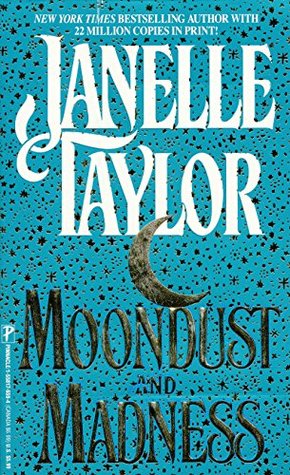
MoondustA friend (a generation older than I am) recommended books by Janelle Taylor, saying she is a prolific series romance writer from Georgia.  That’s true. Goodreads lists lots and lots of titles by Taylor, and apparently she sold quite a few books in her heyday. The series my friend recommended was “western” but as I am a science fiction fan, I chose to read book one in the Moondust series, Moondust and Madness.
Reviews for the ebook, which I read, are not plentiful, but are mostly positive. However, a deeper dive into those reveal that the positive reviews are mostly by readers who remembered this yarn from way back, whereas younger, first time readers are not impressed. I understand both points of view.

Moondust and Madness is a traditional 80s bodice ripper novel, which just happens to be set in space. Heroine Jana Greyson is a scientist who is abducted by an alien gathering up human mates for a large system of planets in another galaxy. These alien abductions are sanctioned by the alien powers that be due to the devastation of an engineered virus which caused a lack of fertility amongst the alien females. BTW, these aliens look just like humans, and can breed with them, so the only thing Jana (and her five hundred companions) need is an inner ear translation device and some brainwashing to help her get ready for her new life. Much of the science fiction trappings seem to have been lifted from Star Trek, from “Star Fleet” to transporters. That could be viewed as “ripping off” Trek, but I think it was more to give readers some familiar science fiction props. This is a romance novel, so there are very few explanations of how gadgets or space ships work.

Lots of political intrigue and the on-again off-again romance between Jana and her captor, Varian Saar, make up the more than five hundred pages of this novel, which begins a series featuring other characters set in the same universe. While I liked the book at times, it is just too retro for most readers. I won’t continue the series, but I did finish it.

For readers who like alien abduction and then fall in love plots, Myra Nour used this same basic plot for her much better novel, Love’s Captive. And, if you want a dose of reality wherein the heroine doesn’t fall in love with her captor, try my novel, Trinity on Tylos.


Resources for writers

Book Covers SFOver my almost two decades of writing and (occasionally) publishing, I’ve learned some stuff. Lots of stuff, actually. Some of what I learned (such as a great place to buy a box for a manuscript) is out of date. However, there are some resources that budding writers should utilize that are still quite relevant, so here goes—

While a novel (or a short story or screen play) is still in the drafting stage, consider getting editorial help. Informally, there are many writer’s groups which offer support and critiques. If you live close enough, consider that as a first source of assistance and career development. I was once privileged to judge a short fiction contest held by the Northeast Georgia Writer’s Group, and all of the entries were quite worthy. The group is active, with contests and guest speakers. Many libraries sponsor such groups. There’s a great list of writer’s groups in Georgia at ReadersUnbound.com.

Depending on genre, there just may be a writer’s conference waiting for you. Such conferences usually feature guest speakers, workshops, and opportunities to meet with literary agents, who are the typical conduits between writers and publishers. I was fortunate to attend a few in nearby Athens (at the UGA campus) which was sponsored by the Mystery Writers of America, but there are a number of conferences, either general or targeting specific types of writing.

When the work is more or less complete, if there is no conventional publisher in the picture paying for it, an author seeking to self-publish or polish a manuscript for possible submission should really consider a paid editor. The Writer’s Digest magazine folks have an entire “store” devoted to such services. When I was working on my first novel, a publisher recommended that I go through a course with Writer’s Digest, and the experience taught me quite a lot about the value of editorial assistance.

Whether self-publishing a novel or developing a website and/or a social media publicity campaign, hiring a professional graphic artist is really important. For a web only publication, such as Kindle Direct, I might try the do it yourself method, but even then, it is good to use a site such as Canva.com. However, if there is any serious money going into the project, such as self-publishing in print or multiple platforms, then a cover artist is very helpful. Both The Gift Horse and the second edition of Trinity on Tylos have covers designed by an independent artist. There’s a list of cover artists over at The Creative Penn. By the way, I’d steer clear of Fiver. I tried that, and got nothing, not even a refund for my initial payment.

Once a book is in print or available as an eBook, most writers will want to help with marketing. This can be rather daunting for many writers. The publisher of The Gift Horse (Booklocker) has a companion site, Writer’s Weekly, which has some links to paying markets for shorter works, as well as articles about writing and marketing.

There are a lot of companies that offer “services” to authors. Be very careful to choose wisely, or money that should have been spent on editing and cover design will be frittered away on something else. While some of these resources have costs, others are cheap or even free. Regardless of how much money you spend, for a novelist the two most important resources are editing and cover design—in that order.