Missing Author?

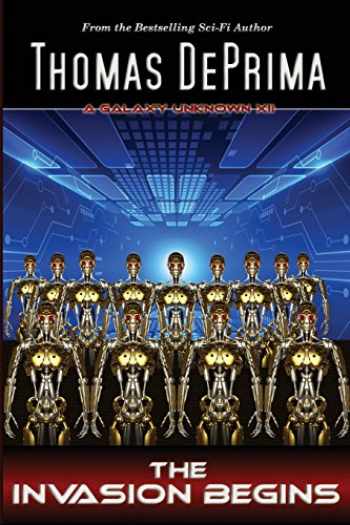
Recently, I re-read the Thomas DePrima novels I had purchased as eBooks, namely, the first nine of twelve titles in the A Galaxy Unknown” series. Gosh, I had forgotten much of the detail, but I remembered that I really enjoyed them. As certain television series benefit from “binge watching”, such as Breaking Bad, I realized that reading those nine novels back to back was great fun, so I sought the other books in the series and found them on Apple’s reading app. I just finished the 12th book, which, darn it, ends with a cliff-hanger. Thus, I have two mysteries. First, how do Jenetta and Space Command once again save the known galaxy, and, second, what happened to Thomas DePrima? According to the end of book 12, The Invasion Begins, the adventure will continue, but that book was published almost a decade ago. According to my web research (thank you AI) DePrima hasn’t published anything since 2019.

For those who haven’t read this nifty space opera series, I reviewed some of these novels when I first read them, and those entries are summarized earlier in this blog.

Thomas DePrima’s A Galaxy Unknown series is a classic space opera infused with modern indie flair. Spanning twelve main novels (plus spin-offs like the Border Patrol and Colton James sub-series), it follows the meteoric rise of Jenetta Carver, a sharp, disciplined young Space Command officer whose destiny is nothing short of galactic. The series has an action packed beginning, with a few flaws in the writing, but nothing that keeps most readers from swiping those electronic pages to find out what will happen next. There’s enough science fiction to keep fans of that genre entertained, but the writing is not so technical that every day readers who enjoy a strong female character can’t enjoy each book. As the series goes on DePrima’s universe is ever more expansive and detailed. From the political tensions between Galactic Alliance sectors to the looming threats of alien species and interstellar crime syndicates, the author builds a rich backdrop for military intrigue and diplomacy.

The series isn’t without some minor imperfections, especially as the series progresses: some plotlines feel recycled—Jenetta foils yet another plot, saves the day, and gets another promotion. Her near-infallibility can reduce the suspense. Not since the video game version of Lara Croft has a female lead seemed so invincible. However, if you’re a fan of David Weber’s Honor Harrington, any early iteration of Star Trek, or any tale of righteous command in deep space, A Galaxy Unknown and its eleven sequels offers a satisfying and immersive experience. 

That said, I wonder what happened to Thomas DePrima. According to Goodreads, he has over 20 books available, and most of them rate above 4 (out of 5) stars, with thousands of reviews of the earlier books, and hundreds for the later titles, which is amazing for an indie author. Various sources speculate that DePrima is a pen name (not so unusual) so maybe he has passed. Or, maybe he got tired of writing. Maybe he pivoted to another name and a new set of books. I have no idea, but I do wish that the series had some sort of denouement. Jenetta Carver and company are too cool to just leave hanging.

Where are you, Thomas DePrima?
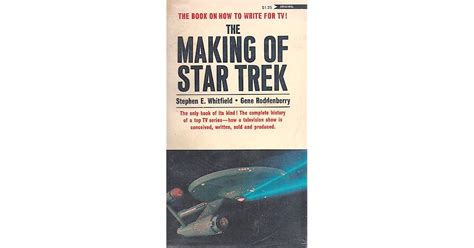
The Making of Star Trek by Stephen E. Whitfield—a retro review

Way long time ago, I borrowed a copy of The Making of Star Trek from a friend. After watching some episodes of The Original Series (TOS) on Pluto TV, I remembered the book, so I ordered a vintage paperback via eBay. Once I had it in hand, I could revisit a wonderful read, as well as wallow in some insider info once again. First printed in 1968, this book is both a history of Star Trek, with quite a few photos, and a “how to” guide to creating, producing, and writing a television series. However, as the book was written as the series was coming to a close, the legacy and cultural significance of Star Trek were not yet known to Whitfield (or Gene Roddenberry, who is listed as a co-author.) For more casual fans, there are other sources, from videos to more focused books.

When a ground breaking television series is created, there are thousand decisions to be made. From character names to methods of propulsion, this volume covers in detail how many of the concepts that make Star Trek work were developed, some visionary, such as the multi-cultural crew (unheard of in the mid-sixties) while others were merely practical, such as the “transporter” which was necessary as it would slow down the action if every port of call required a shuttle craft excursion (or worse, landing a huge space ship.) Within these pages are excerpts from memos to and from ST creator Roddenberry, quotes from NASA consultants, and preliminary sketches of possible ship configurations.

As this book was written alongside the filming of the series, there are glimpses of who wrote (and re-wrote) scripts, which actors were cast, and how the characters evolved. Letters from some of the actors, with insights into how their characters were to be portrayed, are included. Loosely organized chronologically, but with sections on such topics as “weaponry” and “the bad guys,” the reader sees how items familiar to TOS fans were developed over time.

Previously, I wrote a bit about a tour of The Neutral Zone Studios, where Star Trek Continues was filmed, and where fan films are still made. Our tour included some of the information in this book, but quite a bit of it was different, as the guides took a more hands on approach. Anyone planning a trip there might well read The Making of Star Trek prior to taking the tour. While the book does compliment Gene Roddenberry’s creative genius, many people helped create this vision of the future. Some of it has come to fruition (think folding cell phones) and some might never (Warp drive), but the influence that this one television series, which most deemed a failure when it ceased production, is difficult to minimize.

The Making of Star Trek is no longer in print, so it does require a bit of searching, but for fans, it is worth the effort.

The Neutral Zone Studios

Hubby and I decided to visit “The Neutral Zone” studios on one of their almost monthly fan appreciation weekends recently. Also, since these sets are rented out, the only time to see them is during scheduled events, so certainly see the calendar on the website prior to planning a visit.

The facility is actually a warehouse in Kingsland, Georgia, where the web series Star Trek Continues was filmed. The sets occupy a space just under 10,000 square feet, which is small by Hollywood standards, but the sets include many of the areas which would have been used on the original Star Trek series. While the original sets were destroyed more than fifty years ago, the blueprints are available, as are screen shots from the original series. The sets at The Neutral Zone were constructed over more than a year, then used for a while by the makers of Star Trek Continues. When CBS/Paramount decided to reboot Star Trek (making such series as DiscoveryPicard, and Prodigy) they basically told the folks making Star Trek Continues to wrap it up, so the sets became available for fan films. Indeed, it is possible to rent The Neutral Zone for an event or to make your own film, as long as the script meets the restrictions put in place by CBS.

The set visit begins with a guided tour. We began our tour with Ray Tesi, who currently owns the sets and manages the studio, then Vic Micnogna, who was the visionary behind Star Trek Continues, took over. Vic also plays Captain Kirk in the series, and if you haven’t seen it and are a fan, you really should take a look at the eleven full length episodes. Ray began with some background, then took us to engineering, then just across the entryway to the main ship, which is arranged in a circle, just like TOS. We visited sick bay, the briefing room, Captain’s quarters, the transporter room, auxiliary control, the Jeffries tube and brig, and the big finale is the bridge set. The guide(s) explained how the sets were built originally, and how the sets might be used in filming now. For instance, the Captain’s quarters, with a bit of redressing, can be any crew member’s quarters.

After the tour, with a bit of flexibility to avoid the next tour, attendees are welcome to take pictures. Just imagine, you, too can be pictured standing in the transporter room or on the bridge, either at the helm or even in the captain’s chair. We also purchased the entire series on DVD, and as Vic was there, he autographed the case for us.

Star Trek, even for non-fans, is a bit of a cultural phenomenon. Who doesn’t know such phrases as “Beem me up, Scotty?” For non-fans, The Neutral Zone is probably not a tourist destination, but for the thousands upon thousands of those who are fans of the original Star Trek series, the set tour is an amazing experience. I urge travelers to take a look at the websites for both The Neutral Zone and Star Trek Continues for a bit of research prior to scheduling a trip. As a fans of all vintage Star Trek series, including Star Trek Continues, this was a “must see” for us, and it did not disappoint.

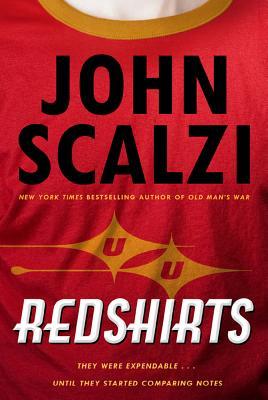
Redshirts by John Scalzi—a brief review and commentary

Fans of Star Trek, the original series, will immediately understand the premise of this very humorous novel. For the few folks who aren’t familiar with the show, there were a handful of officers who were the “stars” of Star Trek. In the show, the starship ventured from planet to planet. Often, one or more officers left the ship on “away” missions, and they were almost always dangerous. Those bridge officers were usually accompanied by security officers, and in the color scheme of the original series, security staff wore red shirts. As the show couldn’t lose any main cast members, the extras, playing security staff, would invariably be the ones to be maimed or killed.

In Redshirts, the author follows a young officer assigned to the Intrepid, the flagship of the Universal Union. Ensign Dahl is thrilled to be onboard, but soon becomes apprehensive, because he quickly realizes that when lowly crew members accompany the captain, its chief science officer, or its chief engineer, those lowly crew members would bear the brunt of any dangerous action. In other words, Ensign Dahl is a “red shirt” without actually wearing a red uniform. So, as a very intelligent young officer, Dahl must navigate the command structure of the Intrepid and learn how to stay alive. Quickly, he figures out that it is best to be anywhere other than on an “Away Mission.”

At times, Redshirts is laugh out loud funny. For instance, any attack on the ship will take out the lower decks, but the bridge always remains unscathed. And one young lieutenant has so many close calls, but he never dies, as he is a “main character.” Soon it becomes apparent that only a few characters will always survive. More experienced crew members seem to have figured out how to dodge being tapped for away missions, thus newbies like Ensign Dahl are more likely to end up dead. Rather than explain what they do and what the manage to figure out, I will simply say that the novel goes where the reader might not expect. And, while the novel really is funny, it is also a bit challenging.

Not since Galaxy Quest have I seen such a good parody of television space opera. Fans of the genre will certainly find something to like in Redshirts. And, for those few folks who have never seen Star Trek in any of its various iterations, this novel is still funny, but probably won’t resonate quite so well. However, the novel is rather, well, novel in that it doesn’t end at the end. Instead there are three sections after the end, called Codas. Some reviewers liked them, some did not. Hopefully, some of my readers will take up the challenge and try this book.

Science fiction fans tend to be smart, and it takes some smarts to appreciate this novel. That said, it is quite creative.

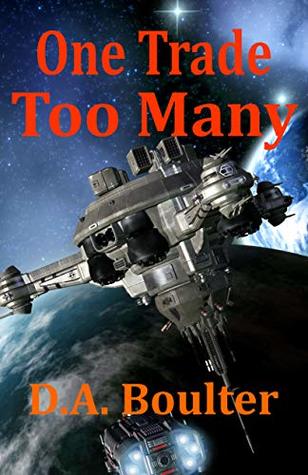
More from D.A. Boulter— One Trade Too Many and Trading for War

Some years ago, I discovered D.A. Boulter’s ebook series about a family of traders who traveled via space going vessels to various ports of call. Recently, I bought a couple more entries in the series, books 3 and 4, with the respective titles above.

As I previously touched upon earlier books in the series, here are links to Courtesan, Trading for the Stars, and Trading for a Dream. I’ve also read some of his stand alone books and other series, but the Yrden Chronicles remain my favorites in his growing booklist.

In One Trade Too Many, the Clay and Colleen Yrden are doing what their family does, traveling, trading, and raising their kids onboard one of the combo passenger and cargo ships, Blue Powder. During this entry, the Captain of Blue Powder (Clay Yrden) asks the head of security, Adrian Telford, to play passenger in an attempt to ferret out a possible saboteur, and one of the passengers, a widow, begins stalking Mr. Telford. While not boring, the story takes a while to build, but there is significant suspense toward the end of this third volume of the Trading series, and it has a cliff hanger ending. Some folks hate such endings, but as I purchased books 3 and 4 at the same time, I just swiped on over and read Trading for War. The latter is largely about warfare, and focuses on Colleen Yrden, who has a host of problems: her husband is missing, her son is growing into manhood with revenge on his mind, her family’s business is being disrupted by pirates and mercenaries, and her two mothers hate each other’s guts.

Nowadays, authors tend to follow other forms of media and rely upon bad language, sensuality, and inorganic plot twists to entertain readers. D.A. Boulter’s stories do not have any of those characteristics. Indeed, while not written for kids, or even young adults, these stories are entertaining but almost squeaky clean. Honestly, it is quite refreshing to read Boulter’s stories, which rely more upon world building, character evolution, and wholesome themes than anything shocking.

Fans of science fiction and multi volume stories should take a look at the works of D. A. Boulter. He’s one of the first eBook authors I ever read, and he remains a favorite a decade after I discovered his work.

Re-Reading, The Quantum Rose by Catherine Asaro

My recent visit to a used bookstore netted me a couple of relics from my past reading, including a paperback of Catherine Asaro’s The Quantum Rose. For those who have not read any of Asaro’s Skolian saga, this book might make a good starting point, but it is probably a better read for those who are already familiar with this rather involved science fiction/fantasy/romance series.

The Quantum Rose won the 2001 Nebula Award

Asaro’s bio is almost as mind-boggling as her stories: She holds a doctorate in chemical physics, and she is a former ballerina, jazz dancer, and sometime singer. Her books include near future science fiction, such as The Veiled Web and the Phoenix Code, the 14 (or so) volume Skolian saga, which begins with Primary Inversion, The Lost Continent series, The Uplift Saga series, and more.

For me, this book is really hard to quantify. One tag line is that it is a re-telling of Beauty and the Beast. Uh, not really. Another is that it is a physics allegory, and the author ‘s note at the end makes every effort to explain the book via that lens, and while interesting, I kinda got lost in her description of particle physics after a while. Certainly this book is a romantic science fiction story, and there’s really not much high brow competition in that sub-genre. While readable, Asaro is never simplistic.

This story does fill in some gaps in the Skolian saga, which generally tells the story of members of the Ruby Dynasty in a book (or two.) Interestingly, the point of view character in The Quantum Rose is Kamoj Argali, a young ruler of an impoverished province on a backward planet, and not a member of the Ruby Dynasty. Kamoj does end up entangled in their saga, because she becomes involved with Vyrl, one of the Ruby Dynasty, who is sojourning on her planet for a while, and they end up falling in love.

The first part of the book is all about Kamoj, Vyrl, and the complications of her previous engagement to a local leader of questionable morals, Jax Ironbridge. This first half is more romance than sci-fi, although sci-fi elements are present. The second half is mostly set off of that world, filling in certain backstory aspects of the Skolian saga, with more science fiction and a heavy dose of fantasy. At this point, the romance takes a back seat to the political machinations that are part and parcel of the Skolian yarn.

While I enjoyed The Quantum Rose once again, I have trouble understanding why it won the Nebula award, which goes to the best science fiction novel of the year (via a vote of the SFWA). Yes, it is skillfully written and the quantum part of the title is justified, at least in the author’s notes after the novel, as “playing with quantum scattering theory.” Still, I have to wonder if it was really the very best science fiction novel of 2000. I like most of the Asaro novels I have read, and I think some of the others are better than The Quantum Rose. Hum, maybe it was the lack of competition.