Resources for Readers

DaVinciWhat to read? When I was young (a very long time ago) my mother took my sisters and me to visit the public library every week. This was “free” entertainment, and as we were fairly poor, it was a great deal. However, there was that day when I’d read everything of interest to me in the children’s and young readers category. Again, this was a long time ago, when “young adult” publications were not a big category. I remember her guiding me over to the adult fiction section (meaning not for kids, but nothing racy—it was a public library) and she suggested some titles. My first reads from that section were what mom would term “mysteries” although romantic suspense would be closer to the genre of that time. The authors were Phyllis A. Whitney and Mary Stewart, although I can’t remember the titles. So began my transition into reading for pleasure, an activity that is still a big part of my life.

Mom has been gone for a long time, as she had cancer and died before she should have, but there are plenty of other places to find recommendations for reading. I do belong to way too many Facebook Groups, and most of those have advertising that I largely ignore. For a time, Amazon was my favorite place to find books, and while it is a source for content, the weirdo reviews have made it less and less reliable for recommendations. Also, big A encourages authors to buy ads, making it even less relevant. If you are lonely and want to be inundated by promotional emails, there are lots of sites that promote books via that route, but by and large that content comes from paid ads, so it’s not reliable either. I read a lot of eBooks these days, and my public library has a few thousand titles, but I’ve noticed that far too many of them are “reprints” wherein established authors are giving their backlist titles new life, and I have either read those books are wasn’t interested the first time. So, what to do?

There are some solutions. First, check out Goodreads. It’s now owned by Amazon, but it seems to work quasi-independently from big A, so the reviews are more often by serious readers. Authors can have a “page” on Goodreads, too, which can be helpful. If you like a certain genre, typically there are blogs that feature books of interest. As a lover of science fiction romance, I like this blog: SFR Brigade. Some authors maintain a blog or a Facebook group, so check on a favorite writer’s web presence. Often writers will mention fellow writers or their own favorite reads. I’ve really enjoyed Susan Grant’s books and her blog, Come Fly with Me (now found via her website).

In addition to big A, readers sometimes leave reviews on traditional bookstore sites such as Barnes and Noble and Books a Million. As these sites primarily serve readers, the reviews tend to be written more literate customers. There may be fewer reviews, but I believe they are more reliable.

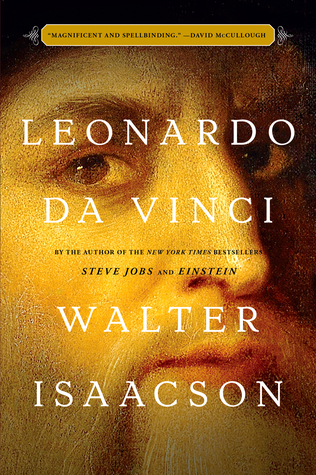
Also, if you know others who like to read, try forming a book club. My sister belongs to such a club, and members propose which books to read. She’s given me some suggestions of books that were well-received by her group, such as my current read: DaVinci, by Walter Issacs. It’s fascinating, and I would never have chosen it without the recommendation of that group over in Richmond, Virginia.


Resources for writers

Book Covers SFOver my almost two decades of writing and (occasionally) publishing, I’ve learned some stuff. Lots of stuff, actually. Some of what I learned (such as a great place to buy a box for a manuscript) is out of date. However, there are some resources that budding writers should utilize that are still quite relevant, so here goes—
While a novel (or a short story or screen play) is still in the drafting stage, consider getting editorial help. Informally, there are many writer’s groups which offer support and critiques. If you live close enough, consider that as a first source of assistance and career development. I was once privileged to judge a short fiction contest held by the Northeast Georgia Writer’s Group, and all of the entries were quite worthy. The group is active, with contests and guest speakers. Many libraries sponsor such groups. There’s a great list of writer’s groups in Georgia at ReadersUnbound.com.

Depending on genre, there just may be a writer’s conference waiting for you. Such conferences usually feature guest speakers, workshops, and opportunities to meet with literary agents, who are the typical conduits between writers and publishers. I was fortunate to attend a few in nearby Athens (at the UGA campus) which was sponsored by the Mystery Writers of America, but there are a number of conferences, either general or targeting specific types of writing.

When the work is more or less complete, if there is no conventional publisher in the picture paying for it, an author seeking to self-publish or polish a manuscript for possible submission should really consider a paid editor. The Writer’s Digest magazine folks have an entire “store” devoted to such services. When I was working on my first novel, a publisher recommended that I go through a course with Writer’s Digest, and the experience taught me quite a lot about the value of editorial assistance.

Whether self-publishing a novel or developing a website and/or a social media publicity campaign, hiring a professional graphic artist is really important. For a web only publication, such as Kindle Direct, I might try the do it yourself method, but even then, it is good to use a site such as Canva.com. However, if there is any serious money going into the project, such as self-publishing in print or multiple platforms, then a cover artist is very helpful. Both The Gift Horse and the second edition of Trinity on Tylos have covers designed by an independent artist. There’s a list of cover artists over at The Creative Penn. By the way, I’d steer clear of Fiver. I tried that, and got nothing, not even a refund for my initial payment.

Once a book is in print or available as an eBook, most writers will want to help with marketing. This can be rather daunting for many writers. The publisher of The Gift Horse (Booklocker) has a companion site, Writer’s Weekly, which has some links to paying markets for shorter works, as well as articles about writing and marketing.

There are a lot of companies that offer “services” to authors. Be very careful to choose wisely, or money that should have been spent on editing and cover design will be frittered away on something else. While some of these resources have costs, others are cheap or even free. Regardless of how much money you spend, for a novelist the two most important resources are editing and cover design—in that order.


Snow in the South

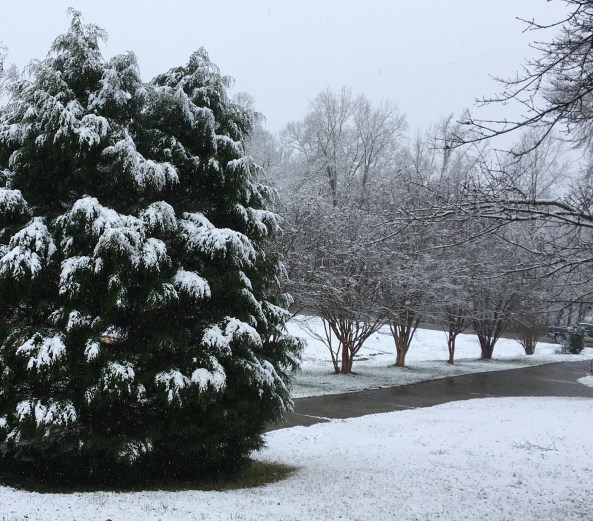
In celebration of a rare snowfall in Georgia, here’s a picture and a poem:

IMG_1559

The Snow Storm

Ralph Waldo Emerson – 1803-1882

Announced by all the trumpets of the sky,
Arrives the snow, and, driving o’er the fields,
Seems nowhere to alight: the whited air
Hides hills and woods, the river, and the heaven,
And veils the farmhouse at the garden’s end.
The sled and traveler stopped, the courier’s feet
Delayed, all friends shut out, the housemates sit
Around the radiant fireplace, enclosed
In a tumultuous privacy of storm.

Come see the north wind’s masonry.
Out of an unseen quarry evermore
Furnished with tile, the fierce artificer
Curves his white bastions with projected roof
Round every windward stake, or tree, or door.
Speeding, the myriad-handed, his wild work
So fanciful, so savage, nought cares he
For number or proportion. Mockingly,
On coop or kennel he hangs Parian wreaths;
A swan-like form invests the hidden thorn;
Fills up the farmer’s lane from wall to wall,
Maugre the farmer’s sighs; and, at the gate,
A tapering turret overtops the work.
And when his hours are numbered, and the world
Is all his own, retiring, as he were not,
Leaves, when the sun appears, astonished Art
To mimic in slow structures, stone by stone,
Built in an age, the mad wind’s night-work,
The frolic architecture of the snow.

Guest Author Interview

catching-raven-volume-1-by-cb-tuckerFor a change from my usual topics, I am posting an interview with CB Tucker, an author who lives in northeastern Georgia. Tucker has been to approximately 132 countries and lived in 10. He believes that his worldly experiences beg to be placed into a book. Tucker is a Vietnam veteran, who was also in Iraq where he backpacked for 10 months from the Saudi border all the way to Kirkuk. During his career he has seen the horrors of war and the strains of peace and both heroism and cowardice. Tucker worked in the computer industry for several years. Prior to retirement, he spent six years working in diplomatic security with the State Department of the United States. 

Tucker is the author of Catching Raven: Volume I, Catching Raven Volume II, and Catching Raven: Elizabeth Raven Coming Into Her Own.


When did you first realize you wanted to be a writer?

While I was living in Virginia Beach with my first wife and three daughters, I realized that (including the female cat and dog), I was the only man swimming in a house of estrogen. I began writing stories about my daughters, figuring this was cheaper than therapy. The final push came when I was stationed in Dakar, Senegal, and my wife was sent home for medical reasons. Senegal has some of the most beautiful black people I have ever seen: Picture walking around Dakar and everywhere you look are Halle Barry clones. I decided that it would be wiser to stay in my apartment and write rather than go out. So I began writing. I had no idea what I was going to write, or where it was going. My ideas warped several times into the story that I have today.

What books have most influenced your life most?

The Bible. I was a computer tech for 30 years and had little time to read for pleasure. When I was stationed in Islamabad, Pakistan, I wasn’t able to go out, so I decided to down load books to my Kindle app on my tablet. I had no idea what book to start with, no idea of authors to read, so I decided to check the best sellers list, which was an obvious plan of action. The same book was on top of three different lists: 50 Shades of Grey. (I did say I was in Pakistan by myself.) There were parts I couldn’t bring myself to read, but I did enjoy the book for the interplay between the two main characters. Soon, I was reading one book a week. As time passed, I came to realize that my favorite author was David Baldacci.

How long does it take you to write a book?

I began writing Catching Raven in 2014, and I really didn’t finish it until 2016. I have follow-up books, and they took about two months each, but the characters are established. I actually write the book in my mind before I sit down to the keyboard, and then I iron out the flaws.

What was one of the most surprising things you learned in creating your books?

How much I enjoy coming up with my own story. I find many of the stories I see on TV and in the movies to be stupid. When I write a story, I try to keep things logical and real. I want the reader to believe that what is happening is possible.

Is there a message in your novel(s) that you want readers to grasp?

In the Bible the book of Job is the story of a pious man who believed in God. The devil decided to test him and took away his family, his possessions, and all he had. Even living with the beggars with sores all over his body, he refused to deny God. For his steadfast determination to remain loyal to God, he was rewarded tenfold. That, in a sense, is what Samantha Raven goes through in my novel. She was steadfast in her belief that her daughter was a present from God and Tip, who is the young man she met at Wake Forest and fell in love with; he is the father of Elizabeth Raven. In the novel, Samantha spends her life doing right by her daughter. She remained steadfast and her mission was doing everything she for her daughter, including building a life without having her daughter’s father present. What I would like people to take from this book is the determination to do what is right and proper. In the end, Samantha, too, is rewarded tenfold.

How realistic are your books?

I hope everyone can believe what happened in this book. Can a man become a billionaire and go back to find the woman he impregnated as a young man? Can that woman be true to herself and him? Can a desk lamp warp into a chandelier? Most of what I describe, I hope can happen. I tried to write a book that can believed, even though it is fiction.

Are experiences based on someone you know, or events in your own life?

Yes! I have traveled to 132 countries and I have lived in 10. I have lived in socialist and Muslim countries. When I was young, I studied martial arts and have belts in Taekwondo, Hap Kido, and Sansui. I’m not a bad ass, but I have had experiences in many facets of life; therefore, I know what people can do if they are driven to achieve it. When I was in diplomatic security, I was trained how to drive and shoot. I received training concerning human trafficking and the customs of different societies that I would experience. I try to incorporate all that knowledge and experience into my books.

What makes you passionate about being an author?

Hopefully, when people read one of my stories and come away with new knowledge and appreciation of something that they were never aware of, they will have new knowledge. Did you know that you could drive 60 mph in reverse? Did you know that even a one hundred pound girl could take down a two hundred pound man if she knows how? I hope readers realize that the core of every society is the family. We, as a society, need to protect families and help them succeed. It is those age-old truths that are often disparaged but when followed do succeed: Honor your parents, work hard, and get all the knowledge you can when you can. And don’t quit a job until you have a better one. Be true to yourself, and what you believe.


Thank you, CB Tucker for your detailed answers!

Why do writers need editors?

editing-apps-800x600Before you say, “Duh!” please remember that some people have lots of self-confidence. Others can crawl off into a mental state and ignore the world around them, which can be considered a skill in the writing biz, but conformity is comforting to readers. Other writers seem to think that the rules don’t apply to them, like ee cummings. A few insist on ignoring the red and green squiggles that the word processor uses to offer help in eliminating common mistakes. Writers suffer from any of those problems, or have other idiosyncrasies that make editing necessary. Yes, I considered dealing with editors to be something of a pain, because I am self confident and not afraid to break a few rules.

However, I have learned quite a lot from writing teachers and editors. Friends and family will offer a few tips, but if those friends really like you, brutal honesty is off the table. Sometimes the distance combined with authority that goes along with having an editor is transformative. My first novel was a hot mess when it finally got a full length reading at the micro press that ultimately put it through line editing. My second novel was better, but still needed a lot of work in the editorial phase, beginning at conceptual, then line by line, and finally, proofreading. At that time, WCP did not pay proofreaders, instead relying upon volunteers, which was a bad business decision. My work suffered from that lack, as a few errors made it into the printed work, and sales were less than optimal.

Publishers seldom take on a fiction manuscript that isn’t complete, which leaves out the project development phase. Once the novel is finished, most writers will attempt to put it into the hands of either an agent or a publisher. Problems with style or continuity may crop up at this stage, but if the work is compelling, those can be addressed. What most people consider editing is copy or line editing, which is a line by line examination of grammar, spelling, mechanics, and style. Any “big changes” in the manuscript probably occur at this stage. The back and forth over details can be annoying or even funny, but most problems in the work are solved at this phase. Once, an editor challenged me on a detail where I described a man wearing a glen plaid suit. I thought it descriptive, but she thought it was a weird description that no reader would understand. Ultimately, the description remained, but that is the kind of thing that comes up in line edits.

Before printing comes proofreading, when any style or content changes have been addressed—so what’s left is a last look at spelling, capital letters, and adjustments to make the page layout work. I remember the copy editor at Whiskey Creek Press had to substantially change one sentence to avoid a page with a single word on it, and I was okay with her changes.

A good editor makes printed work better—by questioning, suggesting changes, and insisting on being absolutely correct. Real editing makes the author’s work shine, without the distractions of mistakes or inconsistencies. Nowadays, many people think that word processors have made editors obsolete. Unfortunately, that is simply wrong, and writing is suffering mightily. Errors abound, and the solution is a great editor who reads and corrects. Technology is advancing, but it cannot replace editorial expertise.

So you want to be a successful author—

book and moneyWhile I am pretty sure I don’t qualify as successful in the author department, I made enough mistakes to write (or rant) about the topic. Here are some tips, in no certain order, for those who are writing with the intent to publish a book, or for those who have published but are lacking in sales.

First, write the best book you possibly can. Yes, that should go without saying, but writing is like photography or cooking in that no matter how good you have done it, you can get better. There is no such thing as perfect in any of those endeavors. However, don’t publish unless it is really ready. Mistakes in print are embarrassing!

Next, find a real publisher if you can. Not necessarily one of the big companies (although if that happens for you, whoo hoo!) There are a lot of small and micro presses that can get a book into print and into at least some distribution channels, which leaves more time for the author to help with promotional activities and keep writing. A small company, Whiskey Creek Press, published my second novel, and while my sales were low, any money I spent on promotion was voluntary. My debut novel was initially accepted by a micro press, but when it failed, I ended up using a self-publisher called Booklocker.

Third, if you end up self-publishing, do so at minimal cost. Many authors have published via the Amazon Kindle Direct program, which is free. Yep, that’s right, free. I published the second edition of Trinity on Tylos via KDP, and my only expense was a fancy new cover by Dawn Seewer (which was entirely optional.) I disliked the first cover, which was done by an artist at Whiskey Creek Press, and I thought the book deserved a better effort, and Dawn did a great job for me. Another self publishing program that I am considering is Smashwords, which offers many free services. For most self published authors, the distribution channels associated with Smashwords are fantastic.

Fourth, once the book is ready to debut, get the marketing plan in motion. There are lots of books on this topic, as well as a gazillion websites. I’ve had some success with using Facebook groups, such as Ebook Rave, Kindle Book Authors, and Sci Fi and Fantasy Authors . Those have worked well in conjunction with sales and freebie promos, but bear in mind that I have low cost Kindle titles. Under “links of interest” on this site I have a few other spots that I’ve used for promotion, including “Book Goodies” and “Goodreads.” Having an author page on such sites is not necessary, of course, but doing so usually offers links for anyone who “googles” your author name.

Finally, the most important pillar in promotion is reviews, and lots of them.  If friends and family will write a review on a vendor site, such as Amazon or Barnes and Noble, that’s great, but most of us don’t have that many friends. Also, such reviews don’t carry as much cashé as a professional or semi-professional site. Do send your books to as many of those as you can find and afford. Don’t ever pay for a review, beyond giving a copy of the book. Paying for reviews is wrong on both sides of the equation. If the author pays for a review, then there’s a bias that makes the review worthless for the reader. Unless the book is an eBook only, then there is some expense in distribution of the ARC (that’s advanced reading copy) or published book, so it is best to send the book(s) to appropriate sites, because some sites only review certain genres. There are any number of review sites, and these do come and go fairly frequently. My first novel, The Gift Horse, had several reviews online within a year or two of publication, but apart from those on Amazon and one archived on The Midwest Book Review, they are gone! Therefore, if you get an online review, don’t just save the link, but archive the content, too!

When I first published The Gift Horse, I was invited to do some speeches to local clubs, and I sold a few books via that avenue, but as publishing and self-publishing became more common place, those opportunities dried up faster than blackberries in late August. I also got a book signing at a book store after Trinity on Tylos came out, but it was a very lonely afternoon. If those opportunities come your way, enjoy them, but books and eBooks must be purchased via online vendors in order to make any real money, and that means social media marketing. If you are here, clearly you know what a blog is, of course, and having an author website is usually a good idea. Marketing is an ever changing field, but as of this post, you must get to know Twitter, Instagram, Facebook, and other modern means of communication in order to build an audience for your books.

Oh, and as footnote to “finally” when readers like a book, they usually look for another book by the same author, so you’d best be writing another book, too.


A few books on marketing:

How to Market a Book

Guerrilla Marketing for Writers

The Frugal Book Promoter

Book Marketing 411 for Authors

And a couple on having a book worth the effort:

Don’t Sabotage Your Submission

Writing the Breakout Novel