I’m looking forward to the further adventures on Honor Harrington in this new medium.

I’m looking forward to the further adventures on Honor Harrington in this new medium.
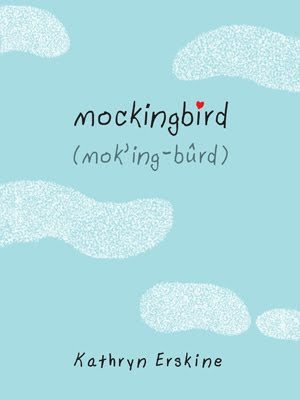 My local library doesn’t have an available copy of Harper Lee’s new/old Go Set a Watchman available just yet, so I chose a novel that I first learned about when taking a graduate level course in improving reading in secondary schools, Mockingbird by Kathryn Erskine. The premise in this YA novel is that our narrator, Caitlyn, is a fifth-grader with Asperger’s Syndrome. I have a family member with a similar diagnosis, so this novel interests me on more than one level. Caitlyn had been quite dependent on an older brother, Devon, but he is not with her any longer. For anyone who does not know, the vast majority of symptoms of Asperger’s are associated with communications skills. Caitlyn exhibits many of the classic symptoms, but there is both humor and pathos in her approach to life. Her father seems to want to help her and connect with her, but he is suffering from a different malady. As the exposition unfolds, the reader learns that Devon was killed in a school shooting and their mother died of cancer a couple of years prior to the events of the novel. So the father is reeling emotionally, and Caitlyn is struggling with adjusting to these losses and with trying to develop empathy for other people. Other players in this novel include young Caitlyn’s teacher, counselor, and her fellow students. Try as she might, Caitlyn has trouble “getting” what others seem to understand with little trouble. This, too, is typical for Aspies.
Mockingbird derives its title from the many references to the movie/book To Kill a Mockingbird, and I do not believe that the novel would resonate nearly as well if the reader had not either seen TKAM or read it. But, with most readers knowing a bit about the famous story by Harper Lee, it is fairly safe to say that most readers will “get” the references. Indeed, I really, really enjoyed the novel, but I did need some tissue toward the end— it is that kind of story.
Reading YA lit is more and more common these days, because big publishing is far more open to publishing those stories. Getting a contract is rather difficult for new writers of adult fiction, but YA sells well, so it is becoming a crowded field. I don’t want to spoil it for potential readers, but I do want to encourage fans of TKAM to read Mockingbird. Although it could be read by upper elementary on up, it is a touching story for readers of any age.
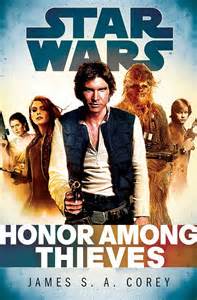 Thus far, my favorite Star Wars novel is Steve Perry’s Shadows of the Empire, which takes place between the film The Empire Strikes Back and The Return of the Jedi. Familiar characters from the film are necessary, but Shadows also introduces the memorable Dash Rendar, and by fleshing out what happened between Han Solo’s freezing in carbonite and Luke and Leia’s rescue, Perry’s novel seems quite organic.
There have been quite a few Star Wars based novels published since Shadows, but with the upcoming new Star Wars movie, it is natural that a new story, with the original characters, come to market, along with a zillion tee shirts. So, we have James S. A. Corey’s Honor Among Thieves, which takes place between A New Hope and The Empire Strikes Back, as Han continues to try to raise money to pay Jabba the Hutt, and Leia is involved in leading the rebellion, which is not just a war, but a fund raiser. Someone has to pay for all those X-wings. Anyway, a valuable spy sent a message indicating that she needs to be recalled, and Han needs the money, so he’s off to make contact, pick up Scarlet Hark, and pocket another reward. Nothing in their universe (a long time ago in a galaxy far, far away) is simple, however, and Han’s little errand gets complicated really quickly.
(spoiler alert)
One of the best ways to create suspense is to raise the stakes, and they are quite high in this novel. No, there is not a Death Star (twice is one too many IMHO) but a device that kills hyperspace travel is high stakes indeed, and Han, Leia, and Luke end up converging in an effort to wrest control of the hyperspace dampener from the Empire.
To be honest, I didn’t like Honor Among Thieves as much as I did Shadows of the Empire, but I did like it. Readers who want to revisit a young farm boy Luke, the pivotal Princess Leia, and the roguish Han Solo should pick up or download a copy of Honor Among Thieves. Before you know it, you’ll be right back in the groove, wondering when Darth Vader will swoop back into the action. This is a great way to get in the mood for the new film.
 When I was younger, one of the genres of movies and television that was quite popular was stories from World War II. While I wasn’t alive for it, of course, many in my parents’ generation had fought or knew those who had. Indeed, on a wall in my house is a framed picture of my uncle, A.L. Dodd, Junior, who was killed a few weeks before the end of the war in Europe; he was in Germany, in the Ruhr valley, when he was shot by a German machine gunner. So, the war was quite real to us. We enjoyed the stories, because they were entertainment, but knew that the war had affected most everyone in America.
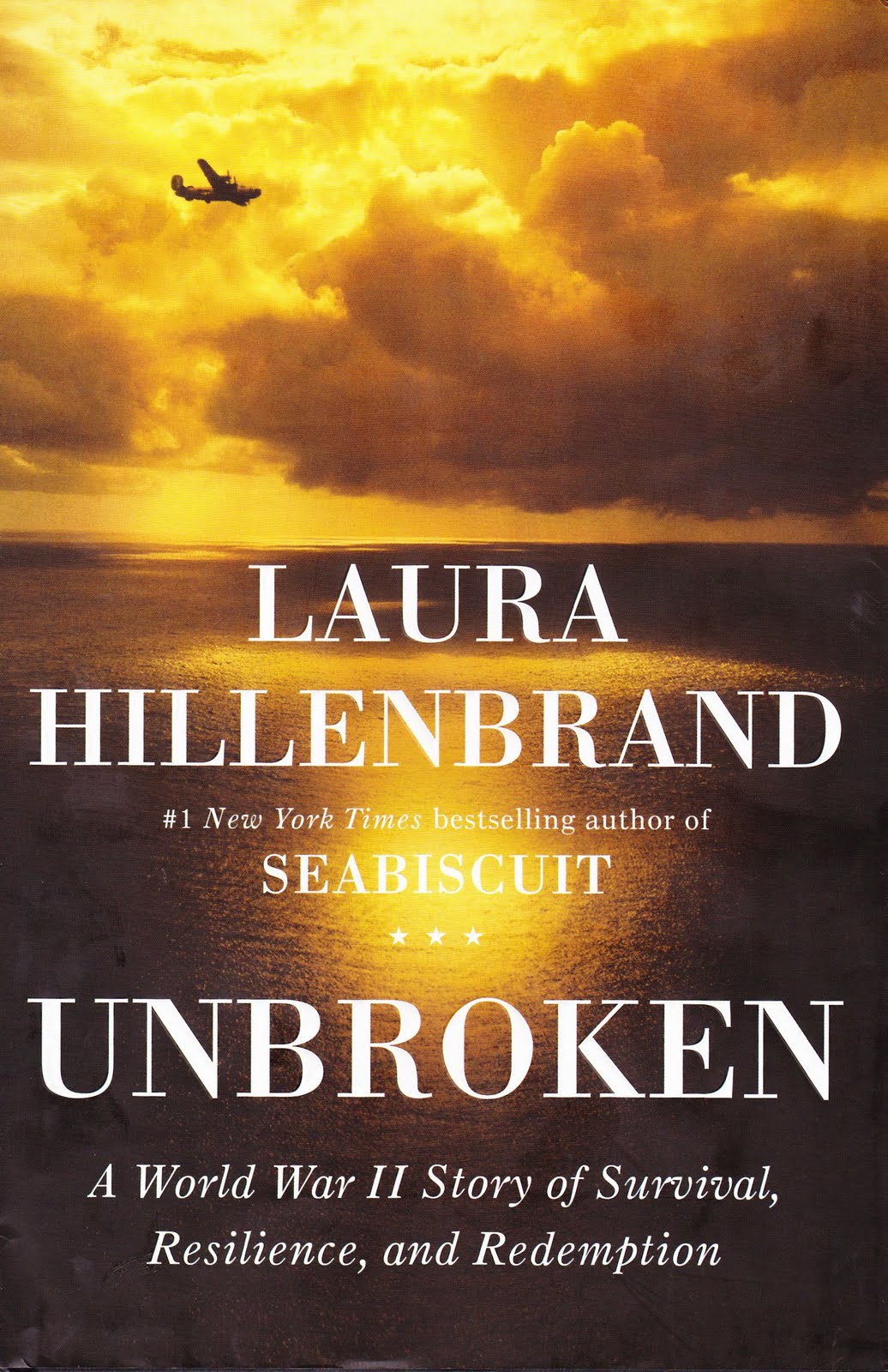
After seeing the film Unbroken, directed by Angelina Jolie, I was telling my sister about it, and she said, “Clearly, you don’t know the whole story. Read the book.” And, with lots of other reading and a bit of teaching, it was almost six months after hearing that advice before I got around to reading the book by Laura Hillenbrand. OMG, why did I wait so long? The movie is very good, but the book is great. Maybe I waited, in part, because I don’t usually like biographies.
As told by Hillenbrand, Louis Zamperini was quite a character, from his earliest days. His parents didn’t quite know what to do with him, and he might be described as a juvenile delinquent. His brother convinced the school authorities to allow Louie to get involved in sports, and Louie was gifted in running. So gifted, in fact, that he became an Olympic runner, and a very good one. He might have known even more fame as a track star, but World War II got in the way. After his plane crashes in the Pacific, Louie and two other Army Air Force survivors were adrift for a very long time. Then, on the brink of death, they were captured by the Japanese. Yes, Louie was still alive, but he faced incredible brutality.
One of my elderly friends is a survivor of a Japanese POW camp in the Philippines. She was interned there as a child, one of several children of a missionary who fled there from China, because the parents thought that being in a U.S. territory was safer for their children. The treatment she and other family members endured was brutal, and toward the end of the war, the prisoners were scheduled to be executed before the Japanese withdrew. She was saved because some American volunteers broke down the fence and escorted the POWs to safety. My friend, to this day, cannot understand Americans can embrace Japan as our friends and allies. To her, they were a barbaric enemy, who starved her family and killed far too many non-combatants.
Hillenbrand does explain the brutality, through Louie’s account, and accounts by other prisoners. But she reinforces the brutal nature of the Japanese POW camps with survival statistics. According to Hillenbrand, only 1% of American POWs held by the Germans or Italians (the European theater) died, but in Japan 37% died. She also goes into the cultural differences which led to the cruelty, not as an excuse, but to let readers know more about the “why” which must come to the mind of her readers.
(spoilers)
The film, Unbroken, closes with the end of the war. That is a good stopping point for a Hollywood film; the audience can go home knowing Louie made it out alive and was welcomed home by his loving family. But, as my sister noted, there is more to the story. The book has a subtitle Unbroken: A World War II Story of Survival, Resilience, and Redemption and it is appropriate. While I do not fault Jolie for leaving out the “redemption” part, the story is incomplete without Louie’s problems adjusting to “normal” life after the horrific experiences he had in Japan and how finding religion gave him the peace he desperately needed. The author continues to cover multiple story lines, including “Phil” the pilot to “the Bird” who was the most sadistic of the Japanese prison guards.
The entire story is important, and those who watch the movie get only the middle, so I encourage readers to tackle the book by Laura Hillenbrand. While it isn’t a quick read, it is certainly worth your time.
Recently, I decided to catch up with the further adventures of Jenetta Carver (and her clones Christie and Eliza) by reading books 8 and 9 in the Galaxy Unknown series by DePrima. Book 8, Return to Dakistee, did not sound too entertaining in the blurb, but I have enjoyed the series so I decided to forge on, and I am glad I did. Like many series, the further along it goes, the more important it is to have read the previous books, and that is true of Return to Dakistee. The main character in this entry is not Jenetta Carver, who is off doing admiral things, but her clone, Christie, who is a mere Lt. Commander. In a way, this book is more interesting because a more junior officer has to please the officers over her as well as lead the ones below her in the hierarchy. And the ending is a bit of a shock.
In Book 9, Retreat and Adapt, the main character is again Jenetta Carver, who has been almost boringly successful in her leadership of Space Command forces. However, a new threat has taken out two of the “invincible” ships that Space Command relies upon, and Jenetta’s orders to the remaining forces are to avoid engaging the enemy, but keep tabs on them. While the Space Command forces are in retreat, it is up to Jenetta to come up with a plan, and she does. Will it work? Or will this new threat take over the known galaxy. That’s the suspense of this yarn, and I won’t ruin it for potential readers, but I will say that DePrima does a good job of looking back at history for his plotline.
My appreciation for indie authors is no secret, but I have seldom followed a series through nine books. Okay, I did read David Weber’s Honor Harrington series beyond that point, and I have read that many entries in the Miles Vorkosigan series by Lois McMaster Bujold. But those are written by great writers! Thomas DePrima isn’t in the same league. However, I have really enjoyed these tales by DePrima. Fans of space opera should certainly hop over to Amazon and check out the series.
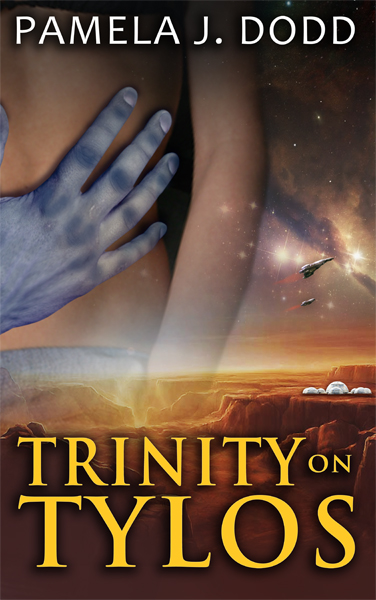 Recently, my science fiction novel, Trinity on Tylos, got a mention on the Goodkindles site. While preparing the copy, I did a web search for reviews, because I wasn’t too sure how many of those are still available. Surprisingly, I found a few, which were done based on the first edition, published by Whiskey Creek Press. Although they got the title wrong, I got a fairly good review from “The Romance Studio” site. Apparently that title is difficult, because the folks over at Books for a Buck misspelled it, too, but it is a decent review. And, the one by Harriet Klausner appears on several sites, including Bookreview.com. The best review I received was over at Fallen Angels Reviews, of course. While searching, I also noted that my efforts to publicize it have resulted in pirated copies online. Oh, here’s another one! And another one! I guess I should be flattered that someone thinks it is worth stealing. 🙂 Check it out!
 Visions and Revisions