Return to Dakistee and Retreat and Adapt by Thomas DePrima

Recently, I decided to catch up with the further adventures of Jenetta Carver (and her clones Christie and Eliza) by reading books 8 and 9 in the Galaxy Unknown series by DePrima. Book 8, Return to Dakistee, did not sound too entertaining in the blurb, but I have enjoyed the series so I decided to forge on, and I am glad I did. Like many series, the further along it goes, the more important it is to have read the previous books, and that is true of Return to Dakistee. The main character in this entry is not Jenetta Carver, who is off doing admiral things, but her clone, Christie, who is a mere Lt. Commander. In a way, this book is more interesting because a more junior officer has to please the officers over her as well as lead the ones below her in the hierarchy. And the ending is a bit of a shock.

In Book 9, Retreat and Adapt, the main character is again Jenetta Carver, who has been almost boringly successful in her leadership of Space Command forces. However, a new threat has taken out two of the “invincible” ships that Space Command relies upon, and Jenetta’s orders to the remaining forces are to avoid engaging the enemy, but keep tabs on them. While the Space Command forces are in retreat, it is up to Jenetta to come up with a plan, and she does. Will it work? Or will this new threat take over the known galaxy. That’s the suspense of this yarn, and I won’t ruin it for potential readers, but I will say that DePrima does a good job of looking back at history for his plotline.

My appreciation for indie authors is no secret, but I have seldom followed a series through nine books. Okay, I did read David Weber’s Honor Harrington series beyond that point, and I have read that many entries in the Miles Vorkosigan series by Lois McMaster Bujold. But those are written by great writers! Thomas DePrima isn’t in the same league. However, I have really enjoyed these tales by DePrima. Fans of space opera should certainly hop over to Amazon and check out the series.
Reviews for Trinity on Tylos

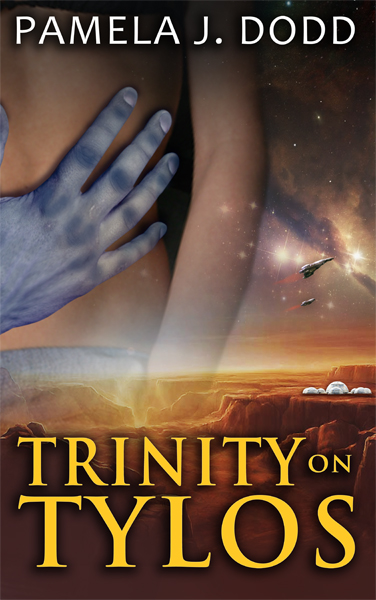
ToT_cover_final_webLGRecently, my science fiction novel, Trinity on Tylos, got a mention on the Goodkindles site. While preparing the copy, I did a web search for reviews, because I wasn’t too sure how many of those are still available. Surprisingly, I found a few, which were done based on the first edition, published by Whiskey Creek Press. Although they got the title wrong, I got a fairly good review from “The Romance Studio” site. Apparently that title is difficult, because the folks over at Books for a Buck misspelled it, too, but it is a decent review. And, the one by Harriet Klausner appears on several sites, including Bookreview.com. The best review I received was over at Fallen Angels Reviews, of course. While searching, I also noted that my efforts to publicize it have resulted in pirated copies online. Oh, here’s another one! And another one!  I guess I should be flattered that someone thinks it is worth stealing. 🙂  Check it out!

Dark Space— a review

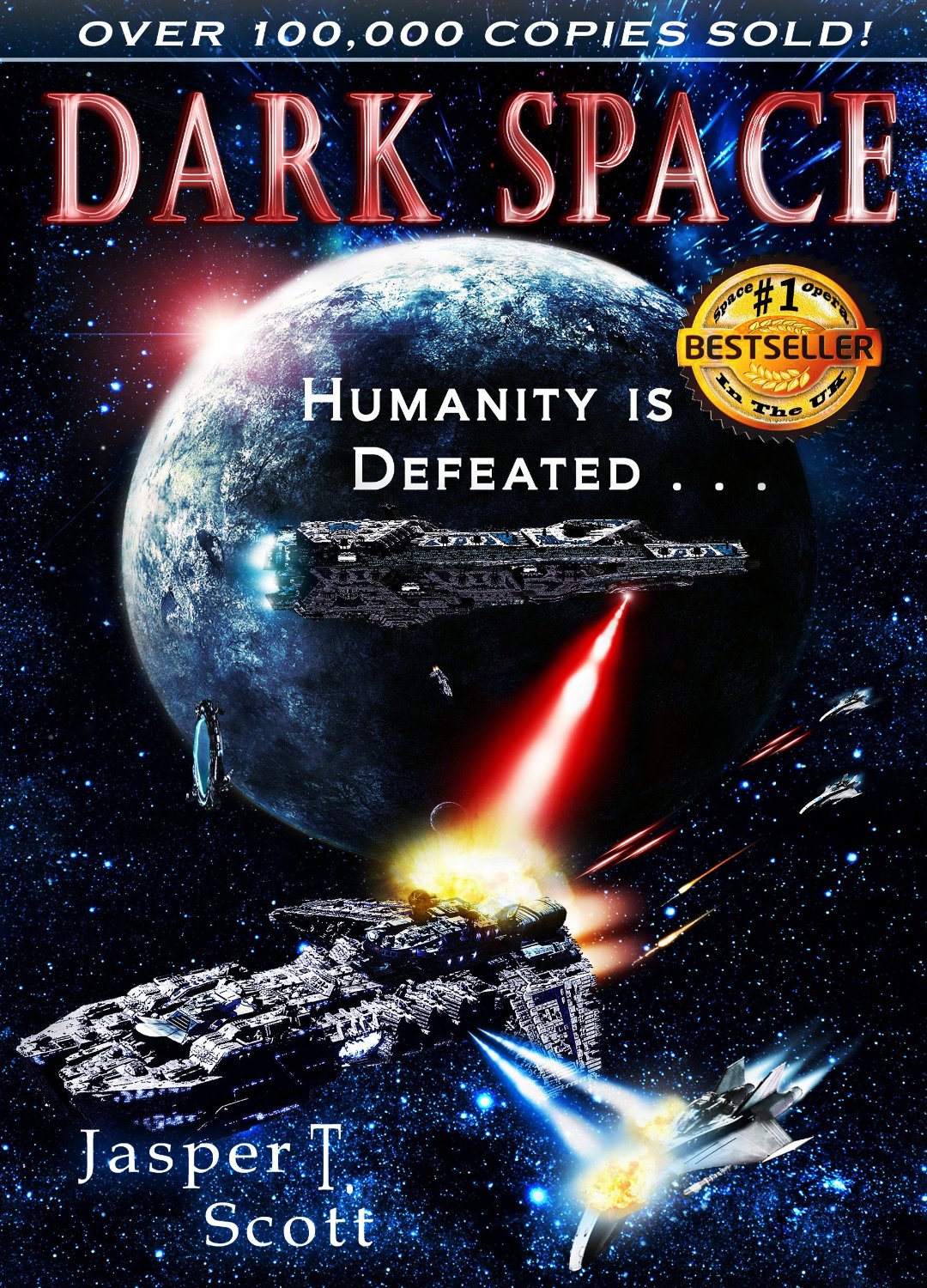
Dark Space coverRecently, I read a space opera called Dark Space by Jasper T. Scott. Although this book didn’t grab me at the beginning, there were enough innovations to keep me reading. Many science fiction fans pay tribute (deliberately or unwittingly) to their screen favorites. This novel blends elements from Star Wars and Battlestar Galactica for sure. It begins “in medias res” with the main character involved in a star fighter to star fighter dogfight, and when it jumps back to the exposition phase, I decided that this novel too much like every other space opera in print and on the screen. However, the use of a “holoskin” to disguise the main character, essentially allowing him to impersonate someone else, is a nifty plot device. So is the use of a “neurochip” inserted into the brain of another character— leaving her appearance as it was, but giving her a whole new personality. In a universe with such devices, the reader (or characters) never seem to know who is friend and who is foe.

Much of the action of Dark Space is like the original BattleStar Galatica; star fighters and ships shooting. This can be fascinating (think David Weber) or just action packed. One reason Weber is fascinating is his ability to craft characters that the reader can love or hate. The core problem with Dark Space is that I just didn’t care who was gonna win those skirmishes.

Dark Space is predictable, except when it isn’t. And it is action packed, but a tad boring. The ending, instead of satisfying the reader, is a build up for part 2. So, I guess I’d give it three stars….

But it was free, and that’s a good price, no doubt because the author is willing to give it away in hopes of selling the sequels. I didn’t go for the second installment, however.

Bertrice Small’s The Kadin

Author Bertrice Small’s obituary in the New York Times piqued my interest in her writing. I’m not sure if I read any of her books back when I read historical romance, but somewhere in a stack of books that a friend passed along to me is her Skye O’Malley. Quite honestly, it is on a shelf downstairs, with a lot of other books that I may never get around to reading. However, a brief look at Small’s book list led me to begin with her debut novel, a “harem” romance called The Kadin. I downloaded it from the Kindle store, and there are a few rough spots where the file didn’t translate too well, but over all, it was in good shape.

I was prepared to not like the novel. The reviews on Goodreads (something like 1900 plus) were mostly good, but there were any number of bad ones. Actually, the reasons for the bad reviews are some of the aspects that I liked best. Instead of being a slice of life, The Kadin is the whole life of Lady Janet Leslie; at least from the age of four, when her father legitimizes her, the offspring of an affair with a local peasant; until her death. Thus, it is far more than a romance. When our main character is a young teenager, her father is appointed ambassador to some obscure Middle Eastern nation and while there she is abducted and sold as a slave. Her purchaser is the chief eunuch of a harem, and young Janet, renamed Cyra, is groomed to be the young sultan’s favorite. For the most part, the eunuch’s plan goes well, but there is sufficient political intrigue between Cyra and her Selim, as well as Cyra and the other harem inhabitants that the plot never really drags, and the novel is some 400 plus pages.

Bertrice Small has the reputation of writing rather sexual romances, but The Kadin precedes that aspect of her writing. While her main character is very strong, she is swept away into the role of harem slave and never really protests that. Modern readers often bring modern mores into their analysis of fiction. Some of those one and two star reviewers seem to expect Janet/Cyra to rebel and somehow turn the sixteenth century into the twentieth at least, which amuses me. Others believe Small’s portrait of harem life, while quite fictional, has too many details. Who cares what they ate or wore? Well, actually, I care. Details help readers get into the story, and I really enjoyed getting into this novel. If it reminded me of anything, it has a lot in common with Angelique in Barbary, but that’s an even older story and is the best “harem slave” story I have ever read.

The Kadin is more than a romance and is almost diametrically opposed to modern chick lit. My time with it was a bit like watching great old movie that I had somehow missed seeing the first time around. I enjoyed it, and while it isn’t a great book, it is a really, really good one.

American Sniper— the book

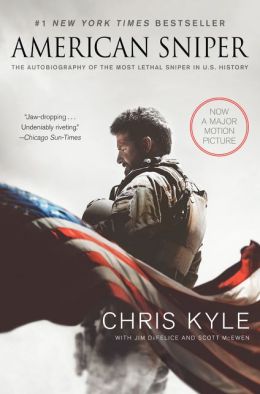
American Sniper by Chris Kyle coverOkay, I admit, I have a tendency to do certain things backwards. Hubby laughs at this one: whenever I pick up a magazine, I thumb through and begin reading somewhere near the back. I sometimes do that with catalogues, too. Why? Because the snazzy pictures are in the front, and the words are in the back. I like words.

American Sniper, the movie, is in theaters in my area of the country as I write this, which means it is the perfect time for Pam to read the book! Chris Kyle’s exploits are apparently quite controversial, based on the reaction to the film, but I did not find it so much controversial as conversational. After I finished, I felt like I has spent a while talking with this Texas cowboy turned Navy Seal, who loved guns and his country enough to go back into a war zone, over and over.

Why is Kyle’s career a controversy? There are those who feel that Americans were invaders in Iraq. Okay, I see that. A little bit, anyway. Any war on foreign soil will have that aspect. And there are those who feel that being a sniper, hiding behind a big rifle with a bigger scope, is a cowardly way to fight. That I don’t get, at all. Guerilla warfare is not new. And, in the war in Iraq, with insurgents attacking government installations and convoys, having a sniper on every tall rooftop made a lot of sense. As he often puts it in the book, Iraq was a “target rich” environment. His recorded number of “kills” is far above any other sniper, and he is matter of fact in explaining that his accomplishment was in part due to being in the thick of things for four deployments.

Kyle’s story, which begins during his childhood in Texas, is entertaining and quintessentially American. When he discusses the war, it is the voice of a military man, explaining what happened from his point of view. Also of interest are brief interludes where his wife, Taya, discusses what was happening from her perspective. This gives the story more depth because modern warfare can happen so far away that the combatant’s home country is isolated from the realities of war. The price paid by the family is made quite real through her observations.

If you haven’t read Kyle’s autobiography, you might want to give it a try. Although it becomes a bit repetitive, because what he did on a day-to-day basis didn’t change all that much, his voice is strong throughout the book, and Chris Kyle was a man’s man in a country that has, by and large, gone soft.

Fatal Boarding— a review

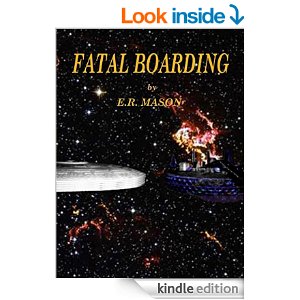
Cover, Fatal Boarding

Fatal Boarding is better than the cover would suggest.

Recently, I read E.R. Mason’s science fiction novel, Fatal Boarding, via the Kindle app. As of this writing, it is a bargain because it is free. And, normally, if I don’t particularly like a freebie, I do not review it. I did review this one, on Amazon, and I am going to do so in a more elaborate manner here, because I did like it, but with reservations.

Why did I “buy” it in the first place? The cover is pretty bad, I think, but the number of reviews and stars is impressive. Also, you can’t beat free. So, I added it to my Kindle library, and I did manage to finish it, although I thought of abandoning the effort more than once. The main character isn’t likable, at least not a first, but he did grow on me. The situation is interesting, and the author does a good job of putting in details to help the reader visualize both settings and characters. Actually, the plot line isn’t all that fresh. However, just about every story has been told by now, so all we readers (and writers) have left is theme and variation.

Adrian Tarn, main character, is an experienced spacer, currently serving as security officer on a ship that has a boring task, mapping. He signed on because he lost too much money gambling, and at least a portion of his grumbling is probably intended as foreshadowing. Anyway, his rather boring job is interrupted when his ship goes a tad off course to investigate a derelict alien vessel. The reason this other ship is abandoned is a bit of a mystery, and solving this mystery becomes imperative when Adrian’s ship has malfunction heaped upon malfunction, apparently all due to the close proximity of the mystery ship. Then, folks start dying, as the title indicates. So, this is a space mystery, which evolves along expected lines, as Adrian and his fellows begin to figure out how and why both vessels are dead in space.

Overall, I did enjoy the story, but the most troubling aspect is the lack of proper grammar, spelling, and/or editing. As a writer, I know it is hard to catch every little thing, especially when working on one’s own manuscript. But, Fatal Boarding suffers myriad problems, making this a distracting book to read. The author confuses “loose” and “lose” several times, and there are missing quotation marks, missing commas, odd paragraphing, and other issues. At times, I had to back up to be certain what was happening or who was speaking.

Yet, 145 reviewers have rated this effort 5 stars, and another 87 give it 4 stars. That’s 228 more reviews than my space story, Trinity on Tylos, has garnered during 8 years of publication.

I’m doing something wrong….