White Roses

When I was a young girl, my mother always went into our yard and plucked roses for us to wear on Mother’s Day. Until I reached my tenth birthday, she wore a red rose, as I did. But that year, she went to another bush and selected a delicate white rose with just a hint of pink. As a curious youngster, I asked her why she did not wear one of “Nanny’s roses” since our red rose bush had grown from a cutting of the ones which graced my paternal grandmother’s yard.

She gently reminded me that Grandma Blackstock had died, so she was now supposed to wear a white rose. My red one told the world, or our small church, that my mother lived.

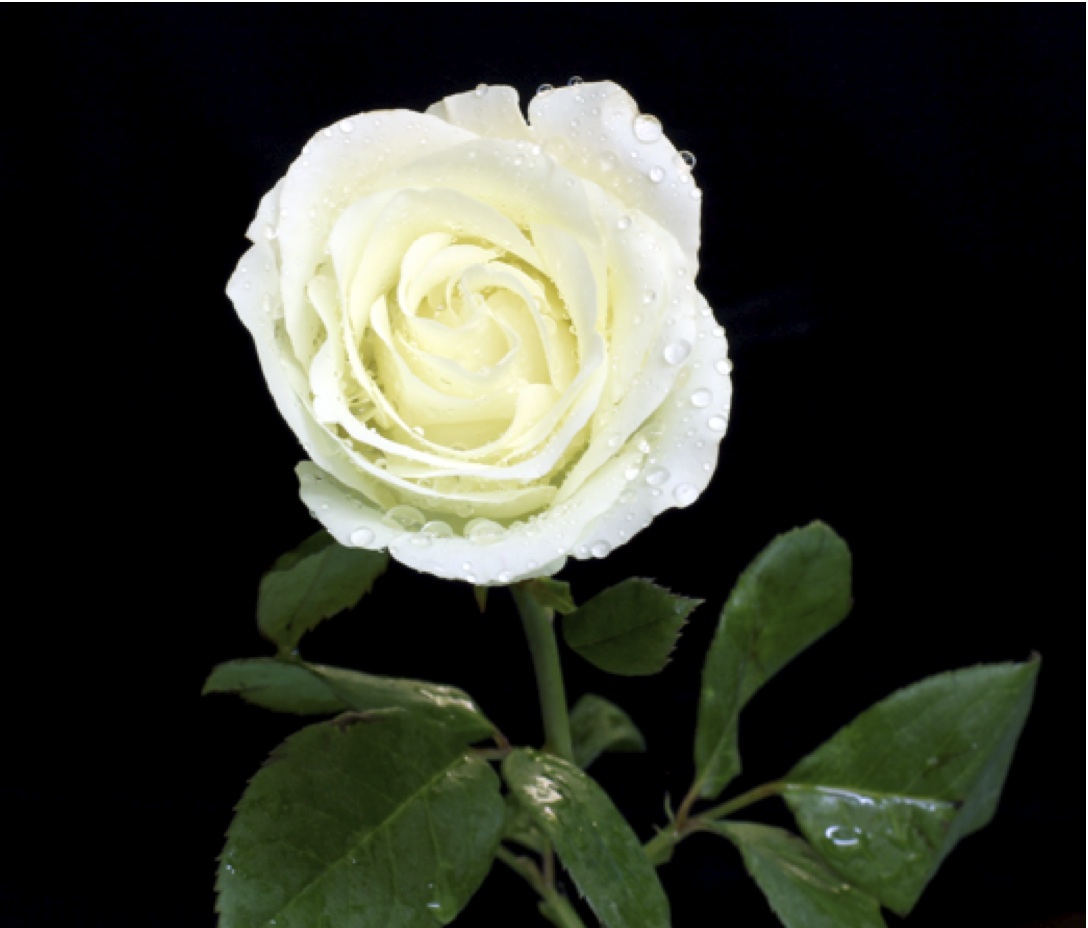
Fast forward more than forty years, and I stood in church today, the same church, but in a much larger building with a congregation ten times larger; and after hearing our three ministers all tout the virtues of motherhood, I looked around to see if anyone was wearing a rose. Across three rows of pews, I saw two ladies wearing florist created white corsages. None of the ladies around me wore roses, of any color, and my yard does not even have a white rose bush. My jacket today was a mosaic of white roses, but I rather doubt that anyone noticed.

Maybe I should plant a white rose bush, because I can’t live through a mother’s day without remembering my wonderful mother, who wore a white rose out of respect for her mom.

All Books— $4

News stories about publisher prices come and go; the latest has the U.S. attorney general going after Apple’s iBooks prices. Let me key that in again… Apple’s iBooks prices. Not the New York big six; not Amazon. While I do believe that book prices are as artificial as aspartame, I don’t really believe that Apple is the culprit in price fixing. The attorney general is just doing some election year grandstanding.

As I have stated in previous blog posts, the 800 pound gorilla in book sales in the U.S. is Amazon. Even when Amazon begins charging sales taxes, and that will happen because our government’s spending is out of control; Amazon will still have the lion’s share of new book sales, due to its ubiquitous internet presence and its killer Kindle app. But, increasingly, Amazon is the best way to sell used books, and that is the reason all books will eventually be around four bucks.

I’ve been selling off my home library for a few months now, but I still have the bulk of it, because I have not found a way to compete with the “power sellers” who offer thousands of used books for a penny, plus Amazon’s $3.99 shipping. Thus, virtually any used book is available for a mere $4.

Having moved recently, I packed many, many boxes of books, and I usually check the price for anything that I don’t want to own forever. Most of them are only a penny on Amazon. I can’t make any money on that sale. Here is how the math works for me:

Book price .01

Shipping fees to me 3.99

Commission(s) to Amazon -$1.00 (transaction fee) and -.80 (minimum commission)

Postage to customer -$3.15 (for a book weighing between 1 and 2 pounds).

Thus, I lose $.95 per book, or more if I use packaging that I purchased, if the book sells at the going rate of $4.00. Heavier books will result in a greater loss, because Amazon’s shipping fees do not adjust for heavier items.

So, most of my books either end up parked on a shelf or in the “yard sale” pile. And, I do know that most of those won’t sell at a yard sale, either, so they’ll end up being donated to charity. Therefore, the owner of a used book must either want to keep it, or be ready to toss it.

Tis sad, but all physical books will become used books. So, if you don’t like the publisher’s price, just wait. Eventually, most any book will be available for four bucks.

Sanctuary

While studying English at Piedmont College, I read Donald Davidson’s Sanctuary, and it made quite an impression. Poems are crystalized thought, free of impurities and shining brightly. Some poems, although well-written, do not appeal to me, but this one did then, and it still does.

There are times, even now, when I want to withdraw and seek sanctuary in the mountains. I’ve been blessed with a husband who can provide a nice home, with material possessions, with children, and with a great church. But sometimes, I’d like to burn what I can’t take with me, not look back, and seek sanctuary away from my enemies.

For those who don’t have “Literature of the South” on your bookshelf, here is the text of Davidson’s masterful poem:

Sanctuary

You must remember this when I am gone,
And tell your sons – for you will have tall sons,
And times will come when answers will not wait.
Remember this: if ever defeat is black
Upon your eyelids, go to the wilderness
In the dread last of trouble, for your foe
Tangles there, more than you, and paths are strange
To him, that are your paths, in the wilderness,
And were your fathers’ paths, and once were mine.

You must remember this, and mark it well
As I have told it – what my eyes have seen
And where my feet have walked beyond forgetting.
But tell it not often, tell it only at last
When your sons know what blood runs in their veins.
And when the danger comes, as come it will,
Go as your fathers went with woodsman’s eyes
Uncursed, unflinching, studying only the path.
First, what you cannot carry, burn or hide.
Leave nothing here: for him to take or eat.
Bury, perhaps, what you can surely find
If good chance ever bring you back again.
Level the crops. Take only what you need:
A little corn for an ash-cake, a little
Side-meat for your three days’ wilderness ride.
Horses for your women and your children,
And one to lead, if you should have that many.
Then go. At once. Do not wait until
You see his great dust rising in the valley.
Then it will be too late.
Go when you hear that he has crossed Will’s Ford.
Others will know and pass the word to you 
A tap on the blinds, a hoot-owl’s cry at dusk.

Do not look back. You can see your roof afire
When you reach high ground.
Yet do not look. Do not turn. Do not look back.
Go further on. Go high. Go deep.

The line of this rail-fence east across the old-fields
Leads to the cane-bottoms. Back of that,
A white-oak tree beside a spring, the one
Chopped with three blazes on the hillward side.
There pick up the trail. I think it was
A buffalo path once or an Indian road.
You follow it three days along the ridge
Until you reach the spruce woods. Then a cliff
Breaks, where the trees are thickest, and you look
Into a cove, and right across, Chilhowee
Is suddenly there, and you are home at last.
Sweet springs of mountain water in that cove
Run always. Deer and wild turkey range.
Your kin, knowing the way, long there before you
Will have good fires and kettles on to boil,
Bough-shelters reared and thick beds of balsam.
There in tall timber you will be as free
As were your fathers once when Tryon raged
In Carolina hunting Regulators,
Or Tarleton rode to hang the old-time Whigs.
Some tell how in that valley young Sam Houston
Lived long ago with his brother, Oo-loo-te-ka,
Reading Homer among the Cherokee;
And others say a Spaniard may have found it
Far from De Soto’s wandering turned aside,
And left his legend on a boulder there.
And some that this was a sacred place to all
Old Indian tribes before the Cherokee
Came to our eastern mountains. Men have found
Images carved in bird-shapes there and faces
Moulded, into the great kind look of gods.
These old tales are like prayers. I only know
This is the secret refuge of our race
Told only from a father to his son,
A trust laid on your lips, as though a vow
To generations past and yet to come.
There, from the bluffs above, you may at last
Look back to all you left, and trace
His dust and flame, and plan your harrying
If you would gnaw his ravaging flank, or smite
Him in his glut among the smouldering ricks.
Or else, forgetting ruin, you may lie
On sweet grass by a mountain stream, to watch
The last wild eagle soar or the last raven
Cherish his brood within their rocky nest,
Or see, when mountain shadows first grow long,
The last enchanted white deer come to drink.

Image

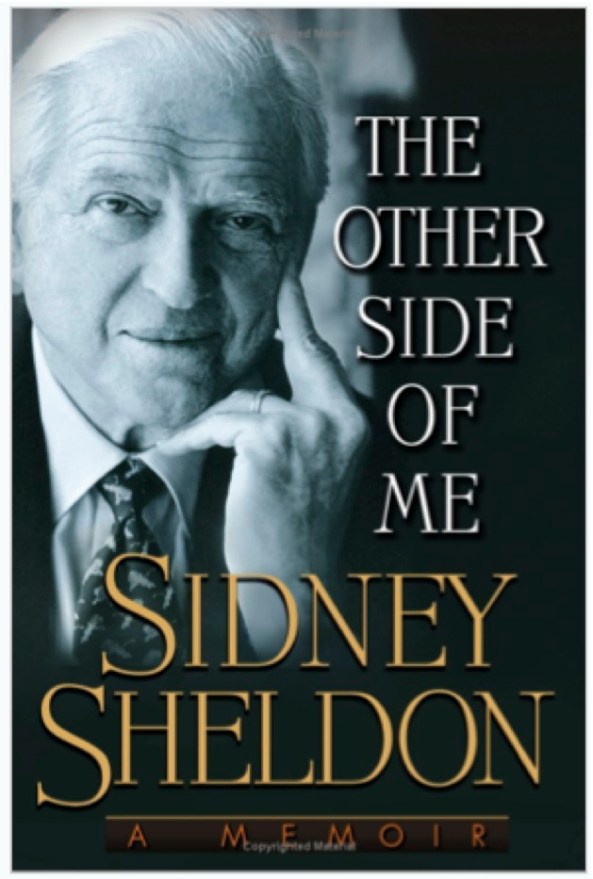
The Other Side of Me

Other Side Cover

The Other Side of Me by Sidney Sheldon

I read this recently, because my elderly aunt literally thrust it into my hands. For a few weeks, it languished in my “to be read” stack of books, but I finally picked it up, and within a page or two, I was hooked. Why did I wait? Because I generally prefer fiction or “how-to” books. Maybe a bit of sociology. But not biography or autobiography.

And, if I had not enjoyed his novels so much, it might have remained unread by me. Like many readers, I enjoyed his best-selling novels, such as The Other Side of Midnight, Master of the Game, and If Tomorrow Comes. A glance at the flyleaf reminded me that he had also been a television writer and producer of such hits as I Dream of Jeannie and The Patty Duke Show. Before that, he wrote plays for Broadway.

Sheldon’s life, as many reviewers have noted, reads like a “tell” rather than “show” fiction narrative. Indeed, he devotes more pages to his early life and career, and the book almost devolves into name dropping as he relates his activities at the height of his career in Hollywood. By the time he reaches his years as a bestselling novelist, he skims over the details. But, avid readers of Sheldon’s books will no doubt recognize that he used his life as a basis for certain aspects of his novels. And Sheldon’s life was ultra-successful, but not free from adversity. Indeed, I came away from this book with the impression that his success can be attributed mostly to hard work, with liberal amounts of talent, help from his friends, and just plain good luck thrown in.

Younger readers are probably saying “Sidney who?” but those of us endowed with a few more years no doubt remember waiting for his newest book to hit the library shelves, or tuning in to yet another tv mini-series based on one of his famous yarns. For you, it is as my aunt Celeste predicted, you’ll like this book.

A Brief History of Science Fiction, and why a good title is so important.

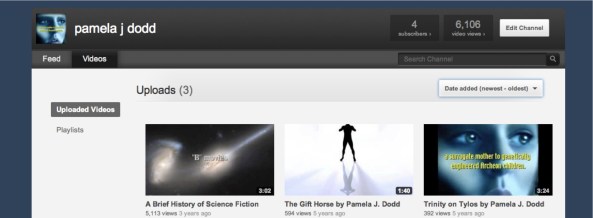
My Youtube Channel has three videos on it, and I created them for marketing purposes, but mostly because I had taken a class in MovieMaker, and I wanted to practice what I learned. As a Mac user, I made them with iMovie, but the programs are similar.

First, I made a video for my then recently published Trinity on Tylos. That title, although I like it, hasn’t been a winner for me. Some people think it is about religion, due to the first word, and it certainly isn’t. I guess I could have titled the book “Love Triangle in Outer Space” but that has even less of a ring to it. Anyway, after five years, the video has only about 500 views. My second video was for my debut novel, The Gift Horse, and since I didn’t have any nifty space images from NASA to use, I spent about $10 on stock images. While The Gift Horse has sold far better than my second novel, the video lags behind.

My third video was my first attempt at three channel video making: In addition to a music track, I recorded myself reading a script. Then I had to put the video together. For me, that was an arduous task, perhaps because so much time had gone by since I took the class. However, this third video needed a title, and I gave the matter about fifteen seconds of thought and used “A Brief History of Science Fiction.” In my mind this is lazy; I obviously adapted the title of Stephen Hawking’s brilliant work, A Brief History of Time. The title proved to be much more successful than the ones I chose for my books, because this video has been viewed over five thousand times. Of course its success may be because it is a bit more ambitious.

I wanted to be succinct, but I also wanted to incorporate much of what I have learned during years of studying literature, as well as my interest in science fiction, and I spent a bit of time on the script. A few months ago, I noticed that my video was cited in an online article on the history of science fiction. I was impressed that anyone would watch the video enough times to be able to quote it.

For anyone who is interested, here is the script, which is close to the recording. I think I skipped a few sentences in order to match the voiceover with the music track, but it is close.

I love science fiction, in print and on the screen. Here is my very brief history of the genre.:

 • Many literary scholars name Mary Shelley’s Frankenstein as the first science fiction novel.

 • Some of Nathanial Hawthorne’s short stories have science fiction thems, especially those which deal with the problems associated with man interfering with nature. The Birthmark, Dr. Heidegger’s Experiment, and Rappaccini’s Daughter all share that cautionary message.

 • British author H. G. Wells and French author Jules Verne gave us turn of the century classics including The War of the Worlds, The Invisible Man, Journey to the Center of the Earth & Twenty Thousand Leagues under the Sea.

 •Edgar Rice Burroughs produced fantasy and adventure, but his Martian settings help form the under-pinings of later space operas.

 During the first half of the twentieth century, several new magazines became the most important venue for scientific fiction writiers. Amazing Stories and Astounding Science Fiction provided the publishing forum for such writers as Isaac Asimov, Robert A. Heinlein, and Arthur C. Clarke. This period is considered to be the beginning of the Golden Age of science fiction.

 While those authors were producing science based fiction, the less than scientific stories seemed more apt to become the basis for Hollywood “B” movies, and such stories as “The Blob” and “The Day the Earth Stood Still” terrified movie audiences during the decade of the 1950’s.

 Despite some serious efforts in the movie world, it took a television show to bring science fiction into the mainstream. Although it lacked a movie sized budget, Star Trek made travel through space seem more plausible than ever before. The govenment run space program of the 1960’s no doubt helped lend some plausibility to the journeys of the Enterprise, but Trek creator Gene Roddenberry’s futuristic vision entranced a generation.

 While science fiction began to flourish on the screen, in print, it became increasingly channeled into separate genres, with “hard” and “soft” science fiction being the over-arching labels. Works which kept science and the scientific method at the forefront became known as hard science fiction, but stories which concentrated on the human reaction to advancing technology became known as soft science fiction.

 In the following decade, George Lucas kicked space opera into box office bucks with Star Wars. Authur C. Clarke’s 2001 A Space Odyssey and the book based upon it exemplfy the integration of the best of hard and soft science fiction, while the Battlestar Galactica, followed the more popular trend of space operas making the move to the small screen.

 In the past two decades, many of the box office champions have owed much to science fiction. Print publishers have not been able to replicate the success of the movie studios, but science fiction contines to thrive, especially with smaller presses. My own novel, Trinity on Tylos, owes quite a lot to the great writers who created the genre known as science fiction.
Goodbye to Anne McCaffrey

Each generation will pass, of course, but I am sad to know that another great fantasy and science fiction writer has died. Anne McCaffrey is best known for her Dragonriders of Pern series. However, she wrote far more than those, and her influence has helped shape modern science fiction. McCaffrey was the first woman to win both the Hugo and Nebula awards, which are the most prestigious in science fiction.

Her debut novel, Restoree, is a story about a woman who is abducted by aliens, placed into a new body, and set to work caring for a man who may not be ill at all, and that is just the set up.  Some say it was written, in part, as a response to the way writers used to portray women in science fiction. McCaffrey’s The Ship Who Sang was also a ground breaking work about severely handicapped children’s brains being used in living ships. Although that sounds terrible, the idea of cybernetic melding of human and machine has gone through many iterations, but McCaffrey’s take on this subject is fascinating.

As a fan of science fiction, far more so than fantasy, I enjoyed her Freedom series more than any other of her works. The four volume saga begins with Freedom’s Landing, which takes the main characters from Earth, via a sojourn as slaves on an alien world, and dumps the troublesome miscreants on a new world. The series is a bit like what happened in Australia, and the characters informally name their new colony “Botony” but it is set on an alien world. These yarns focus on building a society from scratch, but survival is always a driving force in these tales as well. This series is so readable that young adult readers should enjoy it, too.

Another interesting science fiction novel from McCaffrey is Nimisha’s Ship, which blends space-based intrigue with survival skills. McCaffrey often collaborated with other writers, in both science fiction and fantasy genres, and Sasinak is my favorite of those team efforts.

In a side note, one of my science fiction writer friends mentioned that in her later years McCaffrey used a scooter to get around the huge venue known as DragonCon in Atlanta. My friend said that if you saw her, you’d best get out of the way! Maybe her speedy ways on Earth enabled her to write about flying dragons….

By Pamela/Pilar Posted in writing