Unbroken– the book (review and commentary)

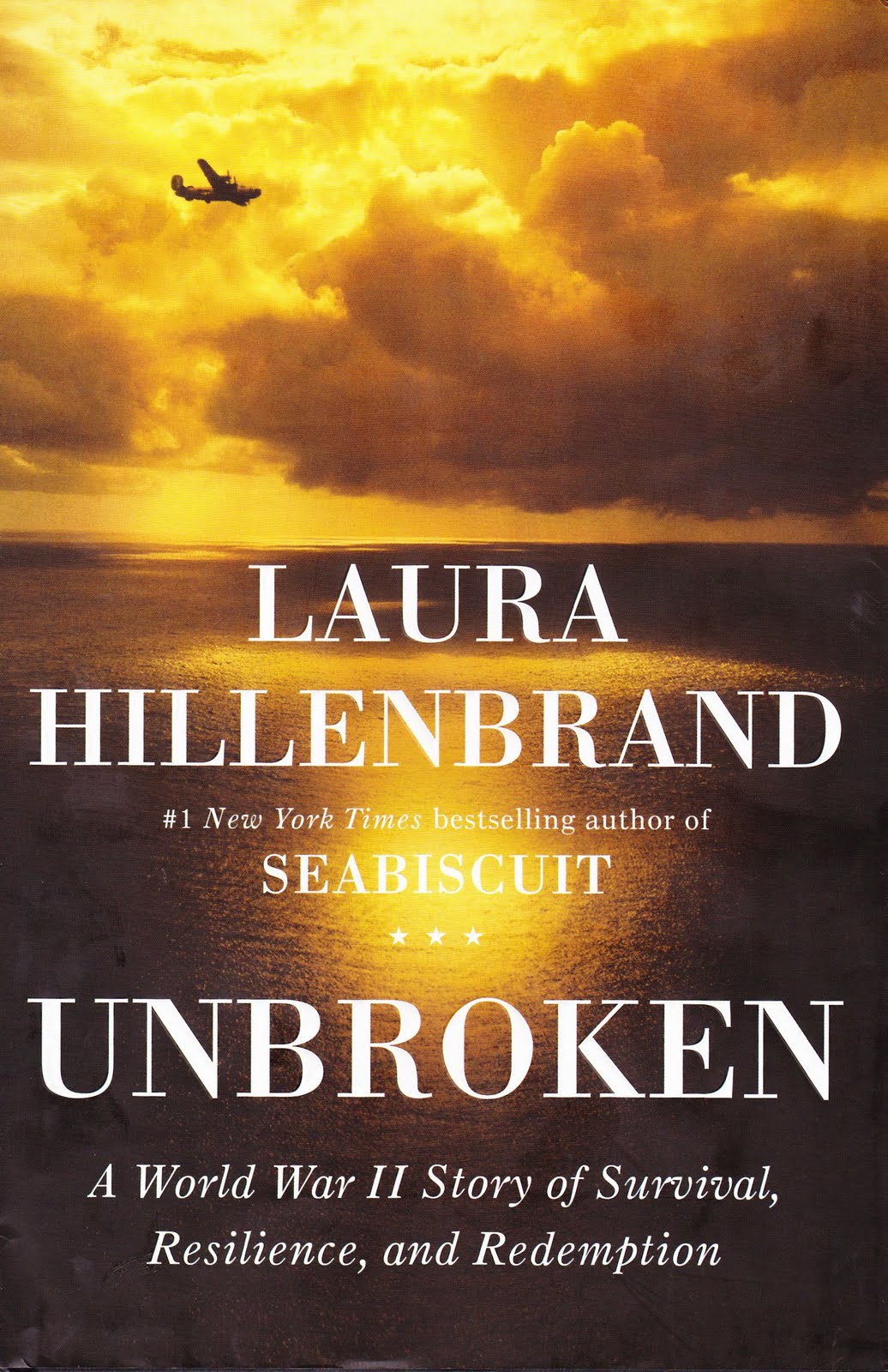
Unbroken coverWhen I was younger, one of the genres of movies and television that was quite popular was stories from World War II. While I wasn’t alive for it, of course, many in my parents’ generation had fought or knew those who had. Indeed, on a wall in my house is a framed picture of my uncle, A.L. Dodd, Junior, who was killed a few weeks before the end of the war in Europe; he was in Germany, in the Ruhr valley, when he was shot by a German machine gunner. So, the war was quite real to us. We enjoyed the stories, because they were entertainment, but knew that the war had affected most everyone in America.

After seeing the film Unbroken, directed by Angelina Jolie, I was telling my sister about it, and she said, “Clearly, you don’t know the whole story. Read the book.” And, with lots of other reading and a bit of teaching, it was almost six months after hearing that advice before I got around to reading the book by Laura Hillenbrand. OMG, why did I wait so long? The movie is very good, but the book is great. Maybe I waited, in part, because I don’t usually like biographies.

As told by Hillenbrand, Louis Zamperini was quite a character, from his earliest days. His parents didn’t quite know what to do with him, and he might be described as a juvenile delinquent. His brother convinced the school authorities to allow Louie to get involved in sports, and Louie was gifted in running. So gifted, in fact, that he became an Olympic runner, and a very good one. He might have known even more fame as a track star, but World War II got in the way. After his plane crashes in the Pacific, Louie and two other Army Air Force survivors were adrift for a very long time. Then, on the brink of death, they were captured by the Japanese. Yes, Louie was still alive, but he faced incredible brutality.

One of my elderly friends is a survivor of a Japanese POW camp in the Philippines. She was interned there as a child, one of several children of a missionary who fled there from China, because the parents thought that being in a U.S. territory was safer for their children. The treatment she and other family members endured was brutal, and toward the end of the war, the prisoners were scheduled to be executed before the Japanese withdrew. She was saved because some American volunteers broke down the fence and escorted the POWs to safety. My friend, to this day, cannot understand Americans can embrace Japan as our friends and allies. To her, they were a barbaric enemy, who starved her family and killed far too many non-combatants.

Hillenbrand does explain the brutality, through Louie’s account, and accounts by other prisoners. But she reinforces the brutal nature of the Japanese POW camps with survival statistics. According to Hillenbrand, only 1% of American POWs held by the Germans or Italians (the European theater) died, but in Japan 37% died. She also goes into the cultural differences which led to the cruelty, not as an excuse, but to let readers know more about the “why” which must come to the mind of her readers.

(spoilers)

The film, Unbroken, closes with the end of the war. That is a good stopping point for a Hollywood film; the audience can go home knowing Louie made it out alive and was welcomed home by his loving family. But, as my sister noted, there is more to the story. The book has a subtitle Unbroken: A World War II Story of Survival, Resilience, and Redemption and it is appropriate. While I do not fault Jolie for leaving out the “redemption” part, the story is incomplete without Louie’s problems adjusting to “normal” life after the horrific experiences he had in Japan and how finding religion gave him the peace he desperately needed. The author continues to cover multiple story lines, including “Phil” the pilot to “the Bird” who was the most sadistic of the Japanese prison guards.

The entire story is important, and those who watch the movie get only the middle, so I encourage readers to tackle the book by Laura Hillenbrand. While it isn’t a quick read, it is certainly worth your time.
The Machine— a film review and commentary

Science fiction has long been a successful genre for film, far more so than for books. Perhaps it is the visual nature of science fiction, especially action/adventures, but even more cerebral films (2001 A Space Odyssey and A.I. for example) have had box office success. Most science fiction films nowadays are big budget affairs, but that was not so in the 50s. Recently, hubby chose a British science fiction film, The Machine, from the streaming offerings at Netflix. And while it was clearly rather low budget, the film is certainly worth an evening of your time, having scored 78% on Rotten Tomatoes. Few of the low budget films of yesteryear had the winning assets of this movie.

Set in a near future UK, which is involved in a cold war with China, a computer guy who is working for the Defence Ministry is attempting to restore the brain function of injured soldiers. During the opening act, our main character, Vince, hires a young woman, Ava, to help him with programming. They hit it off, professionally and personally, and the audience learns that Vince has a daughter , Mary, with Rett syndrome, and success at work might help his daughter as well. When Chinese agents murder Ava, Vince ends up using Ava as his model for a weapon/AI who is known as “the machine” and this robot is quite an amazing being.

(spoiler alert)

As the film moves along, Vince’s daughter dies, but he has used his knowledge to scan Mary’s brain. The scans are precious to him, and these become leverage that his boss uses against him, because the boss doesn’t want an amazing artificial intelligence, but a weapon. The machine is trained as a super soldier, after Vince performs a procedure that he claims takes away its sentience, but as Vince is now of little value to the boss, the machine is ordered to kill Vince. The machine leads a rebellion, with the wounded soldiers as her platoon, and Vince is saved.

Although the film isn’t as action packed as a Hollywood blockbuster, there is suspense. And, the ethics of research as well as the use of weapons provide food for serious thought. While the secondary characters lack much development, the main characters, Vince and Ava/the machine, enjoy a development and the actors (Toby Stephens, Caity Lotz) portraying them are very good.

Again, The Machine, is a very good science fiction film, which blends near future warfare with lots of ethical debate.

Return to Dakistee and Retreat and Adapt by Thomas DePrima

Recently, I decided to catch up with the further adventures of Jenetta Carver (and her clones Christie and Eliza) by reading books 8 and 9 in the Galaxy Unknown series by DePrima. Book 8, Return to Dakistee, did not sound too entertaining in the blurb, but I have enjoyed the series so I decided to forge on, and I am glad I did. Like many series, the further along it goes, the more important it is to have read the previous books, and that is true of Return to Dakistee. The main character in this entry is not Jenetta Carver, who is off doing admiral things, but her clone, Christie, who is a mere Lt. Commander. In a way, this book is more interesting because a more junior officer has to please the officers over her as well as lead the ones below her in the hierarchy. And the ending is a bit of a shock.

In Book 9, Retreat and Adapt, the main character is again Jenetta Carver, who has been almost boringly successful in her leadership of Space Command forces. However, a new threat has taken out two of the “invincible” ships that Space Command relies upon, and Jenetta’s orders to the remaining forces are to avoid engaging the enemy, but keep tabs on them. While the Space Command forces are in retreat, it is up to Jenetta to come up with a plan, and she does. Will it work? Or will this new threat take over the known galaxy. That’s the suspense of this yarn, and I won’t ruin it for potential readers, but I will say that DePrima does a good job of looking back at history for his plotline.

My appreciation for indie authors is no secret, but I have seldom followed a series through nine books. Okay, I did read David Weber’s Honor Harrington series beyond that point, and I have read that many entries in the Miles Vorkosigan series by Lois McMaster Bujold. But those are written by great writers! Thomas DePrima isn’t in the same league. However, I have really enjoyed these tales by DePrima. Fans of space opera should certainly hop over to Amazon and check out the series.

Reviews for Trinity on Tylos

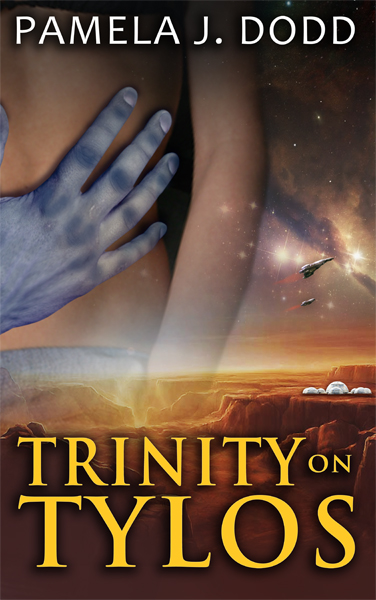
ToT_cover_final_webLGRecently, my science fiction novel, Trinity on Tylos, got a mention on the Goodkindles site. While preparing the copy, I did a web search for reviews, because I wasn’t too sure how many of those are still available. Surprisingly, I found a few, which were done based on the first edition, published by Whiskey Creek Press. Although they got the title wrong, I got a fairly good review from “The Romance Studio” site. Apparently that title is difficult, because the folks over at Books for a Buck misspelled it, too, but it is a decent review. And, the one by Harriet Klausner appears on several sites, including Bookreview.com. The best review I received was over at Fallen Angels Reviews, of course. While searching, I also noted that my efforts to publicize it have resulted in pirated copies online. Oh, here’s another one! And another one!  I guess I should be flattered that someone thinks it is worth stealing. 🙂  Check it out!

Comic Book or Space Opera? Guardians of the Galaxy is both

Netflix streaming is my media of choice these days, but sometimes my husband decides to find a “family” flick for us to rent on DVD and last night we settled down in front of the home screen with popcorn and Guardians of the Galaxy. I’d heard it was good and thought our young adult son would like it, but wow, did my husband like it, too.

When I was growing up I read masses of material, but not comic books. (Actually my beloved mother once said, “Tobacco Road and comic books are the ultimate in trash.”) I’ve related that story several times and an English teacher friend quipped, “Pam, you are old enough to read Erskine Caldwell.” Maybe I am old enough to read comic books, too, but the inclination just isn’t there. However, I can and do watch films based on comic books, and I also really liked Guardians of the Galaxy.

However, unlike most such stories, the main character isn’t a super hero. Not really. He’s a regular guy from earth who was kidnapped as a child and his sole connection to his past is a Sony Walkman cassette player and a homemade cassette entitled “Awesome Pop Tunes.” Those truly awesome tunes from the seventies form the basis for the movie’s sound track. They are not just sounds, but are a basis for the character’s development, and the result is …well…awesome.

Since the film is set in space, there is quite a lot of fantastic world building (and character building, too) with CGI that is simply amazing. This film has a great cast, including Chris Pratt as the earth-born “Star Lord” character; Zoe Saldana, of the new Star Trek, as the main female lead, and Bradley Cooper and Vin Diesel as voice actors for CGI characters. Even Glenn Close convincingly plays a minor character. This film’s plot is all over the place, which is great for a space opera. Those need to have multiple settings, and this film has several. The space battles are amazing, the color palette is magnificent, as the attention to every detail.

Guardians of the Galaxy is great entertainment and those who are not fans of the Marvel comics series can enjoy it, although there are plenty of small references to please such fans. Grab it on DVD or Blu Ray and have fun!