Valor’s Trial

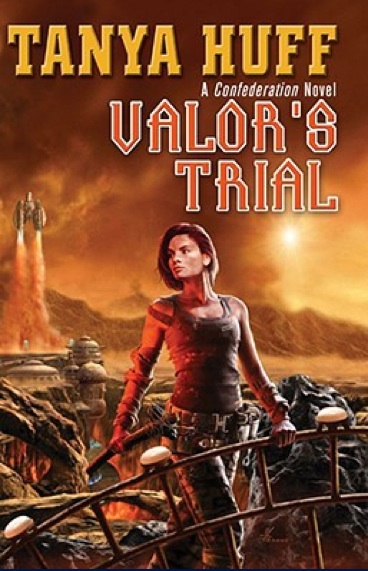
Tanya Huff’s Gunnery Sergeant Torin Kerr is a real kick-butt heroine, and in Valor’s Trial, she begins with some serious action. For the next three hundred pages, the story seldom lags. The plot is basic: Kerr is involved in a hopeless battle with a faceless enemy known for taking no prisoners. In the blink of an eye, her position, and all of the personnel are simply gone. Obliterated. The Corps declares her dead, but neither her lover nor her father can believe it. Actually, neither can Torin Kerr, when she awakens in an underground POW camp, but she does feel quite put upon. Still, one of the duties long held by military forces is to escape, and Kerr is quite determined to do so, regardless of the obstacles or the odds, and no one, not even her fellow Marines, will deter her for long.

Huff’s writing comes across as authentic. The world building is always effective, but her characterizations, via actions and dialogue, are where her skills really shine. I’ve read a fair amount of military fiction, especially science fiction, and while others may hatch more creative plot lines or more expansive empires, no one can touch her realistic prose.

If Tanya Huff had written Star Wars, we’d all believe that Luke, Leia, and Han Solo are real enough to step off of the screen and go to the local watering hole for a drink. Listen up, Syfy channel, when y’all get serious about movie making, take a long look at the Confederation series.

By Pamela/Pilar Posted in writing

The Gift of Light

The second stanza of Poe’s magnificent poem, The Raven, describes the weather of this month: “Ah, distinctly I remember it was in the bleak December.” But our modern celebration of Christmas often defies the bleakness with a show of light. As a youngster, my family would go on a “light tour” during the month, and for the past few Christmas Eves, I have gone to church and then taken a long light tour with some friends and family members. For any of you who live in my patch of northeastern Georgia, my folks voted the town square in Dahlonega as their favorite light show, but there are plenty of cheerful lights in Helen, Cornelia, and in downtown Athens, also. Gainesville and Clarkesville are trying, but are not quite as successful. What makes Dahlonega the winner is the small size of the town square and the abundance of lights. While we circled the old courthouse over and over, we saw people parking and walking around. Some posed in an empty sleigh, set up near the visitor’s bureau, ready for everyone’s Kodak moment.

Recently, I read a seasonal feature story about communities using lights to brighten up the lives of their neighbors. The most affecting of these stories was one of a youngster who was losing his battle with leukemia. Having been sent home to hopefully enjoy one last Christmas, at the age of two years, little Dax’s neighbors lit up the entire neighborhood, even though it was only October, so he would have plenty of Christmas to see. Yes, they decorated early, just in case he did not live until Christmas Day. The gesture was a welcome one for the sickly young man and his parents. Dax got to see his final Christmas, including the light gifts of his neighbors, because he lived until December 30 of 2009. As the article pointed out, decorations on the interior of a home are for the occupants, but decorating outside is a gift to others who pass by.

When you are out looking at lights, and I hope you will look for them in your neck of the woods, don’t be impatient, as some of the folks are on my road. Across from my home, there is a brilliant light show that is either treasured or mocked by locals, depending on their “Scrooge Factor.” A few nights ago, a car had slowed to a crawl to look at the illuminated decorations, and another vehicle ran up behind and began sounding its horn. Maybe the driver of that second auto was in a hurry, or maybe he just did not understand the gift of light in the bleak December.

By Pamela/Pilar Posted in writing

Something new at Christmas

Mary, Did You Know?

There are two rough drafts for this month, and they will more than likely remain in the drafts section of this blog. As I try to come up with something new for Christmas, I realize how hard it is to add to the message of Christmas. For some, this time of year is all about material things, and that is truly sad. No human gift can compare, and certainly not replace, the gift of God to man.

However, words and music can make a powerful statement, and this “new” Christmas carol (first recorded in 1992) is now a favorite of mine. If you have not heard this song, then you might enjoy a carol written in our time, about a message for all time.

By Pamela/Pilar Posted in writing

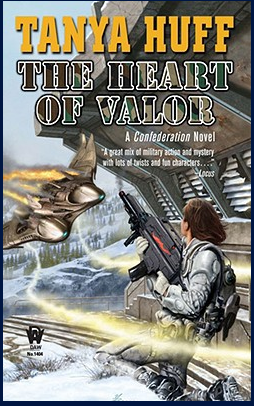
Book Review— The Heart of Valor

Tanya Huff’s “Confederation” series has a fabulous heroine, Torin Kerr. As the series begins, in Valor’s Choice, Kerr is a Staff Sergeant in some futuristic Marine Corps. In this opening yarn, Huff demonstrates good character development, better world building, and a wonderful flair for dialogue. While I really like other heroines of military sci-fi yarns such as David Weber’s Honor Harrington and Elizabeth Moon’s Esmay Suiza, those characters are officers. Huff’s non-com is gritty and more realistic than either of those officer-characters.

Recently, I purchased The Heart of Valor, the third installment in the series. Kerr has been promoted to Gunnery Sergeant after her exploits in books one and two of the series. Her new found fame is unwelcome, so she jumps at the chance to accompany a platoon and some observers to Crucible, a frozen planet where recruits complete their training. Kerr is there mostly to watch, but once the training platoon arrives on Crucible, there is a series of unfortunate events. A longtime drill sergeant becomes ill, the training drones are out to kill rather than test the recruits, and something odd is happening with the the single officer in their midst. Of course, Kerr works overtime to save her comrades, by using all of the knowledge she has accumulated in her career.

While not boring, this third installment seems rather predictable, until Kerr figures out why things have come unglued, and the plot becomes much more interesting. Unfortunately, that happens about two thirds of the way through the book. The suspense ramps up along with the action, and a three star book becomes a five star read.

I enjoyed The Heart of Valor, but I can’t say it lives up to the first two novels. Readers who like feisty heroines, humor, and lots of action should enjoy it, and the series continues with two more installments. I’m reading the next one now.

By Pamela/Pilar Posted in writing

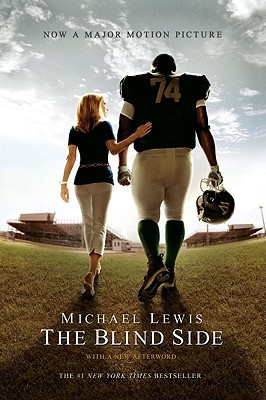
Book Review: The Blind Side

Last Christmas, the movie version of The Blind Side opened in theatres. Although I seldom watch television, hubby and I were in Charleston for our anniversary (what a great place for a romantic trip!) and he had turned on the telly one evening while we were getting ready for dinner. A reviewer proclaimed that Sandra Bullock should get an Oscar for her role in this movie, and the movie poster shot zoomed to the screen. At the time, we were more interested in she-crab soup and touring the battery, but after Bullock won an Academy Award and the DVD became available on Netflix, we watched the film. Great movie, but I wanted to know what they left out.

As anyone who both reads books and views movies knows, rarely is a movie made without leaving plenty of material on the page. Just as the news is less satisfying on television than in a newspaper, a movie, while entertaining, is less satisfying than a book. Quite simply, pages contain more information, and anyone who is even moderately literate can read faster than a film can unfold. So, I picked up a second edition of the paperback, the movie tie-in version with an afterward which contains some interesting observations by the author about reactions to the first edition.

Michael Lewis’ book, The Blind Side, has a subtitle, Evolution of a Game. And the book contains much more information about football than the film does. The book opens with a gripping account of Laurence Taylor’s tackle of Joe Theisman, the one that ended the quarterback’s career. As the pages turn, The Blind Side alternates between discussions of the business of football, significant players and coaches, and the story of Michael Oher. Fans of football might be inclined to skim the passages which inspired the movie script, but fans of the film might skim the intricate treatment of the evolution of football.

Actually, I liked both parts, although they don’t always blend together easily. Indeed, the Oher story is not told in a precisely linear fashion, and the football treatise has sections devoted to players, to coaches, and to others who have shaped the game. Lewis does a remarkable job of explaining how the game of football moved from a running game to a passing game, and it is fascinating. Of course, some readers will take far more from this book than others will. Even the title has multiple interpretations. Literally, it refers to the left side of the offensive line, because a right-handed quarterback turns his back to it as he scans the field. But, the phrase is also a tribute to the Tuohy family’s attitude toward Michael, and toward the friends and family members who could not understand why a rich, white, politically conservative family would bring a homeless black boy into their lives and ultimately, into their home. Of course, the film begins and ends with football, but it is primarily the story of how Michael Oher came to live with Sean, Leah Ann, Collins, and SJ Tuohy, and his voyage to becoming a left tackle at Ole Miss, and later, a highly paid NFL player.

After I finished the book, I looked for videos of the real people who inspired both the book and the film, and YouTube has plenty of material. Interested readers will find interviews with Michael and the Tuohy family. My favorite one is with Mike Huckabee, and he calls The Blind Side a wonderful story for the holidays. And it is. Christmas stories fall into categories— religious, sloppily sentimental, and fairy tales. The Blind Side isn’t any of those, but it is quite appropriate for the season of giving. Both the film and the book are worthy, because the film is emotionally satisfying, but the book satisfies on several levels.
By Pamela/Pilar Posted in writing

When Good Ideas Go Bad

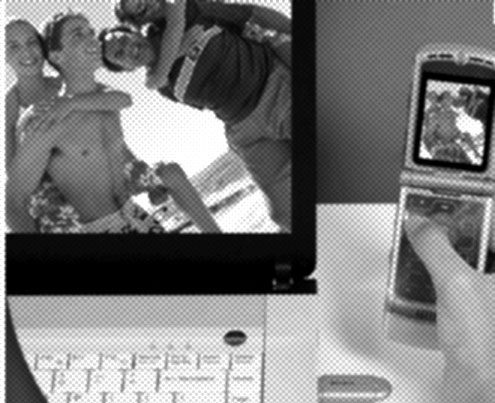
News sources report “invasion of privacy” situations quite frequently these days. Ironically, their reporting exacerbates the situation. A firefighter in my home state is under the gun for distributing a video, made by his personal cell phone, of an accident victim who was deceased. She won’t see the footage, of course, but her family did, because the person who shot it used electronic means to distribute it. Most of us would see that as a clear cut case of invading the privacy of the victim’s family. Yet, I would never have known about the gruesome video if the local news media had not put excerpts online. Should the family have made their plea for privacy so publicly? No doubt some journalism class is debating it right now.

As a writer, I have attended seminar sessions on how to write realistic crime scenes. A few years ago, I was sitting in a hotel meeting room while a forensic detective showed a video of a murder scene, with the sound muted, because he said that he did not want us to hear what the officers were saying about the situation. Instead, he talked about the process of collecting evidence and the nature of the crime. However, shooting a video at a crime scene is standard operating procedure, but what happens to the file later is not so clear.

Traffic stops are routinely video-taped, and there is a presentation about distracted drivers, featuring videos of local traffic stops, going around to schools in this area. The mission is well-meaning, of course. Having a camera on the dashboard should protect both the officer and the citizen, but again, sometimes good ideas aren’t good ideas, if one values privacy.

Beyond the realm of public safety, modern technology rivals Superman’s “x-ray vision.” Going into a dressing room at a department store may mean being featured on a security video. Stores have reasons to believe that some “customers” are actually thieves, hence the cameras. Flying on a commercial airliner means a trip through airport security, and the scanners they have can render a pretty good nude. Yet, as terrorism is still a concern, most people submit to the scans. With the ease of electronic transfer, such images may be circulated and recirculated. Once posted online, a photo can be “stolen” and the person depicted has lost any control of what happens to the image.

According to news sources, a school in Pennsylvania recently settled two lawsuits, for more than $600K, over using webcams on school issued laptop computers to spy on students. Some 56,000 images were recorded by the laptops, which were issued to over 2000 students. If you don’t remember the story, this situation came to light after an administrator accused a student of taking drugs. It turned out the the student was eating candy (something like Good ‘N Plenty) at home, and the computer was recording images of the student, snacking on something that looked like pills.

Some years ago, an acquaintance was told by her employer that she could not use her work computer after hours to type up a “prayer bulletin” because listing names of people with their medical conditions was a breach of ethics. Prayer is an essential part of spiritual life, and at the time, I thought that was a strong reaction on the part of the employer. Since then I have come to agree with that manager, because the file could read by anyone with access to that computer. If the file is transmitted via email, then it could go anywhere. More than ever before, it is better to avoid naming names and displaying images, because privacy is like reputation. Once damaged, it is hard to restore.

By Pamela/Pilar Posted in writing