New Contract for The Gift Horse

Publishing has made a significant change in the past couple of years. I’ve long loved the convenience of ebooks, and I have touted them to folks in person and online. A decade ago, I read books from now defunct publishers, on computers which have been recycled. I listened to my CDs on my computer, too. And, yes, I have watched a few DVDs on my laptop. Some would call me an “early adopter” but I don’t think so. Rather than that, I read a great deal, and having to lug around a stack of books (plus a radio and a television) does not appeal to me.

But, just as it was possible to listen to music via a computer, which did not really “catch on,” reading books and watching DVDs on a computer did not “catch on” either. The iPod was the device which made digital music easy to use, and the iTunes store made it cheap and convenient to purchase content. Record stores largely disappeared, and the music industry changed. Netflix, with its inexpensive streaming video content has made digital movies easy to access as well, and my children never watch television; instead they watch Netflix, YouTube, or other web-based video.

Amazon introduced the Kindle in 2007, and that device has been tweaked a bit since then. But, just as Apple did not invent the iPod and not supply content, Amazon’s Kindle store has made the difference. I read Kindle books on an iPad, and the experience is amazing. Look for a book you want, and you can download it in seconds, with “one-click” from Amazon’s Kindle store. The book is then searchable, as well as being easily read. My iPad has several titles on it, and it weighs less than one hard cover book.

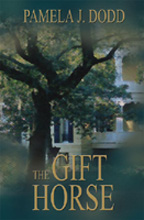
Apparently others believe this is great way to buy and read as well. According to Business Insider, the sale of Kindle books at Amazon outpaced hard covers by July 2010; six months later, the sale of Kindle books has surpassed paperback as well. Amazon now sells 105 Kindle editions for every 100 print books. And, thus far, Amazon is selling three times as many Kindle books in 2011 as it did in 2010. Amazon now has 950,000 titles for the Kindle, and that includes The Gift Horse. I recently renegotiated the contract for my debut novel, and it is now part of the $2.99 promotional price package of books offered by its publisher. This is a great price for a full length novel, of course.

Other ebook sellers are offering the The Gift Horse at the same price point, so here are the links:

Amazon:
http://www.amazon.com/dp/B0053DUK4A

Barnes and Noble:
http://search.barnesandnoble.com/Gift-Horse/Pamela-J-Dodd/e/2940012901996

iBookstore:
http://itunes.apple.com/us/book/isbn9781614340836

BookLocker.com:
http://www.booklocker.com/books/1482.html
By Pamela/Pilar Posted in writing

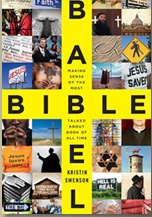
Bible Babel— a review

Last Christmas, one of my sisters gave me an autographed copy of Kristin Swinson‘s latest book, Bible Babel, Making Sense of the Most Talked About Book of All Time. Professor Swinson’s goal is to make some sense of what the Bible says, and what people say about it. That’s an almost impossible task, but the author makes a good effort, and the result is a highly readable book with a really interesting cover. One of my favorite passages is in the introduction:

“…many think that the Adam and Eve story in Genesis equates its talking snake with Satan, that the fateful fruit was specifically an apple, and that to this day men have one less rib than women. None of these are true…”

Some books are to be read at a fast pace, such as the latest thriller on someone’s best seller list, but others are worthy of more thought, and Bible Babel falls into that category. With a blend of pop culture usage (think DaVinci Code in the movies), and common concepts and misconceptions used as a springboard for topics, the author attempts to blend history, linguistics, scholarly research, and the good book itself to explain what it says, and why everyone seems to think it says something else. The table of contents reflects the varied topics she addresses, including “As It Is Written” History and the Bible….” and “Quotes and Misquotes….” and even “Flora, Fauna, Etcetera….”

As one of the best selling books of all time, and one of the least read, the Bible is constantly alluded to, but many of those who say, “it says in the Bible ________” could not give a book, chapter, and verse for the rest of the sentence. That’s because their “reading” isn’t reading at all, but they have heard something, somewhere, which was purported to have come from the Bible. Those readers who believe, for instance, that the Bible says, “God helps those who help themselves” are not Bible readers, but are instead, have been educated by proxy. Bible Babel is written for such readers, as an introduction to what the Bible does say, and in what context. Those who have read and studied the Bible may be bored with passages which explain that the Jewish Bible is the basis for the Christian Bible, or that Paul is the author of much of the New Testament. And those Christians who believe that Jesus spoke in Elizabethan English, as recorded in the King James Version, will be a bit disappointed as well.

But, for those who are religious, the author is quite respectful. For those who are skeptical, there is plenty of fuel for their skepticism. While I fall into the former category, my brain is still working, so I enjoyed both aspects of this book. If you have ever wondered why the scripture seems to be in conflict with itself, at least some of the time, or if you simply want to know more about one of the foundations of western world literature, then do read Bible Babel. Just carve out some time, because, like its subject matter, it is worthy of more than a casual reading.

By Pamela/Pilar Posted in writing

Reading (rather than writing)

Since my last post, I have been reading, reading, reading. First there were research papers, and while that is work, it is work I mostly enjoy. Over the four going on five years I have taught at the post secondary level, I have read papers on welding, auto repair, hair coloring, the history of perfumes, heat pumps, dirigibles, the physics of guitars, and even drag racing. There is much to learn in life, and those who stop learning must be really sad people. Anyway, I learn quite a lot when I read student papers.

When the quarter break came, we did some historical traveling, including a visit to the “Little White House” in Warm Springs, and the POW museum at Andersonville. At each of these spots, there are, of course, many many plaques and brochures to read, so I just kept on with my reading. Among the things I needed a refresher on were the vast number of progressive programs which began under FDR, including the “Rural Electrification Act.” Most everyone associates social security and with Roosevelt’s New Deal, but how many realize that without his direct input, farmers might have gone for many more decades without affordable electrical power? Another stop was the Currahee Military Museum in Toccoa, Georgia. There, visitors can see a number of artifacts from WWII, including a reconstructed stable, which housed troops in England, prior to the invasion of Normandy.

Also, a writer’s group in North Georgia has asked me to judge a category in their annual contest, which means more reading. While these entries won’t be like my research papers, I do look forward to reading the submissions.

Yes, I am really behind on writing, but I’ve been reading like crazy, and some writing will follow. (I hope so, anyway.)

By Pamela/Pilar Posted in writing

Blooms and Trash

Wow, I had forgotten just how many days have passed since my last entry. Nothing’s wrong, but I have had a busy quarter at school, so I my reading has been rather limited. Soon, I will have another book review, but in the mean time, I will share one of my activities. 

Since I know that good health requires exercise, I have been going outside in our early spring weather. The daffodils are blooming nicely, and the vinca has never looked better. Our three Bradford pear trees are about to make a wonderful showing, as is the tulip tree. But, after the winter, I always end up with some chores, such as cutting back the junipers and crepe myrtles, picking up sticks, and in front of our house, picking up the trash. Yes, trash. I have the misfortune of living on a main road (didn’t used to be) and folks do litter.

I’ve picked up many “scratch off” lottery tickets, but I kinda hate to complain, since Georgia’s lottery funds the vast majority of technical school student tuition. Complaining about those would be rather like biting the hand that feeds, and I have better sense. Wadded up wrappers from Mickey D’s are usually in the trash bag as well. Makes me wonder what is it about Mickey D’s customer base that makes them trashier than the rest of the fast food nation. As usual, I found a couple of styrofoam cups clinging to the weeds near the woods. There are usually some receipts, flyers, and an occasional home burned CD. Actually, it is interesting, because I read the trash. I read everything, and my students are usually amazed that I read every word of their papers.

My favorite bit of recent trash was a pharmacy bag from a nearby Kroger. One of my fellow Jeffersonians, whom I do know slightly, tossed away his Cialis paperwork. He’s probably in his sixties now, so I guess he needs a little help. Well, I hope he and the lady of his choosing had a nice weekend.

By Pamela/Pilar Posted in writing

Twenty-five Years Later

Where were you when __________?

There are some events so powerful that we remember exactly where we were when we heard the news. As youngster, I was in my seat in Mrs. Spratlin’s second grade class when our principal, Mr. Ash, told us that the president, Mr. Kennedy, had been killed in Dallas. My parents were feverishly working on renovations to our new (very old) home, and I rode the bus there, telling them the news. Neither of them knew, having spent the day installing a floor in what would soon be my bedroom.

When Ronald Reagan was shot, I was working as a sales clerk in a lumber store in Winder. We stood around a radio, listening to coverage of that event, remembering the Kennedy assassination.

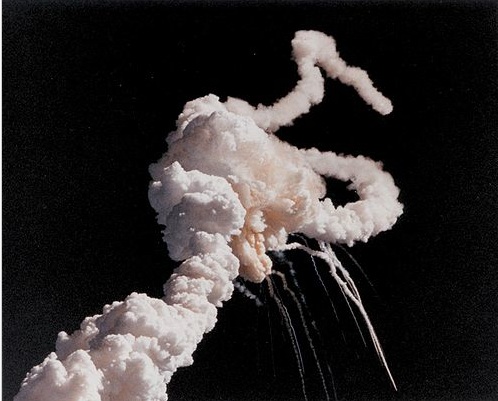
And, when the Challenger blew up, I was at Jefferson High School. It was so cold (below zero) in northeast Georgia that the school had cancelled classes for students, but we had a “work day” for teachers. I was in the business department lab, averaging grades on a calculator, since this was before the proliferation of computers and electronic gradebooks. A fellow teacher stopped by to tell me, and at first I thought she was joking. Space travel had become so routine that it was not particularly newsworthy. That day, however, when I got home, I saw image after image on television, like the one above, and heard the stunned anguish of the friends and colleagues of the astronauts.

That day proved that space travel is still a very risky business. And one person in particular, teacher Christa McAuliffe, represented all Americans that day. There were seven people killed in that explosion, but the others were NASA people, trained for the space program, and presumably ready to risk their lives. But McAuliffe was one of us, granted the opportunity to do her job, teaching, from a platform high above the earth. At first, news outlets showed the unfolding reaction on the faces of McAuliffe’s parents, who were in Florida for the launch, but later, the news outlets became more sensitive to the loss.

Yes, twenty-five years have passed since the Challenger made its seventy-three second journey, and NASA has not fully recovered from the blow. The space program still has no better vehicle than the space shuttle, and in part, that is due to America and Americans deciding that manned space travel is too expensive and too risky. Politicians have gone along with the desires of their constituents to spend the nation’s money on programs to defeat poverty instead. So, if there is to be travel to the rest of the solar system, or beyond, America won’t be the force behind it. I’ve accepted that.

Still, someone, somewhere, will take up the task, because this planet will run out of resources, and there will only be “out there” for man to explore. When Spain, France, and even England ran out of money and gusto, they became lesser nations. The decline of European nations led to America being a “super power” in the second half of the twentieth century. There are many signs of decay here in America, but the lack of any desire to expand beyond these shores, a kind of political egocentrism, is a sure sign that our bright sun is setting. China, which holds much of our nation’s debt, seems to be the up-and-coming power now, so the first man on Mars probably won’t be speaking English.

By Pamela/Pilar Posted in writing

Let them watch Star Trek

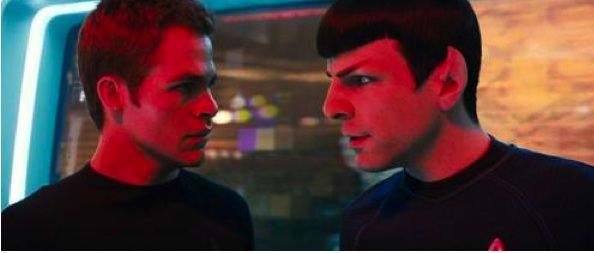
We have had a bout of bad (or good) weather, depending on one’s point of view. This week, we have had a snow followed by freezing rain, followed by enough cold to keep refreezing the roadways. I really can’t recall missing an entire week of classes over a weather event, but that is what we have had. So, in addition to some organizing at home, I have been watching the telly a bit more. I’ve seen both The Wrath of Khan (1982) and  the DVD version of JJ Abrams Star Trek (2009) with Chris Pine as James T. Kirk and Zachary Quinto as Spock in the course of one week. Until now, my favorite film version of Trek was Khan, with the riveting Ricardo Montleban in the title role, and the original series stars reprising their television roles.

As I am old enough to remember the original series in first run episodes, and am still a fan of it, I was skeptical of this new version. Still, JJ Abrams’ Alias was one of the few modern television series that I watched eagerly, so I did indeed go to the theatre to take in this “reboot” of Star Trek. By using the science fiction theme of time travel, and the subsequent altered reality, the script writers were able to retell the story, with fresh new versions of the characters. Yet, for the most part, the film pays homage to the original, and the use of both Leonard Nimoy and Zachary Quinto as Spock (the elderly ambassador and the fresh young Star Fleet officer) helps make the whole thing work.

Any summer block buster needs plenty of top-notch special effects, and this Star Trek does not disappoint in that department. The casting is simply superb, and the script isn’t half bad either. But, I am most happy that this new version did attract an audience of younger folks. The last time I went to see a Trek movie in the theatre (prior to this one) the audience looked like a convention for middle aged science fiction fans, and there weren’t too many of them. My own children, who don’t care for the original series or the next generation versions of Trek, really liked this film. For the concept of Star Trek to go on, it must reach young people, and this one did a great service for the fan base by re-introducing beloved characters and the magnificent vehicle known as the star ship Enterprise.

By Pamela/Pilar Posted in writing