Weight loss apps— my experience

scaleI guess the subtitle is Weight Watchers vs. My Fitness Pal, as those are the only two I have used enough to review in a meaningful manner.

Quite a long time back, I went to Weight Watchers and lost a goodly amount of weight, but I didn’t reach any goal. My thought at the time was that I had learned so much that I would be able to maintain my loss, and for a time I was somewhat successful. Fast forward a decade plus, and I was shopping the big girl’s section, which wasn’t much fun. Also, I became seriously concerned about the health effects of carrying so much extra weight around.

So, I joined Weight Watchers again, and wow, had things changed. Everyone was using the “app” and the meetings were half as long as before, because things were so high-tech. But, the core principles are the same: foods are assigned points, based on both calories and how “healthy” they are, and users are assigned a point target, based on certain individual criteria. Instead of looking up point values in a book, as we did before, the app can assist, even allowing users to scan a bar code on a package. (I don’t use that feature much, because fresh foods like blackberries and tomatoes do not have bar codes.) Anyway, the program works, and I lost even more weight than I did the first time, albeit over a longer period of time. (Maturity sucks.)

As I was losing, hubby lost quite a bit, too. He and his doctor were happy with the change, so hubby decided to go “all in” on weight loss, but he was not about to pay for it. So, he decided to try the “My Fitness Pal” app, as the basic version is free, and it works quite well. Since I do most of the cooking, he was always asking me for assistance in recording his food intake, which weight loss programs call “tracking,” so I ended up doing both WW and MFP for a few months. I’m currently still at my goal weight, which means as a lifetime member, I can use the WW app for free, but instead I am using MFP.

Both apps are very good, but for losing weight and learning how to do that, I would certainly stick with the WW app. By weighting (pun intended) certain foods, the app not only tracks users, but steers them toward healthy eating habits and better portion control. One excellent feature of the WW app is the recipes, which help users come up with a healthy recipe for whatever ingredients are entered. So, if I see pork tenderloin on sale, I can open the app and summon several healthy recipes right on my phone or iPad. However, the nutrition reports offered by the MFP app does a much better job of showing excesses or deficiencies in what I’ve been eating. For instance, I’ve been using MFP to help me keep up with how much protein I am eating, as I am a serious carb lover, and I might eat too many carbs and too little protein without those handy reports.

In our high tech world, it is quite easy to eat too much and move too little, so apps such as Weight Watchers and My Fitness Pal are very helpful.
The Machine— a film review and commentary

Science fiction has long been a successful genre for film, far more so than for books. Perhaps it is the visual nature of science fiction, especially action/adventures, but even more cerebral films (2001 A Space Odyssey and A.I. for example) have had box office success. Most science fiction films nowadays are big budget affairs, but that was not so in the 50s. Recently, hubby chose a British science fiction film, The Machine, from the streaming offerings at Netflix. And while it was clearly rather low budget, the film is certainly worth an evening of your time, having scored 78% on Rotten Tomatoes. Few of the low budget films of yesteryear had the winning assets of this movie.

Set in a near future UK, which is involved in a cold war with China, a computer guy who is working for the Defence Ministry is attempting to restore the brain function of injured soldiers. During the opening act, our main character, Vince, hires a young woman, Ava, to help him with programming. They hit it off, professionally and personally, and the audience learns that Vince has a daughter , Mary, with Rett syndrome, and success at work might help his daughter as well. When Chinese agents murder Ava, Vince ends up using Ava as his model for a weapon/AI who is known as “the machine” and this robot is quite an amazing being.

(spoiler alert)

As the film moves along, Vince’s daughter dies, but he has used his knowledge to scan Mary’s brain. The scans are precious to him, and these become leverage that his boss uses against him, because the boss doesn’t want an amazing artificial intelligence, but a weapon. The machine is trained as a super soldier, after Vince performs a procedure that he claims takes away its sentience, but as Vince is now of little value to the boss, the machine is ordered to kill Vince. The machine leads a rebellion, with the wounded soldiers as her platoon, and Vince is saved.

Although the film isn’t as action packed as a Hollywood blockbuster, there is suspense. And, the ethics of research as well as the use of weapons provide food for serious thought. While the secondary characters lack much development, the main characters, Vince and Ava/the machine, enjoy a development and the actors (Toby Stephens, Caity Lotz) portraying them are very good.

Again, The Machine, is a very good science fiction film, which blends near future warfare with lots of ethical debate.

Reviews for Trinity on Tylos

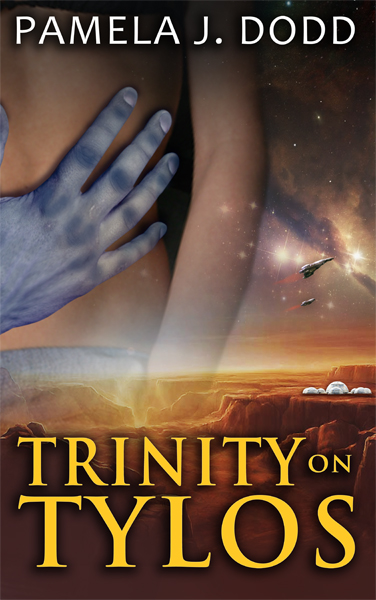
ToT_cover_final_webLGRecently, my science fiction novel, Trinity on Tylos, got a mention on the Goodkindles site. While preparing the copy, I did a web search for reviews, because I wasn’t too sure how many of those are still available. Surprisingly, I found a few, which were done based on the first edition, published by Whiskey Creek Press. Although they got the title wrong, I got a fairly good review from “The Romance Studio” site. Apparently that title is difficult, because the folks over at Books for a Buck misspelled it, too, but it is a decent review. And, the one by Harriet Klausner appears on several sites, including Bookreview.com. The best review I received was over at Fallen Angels Reviews, of course. While searching, I also noted that my efforts to publicize it have resulted in pirated copies online. Oh, here’s another one! And another one!  I guess I should be flattered that someone thinks it is worth stealing. 🙂  Check it out!

Star Wars Episode Seven

After seeing the second Star Trek reboot, all I can say about the new Star Wars is that I have a lot of hope and fear. Hope that it will be worthy of the Episode IV-VI trilogy, and fear that it will be even worse than episodes I and II. I actually kinda liked Episode III.

Harrison Ford looks older than dirt, but I’m not particularly young myself. Of course, any action will fall to the younger cast members, so let’s hope that the writers crafted them well. Abrams can make it look great, but if the writing is bad, nothing can save it.

You Can Retire Sooner Than You Think— a book review

I’ve listened to Wes Moss for a few years now, but usually for just a few minutes at a time. His show, Money Matters, is on a local radio station on Sunday mornings, and I usually tune it in as I drive to church. More than once, however, I have sat in my van, in the parking lot, listening for just a few more minutes, because his show is interesting and his advice seems very sound.

So, after hearing him hawk it a few times, I downloaded the Kindle version of You Can Retire Sooner Than You Think, which has a somewhat misleading title. The subtitle is very much the point of the book, “The 5 Secrets of the Happiest Retirees.” And, as someone who is married to a guy contemplating an early retirement, I really wanted the book to be about the main title. Still, I found this an easy and interesting read. According the Amazon listing: After conducting an intensive study of happy retirees to learn the financial practices they hold in common, Moss discovered that it doesn’t take financial genius, millions of dollars, or sophisticated investment skills to ensure a safe, solid retirement. All it takes is five best practices:

Determine what you want and need your retirement money for
Figure out how much you need to save
Create a plan to pay off your mortgage in as little as five years
Develop an income stream from multiple sources
Become an income investor

The retiring sooner part simply comes from the assertion that many folks who want a happy retirement belleve that a number of dollars, i.e. a million or two or even more, is the main way that retirees can leave the workforce. Instead, Moss uses his considerable research to point out that beyond a certain income that more is just more, but not a real factor in retirement bliss. He also includes the option of continued work, although scaled back, as something that modern retirees may want to use. Having known a number of people, mostly teachers, who have a full retirement from the state, and then just teach somewhere else, such as being an adjunct at the college level, I can attest to how well that can work.

His other points include how to manage the money you are putting aside for retirement, what to do in the years prior to retirement (such as paying down debt) and, perhaps most important, to have real interests to fill your time when you no longer work.

Some people do not want to retire. Cool. If a person is able, and wants to keep at it, then I think that is fine. But most of us have something else we want to do before we get too old and feeble, and Moss makes a good case for using multiple income streams to be able to fulfill those dreams. This is a good read, whether it affirms your game plan, motivates you to get your financial house in order, or helps you realize that you don’t need to be a multimillionaire to enjoy being retired.