Missing Author?

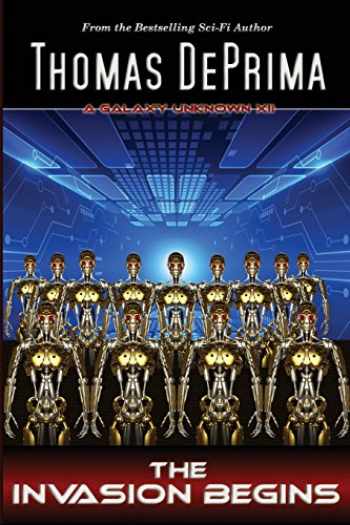
Recently, I re-read the Thomas DePrima novels I had purchased as eBooks, namely, the first nine of twelve titles in the A Galaxy Unknown” series. Gosh, I had forgotten much of the detail, but I remembered that I really enjoyed them. As certain television series benefit from “binge watching”, such as Breaking Bad, I realized that reading those nine novels back to back was great fun, so I sought the other books in the series and found them on Apple’s reading app. I just finished the 12th book, which, darn it, ends with a cliff-hanger. Thus, I have two mysteries. First, how do Jenetta and Space Command once again save the known galaxy, and, second, what happened to Thomas DePrima? According to the end of book 12, The Invasion Begins, the adventure will continue, but that book was published almost a decade ago. According to my web research (thank you AI) DePrima hasn’t published anything since 2019.

For those who haven’t read this nifty space opera series, I reviewed some of these novels when I first read them, and those entries are summarized earlier in this blog.

Thomas DePrima’s A Galaxy Unknown series is a classic space opera infused with modern indie flair. Spanning twelve main novels (plus spin-offs like the Border Patrol and Colton James sub-series), it follows the meteoric rise of Jenetta Carver, a sharp, disciplined young Space Command officer whose destiny is nothing short of galactic. The series has an action packed beginning, with a few flaws in the writing, but nothing that keeps most readers from swiping those electronic pages to find out what will happen next. There’s enough science fiction to keep fans of that genre entertained, but the writing is not so technical that every day readers who enjoy a strong female character can’t enjoy each book. As the series goes on DePrima’s universe is ever more expansive and detailed. From the political tensions between Galactic Alliance sectors to the looming threats of alien species and interstellar crime syndicates, the author builds a rich backdrop for military intrigue and diplomacy.

The series isn’t without some minor imperfections, especially as the series progresses: some plotlines feel recycled—Jenetta foils yet another plot, saves the day, and gets another promotion. Her near-infallibility can reduce the suspense. Not since the video game version of Lara Croft has a female lead seemed so invincible. However, if you’re a fan of David Weber’s Honor Harrington, any early iteration of Star Trek, or any tale of righteous command in deep space, A Galaxy Unknown and its eleven sequels offers a satisfying and immersive experience. 

That said, I wonder what happened to Thomas DePrima. According to Goodreads, he has over 20 books available, and most of them rate above 4 (out of 5) stars, with thousands of reviews of the earlier books, and hundreds for the later titles, which is amazing for an indie author. Various sources speculate that DePrima is a pen name (not so unusual) so maybe he has passed. Or, maybe he got tired of writing. Maybe he pivoted to another name and a new set of books. I have no idea, but I do wish that the series had some sort of denouement. Jenetta Carver and company are too cool to just leave hanging.

Where are you, Thomas DePrima?
A review I didn’t write

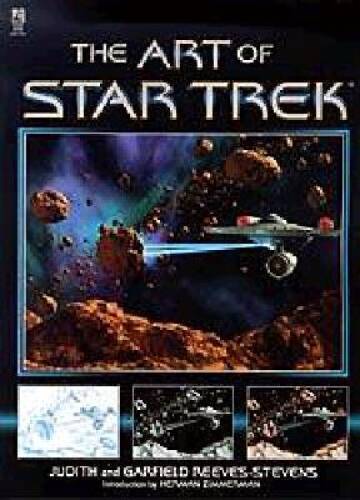
Review of The Art of Star Trek by Judith Reeves-Stevens and Garfield Reeves-Stevens

The Art of Star Trek is an expansive, visually rich tribute to one of the most iconic science fiction franchises in television and film history. Authored by Judith and Garfield Reeves-Stevens—veterans in the Star Trek literary universe—the book is both a meticulously researched chronicle and a celebration of the franchise’s visual imagination. Originally published in 1995, it captures the essence of Star Trek from The Original Series up to the early days of Deep Space Nine and Voyager, offering a deep dive into the creative process behind its legendary design work.

Content & Structure

The book is organized chronologically, walking readers through the development of each series and film, and highlighting the evolution of Starfleet’s aesthetic—from the colorful minimalism of the original USS Enterprise to the more militaristic tones of The Next Generation and Deep Space Nine. It covers not only starship and costume design but also alien worlds, species, props, matte paintings, and behind-the-scenes concept art.

What makes The Art of Star Trek stand out is its generous use of images—over 600 illustrations, including concept sketches, set designs, production photos, and storyboards. Many of these had not been widely published before, giving fans a rare glimpse into the franchise’s visual development.

Insights & Analysis

The authors provide thoughtful commentary throughout, not just presenting the art but contextualizing it within the creative and production challenges of each era. Interviews with production designers, concept artists, and series creators add depth, explaining how design choices supported storytelling themes, budget constraints, or advances in technology. There’s also insightful discussion about how the look and feel of the franchise shifted to reflect changing cultural attitudes, from the optimistic idealism of the 1960s to the more complex and politically nuanced narratives of the 1990s.

Strengths

  • Comprehensive Scope: Covers nearly three decades of design work across TV and film.
  • Rare Artwork: Features a treasure trove of previously unpublished art and design materials.
  • Historical Value: Serves as an excellent reference for both casual fans and serious scholars of media design or science fiction.

Limitations

  • Cutoff Point: As it was published in 1995, it doesn’t include Enterprise, the reboot films, DiscoveryPicard, or any modern Star Trek series.
  • Print Quality (in some editions): Some readers have noted that certain editions could benefit from higher-resolution image reproduction.

Final Verdict

The Art of Star Trek is a must-have for any serious Trekkie or fan of cinematic design. It not only honors the visual legacy of the franchise but also captures the spirit of exploration, creativity, and vision that defines Star Trek. Even decades after its publication, it remains a definitive guide to how imagination was translated into one of science fiction’s most enduring worlds.

Rating: 9/10
A stunning archive and a passionate tribute, though in need of a sequel to cover the post-1995 era.

This is the book, which I read and enjoyed. Just for fun, I asked ChatGPT to write a review, and the text above is what it generated. While I don’t gush quite as much as the AI, mostly I agree with the review. For fans of the older television shows, there could be a bit more details. For fans of the full length features, the content is better. And, as it was published about the time Voyager was getting started, there is certainly plenty of art that must be found elsewhere. My rating would probably be more like a 7, if I were to give ratings up to 10. Still, seeing what the AI generated was so entertaining that I decided to share.

Cover of The Art of Star Trek, book

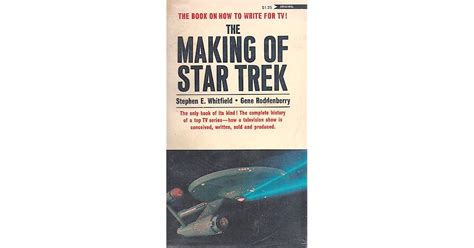
The Making of Star Trek by Stephen E. Whitfield—a retro review

Way long time ago, I borrowed a copy of The Making of Star Trek from a friend. After watching some episodes of The Original Series (TOS) on Pluto TV, I remembered the book, so I ordered a vintage paperback via eBay. Once I had it in hand, I could revisit a wonderful read, as well as wallow in some insider info once again. First printed in 1968, this book is both a history of Star Trek, with quite a few photos, and a “how to” guide to creating, producing, and writing a television series. However, as the book was written as the series was coming to a close, the legacy and cultural significance of Star Trek were not yet known to Whitfield (or Gene Roddenberry, who is listed as a co-author.) For more casual fans, there are other sources, from videos to more focused books.

When a ground breaking television series is created, there are thousand decisions to be made. From character names to methods of propulsion, this volume covers in detail how many of the concepts that make Star Trek work were developed, some visionary, such as the multi-cultural crew (unheard of in the mid-sixties) while others were merely practical, such as the “transporter” which was necessary as it would slow down the action if every port of call required a shuttle craft excursion (or worse, landing a huge space ship.) Within these pages are excerpts from memos to and from ST creator Roddenberry, quotes from NASA consultants, and preliminary sketches of possible ship configurations.

As this book was written alongside the filming of the series, there are glimpses of who wrote (and re-wrote) scripts, which actors were cast, and how the characters evolved. Letters from some of the actors, with insights into how their characters were to be portrayed, are included. Loosely organized chronologically, but with sections on such topics as “weaponry” and “the bad guys,” the reader sees how items familiar to TOS fans were developed over time.

Previously, I wrote a bit about a tour of The Neutral Zone Studios, where Star Trek Continues was filmed, and where fan films are still made. Our tour included some of the information in this book, but quite a bit of it was different, as the guides took a more hands on approach. Anyone planning a trip there might well read The Making of Star Trek prior to taking the tour. While the book does compliment Gene Roddenberry’s creative genius, many people helped create this vision of the future. Some of it has come to fruition (think folding cell phones) and some might never (Warp drive), but the influence that this one television series, which most deemed a failure when it ceased production, is difficult to minimize.

The Making of Star Trek is no longer in print, so it does require a bit of searching, but for fans, it is worth the effort.

The Neutral Zone Studios

Hubby and I decided to visit “The Neutral Zone” studios on one of their almost monthly fan appreciation weekends recently. Also, since these sets are rented out, the only time to see them is during scheduled events, so certainly see the calendar on the website prior to planning a visit.

The facility is actually a warehouse in Kingsland, Georgia, where the web series Star Trek Continues was filmed. The sets occupy a space just under 10,000 square feet, which is small by Hollywood standards, but the sets include many of the areas which would have been used on the original Star Trek series. While the original sets were destroyed more than fifty years ago, the blueprints are available, as are screen shots from the original series. The sets at The Neutral Zone were constructed over more than a year, then used for a while by the makers of Star Trek Continues. When CBS/Paramount decided to reboot Star Trek (making such series as DiscoveryPicard, and Prodigy) they basically told the folks making Star Trek Continues to wrap it up, so the sets became available for fan films. Indeed, it is possible to rent The Neutral Zone for an event or to make your own film, as long as the script meets the restrictions put in place by CBS.

The set visit begins with a guided tour. We began our tour with Ray Tesi, who currently owns the sets and manages the studio, then Vic Micnogna, who was the visionary behind Star Trek Continues, took over. Vic also plays Captain Kirk in the series, and if you haven’t seen it and are a fan, you really should take a look at the eleven full length episodes. Ray began with some background, then took us to engineering, then just across the entryway to the main ship, which is arranged in a circle, just like TOS. We visited sick bay, the briefing room, Captain’s quarters, the transporter room, auxiliary control, the Jeffries tube and brig, and the big finale is the bridge set. The guide(s) explained how the sets were built originally, and how the sets might be used in filming now. For instance, the Captain’s quarters, with a bit of redressing, can be any crew member’s quarters.

After the tour, with a bit of flexibility to avoid the next tour, attendees are welcome to take pictures. Just imagine, you, too can be pictured standing in the transporter room or on the bridge, either at the helm or even in the captain’s chair. We also purchased the entire series on DVD, and as Vic was there, he autographed the case for us.

Star Trek, even for non-fans, is a bit of a cultural phenomenon. Who doesn’t know such phrases as “Beem me up, Scotty?” For non-fans, The Neutral Zone is probably not a tourist destination, but for the thousands upon thousands of those who are fans of the original Star Trek series, the set tour is an amazing experience. I urge travelers to take a look at the websites for both The Neutral Zone and Star Trek Continues for a bit of research prior to scheduling a trip. As a fans of all vintage Star Trek series, including Star Trek Continues, this was a “must see” for us, and it did not disappoint.

Redshirts by John Scalzi—a brief review and commentary

Fans of Star Trek, the original series, will immediately understand the premise of this very humorous novel. For the few folks who aren’t familiar with the show, there were a handful of officers who were the “stars” of Star Trek. In the show, the starship ventured from planet to planet. Often, one or more officers left the ship on “away” missions, and they were almost always dangerous. Those bridge officers were usually accompanied by security officers, and in the color scheme of the original series, security staff wore red shirts. As the show couldn’t lose any main cast members, the extras, playing security staff, would invariably be the ones to be maimed or killed.

In Redshirts, the author follows a young officer assigned to the Intrepid, the flagship of the Universal Union. Ensign Dahl is thrilled to be onboard, but soon becomes apprehensive, because he quickly realizes that when lowly crew members accompany the captain, its chief science officer, or its chief engineer, those lowly crew members would bear the brunt of any dangerous action. In other words, Ensign Dahl is a “red shirt” without actually wearing a red uniform. So, as a very intelligent young officer, Dahl must navigate the command structure of the Intrepid and learn how to stay alive. Quickly, he figures out that it is best to be anywhere other than on an “Away Mission.”

At times, Redshirts is laugh out loud funny. For instance, any attack on the ship will take out the lower decks, but the bridge always remains unscathed. And one young lieutenant has so many close calls, but he never dies, as he is a “main character.” Soon it becomes apparent that only a few characters will always survive. More experienced crew members seem to have figured out how to dodge being tapped for away missions, thus newbies like Ensign Dahl are more likely to end up dead. Rather than explain what they do and what the manage to figure out, I will simply say that the novel goes where the reader might not expect. And, while the novel really is funny, it is also a bit challenging.

Not since Galaxy Quest have I seen such a good parody of television space opera. Fans of the genre will certainly find something to like in Redshirts. And, for those few folks who have never seen Star Trek in any of its various iterations, this novel is still funny, but probably won’t resonate quite so well. However, the novel is rather, well, novel in that it doesn’t end at the end. Instead there are three sections after the end, called Codas. Some reviewers liked them, some did not. Hopefully, some of my readers will take up the challenge and try this book.

Science fiction fans tend to be smart, and it takes some smarts to appreciate this novel. That said, it is quite creative.

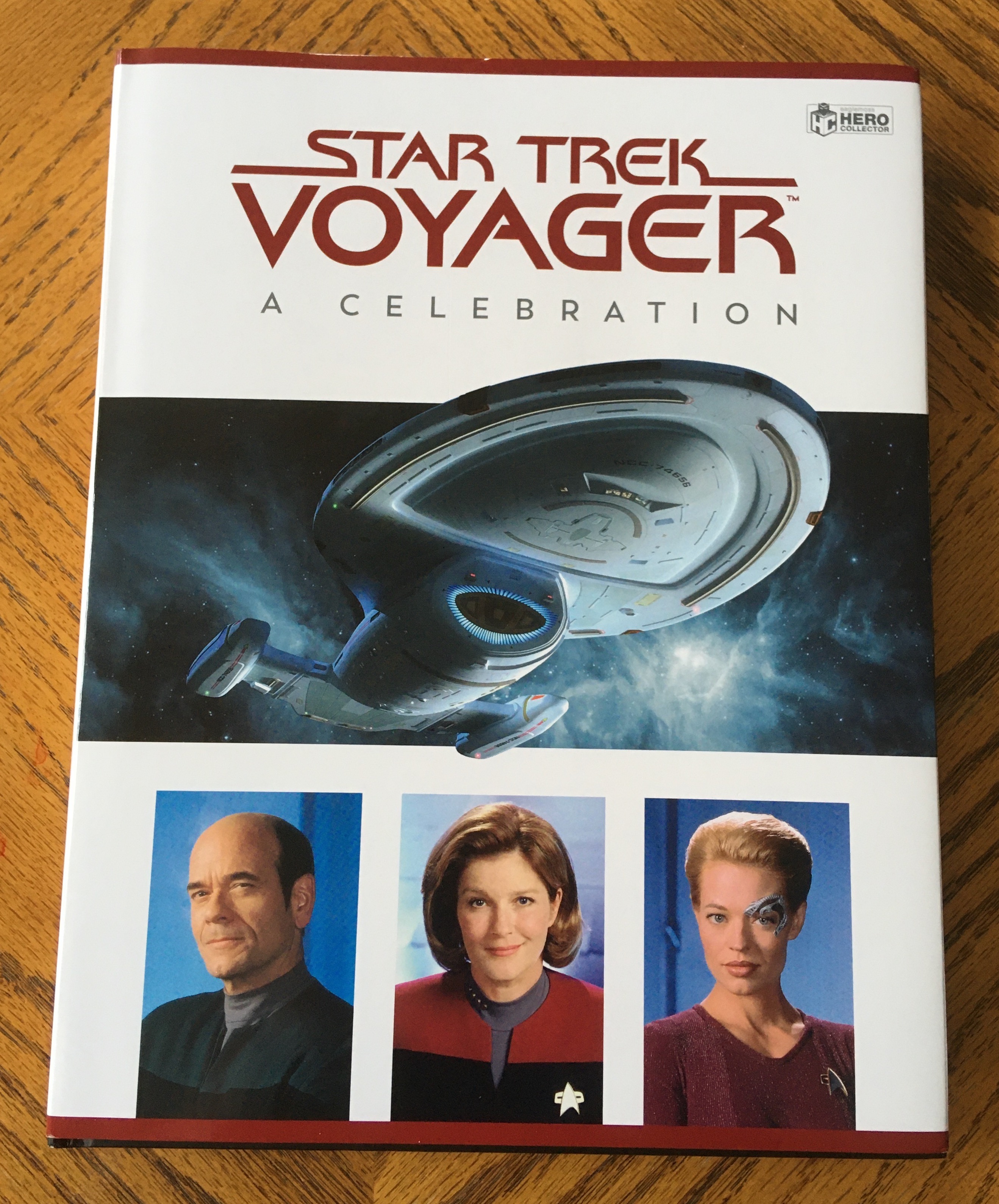
Star Trek Voyager: A Celebration

While all Star Trek series are worthy, some are just more interesting than others. Deep Space Nine has some great characters and acting, but initially suffered from being “stationary” rather than zipping around like the Star Trek ( the original series) or Star Trek: The Next Generation. As Roddenberry’s vision had sharpened and the syndication model freed him from many constraints, probably TNG is the overall best series. Certainly, the acting is amazing and the scrips are often really great, too. But, as special effects have become better and better, TNG suffers a bit in that area. Enter Star Trek: Voyager, which had a seriously huge void to fill, as it debut was a mere six months after TNG ended its seven year run. I also reviewed a book, Star Trek Voyager, A Vision of the Future, written during Voyager’s run, which is good, but last year, this volume, written as an anniversary edition, does a much better job of explaining the series as a whole, from development to the two part ending episode, “End Game.”

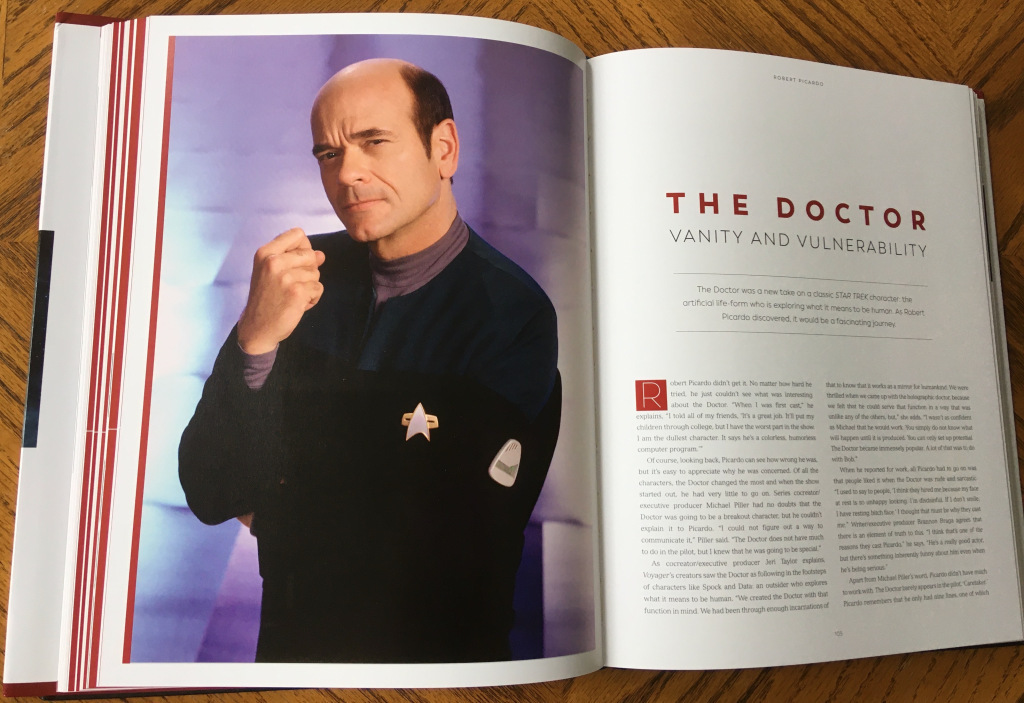
Upon receiving the book, I thought it would be one of those “coffee table” books, long on pictures and short on words. Nope, although there are many pictures. Indeed, the use of now decades old still pictures from the series is sometimes a weak point. However, there are drawings, pictures of behind the scenes contributors, and plenty of text. Overall, I really enjoyed the book, which is written in short segments which can be quickly read, but there are many sections, and these don’t necessarily need to be read in any fixed order.

The book begins, logically, with series development, and then there’s a short (two page) section devoted to the title sequence. I had no idea that this part (often “skipped” while streaming) was nominated for an Emmy award. Interspersed with the more technical aspects of the series are longer passages about the characters, beginning, of course, with Captain Janeway. The authors (two principal and two others, along with a general editor and a sub-editor) rely upon previously published material as well as newly conducted interviews with some cast members, as well as writers, producers, artist, and a host of others. Kate Mulgrew, who played Janeway, is among those who share memories in this book, and she discusses how much pressure was upon her as the first female captain of a Star Trek series, and how she approached the character as well as learning the scientific language necessary in this sort of show.

As there were many episodes (16 the first season, and 26 in each of the following six seasons) not all of them are featured, but sections devoted what are termed “key” episodes are mixed in with the other segments. The first, “Caretaker” is the two part pilot, and some of the other key episodes include “Tuvix” a character created by a transporter accident in which Neelix and Tuvok are blended into one individual. Each character gets a section, and most of multi episode villains do also. There are a couple of segments about the ship, one about the Delta Flyer, which is a smaller ship built by the Voyager crew about halfway through their journey, as well as segments about the special effects department, the makeup artists, the costumers, the writers, and the directors. As a fan of Voyager since it originally was broadcast, I knew quite a bit about the series, but there’s a lot of new material. For instance, I knew that some of the actors directed certain episodes, but I did not know that Star Trek actually fostered this by holding a “director in training” program. Roxann Dawson, who played Lt. Torres, directed a couple of episodes of Voyager, but went on to become a sought after director. She states that the program changed her life.

Bob Picardo took advantage of the DIT program and directed episodes of Voyager, but he also gets a writing credit, as he pitched a story line which was used, and he co-wrote the script. Robbie McNeil, who played Tom Paris, also directed multiple episodes of Voyager and went on to direct other projects.

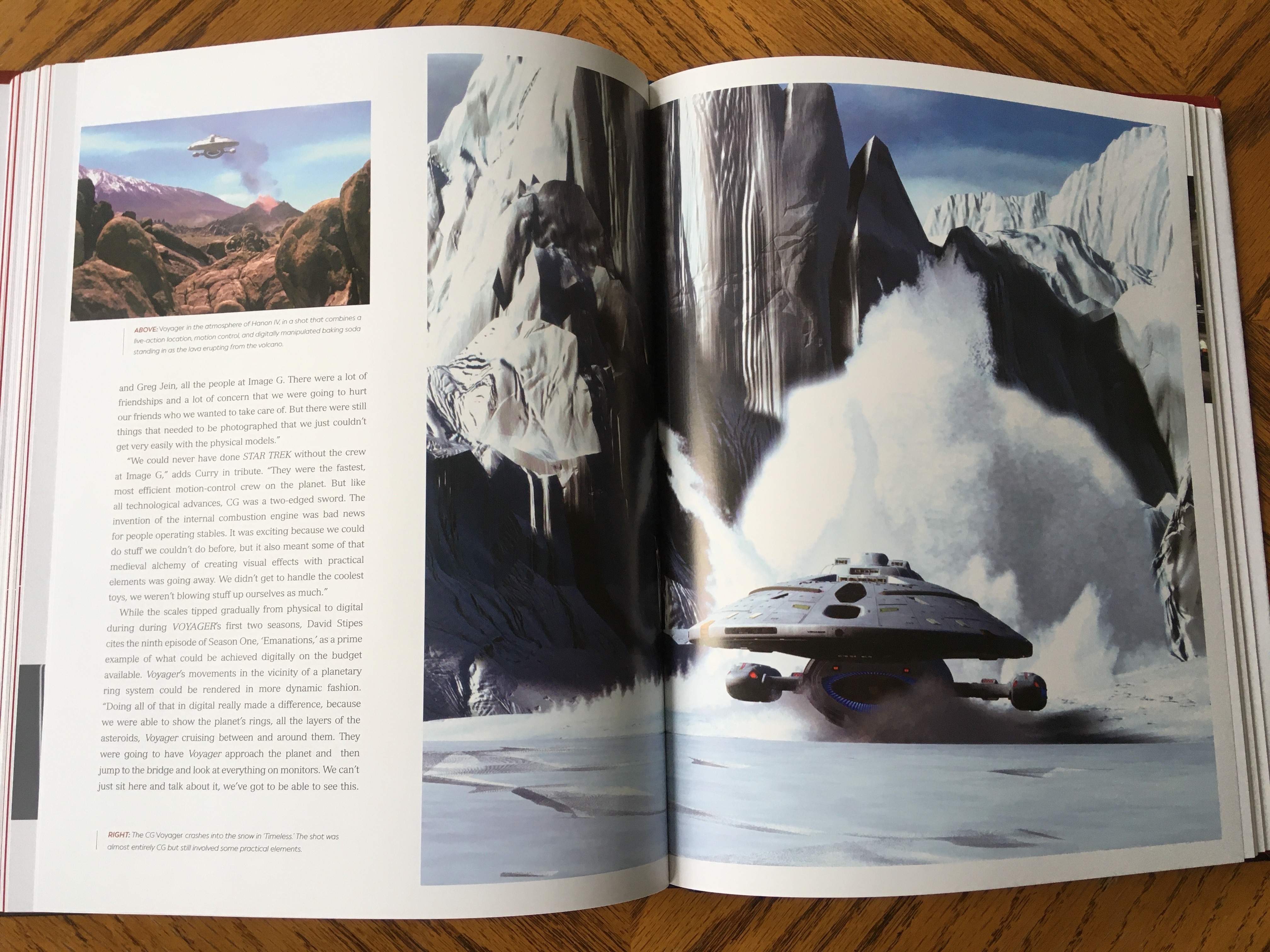
When TNG was in production, many of the special effects were done with models, but by the time Voyager was being produced, digital graphics were beginning to be more cost effective, as well as allowing more creative shots, so as the seven seasons went by, more and more VFX were done digitally. However, in the show’s 100th episode, “Timeless”, the ship is depicted as crashing into a snow and ice covered planet. The visual effects crew found that digital snow wasn’t working, so they ended up doing a practical shot with a model crashing into a tray of baking soda. I’ve seen that episode several times, and I am amazed by how good it looks on the screen.

For fans of Star Trek Voyager, this book is a real treat. For readers interested in television, particularly directing, writing, and special effects, it is worthy. Casual readers or those who just “look at the pictures” might be a tad disappointed in this book, but I read it cover to cover, with a couple sections earning a second reading. For now, it has a spot on my “keeper” shelf, too.