Butterfly Garden— a review

Trust me, this book will get under your skin and into your memory. I’ve read a lot of books, but this one is haunting.

One of my favorite genres of fiction is what is sometimes termed psychological fiction because the author gets into the minds of the characters. Perhaps it is due to my life experiences, or maybe it is due to my eclectic reading, but I am fascinated by the caretaker/villian. One my first exposures to this genre was the film “The Collector” based on the novel by John Fowles. Later, I read the book, which was also fascinating, but perhaps even more disturbing than the movie, which nicely bridges the gap between suspense and horror.

I think that Dot Hutchinson may have read the same book. That is not to say that her novel, The Butterfly Garden, is a rip-off of The Collector; it is not. However, there are some common aspects, so I will say that my guess is that she was inspired by the Fowles novel. Both novels deal with a warped collector, interested in butterflies, and his hapless series of victims. But, the villain in The Collector had one victim (at a time); in Hutchinson’s novel, the Gardener has a much bigger operation. Hutchinson basically took the plot, then raised the stakes. Her villain is far more villainous, so be forewarned that this novel is really disturbing. There is some bad language, as well as non-graphic rape and other unpleasantness directed toward the female victims.

The Butterfly Garden is modern in tone, pace, and language. But it is more of a “why” novel than a “what novel” as it begins at the end, and the plot unfolds as detectives try to unravel the story of the interactions between our victim (who has 3 names before it is over, so I won’t name her here) and an individual that the main character knows as the Gardener. Our protagonist is more victim than heroine, but she is certainly brave in a multi-layered manner. The novel is well-written and sufficiently suspenseful for me to have read it in a couple of evenings.

There are few parallels between The Butterfly Garden and my own psychological novel, The Gift Horse. However, an exploration of the role of the victim is common to both. If any of you readers enjoyed The Gift Horse, and were not overly offended, then you should try The Butterfly Garden. I really, really enjoyed it. But, I am not am not outraged by villains doing really bad things. That is what makes such characters villains.

Alarm of War— The Other Side of Fear

A while back, I wrote a positive review of Kennedy Hudner’s Alarm of War. Perhaps its greatest downside was that it clearly was intended to have a sequel. For a few months, I checked Amazon, hoping that Hudner had released the second part, but after a while, I quit looking. Then, as I reviewed my “keeper” files, I saw Alarm of War and looked again. Low and behold, Alarm of War, Book II: The Other Side of Fear was published in 2014. Finally, I had the sequel, but alas, it’s really part II of a trilogy. So, I am back to waiting.

However, it would be remiss to not review the second book. So, here’s a true confession: I went back and re-read the Alarm of War because it had been so long that I was certain I needed a refresher. Good plan, as I enjoyed it almost as much the second time. Once I had swiped the last page, I jumped right into The Other Side of Fear, and it wowed me from the opening scene.

While there are some stereotypical situations and characters, there is plenty of depth to Hudner’s ensemble of main characters, who met as they went through basic training during the first novel. My favorite is Emily Tuttle, a former history teacher with a brilliant grasp of military strategy. Other main characters include Grant Skiffington, the favored son of an admiral; Hiram Brill, a geeky guy who instinctively puts together intelligence into workable prophecies; and Marine sergeant Maria Sanchez, who is super gung ho, but reads books and likes to hang out with the nerd, Hiram. These characters all had intertwining adventures in the first book and book two immediately picks up the action.

Rather than write a bunch of spoilers, I will say this: Mr. Hudner’s series reminds me quite a lot of the early works of David Weber, the creator of the great Honor Harrington series. But, by using the ensemble, rather than centering on one character, Hudner is able to bring in various aspects of his universe, but keep the reader’s interest. At times, Weber spends more time explaining his villains than his heroine, and that has always bothered me. As a huge fan of military sci fi in general, and Honor Harrington in particular, it is hard to say this, but, “Move over, Mr. Weber.” Kennedy Hudner is writing some seriously kick-butt military sci-fi. Really.

As of this writing, the first book is a bargain at 99¢, and The Other Side of Fear is $3.99. My gosh, so much entertainment for less than the price of a movie ticket!

Up to Date— a quick review of a quick read.


Very light romance is not normally my thing, but a friend suggested that if I would “like” Gemma Halliday on Facebook that I could get a freebie on Friday. So, one of the recent choices was a romance novella called Up to Date, which is also billed as Better Date than Never series, Book #8.

When I began Up to Date by Susan Hatler, I was immediately hooked. The main character’s name is Ginger. Her sister is named Mary Ann. And, yes, their dad was a big fan of Gilligan’s Island. The tone of this book kinda goes along with that… a bit romantic and quite a bit of comedy. This version of Ginger is miserable in her job, because being an office manager is a real snoozefest. Her home life lacks stability, because flighty sister Mary Ann never seems to have money to pay rent, but has lots to spend on frivolous social matters. Ginger is artistic and highly interested in home decor, so her true calling is to be an interior decorator. Knowing this, and knowing her talent for it, a friend suggests that Ginger donate her design services as a prize in a charity auction. The winner of the auction is a guy who wanted to date Ginger, but in typical romance fiction style, Ginger doesn’t care for him. Or maybe she does.

Anyway, I really enjoyed this light romance and urge those who enjoy the genre to download Up to Date. I read the Kindle version, and it is a most pleasant way to spend an evening.

The Literary Mystery of Harper Lee’s sequel/prequel

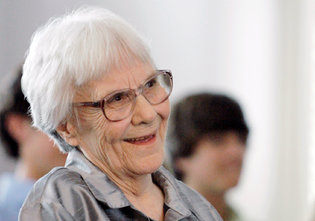
Author Harper Lee

Harper Lee in 2007

As I write this, bookstores and online book vendors are getting ready to sell something unusual. After sixty years of mostly silence, the “missing” manuscript, Go Set a Watchman, that Harper Lee wrote before she wrote her masterpiece, To Kill a Mockingbird, will be officially on sale on Tuesday, July 14, 2015. Some will love it, because Lee wrote it, some will hate it, because it isn’t just like To Kill a Mockingbird, and many people won’t care, because they don’t read. I don’t know if I will like it or not, but since I read, eventually I will tackle it.

Part of the mystery is why publish this manuscript, and why do it now? Let’s go back some sixty years. Nelle Harper Lee, daughter of a lawyer in Monroeville, Alabama, dropped out of law school to focus on her writing. Her daddy wasn’t pleased and told her that she could now support herself. So she worked days booking airline flights and wrote in her spare time. Then, friends gave her sufficient funds to work on her writing full time for a year, so she quit her job and focused on writing. In 1957, Nelle Harper Lee won a contract for her debut novel, Go Set a Watchman. Lee’s editor of the time suggested that Lee go back and rewrite the book, focusing on the events which were told in flashbacks. Having spent a year on GSAW, I’m sure Lee had mixed feelings about this more than a rewrite, but new authors have to trust experienced editors, so Lee went back and worked for two more years. The result her her labors was To Kill a Mockingbird, which was instantly successful, being selected for various book clubs. Lee won the Pulitzer Prize for fiction and the excellent movie version of the book added to the fame (and fortune) of this lady from a very small town in Alabama.

Not much has been published about Nelle Harper Lee, largely because she seemed unprepared for the trappings of fame which accompanied the publication of To Kill a Mockingbird. Not long after the movie’s successful run, she became a literary recluse; not granting any interviews. She kept up with her friends, but she did not want to talk about her now very famous novel.

While I am certainly not famous, and don’t expect to be, I do get it. Really. My least favorite part of being a writer is answering all of the “why” questions which come from readers. For whatever reasons, many readers can’t let the work speak for itself, so they want more and more from the author. (I’ve always thought that Stephen King’s Misery is a backlash against obsessed readers.) Apparently, Ms. Lee was also not confident in her other work, so she didn’t finish her other projects after TKAM, nor did she make any efforts to have the first manuscript, Go Set a Watchman, published. Apparently, she was content to split time between her apartment in New York City and her home in Alabama.

In 2007, Ms. Lee had a stroke; she already had severe hearing loss and macular degeneration. Her older sister, Alice, an attorney, had handled many of Lee’s financial affairs, but the Lee sisters both relied upon her literary agent to handle much of the business side of publishing, especially collecting the considerable royalties from the ever popular novel. Alice Lee’s own health began to fail her when she was in her nineties, so, increasingly, people less loyal to Nelle have had greater access to her and to her finances. Without going into detail, the copyright to TKAM has changed hands a couple of times, law suits have been filed against various parties over the rights, and over rights to merchandise bearing the name of the famous novel, and a considerable amount of greed has been part of the landscape. Finally, a judge did rule Ms. Lee, who is now confined to an assisted living facility, competent to make the decision to publish this long “lost” work, and it will be available for purchase. Based on pre-sells, it is already sure to be a bestseller.

Fifty years from now, scholars will be writing papers on this matter. By all accounts, Ms. Lee had forty years of good health and good mind, and during that time, she did not seek to publish the previous manuscript. So the question is, did Harper Lee, who did not have much confidence in her later work, want readers to see this early manuscript? Or is it being published to fatten the wallets of the “handlers” of the elderly and failing Harper Lee?

That’s why this is a literary and legal mystery.

Monuments Men— on DVD

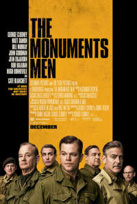
Monuments Men film posterA friend mentioned that she had seen and liked Monuments Men when it was in theaters, but I didn’t get around to seeing it then. However, it is out on DVD so hubby put it in the Netflix que, and we saw it recently. The cast is, perhaps, the best part of this effort. Lots of big name stars have roles, including Matt Damon, George Clooney, John Goodman, and Cate Blanchett. Essentially, this is the story of the men tasked with finding and protecting the art which was stolen by the Germans during World War II.

The script is good, but not especially memorable. In this film, however, the dialogue takes a back seat to action and suspense. And, there is certainly an element of education in the film. In order for the suspense to work, the audience must come to care about the historical artifacts and those who worked so hard to restore them to their rightful places. As my friend said when she recommended it, the movie isn’t great, but it is good, and it helps modern viewers appreciate the risks and hard work of those who went to war to help preserve these works.

Oddly, there are few people now who care enough to publish accounts of the destruction of art, as is happening in the middle east, much less go to war over it.