Time for Dystopian Science Fiction?

Reader’s Alley, a nifty site for bargain eBook lovers, divides their science fiction offerings into sub-genres: sci-fi romance, sci-fi thriller, and science fiction, dystopian. While those first two descriptors would seem self-evident, the dystopian flavor is considered by some (mostly jaded members of academia) as the only serious science fiction. Typically, I avoid reading dystopias because they tend to be so darned depressing. But, with all that is happening in the news, which I also try to avoid, perhaps it is time to take a look at the genre.

One of the finest books about the history of science fiction is Brian Aldiss’ Trillion Year Spree, which covers science fiction literature from its beginnings to the early 1980s. Aldiss does discuss many sub-genres, but the thread of dystopia runs strongly throughout his encyclopedia of science fiction in printed form. The term, dystopia, is applicable to “a world in which everything is imperfect, and everything goes terribly wrong. Dystopian literature shows us a nightmarish image about what might happen to the world in the near future. Usually the main themes of dystopian works are rebellion, oppression, revolutions, wars, overpopulation, and disasters. On the other hand, Utopia is a perfect world – exactly opposite of dystopia.”

Science has, until recently, been viewed as a two edged sword; while it can make life much better, mis-use of science has been the root of all sorts of evils. Frankenstein, by Mary Shelley, is often considered to be the first science fiction novel, and the dark side of science is clearly the central theme of the novel. Dr. Heidegger’s Experiment and Rappacini’s Daughter, short stories by Nathaniel Hawthorne, also feature mis-use of science as their main themes. When teaching those stories, which used to be in many American Lit anthologies, one way to make it simple for students is to say, “Hawthorne is basically telling his readers, ‘don’t mess around with Mother Nature’.”

Later novelists fine tuned dystopian themes, with societies becoming more and more restrictive upon the populace. Aldous Huxley’s Brave New World and George Orwell’s 1984 share these themes, “including the consequences of totalitarianismmass surveillance, and repressive regimentation of persons and behaviours within society.” Kurt Vonnegut’s short story, Harrison Burgeron is one of the most widely read dystopian stories, due to its inclusion in anthologies for students, and I recently read a news story liking our current government policies to Vonnegut’s didactic work. Y’all, it is scary when dystopia becomes reality.

Of course, many fans of science fiction today seldom, if ever, read it. Instead, what they know of utopia and dystopia is presented via video. Early episodes of Star Trek explored both sides of the scientific divide. The Ultimate Computer, rather dated today, explored the man vs. machine conflict, using future war games as a setting for its rather disturbing premise. Various dystopian novels have been adapted to long form (movies) video, including everything from 1984 to Planet of the Apes. There are literally dozens of dystopian sci fi films. Some are rather laughable now (Mad Max?) but others are quite troubling.

My own fiction, which has many conflicts for characters to attempt to resolve, certainly isn’t “happily ever after, ” but it isn’t as dark as some of these works, and that’s because my outlook on life is more pragmatic. Hopefully, there will be some gravitation away from the totalitarian policies of modern politicians and administrators. But, when I consider what I am seeing when I do go out and about, I wonder. I really do. Remember this: In each fictional dystopia, the goal was to make things better for certain segments of the population, and bad outcomes are unhappy accidents. Be careful what you wish for—
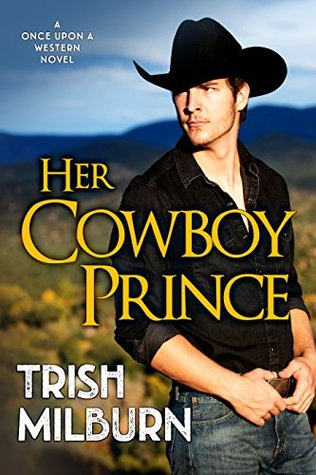
Trish Milburn’s “Her Cowboy Prince” review

For readers who want an up to date romance about courtship, then this book merits your attention.

Modern romances are often more about sex than the “getting to know you” that dominated romances in previous decades. Nowadays, it is not uncommon for the first kiss to be followed by sexual fulfillment, and that often happens a third of the way through the narrative. Thus, many modern romances are about the sexual relationship, not about courtship. Her Cowboy Prince is old fashioned, but it is a recent publication, and I liked it very much for that reason. Another reviewer called it “clean” and that’s fair, I suppose. All too often, I’ve downloaded a romance with a recent publication date, only to find references to commonalities from decades ago, such as cassette tapes or pay phones. It may be fun to read an author’s backlist, but please don’t re-release books that are decades old and pretend they are new! In Her Cowboy Prince, the neighbor disturbs Melody by playing video games at all hours; the heroine up cycles items she purchases at thrift stores using techniques she garnered from watching HGTV; the resort uses its website to attract customers for their newest events, and so forth. Yep, this story’s not recycled material, which is refreshing.

Her Cowboy Prince has a cute title and stock cover cute guy on the cover, but the plot is a bit more serious. Melody Shaw is a housekeeper at a spa/resort in Montana, but she is there because she has had to go into witness protection after she testified against her stepmother, who had her father killed and managed to deprive Melody of ownership of the pharmaceutical company that he founded. Oh, and for good measure, Melody’s step-sister tried to have her murdered, so Melody has reasons to keep a very low profile. The housekeeper job across the country from her former home in Atlanta should be safe, but Melody can’t quite keep from looking over her shoulder at everyone.

Justin McQueen, a newly eligible bachelor since he figured out that his latest fiancée was a gold digger out to get everything he owned, runs the resort where Melody works. Before long, the attractive and way too smart for her job housekeeper attracts his attention. The author could have them jump each other’s bones in one of the guest rooms, but she restrains her characters. They plan events for the resort. They run into each other at a local cafe. She rescues his dad from a highway accident. As he takes her home from work, he stops to show her the stars. In short, they develop a romantic relationship. However, Justin is aware that there’s something mysterious in her reluctance to enjoy his company, while Melody is continually afraid of breaking her cover and inviting her troubled past into her new digs in Montana.

Author Trish Milburn does a better than average job using her settings, scenic Montana and metro Atlanta, to help create an interesting story. While the plot is somewhat predictable, there are no jarring moments when the reader just can’t suspend disbelief. The characters are mostly engaging, from the ever suspicious heroine and the diligent hero, to the displaced southern thrift shop owner and the poor but proud video game playing neighbor whom Melody befriends. The villains are mostly off stage, but the threat is sufficient to provide suspense for the reader, along with Melody and Justin.

For readers who want to experience vicarious sex, this book would not be appropriate, but for readers who want an up to date romance, about courtship, then this book merits your attention.

BTW, I am reviewing the book because I liked it, not because I got a free copy for review purposes.

Last Stand series by William Weber—review and commentary

Last Stand: The Complete Box Set

From time to time, I’m offered a “box set” of eBooks, which strikes me as funny as there is obviously no box, just a longer than normal eBook. While these often seem to be great values, I seldom read an entire series. Last Stand is different, because I did indeed read all four books, and while I enjoyed them, I liked each one a little less, but that’s just me and what I Prefer to read, rather than any flaws in the books themselves.

Book one, Surviving America’s Collapse, was so suspenseful that I read it in less than 24 hours. Apparently survivalist/prepper books are a sub-genre, but this is my first such book. Viewed simply as fiction, readers might be annoyed, as the narrative often becomes pedantic, teaching survivalist techniques to the reader, but I rather enjoyed those segments. In short, the story begins with the hero, former Army officer John Mack, being the only guy in his neighborhood who understands that the vehicles, phones, and other conveniences aren’t working because some entity set off an “EMP” device. Mack rescues his wife, then his children, thinking they will soon retreat to his survivalist hideaway cabin, but his wife convinces him to remain in their neighborhood, to assist their friends. This proves to be increasingly difficult, as resources dwindle and nefarious elements attempt to takeover their community.

Book two, Patriots, begins in the second setting, the Mack family hideaway. The canvas of conflict widens a bit in this book, as Mack realizes the scope of the attack upon America, and feels the need to take up arms not just to defend his family, but his country. Book three, Warlords, is a bit darker in tone, as the forces behind the attack upon America begin divvying up the country. Book four, Turning the Tide, is on a grander scale, as Mack is one cog in the military effort to fight back against the foreign powers that seem to have figured out how to conquer the United States.

Each of these books has a fictional story, but invariably the author uses his story to also instruct the reader. Those who like lots of details about the military and/or weaponry might like these books more than I did, but I did enjoy them. Some of the characterizations are fairly stereotypical, and sometimes the main characters are able to overcome situations which would probably be hopeless without the assistance of the author. So, suspending one’s disbelief a bit is a necessary skill for staying with the series. Still, the suspense is sufficient to keep the reader turning the pages.

Survivalists, military buffs, and those who enjoy suspense will all find something to like in Last Stand. As of this post, the price for the eBook set is three bucks, which is a down payment on a hamburger! I can’t think of anything as entertaining as these books for that price, so take a look. These books are also available in paperback and as audio books, and all have hundreds of ratings on Goodreads, mostly 4-5 stars.

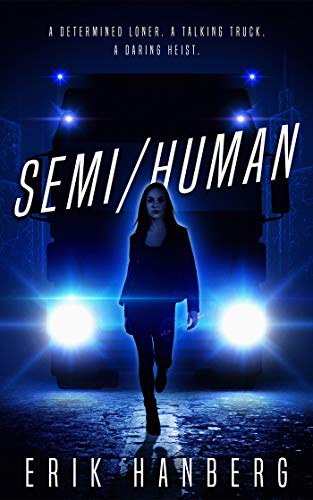
Semi/Human by Erik Hanberg—review and commentary

A Y/A science fiction yarn

As the pandemic has continued to plague businesses, many of them are accelerating their transition to robots and artificial intelligence, thus replacing or supplementing their all too frail human employees. Semi/Human is set in the near future, and in this novel Silicon Valley has finally written an adaptable code that makes most human employees obsolete. Vehicles drive themselves, dealers in Vegas are all robots, police have been replaced by armed drones, and so forth.

Main character Pen(ney) Davis is more than depressed, because like most other human jobs, her intern job at a Silicon Valley computer firm has been eliminated. However, Pen has come up with a less than practical scheme to steal a ridiculously expensive treasure from her former employer and get rich enough to care a lot less about being unemployed.

As Alexander Pope once observed, “A little bit of learning is a dangerous thing,” and recent intern Pen re-writes the code of a self-driving truck, intending to hijack it for a trip across the country, but ends up making the aforementioned truck autonomous instead. Fortunately for Pen, the truck, Lara B, is both friendly and grateful.

Lest I ruin this tale for readers, let me just say that this yarn is cogent, examining the societal damage which would ensue if gainful employment ceased, as well as the ethics of dealing with a self-aware, nearly omniscient super computer. There’s a dash of economic reality sprinkled in as well, because with no work, there’s no money coming in for the vast majority of the populace, so they end up fighting over whatever is left behind in the technological revolution.

There’s also more than a little suspense, as Pen and Lara B join forces to accomplish the original mission, wherein Pen hopes to acquire both riches and revenge in one fell swoop. Semi/Human is one of those rare books that blends a cautionary theme with an entertaining plot. Most of the characters are well drawn, and there is sufficient description of settings to keep the reader entertained but the plot never bogs down.

As a frequent reader of science fiction, it is rare for me to call a novel memorable, but for me Semi/Human is such a book. Perhaps I simply read it a the right time, or perhaps the book is really that good. If you like youthful, sassy heroines, self-aware computers (and trucks) along with a suspense filled story line, you really should try Semi/Human.

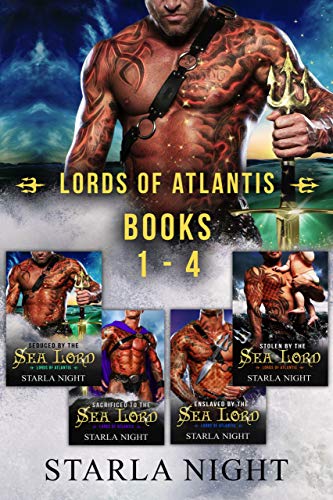
Seduced by the Sea Lord by Starla Night—brief review

A while back, I purchased (at a reduced price) the box set entitled Lords of Atlantis books 1-4, but the review is for Seduced by the Sea Lord, as that was the only novel I read. Quite frankly, it took me a while to read it, because it wasn’t very good.

Here’s the book blurb: “Determined warlord Torun cannot wait to claim Lucy, who mistook him for a shipwreck survivor and pulled his injured body from the ocean. All his instincts tell him she is his soul mate. Now she must join with him and give him a child. 

Lucy can’t believe the words coming out of this dominant male. He insists her destiny is to become a mermaid queen and mother to his future children. The one thing “destiny” forgot to mention was that Lucy’s a broke divorcee who can’t even have a child. 

It’s really too bad, because his gorgeous lips are all too kissable, and she’d love to see his iridescent gold tattoos moving as he flexed those broad, hard pectorals under the water…”

This cover image is for the set; I am reviewing book 1

There are a bunch of five star reviews for this set, by Starla Night, and one reviewer who rated the set at one star accused the others of being “paid reviewers.” Darn, I wish I could afford to pay some of those reviewers to put up five star reviews of my novels. Maybe I’d make some bank, but I’m too honest. Or poor.

Anyway, back to the review. The point of view character, Lucy, is chick-lit cute in her narrative. The alpha male hero is appropriately madly in love with Lucy. The bad guy is Lucy’s ex, and he is cardboard cut out bad. Many gals dislike their ex, but Lucy’s guy stole her money, her ideas, and her dignity. Yep, he’s bad, all right, but some how I didn’t hate him. Nor did Lucy’s grousing about him endear her to me.

The trappings of “mer” vs “human” seemed alternately implausible or just plain silly, which didn’t help the novel at all. In a word, this novel seems phony. I have three more books in the set, but unless I am stranded on a desert island with nothing else to read, I rather doubt I will re-visit the Lords of Atlantis.

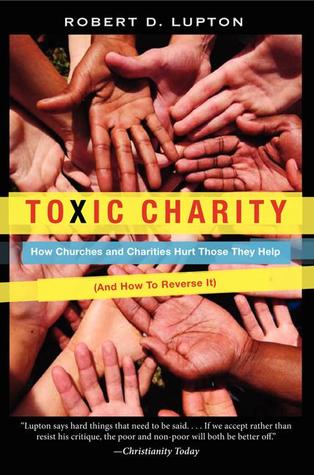
Toxic Charity: How Churches and Charities Hurt Those They Help— review and commentary

ToxicA friend who works on the staff of a large church recommended this book to me, and while it lacks sufficient support for some of the concepts, the principles are sound. Basically, the title says it pretty well—whether just throwing money or a week of unpaid labor at poverty—this act of charity might do more harm than good.

Author Robert D. Lupton has plenty of experience in urban ministry, and he cites many examples from his experience in Atlanta, Georgia, which is where he lives and works. But, as I have seen lots of churches gather a group of volunteers for week long “mission trips” I was fascinated by the story of a church in Mexico that was painted six times during one summer, by six different sets of volunteers. Indeed, what the author terms “religious tourism” is big business. He states that in 2005, $2.4 billion was spent by 1.6 million Americans, who traveled abroad for short term mission trips. My favorite statistic: “The Bahamas, it is estimated, annually receives one short-term missionary for every fifteen residents.” Okay, I have never traveled abroad on a mission trip, but the Bahamas sounds like a great place to visit. (My daughter mentioned knowing of a local church that did a mission trip to Ireland. Sounds heavenly!)

Lest readers get the idea that all Lupton does is make the good hearted look either mis-guided or just plain stupid, he does mention that many people set out on these trips with good intentions. Then he explains that in the third world, a little bit of money spent properly can do quite a lot. He explains the use of “micro loans” which can give a struggling person a needed hand up. For example, a $50 loan to a woman in Nicaragua allowed her to buy a sewing machine so she could ramp up her production of baby clothes. Once she paid off the loan, she still had the increased earning capacity.

In the U.S. many churches and other charities give away certain items. One example was giving holiday presents to needy families, but the fathers in such situations are often embarrassed that they can’t match the generosity of the well meaning givers, and are thus emasculated in front of their wives and children. Another example was a food bank, wherein the recipients had come to view the handouts as entitlements, which the author then contrasted with a food co-op, where members paid a small ($3) membership fee, and the members then gathered food from free or discounted sources, set their own rules for distribution, and so forth. The co-op helped the members but did not demean them or destroy their work ethic.

Toxic Charity is a bit controversial, but the U.S.A. is one of the most generous nations which has ever graced this planet. Unfortunately, just throwing money at problems can actually make things worse. This book is a must read for anyone who is involved in charity work, faith based or not, because it explains the problem but gives some good guidelines for better ways to help without hurting the recipient or wasting effort and money.