iBooks and eBay—a winning combo

liver-rescue-apples

Apples and Apple, Inc.

As a reader of eBooks, I’ve been exploring new ways (and revisiting old ones) to view content. Recently, I saw a title touted on Facebook, and a quick look at eBay revealed several purchase options, including an eBook which was offered as a pdf file. I paid a golly whopping .99, and it arrived via email. Not quite as quick as Big A, but the seller offered pretty quick service. I tried reading the file via my email app, but that didn’t save my place, so I downloaded the file to iBooks. Winner, winner, but no chicken dinner. However, the iBooks app is a very good way to read a pdf file, and the app is easy to use, just like other, more well known ways to view eBook content. Certainly, the price was right, too.

When Big A (the relentless internet seller) decided to give me the old “heave, ho” I was a bit concerned about when and where I’d get new books to read, as I am not buying from them at the moment, but that fear has been allayed by the eBay and iBooks combination. The title I purchased is “Liver Rescue” which I won’t review, as I sincerely hope my readers don’t need it, but I’ll let you know that one way to help the liver is to eat lots of apples. Actually, I am very pleased to get a 500+ text for a buck, and the advice to eat a fruit I really like is welcome, also. Thanks eBay! And thanks to Apple, for making such an intuitive app for the iPad. Reading about apples on an Apple product is quite appropriate, isn’t it?

Nook—a second look at the eBook app

NOOK-feature-300

Nook is an app and a device!

Since big A decided to fire me as one of their “Associates” I have set aside my K—  library for the moment, and am re-reading some older titles via the Nook app on my iPad. For readers who aren’t familiar with this, it is basically the eBook platform used by Barnes and Noble. While I have not purchased many books via B & N, I was once a very loyal customer at Fictionwise. When B & N bought out Fictionwise in 2009, I was able to keep some, alas not all, of the content I had purchased, by adding the Nook app, so those books became part of my Nook library. And, as there are quite a few titles there, I am looking through the library, seeing if anything is worth a second read. One of the best aspects of eBooks is that the “keeper shelf” takes up no room in my house!

The Nook app works like other eBook apps; the raw file format is ePub. In their review of eBook apps, CNET judged it as #3, and it is quite good. I find the animation associated with page changes very pleasing; it looks just like flipping a physical page! I also like having basic info at the top of the screen (date, time, % of battery are all available) as well as the typical (in print format) of two facing pages, with the title on one side and the author name on the other. Apart from a page number, which is not possible as the file must adapt to the reader’s screen size, the interface is very book-like, and I mean that as a compliment. As an app, it is a bit quirky, however. For instance, getting back to the library can be a bit of a chore, as one must first get a more info screen, and then the option to move around a bit becomes available.

There is a library screen, a bookstore screen, a quick link back to the current book being read, and something called “Readouts” which is a bit of sales pitch mixed with freebies and information. The library screen shows “Recent Reads” and “Recent Purchases” as defaults, and there are tabs with “All titles” and “Shelves” which are, of course, organizing tools. Unfortunately for me, the only way I can find some of the oldies is via the “search” feature, but it works quite well. For instance, I didn’t finish my last name before both of my titles popped right up!

I use my iPad (mostly) for reading, so I’m using the free app, but Barnes and Noble is currently offering a 7 inch screen Nook for about $50, and a big screen (10 inch) for $130. When eBooks were new to the market, most were priced substantially lower than their print counterparts, and sometimes that is still true. Lots of classics are free, of course, but lower priced options can be, well, garbage. Overall, the prices at B & N are a bit higher than their ginormous internet competitor, but the store’s interface is elegant. Also, the content is a bit more “curated” than the content over at Big A, where just about anyone can sell anything, regardless of quality.

Since I’ve been reading via the Nook app, I have begun researching the possibility of pulling Trinity on Tylos out of the K— exclusive program and publishing it via ePub to other bookstores. Perhaps Barnes and Noble readers would buy a few digital copies. Stay tuned….

Anxious for Nothing— brief review and commentary

A friend told me how much she is enjoying her study of Max Lucado’s book, Anxious for Nothing, so I bought an eBook version. Quite frankly, her comments were so positive that I did not want to wait to pick up the physical book. I’ve read several of Lucado’s Christian living texts, and they have all been easy to read and helpful, and this book fits that mold.

The title says quite a lot. Modern people have too much information coming at them, much of it negative, so being anxious is almost a modern plague. This plays out in all sorts of ways: addiction, suicide, failed relationships, etc. Lucado discusses the whys, and then gives some very good solutions to our problem thinking. One of my favorite passages says this: “There is a reason the windshield is bigger than the rearview mirror. Your future matters more than your past.”From my own experience, over thinking the past— the coulda, woulda, shoulda— is very damaging. When I counsel students, who almost always want me to allow them to “make up work” or “try again” I tell them to do better going forward. I even use the windshield analogy. But I like Lucado’s take on it.

Okay, his writing lacks sophistication; but not substance. Anxious for Nothing can be a quick read, but there is sufficient food for thought for study, too.

Some Science Behind My Science Fiction

Having just read an article in Popular Science online about what a”Generation Ship” might look like, I was gratified to see that some of the core concepts in my science fiction novel, Trinity on Tylos, are firmly rooted in science.

The article speculates about what challenges the multi-generation inhabitants of a colonizing venture (based on an extrapolation of current space technology) might face. Topics addressed include propulsion, medical issues, livestock, and robot workers.

In Trinity on Tylos, the alien captain of the Archeonite III has a big problem: his colony of survivors died out, but he has the ability to grow little Archeons from stored genetic material. He just needs some baby mamas, and my characters Venice Dylenski and Alathea Duke end up with the task. In the Popular Science article, We Could Move to Another Planet with a Spaceship Like This, the author mentions that “speculators say it’ll take 20,000 souls to start a healthy population on a new world. One space-­saving tip: Bring frozen embryos and people to diversify the gene pool upon arrival.” That’s right out of my novel, where Azareel and his android medical team design the embryos that Venice and Alathea gestate.

As in the Popular Science article, robots are probably going to be the grunt workers of the future. In my novel, the Archeons use robots (as they take the form of their makers, I call them androids) as workers. A limited but technologically proficient population would no doubt employ robotic workers, freeing the populace to supervise or take on  tasks that require a more creative mind.

Trinity on Tylos is a complex story, because it goes beyond being just a space opera and delves into human relationships, made more complicated by the limited number of people with whom the characters interact. Also, it is a story of surviving on a somewhat hostile planet, solving such issues as having enough water to irrigate crops. The Popular Science article mentions farming as one of the most necessary activities once the generation ship reaches a new planetary home. Indeed, when I wrote Trinity on Tylos, I remembered the words of William Bradford, a leader of the pilgrims who settled Massachusetts, who wrote “what could they see but a hideous and desolate wilderness, fall [sic] of wild beasts and wild men—and what multitudes there might be of them they knew not.” Survival is not easy, and the Popular Science article, although very positive in outlook, does not ignore the difficulties that might face the future generations of humans whose journey began with some adventuresome ancestors.

Technological progress and science fiction often go hand in hand, because what writers dream up, engineers can (sometimes) make happen. However, the reverse is also true— when creating a science fiction story, there must be some science blended in with the fiction. Trinity on Tylos is science based fiction, and it is available for your Kindle reader or Kindle enabled device; just click on the cover art.


The Heart of a Dog by Albert Payson Terhune

The Heart of A Dog by Albert Payson TerhuneWhen I was a kid, I read The Heart of a Dog, a collection of short stories by Albert Payson Terhune, over and over. The collection of seven stories is good for adults more so than children. One of the things I did when I first began teaching was to read to my middle school students, and I did read a story, The Meanest Man, from this book to them. Although it was first published in the 1920s, these stories are still very interesting.
All of the stories feature a different member The Sunnybank Collies, and the stories have various themes. One tale of survival, “One Minute Longer,” has a plot wherein a young man gets trapped in some icy water and his life depends on the efforts of his collie friend, Wolf, managing to this convey the situation to the adults back home. This story holds up quite well for modern readers, and it has been used in reading anthologies in the past, but the references to hunting and guns wouldn’t make it past modern censorship. In “Youth Will Be Served” the reader follows the difficult decision of dog show judge Angus McGilead, who wants to award the best in show prize to the old favorite collie, Bruce, but realizes that the young collie Jock, sired by Bruce, should win. Yet, the decision is his, and his alone. Okay, this sounds so boring, but it isn’t because the author does a great job of describing every aspect of the dog show, along with criteria used by dog show judges to pick the best of the best.

“The Meanest Man” is my favorite story. It is about a farmer, Link Harris, a well-trained collie, Chum, and the dog catcher, Eben Shunk. Even those who haven’t read it will know who the meanest man is, but the way that Link and Chum deal with him make this story very amusing, if rather dated. Anyway, my students liked it quite a lot, and according to my notes (still in the book) it takes 45 minutes to read aloud.

I’ve linked to the Kindle edition of this book, because it is a very good deal. The copy of The Heart of a Dog  that I have looks like the one pictured, because it was issued by a children’s book club. If you are ever antiquing and see one of these editions, grab it, because the illustrations are cool, too.

About that new page— WIP

Pam on Dragon webI’m always writing something, but I don’t always publish what I write. Sometimes I write letters (sent and unsent) or emails or fragments. I suppose most people do that. But, I also have manuscripts in progress, and sometimes I get bogged down with those because I truly don’t know if there would be any interest in them. So, I am going to try posting a few excerpts, and if the traffic and/or comments indicate interest, the encouragement might be enough to push me out of procrastination and into finishing mode.

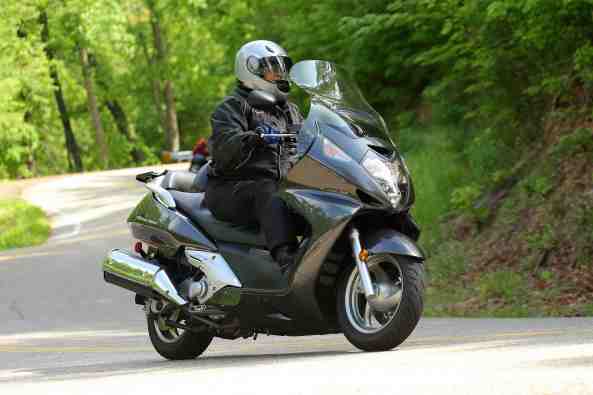
The first WIP is actually one of the most recent, a non-fiction book about motorcycle touring. My first thought was to publish an e-booklet on restaurants in my neck of the woods. Then I thought about creating a blog on motorcycle touring. After a bit more consideration, I asked hubby to read and comment on a manuscript that combines the two topics into one, which is currently at about 7K words. If I go with the original plan, this will be one of a series of short ebooks, which might look like this:

Ride to Eat— in Northeastern Georgia

Ride to Eat— in Western North Carolina

Ride to Eat— in Middle Georgia

As it stands now, the writing part is going fairly well, but I need to add maps, and that is a bit of an issue for an ebook, but I’m still working on it.