Star Wars Episode Seven

After seeing the second Star Trek reboot, all I can say about the new Star Wars is that I have a lot of hope and fear. Hope that it will be worthy of the Episode IV-VI trilogy, and fear that it will be even worse than episodes I and II. I actually kinda liked Episode III.

Harrison Ford looks older than dirt, but I’m not particularly young myself. Of course, any action will fall to the younger cast members, so let’s hope that the writers crafted them well. Abrams can make it look great, but if the writing is bad, nothing can save it.

American Sniper— the book

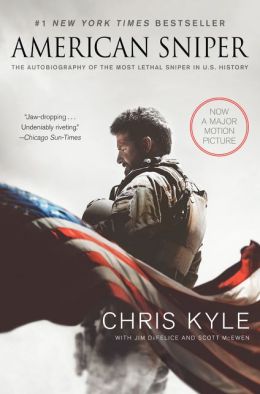
American Sniper by Chris Kyle coverOkay, I admit, I have a tendency to do certain things backwards. Hubby laughs at this one: whenever I pick up a magazine, I thumb through and begin reading somewhere near the back. I sometimes do that with catalogues, too. Why? Because the snazzy pictures are in the front, and the words are in the back. I like words.

American Sniper, the movie, is in theaters in my area of the country as I write this, which means it is the perfect time for Pam to read the book! Chris Kyle’s exploits are apparently quite controversial, based on the reaction to the film, but I did not find it so much controversial as conversational. After I finished, I felt like I has spent a while talking with this Texas cowboy turned Navy Seal, who loved guns and his country enough to go back into a war zone, over and over.

Why is Kyle’s career a controversy? There are those who feel that Americans were invaders in Iraq. Okay, I see that. A little bit, anyway. Any war on foreign soil will have that aspect. And there are those who feel that being a sniper, hiding behind a big rifle with a bigger scope, is a cowardly way to fight. That I don’t get, at all. Guerilla warfare is not new. And, in the war in Iraq, with insurgents attacking government installations and convoys, having a sniper on every tall rooftop made a lot of sense. As he often puts it in the book, Iraq was a “target rich” environment. His recorded number of “kills” is far above any other sniper, and he is matter of fact in explaining that his accomplishment was in part due to being in the thick of things for four deployments.

Kyle’s story, which begins during his childhood in Texas, is entertaining and quintessentially American. When he discusses the war, it is the voice of a military man, explaining what happened from his point of view. Also of interest are brief interludes where his wife, Taya, discusses what was happening from her perspective. This gives the story more depth because modern warfare can happen so far away that the combatant’s home country is isolated from the realities of war. The price paid by the family is made quite real through her observations.

If you haven’t read Kyle’s autobiography, you might want to give it a try. Although it becomes a bit repetitive, because what he did on a day-to-day basis didn’t change all that much, his voice is strong throughout the book, and Chris Kyle was a man’s man in a country that has, by and large, gone soft.

Leonard Nimoy, one of the original stars of Trek, has died

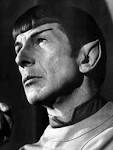
Leonard Nimoy as Spock

Mr. Nimoy, in black and white, for that is how I first saw him, on my parents’ old console television.

That sucks. Really.

He was in poor health, but really, I am feeling loss right now. As a youngster, I enjoyed TOS when it was first telecast, and I enjoyed it even more in re-runs when it was in syndication and I could watch it without any disparaging remarks from my father. (Nothing against dear old J.R. but he liked westerns, and just didn’t realize that Trek was a western, set in outer space.) And, Nimoy’s character, Spock, was just a lot more interesting than Dr. McCoy, Scottie the engineer, or even the feisty Captain Kirk. Lots of girls swooned over the intellectual Mr. Spock, and maybe that was part if the attraction, but I really think it was his brainpower that made me love the character of Spock. During my life, I only dated two young men for any length of time, both of whom had very dark hair and lots of brainpower, and I feel very fortunate to have married one of them!

Anyway, I’m not sure how others will react to Mr. Nimoy’s passing, but for me his death touches my heart even more than the deaths of his co-stars, James Doohan and DeForest Kelley, or even the great bird of the galaxy, Mr. Roddenberry himself. I never met Leonard Nimoy, but I feel as if a long time friend is gone. Since I watched TOS countless times, as well as the movies, I suppose my feeling of loss is logical.

We’ll miss you, Mr. Nimoy!

Nebraska— the film

I’m a fan of Netflix.  As of this writing, the film Nebraska is available on the service. This comedy/drama is rather hard to classify, but I enjoyed it very much. Perhaps it speaks to my life experiences. My father was a widower for a number of years, and as the daughter who lived close by, it was often up to me to take care of his needs. And, people of his generation are just different from ours. Example: I was handed his wallet while he underwent a medical procedure; the darned thing was two inches thick. With nothing else to do while I waited, I thumbed through it. There were many scraps of paper, usually with a phone number scrawled upon each of them. He had a metal plate replica of his social security card! And, there was a “business card” of some executive from the Reader’s Digest Sweepstakes. No kidding.

Okay, you are wondering when I will get around to reviewing Nebraska. Here goes: As the film opens, set in Billings, Montana, an elderly gent is walking on the emergency lane of a multilane highway. A cop pulls over and asks the gent (ably portrayed by Bruce Dern) where he is going, and he merely points ahead of his position. When asked where he came from, he points behind him. All the while, he is still walking. The next scene has his son, Dave, coming to the police station to pick up his father. His father’s destination is Nebraska. Why? Because he has a letter saying he won a million dollars in a sweepstakes, and the letter has to be returned to an address in Nebraska by a certain date. You know, the kind that really exist only to sell magazines.

The father, who seems a bit out of it, apart from his intense desire to get his million dollars, has become a thorn in his mother’s side. So, to give his mom a break, the son feigns illness to get off work, puts his dad in the car, and off to Nebraska they go. Their adventures make up the rest of the film. I’m not going into details, because I don’t want to spoil it, but suffice it to say that the son learns quite a bit about his elderly father on their journey to pick up his million dollar sweepstakes.

Nebraska gets a 92% positive rating on Rotten Tomatoes, which is unusual. So is this film, however. Those who have dealt with parents born during the depression will really appreciate this well acted film.

Coolest cover art

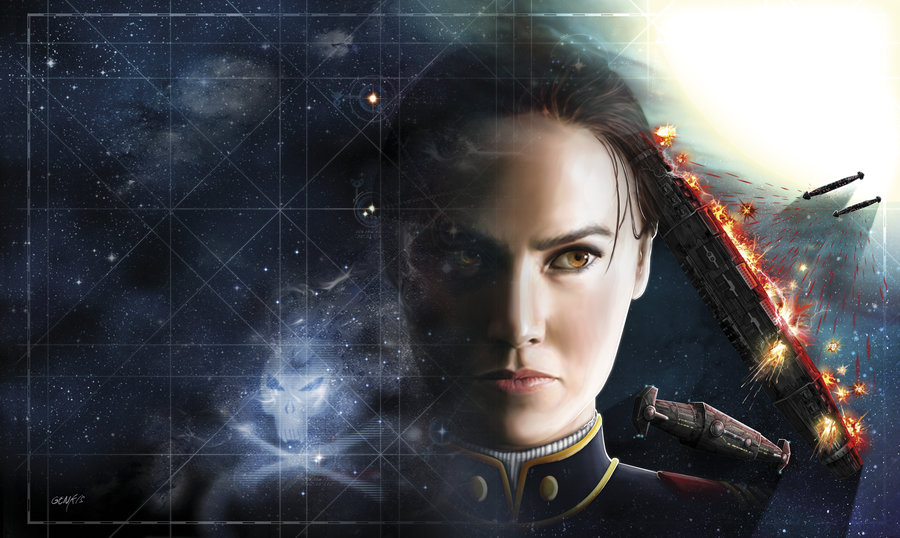
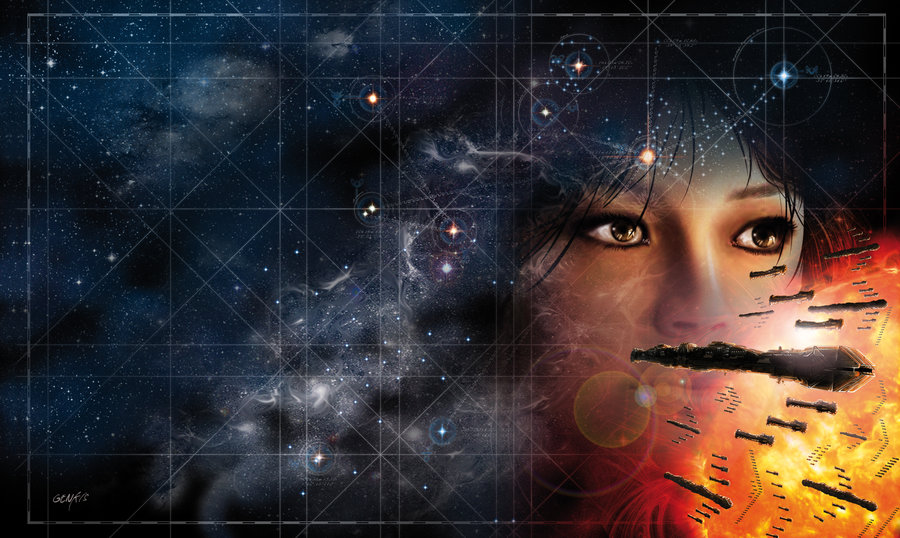
I’ve been looking online for information about the new versions of David Weber’s Honor Harrington novels— there’s a video game, comic books, and a forthcoming movie! While the news is interesting, the art files coming from the comic books are seriously cool. I am looking forward to all of it, especially the film version, because Honor is one of my favorite characters of all time.

But, I saw some cover art files from an artist in Europe who is absolutely nailing the image I have of Honor and her universe in my miid. Wonderful, powerful images. Check this out, HH fans!

honor_among_enemies_2_by_genkkis-d5c6lhm honor_harrington___field_of_dishonor_by_genkkis-d72fwyj honor_harrington_war_of_honor2_by_genkkis-d2mtz6ahonor_harrington_flag_in_exile_by_genkkis-d2mty9d

There are more files, as well as some interesting discussion between fans and the author over at Deviant Art.

Honestly, I am simply blown away by the talent and the skillful interpretation of the artist.

A Brief History of Science Fiction, and why a good title is so important.

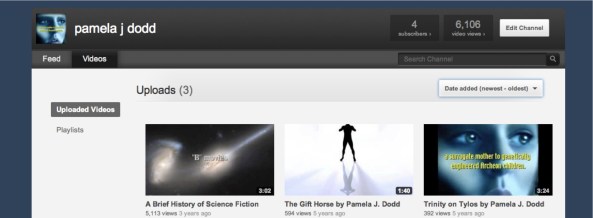
My Youtube Channel has three videos on it, and I created them for marketing purposes, but mostly because I had taken a class in MovieMaker, and I wanted to practice what I learned. As a Mac user, I made them with iMovie, but the programs are similar.

First, I made a video for my then recently published Trinity on Tylos. That title, although I like it, hasn’t been a winner for me. Some people think it is about religion, due to the first word, and it certainly isn’t. I guess I could have titled the book “Love Triangle in Outer Space” but that has even less of a ring to it. Anyway, after five years, the video has only about 500 views. My second video was for my debut novel, The Gift Horse, and since I didn’t have any nifty space images from NASA to use, I spent about $10 on stock images. While The Gift Horse has sold far better than my second novel, the video lags behind.

My third video was my first attempt at three channel video making: In addition to a music track, I recorded myself reading a script. Then I had to put the video together. For me, that was an arduous task, perhaps because so much time had gone by since I took the class. However, this third video needed a title, and I gave the matter about fifteen seconds of thought and used “A Brief History of Science Fiction.” In my mind this is lazy; I obviously adapted the title of Stephen Hawking’s brilliant work, A Brief History of Time. The title proved to be much more successful than the ones I chose for my books, because this video has been viewed over five thousand times. Of course its success may be because it is a bit more ambitious.

I wanted to be succinct, but I also wanted to incorporate much of what I have learned during years of studying literature, as well as my interest in science fiction, and I spent a bit of time on the script. A few months ago, I noticed that my video was cited in an online article on the history of science fiction. I was impressed that anyone would watch the video enough times to be able to quote it.

For anyone who is interested, here is the script, which is close to the recording. I think I skipped a few sentences in order to match the voiceover with the music track, but it is close.

I love science fiction, in print and on the screen. Here is my very brief history of the genre.:

 • Many literary scholars name Mary Shelley’s Frankenstein as the first science fiction novel.

 • Some of Nathanial Hawthorne’s short stories have science fiction thems, especially those which deal with the problems associated with man interfering with nature. The Birthmark, Dr. Heidegger’s Experiment, and Rappaccini’s Daughter all share that cautionary message.

 • British author H. G. Wells and French author Jules Verne gave us turn of the century classics including The War of the Worlds, The Invisible Man, Journey to the Center of the Earth & Twenty Thousand Leagues under the Sea.

 •Edgar Rice Burroughs produced fantasy and adventure, but his Martian settings help form the under-pinings of later space operas.

 During the first half of the twentieth century, several new magazines became the most important venue for scientific fiction writiers. Amazing Stories and Astounding Science Fiction provided the publishing forum for such writers as Isaac Asimov, Robert A. Heinlein, and Arthur C. Clarke. This period is considered to be the beginning of the Golden Age of science fiction.

 While those authors were producing science based fiction, the less than scientific stories seemed more apt to become the basis for Hollywood “B” movies, and such stories as “The Blob” and “The Day the Earth Stood Still” terrified movie audiences during the decade of the 1950’s.

 Despite some serious efforts in the movie world, it took a television show to bring science fiction into the mainstream. Although it lacked a movie sized budget, Star Trek made travel through space seem more plausible than ever before. The govenment run space program of the 1960’s no doubt helped lend some plausibility to the journeys of the Enterprise, but Trek creator Gene Roddenberry’s futuristic vision entranced a generation.

 While science fiction began to flourish on the screen, in print, it became increasingly channeled into separate genres, with “hard” and “soft” science fiction being the over-arching labels. Works which kept science and the scientific method at the forefront became known as hard science fiction, but stories which concentrated on the human reaction to advancing technology became known as soft science fiction.

 In the following decade, George Lucas kicked space opera into box office bucks with Star Wars. Authur C. Clarke’s 2001 A Space Odyssey and the book based upon it exemplfy the integration of the best of hard and soft science fiction, while the Battlestar Galactica, followed the more popular trend of space operas making the move to the small screen.

 In the past two decades, many of the box office champions have owed much to science fiction. Print publishers have not been able to replicate the success of the movie studios, but science fiction contines to thrive, especially with smaller presses. My own novel, Trinity on Tylos, owes quite a lot to the great writers who created the genre known as science fiction.