Halt and Catch Fire—a series to catch on Netflix

As we aren’t “cable” subscribers, sometimes we miss a show that was commissioned for a network. Halt and Catch Fire is such a series, as it was originally shown on AMC. Honestly, the title is so weird that I would have never given it a thought, but one of those “Best things to watch on Netflix” lists gave it a good review, so hubby and I decided to give it a go.

Of late, it has been our favorite binge-watch. Usually, I wait until finishing a series before reviewing it, but Halt and Catch Fire ran for four seasons, and we are mostly through season three, so it’s time to let y’all in on this excellent period drama.

First off, the title has something to do with writing computer code, but I don’t remember what it means (and it probably doesn’t matter). I like computers; I’m typing on a MacBook Pro right now! This show is about the computer revolution, and how you view it might depend upon your age. If you are younger, this show will be a bit historical. But, if you are a somewhat chronologically gifted, you probably remember the first computers. As a classroom teacher, I remember begging to put computers into my classroom so we could edit copy for the yearbook. Back in the 80s, editorial changes for typewritten copy were costing us hundeds of dollars per year, so I managed to get a couple of surplus Apple IIe computers. They had green flashing characters and those big floppy drives, but they saved us some dough and were my intro into the modern age of publishing. Then I got a Mac SE that used smaller disks. That little machine was bequeathed to use from an administrator who felt some pity for the plebes in the classroom, and it was so different that I took it home over the summer to learn how to use it. I digress, but the 80s is the era where HACF begins.

The characters who come together in the first episode represent various aspects of the nascent computer business. In season one, the show is set in Texas (the Silicon Plain) but the group moves to Silicon Valley in later seasons. Joe is the super salesman who cut his teeth at IBM and wants to create a better personal computer. Gordon is an engineer who already made a better computer, but since the machine failed, he’s slogging along at Cardiff Electric, a company that produces software for mainframes and tries to compete with IBM. His wife, Donna, is a brilliant computer developer who is relegated to support work at the Texas Instruments learning division, because she and Gordon need to feed their family. The catalyst for change is Cameron, a female college drop out who writes code better than Shakespeare wrote plays. Cameron is recruited by Joe to come to work at Cardiff Electric, where he’s a recent hire. The company manager, John Bosworth (Boz), is just trying to make the owner happy and is baffled by the changes that are coming to the company as these players all work together to build a better computer.

This show is well-written and well-acted by the ensemble cast. As I wrote that summary, it sounds a bit boring. Not! While there are a few technical aspects that are necessary in a show about the informational technology revolution, this is a show about people—their hopes, their ambitions, as well as success and failure of people and businesses. The series is a blast from the past in terms of technology, but seeing how these fictional characters helped create the computers that we tend to take for granted is both entertaining and compelling.

If you didn’t watch Halt and Catch Fire the first time, catch it on Netflix before it goes away!
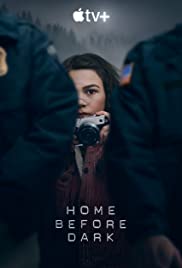
Home Before Dark—television for October or any time you want a mystery

After buying a new iPad, I got a freebie subscription to AppleTV and we’ve watched a couple of good things. However, my husband and I were both surprised by the appeal of “Home Before Dark,” which has a description that sounds a lot like Harriet the Spy blended with a modern gothic mystery. The first episode shows promise, but by the third, we were in “gotta see more” mode. Series television shows often have difficulty maintaining suspense, but this one does a darned good job of it.

Basically, the story follows an investigative reporter in New York, who has lost his job, and moves his family back to his hometown (and home) because his dad has had to move to a facility due to illness. As the family is in some financial distress, they have come to this small town because the house is free. The wife is a former public defender, and the couple has three daughters. The middle daughter has always wanted to be just like her dad, and she likes to carry a notebook and ask a lot of pointed questions. Before long, this daughter has found a cold case that dates back to her dad’s childhood, solved at the time by convicting a scapegoat whom the child comes to believe as innocent, and she emulates her dad by asking lots and lots of questions.

While I don’t want to spoil the story for potential viewers, suffice it to say that dad and mom get drawn into the investigation, while the older and younger daughters suffer the consequences of the backlash which comes from the townspeople, who don’t welcome the revival of interest in the case, which gets hotter with each episode.

Home Before Dark isn’t a show for kids, although older ones might enjoy the story, despite the nine year old point of view character. The script, the acting, and the setting are all top drawer, so ignore the “kiddy show” description, and enjoy a very good mystery leading up to Halloween!

The Night Manager (television series)—a brief review and commentary

managerOften, the best stories begin as, well, stories. Before The Wizard of Oz was a groundbreaking film, it was a book by L. Frank Baum. Before 2001 A Space Odyssey was an influential science fiction film, it was a book by Arthur C. Clarke. Television series have also been book based, including such diverse stories as Little House on the Prairie, based on a series of books by Laura Ingles Wilder, and Game of Thrones, which was based on a series of books by George R. R. Martin. There are literally dozens of others, but I’m going to discuss one that you might have missed: The Night Manager, based on a book by John Le Carré. A friend recommended this six part series, and we usually enjoy the same sorts of stories.
The Night Manager is currently on a streaming service offered by a large online reseller, the one that starts with an A. Originally, however, the series was made for British television and shown in the states on AMC. As I don’t subscribe to cable, I missed it there, but my hubby and I saw this winner of three Golden Globe awards recently. The plot, although updated a bit from the 1993 novel, is intricate enough to puzzle, but not nearly as confusing as modern teleplays tend to be. The direction is subtle but sure. The acting is simply outstanding, with a star cast including Hugh Laurie (who starred eight seasons in House M. D.) and Olivia Coleman (who dons The Crown in seasons 3 and 4 over on Netflix.) The main character is brought to life by Tom Hiddleston, who has several Marvel movies as well as a video game in his resumé. This series was rather expensive to make, by BBC standards anyway, and was filmed in Egypt, Morocco, Spain, Switzerland, Turkey, and the United Kingdom.

Here’s a bit of plot summary: A former soldier for the British army, Jonathan Pine, is portrayed as the night manager of a Cairo hotel as the story begins. He gets involved with a mysterious guest who is the girlfriend of a local gangster. Through her relationship with the gangster she has acquired information linking illegal international arms sales with Richard Roper (Hugh Laurie), an English billionaire. Just after leaking information regarding the illegal arms, she is found murdered.

(Minor spoilers ahead)

Fearing for his own life, Pine flees, and is next seen, a few years later, doing the same job at a remote hotel in Switzerland. When super villain Roper visits the Swiss hotel, Pine longs to have some revenge, and soon he is enlisted by British Intelligence to spy on Roper. Before long, he has a new identity and an opportunity to infiltrate the small network of arms dealing. Getting information out, while staying alive and undercover is quite a challenge.

One reviewer called it a “classy thriller.” That nails it, but do check out this amazing bingeable series.

The Functional. Fragment. Celebrated. Or reviled.

ARC5Claimed (which may or may not also have the title of Rescued) came to me as an advanced review copy (ARC) which I read recently for a review site. Actually, I am glad to have the opportunity to review again, as it has been quite a while since I’ve done this. Most such sites really want a positive review, and I have written one. My comments for the site are true but censored a bit. What you’ll read here is more genuine.

First of all, sometimes minor mistakes are in an ARC, and I certainly understand that. The author used “fussed” for “fussy” for instance. That’s the kind of minor mistake that should be corrected before the final book is published. This book is a science fiction romance, with the emphasis on romance. For me, science fiction should have a bit science, but in Claimed/Rescued there aren’t many science fiction elements, apart from characters (lots of aliens) setting (a spaceship and a space station) and plot (alien abduction.) Apart from vivid descriptions of aliens, the other elements are not especially detailed.

Romance comes in several flavors these days, from very hot (nearly pornographic) to sweet (think Amish stories that talk about feelings rather than body parts.) Claimed/Rescued is skewed well on the sexy side of the continuum. For those who read romance for vicarious sex, this novel is a winner. From a science fiction standpoint, this yarn disappoints a bit. Okay, I don’t have to know how the ship goes or how the remote control on her wicked slave collar works, but a little more detail concerning the gadgets would be welcome. The most sci fi part of the book is the afore mentioned vast array of aliens, and those are described in varying levels of detail.

For me, the most annoying aspect of the book was the author’s reliance upon the “functional fragment.” Of course, lots of dialogue depends on the functional fragment. Think about one side of a phone conversation:

“Hey!”

“Oh yeah.”

“Really?”

“No kiddin’!”

I have no problem with the construction in that context. But. This author. Tends to write. Like. This. The words shared in this manner tend to be feelings or observations, such as “Handsome.” “Kindness.” “To Bond.” “To become as one.” “Tenderness.” “Aroused.” “Stay strong.” “Traumatized.” “Wary.” “Forever.” Y’all, I just listed a few of the functional fragments. Every once in a while, this could be an effective technique, but Claimed/Rescued is far too reliant upon these pseudo sentences.

No doubt Claimed/Rescued will be published, and there will be enough positive reviews that some science fiction romance fans will read it. And, those who want to experience sex vicariously may well enjoy it. But. All I seem to remember. Are. Those. Fragments.

The editors are children

Screen Shot 2020-06-16 at 3.01.40 PM

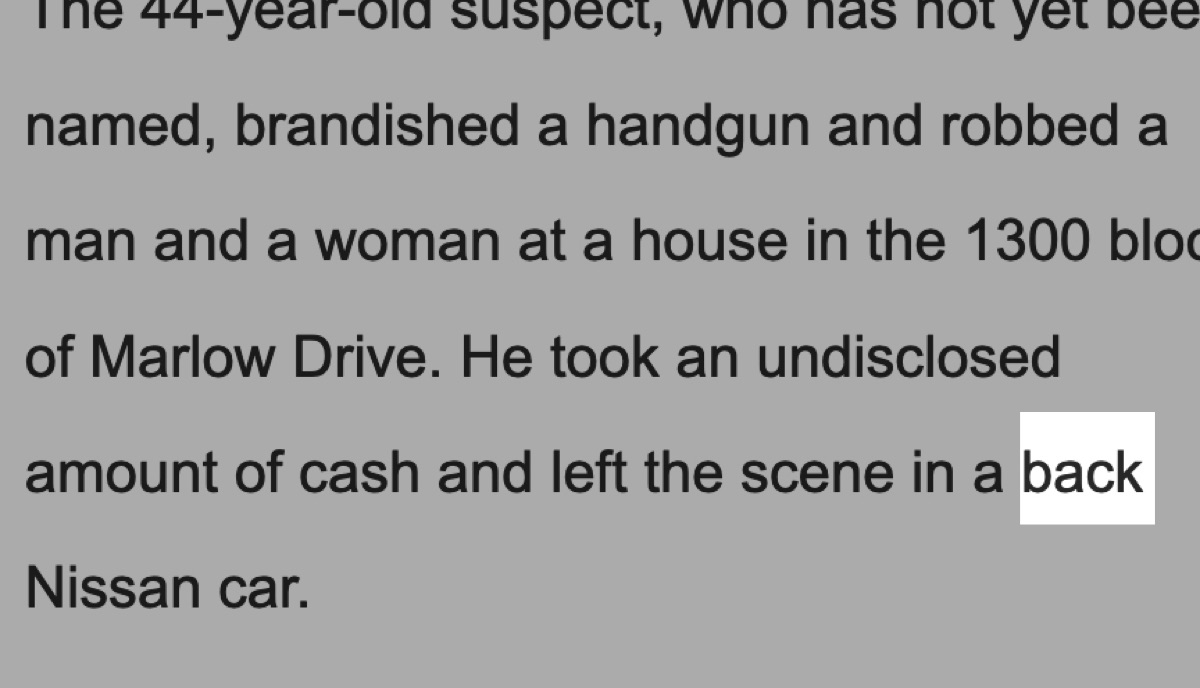
The other day, I wondered aloud why writing is so bad these days. My young adult son scoffed and informed me that he went to school with some of the staff at the news outlet that posted the story above. He didn’t view these fellow students as the best or brightest, obviously.

My sister, a media professional, informed me that these days, editors (and program directors) are more interested in how many hits an item gets on YouTube or Twitter than how well written or researched an item might be.

Considering the power our nation gives the media, it is scary how low the bar is set for those who write, edit, and direct what the rest of us consume.

Oh, and look out for the back Nissan.


Here’s another one:

Screen Shot 2020-06-16 at 6.31.04 PM

That’s from a site with a big budget, but again, there’s not much editing going on.

For All Mankind—on Apple TV

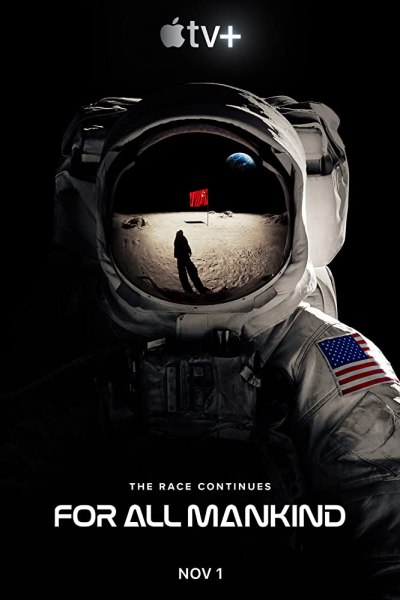
MankindWith the purchase of a new device from Apple comes a free subscription to their relatively new paid streaming platform. As hubby and I are often seeking a new television series to binge watch, we just finished For All Mankind on the Apple platform, and overall, we liked it quite a lot. However, I read several reviews, with criticisms being at least as numerous as the accolades, and often both are well deserved. The series was developed in part by Ronald D. Moore, who has a stellar (pun intended) reputation for writing and producing excellent science fiction, from Star Trek the Next Generation to Outlander, and with the simply superb reboot of Battlestar Galactica in between.

The scenario is quite promising: In an alternate history, the Soviet Union beats the United States to be the first nation to put a man on the moon, and the growing rivalry between nations causes the space program of the United States to flourish, rather than founder. Neither our citizens nor our politicians like being second best, so the need to catch up and surpass drives the plot. As an alternate history, many of the characters are based upon real people, but quite a few characters are inventions. Even those who are based upon real people have different adventures (or mis-adventures) due to the fictional nature of the series. The acting is good, as is the writing. The effects are very good, also. The sets, props, and costumes are really amazing—it’s truly a back to the 60s look. So far, so good.

But, as many negative reviewers have noted, the series is typical of our “social justice” modern agenda. Immigration, same sex relationships, race relations, and feminism are more than just sub-plots in this re-imagining of the space race. Each of these social justice themes has a story arc devoted to it, and these themes are every bit as strong as the “what if America had continued to send people to the moon?” theme that is the advertised plot line.

Alas, any subtle use of themes is no more. This alternate history is very good, but the social justice warriors are using a sledge hammer to right perceived wrongs. For All Mankind is just like many modern day productions in that regard. What could have been A+ for Apple’s streaming service is instead closer to a B-.

If you have Apple TV, check it out. If you don’t, I wouldn’t buy it for this series alone.