A review I didn’t write

Review of The Art of Star Trek by Judith Reeves-Stevens and Garfield Reeves-Stevens

The Art of Star Trek is an expansive, visually rich tribute to one of the most iconic science fiction franchises in television and film history. Authored by Judith and Garfield Reeves-Stevens—veterans in the Star Trek literary universe—the book is both a meticulously researched chronicle and a celebration of the franchise’s visual imagination. Originally published in 1995, it captures the essence of Star Trek from The Original Series up to the early days of Deep Space Nine and Voyager, offering a deep dive into the creative process behind its legendary design work.

Content & Structure

The book is organized chronologically, walking readers through the development of each series and film, and highlighting the evolution of Starfleet’s aesthetic—from the colorful minimalism of the original USS Enterprise to the more militaristic tones of The Next Generation and Deep Space Nine. It covers not only starship and costume design but also alien worlds, species, props, matte paintings, and behind-the-scenes concept art.

What makes The Art of Star Trek stand out is its generous use of images—over 600 illustrations, including concept sketches, set designs, production photos, and storyboards. Many of these had not been widely published before, giving fans a rare glimpse into the franchise’s visual development.

Insights & Analysis

The authors provide thoughtful commentary throughout, not just presenting the art but contextualizing it within the creative and production challenges of each era. Interviews with production designers, concept artists, and series creators add depth, explaining how design choices supported storytelling themes, budget constraints, or advances in technology. There’s also insightful discussion about how the look and feel of the franchise shifted to reflect changing cultural attitudes, from the optimistic idealism of the 1960s to the more complex and politically nuanced narratives of the 1990s.

Strengths

  • Comprehensive Scope: Covers nearly three decades of design work across TV and film.
  • Rare Artwork: Features a treasure trove of previously unpublished art and design materials.
  • Historical Value: Serves as an excellent reference for both casual fans and serious scholars of media design or science fiction.

Limitations

  • Cutoff Point: As it was published in 1995, it doesn’t include Enterprise, the reboot films, DiscoveryPicard, or any modern Star Trek series.
  • Print Quality (in some editions): Some readers have noted that certain editions could benefit from higher-resolution image reproduction.

Final Verdict

The Art of Star Trek is a must-have for any serious Trekkie or fan of cinematic design. It not only honors the visual legacy of the franchise but also captures the spirit of exploration, creativity, and vision that defines Star Trek. Even decades after its publication, it remains a definitive guide to how imagination was translated into one of science fiction’s most enduring worlds.

Rating: 9/10
A stunning archive and a passionate tribute, though in need of a sequel to cover the post-1995 era.

This is the book, which I read and enjoyed. Just for fun, I asked ChatGPT to write a review, and the text above is what it generated. While I don’t gush quite as much as the AI, mostly I agree with the review. For fans of the older television shows, there could be a bit more details. For fans of the full length features, the content is better. And, as it was published about the time Voyager was getting started, there is certainly plenty of art that must be found elsewhere. My rating would probably be more like a 7, if I were to give ratings up to 10. Still, seeing what the AI generated was so entertaining that I decided to share.
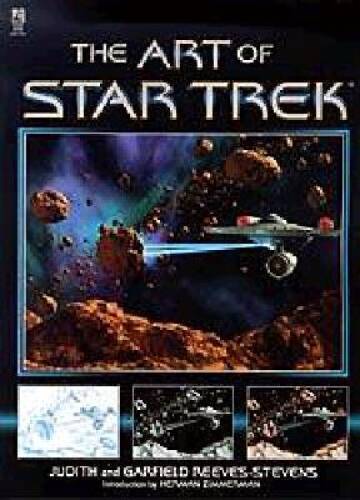

Cover of The Art of Star Trek, book

When All Bleeding Stops—a brief review

All Bleeding Stops is a mostly autobiographical book written by an experienced trauma surgeon, Stephen M. Cohn. During the course of the book, the reader learns how a trauma surgeon differs from other surgeons, how being a military doctor influenced the author, and quite a bit about the different ways that people end up in an emergency room. Chapter titles include “What Exactly is a Trauma Surgeon” and “Dealing with the Worst Injuries” which are the main focus of the book, but the author also has chapters on “Preventing Injuries” and “Managing the Public” which includes the author being involved in a high profile case.

I chose this title, in part, due to a mishap wherein I ended up in an ER and had orthopedic surgery. As Dr. Cohn says, patients choose elective surgeons and develop a bit of a relationship prior to their procedure, but in an emergency, whoever is on call becomes the doctor. I certainly didn’t choose the guy who rebuilt my shoulder, as I certainly didn’t plan to break it into four pieces! Anyway, I identified with some of the patients described in this book.

While I’d like to say this is a five star read, the not-so-linear organization takes it down a notch for me. That said, I really enjoyed this book, as it provides many anecdotal stories about trauma surgery, not only those performed by the author, but also those he heard about from colleagues. Many of the cases described survive, but there are those who don’t make it, and there is a certain dispassionate tone in this narrative. That’s not intended as criticism, but an acknowledgement that doctors who deal with trauma must maintain some distance in order to remain sane.

Again, I enjoyed reading this book, and for those who want to know more about how lives are saved and people put back together after terrible trauma, this book is quite enlightening.

The Making of Star Trek by Stephen E. Whitfield—a retro review

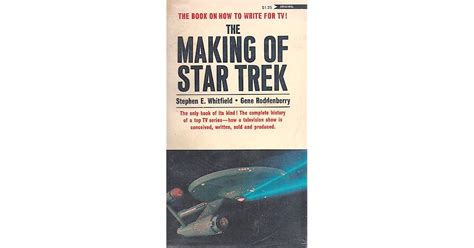
Way long time ago, I borrowed a copy of The Making of Star Trek from a friend. After watching some episodes of The Original Series (TOS) on Pluto TV, I remembered the book, so I ordered a vintage paperback via eBay. Once I had it in hand, I could revisit a wonderful read, as well as wallow in some insider info once again. First printed in 1968, this book is both a history of Star Trek, with quite a few photos, and a “how to” guide to creating, producing, and writing a television series. However, as the book was written as the series was coming to a close, the legacy and cultural significance of Star Trek were not yet known to Whitfield (or Gene Roddenberry, who is listed as a co-author.) For more casual fans, there are other sources, from videos to more focused books.

When a ground breaking television series is created, there are thousand decisions to be made. From character names to methods of propulsion, this volume covers in detail how many of the concepts that make Star Trek work were developed, some visionary, such as the multi-cultural crew (unheard of in the mid-sixties) while others were merely practical, such as the “transporter” which was necessary as it would slow down the action if every port of call required a shuttle craft excursion (or worse, landing a huge space ship.) Within these pages are excerpts from memos to and from ST creator Roddenberry, quotes from NASA consultants, and preliminary sketches of possible ship configurations.

As this book was written alongside the filming of the series, there are glimpses of who wrote (and re-wrote) scripts, which actors were cast, and how the characters evolved. Letters from some of the actors, with insights into how their characters were to be portrayed, are included. Loosely organized chronologically, but with sections on such topics as “weaponry” and “the bad guys,” the reader sees how items familiar to TOS fans were developed over time.

Previously, I wrote a bit about a tour of The Neutral Zone Studios, where Star Trek Continues was filmed, and where fan films are still made. Our tour included some of the information in this book, but quite a bit of it was different, as the guides took a more hands on approach. Anyone planning a trip there might well read The Making of Star Trek prior to taking the tour. While the book does compliment Gene Roddenberry’s creative genius, many people helped create this vision of the future. Some of it has come to fruition (think folding cell phones) and some might never (Warp drive), but the influence that this one television series, which most deemed a failure when it ceased production, is difficult to minimize.

The Making of Star Trek is no longer in print, so it does require a bit of searching, but for fans, it is worth the effort.

The Neutral Zone Studios

Hubby and I decided to visit “The Neutral Zone” studios on one of their almost monthly fan appreciation weekends recently. Also, since these sets are rented out, the only time to see them is during scheduled events, so certainly see the calendar on the website prior to planning a visit.

The facility is actually a warehouse in Kingsland, Georgia, where the web series Star Trek Continues was filmed. The sets occupy a space just under 10,000 square feet, which is small by Hollywood standards, but the sets include many of the areas which would have been used on the original Star Trek series. While the original sets were destroyed more than fifty years ago, the blueprints are available, as are screen shots from the original series. The sets at The Neutral Zone were constructed over more than a year, then used for a while by the makers of Star Trek Continues. When CBS/Paramount decided to reboot Star Trek (making such series as DiscoveryPicard, and Prodigy) they basically told the folks making Star Trek Continues to wrap it up, so the sets became available for fan films. Indeed, it is possible to rent The Neutral Zone for an event or to make your own film, as long as the script meets the restrictions put in place by CBS.

The set visit begins with a guided tour. We began our tour with Ray Tesi, who currently owns the sets and manages the studio, then Vic Micnogna, who was the visionary behind Star Trek Continues, took over. Vic also plays Captain Kirk in the series, and if you haven’t seen it and are a fan, you really should take a look at the eleven full length episodes. Ray began with some background, then took us to engineering, then just across the entryway to the main ship, which is arranged in a circle, just like TOS. We visited sick bay, the briefing room, Captain’s quarters, the transporter room, auxiliary control, the Jeffries tube and brig, and the big finale is the bridge set. The guide(s) explained how the sets were built originally, and how the sets might be used in filming now. For instance, the Captain’s quarters, with a bit of redressing, can be any crew member’s quarters.

After the tour, with a bit of flexibility to avoid the next tour, attendees are welcome to take pictures. Just imagine, you, too can be pictured standing in the transporter room or on the bridge, either at the helm or even in the captain’s chair. We also purchased the entire series on DVD, and as Vic was there, he autographed the case for us.

Star Trek, even for non-fans, is a bit of a cultural phenomenon. Who doesn’t know such phrases as “Beem me up, Scotty?” For non-fans, The Neutral Zone is probably not a tourist destination, but for the thousands upon thousands of those who are fans of the original Star Trek series, the set tour is an amazing experience. I urge travelers to take a look at the websites for both The Neutral Zone and Star Trek Continues for a bit of research prior to scheduling a trip. As a fans of all vintage Star Trek series, including Star Trek Continues, this was a “must see” for us, and it did not disappoint.

The Sound of Music Companion by Laurence Maslon— a brief review

Since I was quite young, I have loved this musical, as have many other people. I’ve owned the sound track in various forms, as well has having first a VHS then a DVD of the film. However, recently I read a short but glowing recommendation for this volume, so off to eBay I go, and low and behold, I got the book in a box with yet another DVD and sound track CD. Sweet!

This is what I’d call a “coffee table” book in size, but the content is a bit more than some such books. The forward is by Andrew Lloyd Webber, who was engaged in putting on a revival of The Sound of Music for the stage in London around the same time as this book (2006) but the book itself begins with the story of Maria von Trapp, the subject of a couple of books prior to her story being turned into the now famous musical.

For those of us who discovered the story via the 1966 movie, the musical actually begins a bit earlier, as a Broadway vehicle for Mary Martin. The music was done by Rogers and Hammerstein, of course, and the book takes the reader through much of the creative process, with photos of notes and typewritten song lists, as well as pictures from the Broadway and traveling productions. There is quite a bit of detail regarding the modifications done as the play was transformed into the movie. Fans of the film will know much of the content, no doubt, but there are nuggets of information which should prove interesting for even well-read aficionados, and there are quite a number of pictures taken during the lengthy location filming in and around Saltzburg.

There’s a bit of information regarding the careers of the “children” in the film, and a couple of pictures showing them all grown up. However, the book doesn’t end there. As this play is still being performed in various venues, there is some detail regarding its continued success. The last section is a fairly detailed recount of the revival done by Lloyd Webber’s production company.

When it comes to these photo centric books, sometimes one thumbs through, reading the captions, and that’s that. With this book, I read it, all in a couple of days. While it was not suspenseful, it was interesting and kept my attention from the forward to the credits. That’s rare for me. So, for fans of the film, it a top pick. For those interested in how a feature film is developed, it is also of more than passing interest. And, as it is no longer new, it is quite affordable, too. Win-win!

Shaken (Quake Runner Book 1) by Kevin Tumlinson— brief review and commentary

This is a pretty good novel. The main character, Alex Kayne, is sassy, super smart, and just vulnerable enough to avoid the “heroine can’t die” syndrome that afflicts almost all comic book super hero characters, or Lara Croft (heroine of the Tomb Raider games/films). Alex is a fugitive computer whiz who needs something to do as she hides from all the forces who want to either kill her or “bring her to justice”, so she kinda does her version of “The Equalizer” in that she helps people who have a specific need. The needy person in Shaken is a surfer/marine biologist named Abbey, who lost an arm to an encounter with a shark. Abbey received a prototype bionic arm, in part due to her high profile injury, and someone stole it. The arm and it’s charger, gone. Who the heck steals a limb from an amputee? (Literate folks might respond with another story, “Good Country People” by Flannery O’Conner, but I digress.)

So, we have Alex Kayne, who manages to change her appearance, her lodging, her cell phone, and her method of transportation more frequently than anyone in any spy novel I’ve ever read. In this book, she is mostly hiding out in Disney World. Other characters include Eric Symon, the FBI agent who nearly nabs fugitive Alex, Abbey who needs her arm back, and a cast of suspects or villains, depending on how the mystery unfolds. The action in this novel is well told, and not quite believable, but that’s part of the fun of it all.

Readers who enjoy puzzles and/or action heroines and want to be entertained for an evening (or two) should try Shaken (Quake Runner Book 1.)

Now, for the commentary. This was my first book by Kevin Tumlinson, but I certainly intend to try another. At the end of this book there’s a note wherein the author explains that he didn’t plan to self-publish this novel, intending to put it in the hands of an agent. However, he thought better of it and put it into his self-publishing stable of products. For many authors (yours truly included) self-publishing is better, due to control of the process and potential financial gain. That decision is understandable, but when the author said he wrote the book in roughly 15 days, I was shocked. Shocked.

Y’all, fifteen days is like two weeks. I can’t edit a book in two weeks, much less go from beginning to end. Wow. I had a whole new perspective on the novel after that. I thought it was a good, if not spectacular read, with very few errors. However, the very idea that such a book could be dreamed up and written in such a short time is simply hard to believe. However, as the author of Ecclesiastes says, “There is no new thing under the sun.” Shaken is a bit like that, in that the elements in the story have been used before, but perhaps not in precisely this manner. The author’s website is a feast for those who want to know more about marketing and branding, especially marketing self-published novels. Clearly, Tumlinson is not just prolific, but also understands how to get the product to customers, too.