Trinity on Tylos, Mulberry River Publishing edition

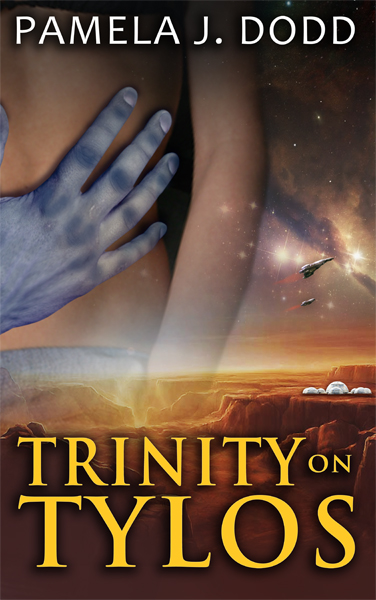
ToT_cover_final_webLGAfter six years with the original publisher, Trinity on Tylos is going to be available in a new edition, via Amazon’s Kindle store.  I’ve priced it at $2.99, the same price as my debut novel, The Gift Horse. For this new version, I went through a copy of the eBook and made every effort to eliminate some of the errors in the original. However, there are no substantial changes, as I was fairly content with it, apart from the proofreading, which was a problem with the original publisher.

The new cover was designed by Dawn Seewer, who did the cover for The Gift Horse. The background depicts the landscape of Tylos IV, with the ships in the sky. The models in the foreground are Venice and Azareel, and I think the artist did a good job. A few of the readers of the original printed novel told me that the cover didn’t really convey the serious nature of the novel, so I hope that this new cover touches the bases.

For those who haven’t read it, here is the original synopsis that I used when shopping the manuscript:

What sacrifices must an officer make to save her shipmates from certain doom? Venice Dylenski, the young security chief of the colonizing ship, Excalibur, is faced with this dilemma after her captain makes a critical error in judgement in an encounter with an alien with superior fire power and a hidden agenda.

Trinity on Tylos begins as Venice experiences an embarrassing moment on a survey mission, one which rules out yet another planet as a hospitable home for their colony. While continuing its search, the Excalibur encounters the Archeons, an alien race characterized by gray-blue skin and a facility for language. The interchange results in Venice and a crewmate, Alathea Duke, being taken captive by the mysterious Archeon captain, Azareel. In short order, he informs them that they will play a critical role in revitalizing his dying race, that of surrogate mothers to genetically engineered Archeon offspring.

Venice, reluctant “to be the next Archeon soccer mom,” strives to escape, but her companion seems all too willing to cooperate with their captor. Thus the stage is set for multiple conflicts between human and Archeon, human and human, and humanoids verses the hostile environment of their new planetary home in the Tylos star system.

Trinity on Tylos has the elements of a good space opera: complex characters faced with myriad problems to solve, set in a future where man may have escaped the bounds of his solar system, but not the bonds of human emotions.

Poor Man’s Fight— a review

While there are any number of space operas available via eBook, I enjoyed Poor Man’s Fight by Elliot Kay quite a bit. The formula is perhaps too much tried and true—yet another coming of age in the military story, but I thought the premise that sets the hero upon his path more thoughtful than many others. Our protagonist, Tanner Malone, is a good student and a nice guy; he’s about to graduate from secondary school. But, in this futuristic yarn, those who perform in a less than exemplary manner on a gi-normous one day test are going to owe a private corporation for their education. Tanner, upset by his dad’s bombshell that he and stepmom are moving off planet leaving him to be “on his own,” doesn’t do particularly well on the test. Owing several grand, Tanner does what any red blooded male teen would do—he consults a girl. (I speak from experience, as the mother of a young adult male.) Anyway, this young lady suggests that he enlist, so that the military will provide him with a home and a job, and that will enable him to begin to pay off the massive debt of his education. In short order, without consulting dad or stepmom, Tanner enlists.

Some other reviewers mentioned that the book’s set up wasn’t plausible. In a day when student loan debt is at all time highs, I actually thought the scenario of a teen trying to deal with crushing debt was the most realistic part of the story!

However, once Tanner gets into basic training, the action keeps readers entertained. His training is related in some detail, but, eventually, he graduates. Having dispensed with roughly half the novel, the author has to create a military disaster pretty quickly, so the hero has a chance to be heroic. I know, that sounds sarcastic, but it isn’t meant to be. By and large, heros are ordinary folks placed in extraordinary circumstances, and that’s what we have here. There’s plenty of heroism during the last third of the book.

Honestly, Poor Man’s Fight cost me some sleep. I just couldn’t wait to see how Tanner’s intense military training saved him (and lots of others) from the incompetence of his fellow navy types, as they are facing some really dastardly villains. And, once the last big scene began to unfold, the suspense ramped up even higher. I was not disappointed. Not at all.

So, if you like space opera, coming of age stories, or just a suspense filled yarn, try Poor Man’s Fight. It’s a bargain!

Going, going, almost gone

TrinitycoversmThe Whiskey Creek Press version of Trinity on Tylos is about to become a bit of a collector’s item. When it was first published, I was mostly pleased, although the final edits were rushed and far too many mistakes made it into the print copy. The paperback was not of the best quality, either. The ebook, at least the one I got from the now defunct Fictionwise, was far worse. What few royalty reports I received indicated low sales, and even lower royalties. At one point, I was getting seventeen cents per ebook sale, and a typical quarterly check was about five bucks.

When the book came out, in 2006, I sought out speaking engagements, author-guest slots at science fiction conventions, and I did quite a bit of internet promotional activity, hoping to help Trinity find an audience, and to do my part to help sell the book for WCP. By 2007, I realized that the sales were not going be as good as my self-published debut novel, so I spent far less time promoting it. But, WCP continued to be a disappointment, too. Just to get Amazon to list it, WCP required that I purchase two copies at full price; then, initially, the title was misspelled on Amazon’s website. Eventually, the print book was listed correctly, and I did have a couple of very good reviews on Amazon, as well as several from other sources. When Amazon’s Kindle format began to take on increasing importance, WCP indicated that eventually all of their titles would be available for the Kindle. While Trinity on Tylos was available for the Nook, it was never converted to Kindle format. My original contract was for two years, but I did not ask for my rights back, in part because I hoped WCP would eventually pay me more royalties, and that they would support the book. And, to be honest, I was very busy with my adjunct instructor job, as well as being mom to teenagers, so I didn’t push either promotion or accountability from WCP.

After years and years of zero communications regarding sales, I can only conclude that either there were no sales or WCP kept all of the royalties. I will never know which. I’ve maintained a website, with promotional materials, links to vendors, and so forth, at my expense, and I finally came to the conclusion that WCP was never going to pay me anything ever again. Anyway, I did ask to have my rights back at the end of last year, via email, and there was no response. I asked again recently, via snail mail, and while I still have not heard a word from WCP, I noticed today that Trinity on Tylos is no longer listed for sale by Whiskey Creek Press nor by Barnes and Noble. Amazon still has it for sale, but they list the one lonely copy, and I do remember that I paid for it in 2006. I’ll bet it is quite shopworn by now!

Fellow WCP authors are in a bit of an uproar, because WCP has been sold to a New York firm, Start Media. Some of those other authors have suggested that I self-publish it, as they are doing with their own books, and I have talked with Booklocker about doing the formatting and cover. Since I don’t have a clean copy of the manuscript, I’ll be doing some editing before doing anything else.

In the meantime, Whiskey Creek Press is going, going, soon to be gone. Various interent sites have chronicled the demise of this small press, and much of the dirt is recorded here. For whatever reasons, I’m sad, which is illogical, because the publisher hasn’t been paying me or even bothering to respond to email. And there is little solace in knowing that I am not the only author that they deemed not worth a simple email.

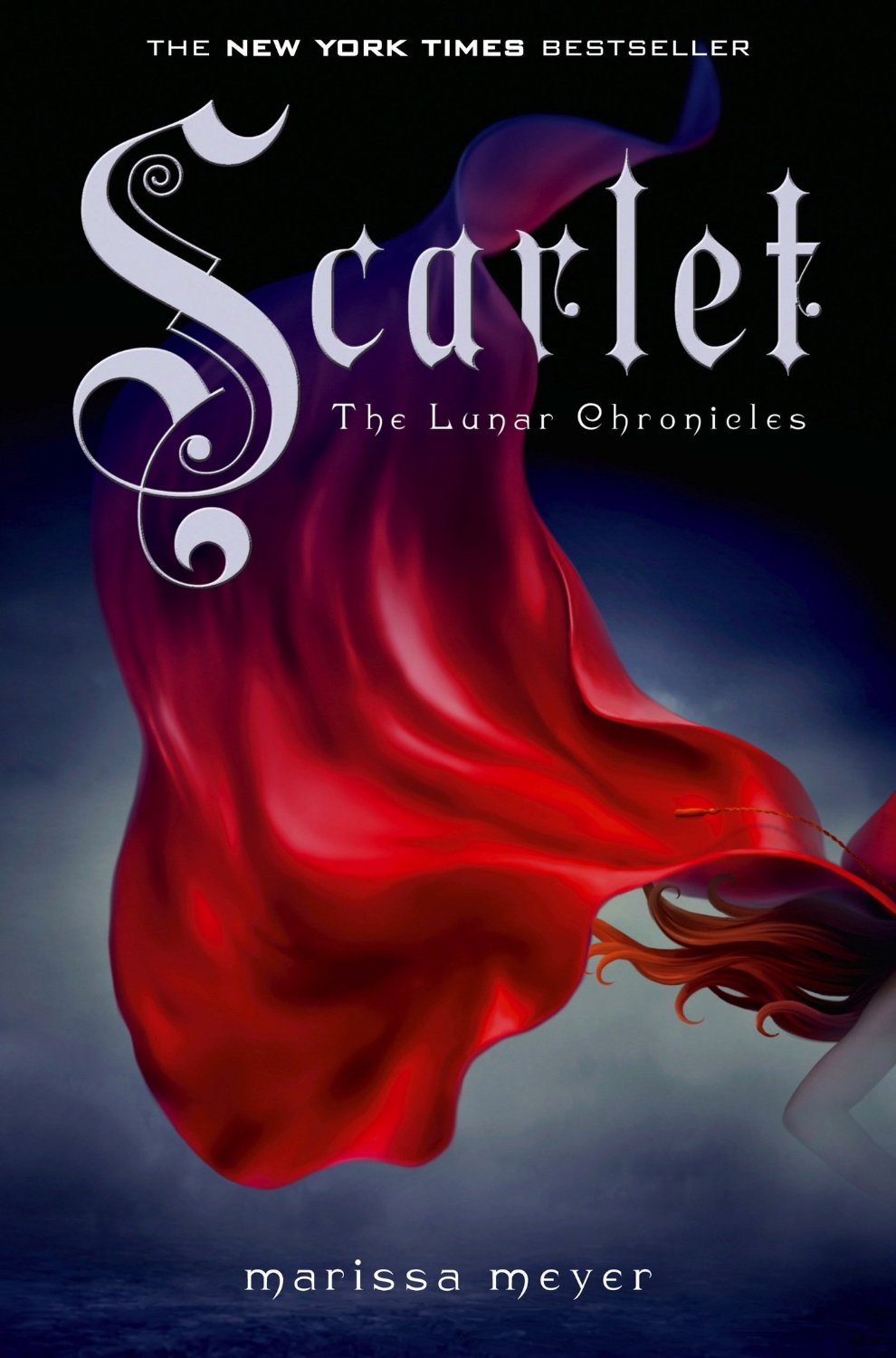
Scarlet (The Lunar Chronicles) review

Image A while back, I wrote a review of Marissa Meyer’s Cinder, which begins a series the author calls The Lunar Chronicles. After I bought it, I did not read it, but put it off for a while. I like science fiction and have no problem with YA titles, but it sounded kinda weird. Once I read it, I did like it. I really liked it, actually. And, once again, I bought the next installment, but put it off while I read another book (Darrell Bain’s The Frontier Rebellion). Then, a few weeks back, I clicked on the cover of Scarlet, and I will admit that I was not entranced after the first chapter, but I pushed myself, and the book did pick up. If you begin and wonder if it is book extolling the virtues of organic gardening, just hold on. Scarlet is a worthy tale, but I will offer a warning to readers—it would be quite confusing to a someone who did not read Cinder first. The story of Scarlet, who abandons the family farm to search for her lost grandmother, is so intertwined with Cinder’s continuing adventures that it is far better to begin with that book and then pick up this action packed story. If this were just the story of Scarlet and Wolf, I would not give it a five star review, but when I reached the end of Cinder, Meyer was clearly not finished, so I was expecting to see her again. Perhaps not so much of her, but that is actually a plus. Now, the character of Scarlet is interesting, and there is plenty of suspense as she struggles to find her grandmother before something really bad happens, but I especially like the multilayer enigma of Wolf. Even more than the first book, this one has the trappings of a gritty urban fantasy, with science fiction elements, and a bit of romance, too. Many times, I have stated that the best fiction is aimed at younger audiences, and this novel is more evidence of that. I noticed that Cress is now available, so I will buy it soon.

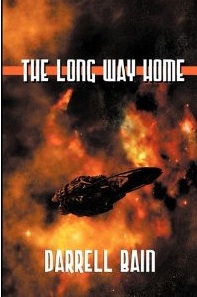
The Long Way Home

One of my favorite eBook authors is Darrell Bain. I think of him as the master of plots. Oh, there are some problems with his writing, primarily in the “show don’t tell” category, but this guy writes the most amazing yarns.

In the dedication of The Long Way Home, Bain recognizes three important Baen Books authors— David Weber, John Ringo, and Travis Taylor. And fans of their brand of science fiction will no doubt see that these authors influenced Bain in this space-based tale. Weber writes military science fiction on a grand scale; Ringo puts the grunt into military fiction, and Taylor is a rocket scientist who can also spin a good space opera. Bain doesn’t do any of those quite as well as these guys, but he does blend the elements quite well.

The plot is not unusual, with opening scenes of an exploratory vessel far from home, and a first contact mission gone awry. But instead of one or two explorers meeting a premature end, as happens in James Alan Gardner’s Expendable series, there is a massive loss of life and starship, and a small “longboat” known as “The Hurricane Jack” is left to ferry the survivors home. And it isn’t a short journey, hence the title. There are many obstacles, and the conflict is almost non-stop, between the “monkeyclaw” ship following the survivors, and the internal debates over matters in the tightly packed small ship. The mission is now to save the survivors and warn the human population about the vicious species they wished they had left behind. As a small vessel, the longboat must stop to scavenge material, and every stop has some built-in danger. Unlike some writers, Bain is not afraid to kill off his characters, which ramps up the peril factor.

Fans of space exploration stories should enjoy the action-packed suspenseful voyage of “The Hurricane Jack” in Darrell Bain’s The Long Way Home.

Where are all the science fiction readers?

I recently read a post on SFReader/SFWatcher stating that there are only 20,000 regular readers of science fiction. That’s fewer folks than live in my home county here in Georgia, making this a really astonishing statistic. The webmaster at SFR/SFW is now paying for movie reviews, in hopes of growing the website. No compensation is offered to reviewers of novels, of course.

When I was taking Mythology in Literature during grad school, one of our texts was by Joseph Campbell, who says that science fiction is mythology for modern people. If science fiction is so important culturally, why aren’t more people reading it, and what might attract a larger readership?

In 2004, Business Week ran an article entitled ScFi: Novel Inspiration which lists four valid reasons for reading science fiction. They include looking for new inventions, understanding the social consequences of invention, learning the lexicon of the future, and inspiring young minds. As America stagnates, and it really is doing just that, I wonder if our lack of wonder is at fault.

While science fiction does more than explore invention, that is one important aspect of it. A website called Technovelgy.com lists almost two thousand ideas which began within the pages of science fiction. Most people know that Captain Nemo’s ship beneath the sea predates the submarine, but how many folks know that Verne also predicted live news conferences, retro-rockets, and was the first to postulate that space travelers would have to deal with being weightless?

One of my favorite SF authors, Robert A. Heinlein, employs 3-D television, exoskeletons for the military, and smart lanes on the highway. All of these are in the later stages of development, and will be as much a part of our future as the “pocket phone” (which he used in “Assignment in Eternity” in 1953) is today.

Recently Fortune magazine published an article about the dearth of math and science students in the United States. Of the 8,000 students who graduated from U. S. colleges with a Ph.D in engineering  this spring, two-thirds were foreign nationals. Just a few years ago, most of those students might have stayed in America, but today, the majority will return to their home countries, because the opportunities to use the skills they just learned are there, and not here.

The fastest-growing college majors in America as of 2007, says the U.S. Education Department, were parks, recreation, leisure, and fitness studies, as well as security and protective services.” (Fortune, July 29, 2010) As Americans turn their collective backs on science (and science fiction) our nation will continue down the road to economic ruin.

In my research on why readers don’t enjoy science fiction, a number of reasons were mentioned, including:

“It’s too hard to read.” 

“The future in science fiction literature is too dark.”

“The science is bad.”

All of those reasons might have some merit, but there is a reason, which should have no merit, that I encountered while promoting Trinity on Tylos: There is a social stigma associated with reading science fiction. Ouch!

Oddly, people who see movies such as AvatarThe Dark Knight, or Jurassic Park don’t seem to feel that society is shunning them when they view science fiction on the big screen. In fact, many of the top grossing films of all time are either science fiction, fantasy, or have some ties to speculative literature. Now, the question is, how do we get those youngsters to make the leap from looking, to reading, and on to inventing?

That question is far more important than expanding market share for science fiction, which is stuck at a mere six percent of book sales. What America must accomplish, to expand the job market and our economy, is to expand the minds of our younger citizens. Science fiction should have a role in that, but someone, somewhere, must introduce it to them, and the earlier, the better.