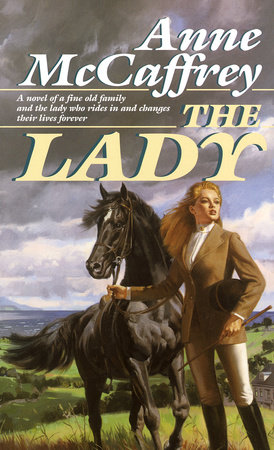
The Lady by Anne McCaffrey

Quite a while back, I decided to avoid writing reviews of living authors’ books, unless the author was either very famous (too famous to care what I thought) or dead. Anne McCaffrey is both super famous and dead. I’ve read several of her books, including some co-authored, but generally in her typical genre: science fiction. However, my daughter found this novel in her quest to find nifty vintage books, so she’s the reason I read The Lady.

I rather liked the retro feel of the novel, from the cover art to the characterizations to the plot. The novel is set in 1970, but according to the flyleaf, this book was originally published in 1987. The style seems more 70s than 80s, and that might be “off-putting” for modern readers. This is more of a “saga” than a typical novel, which was popular in the days of the mini-series on television.

Another aspect of the story is that it is about people who are seriously into horses. McCaffrey helps the reader with a glossary in the beginning of the book, which covers some Irish terms and some horse related terms, which helps a bit. The cast of characters (both human and horses) is sweeping, along with the names of the various horse shows. There’s a lot to keep up with, but the reader is rewarded with being able to escape into another time, when the telly was only briefly mentioned, and phones were attached to a wire.

The point of view character is Catriona Carradyne, a thirteen year old girl, who loves horses, which is both a blessing, because her father breeds, shows, and trains horses; and a curse, because her mother loathes horses and wants Catriona to grow up into a young lady. The setting, as I mentioned previously, is Ireland in 1970. One of the clients that boards her horse with the Caradynes, is Selena Healey, a stylish younger woman, who befriends Catriona, and mentors her through a very eventful time in her young life.

No spoilers here, I hope, but this novel is not just about horses, or about coming of age, although both of those are central to the story. There’s also loveless marriages and expectations of society and family. Some of the characters are well drawn, while others are mostly stereotypes, and the novel doesn’t move swiftly, nor is it filled with twists and turns. Nope, it is fairly predictable. The reader can figure out what will happen fairly early, so it is more “how” is the plot going to turn out rather than “what” will happen.

I can’t say this is the best book I’ve read lately, but it certainly kept me turning the pages. And, there’s that nice vintage feel about it, like listening to music from the 70s and 80s.
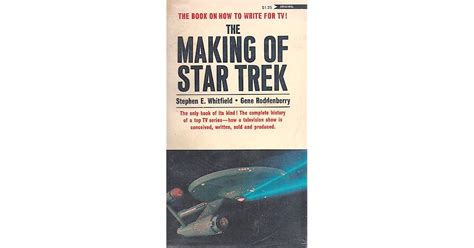
The Making of Star Trek by Stephen E. Whitfield—a retro review

Way long time ago, I borrowed a copy of The Making of Star Trek from a friend. After watching some episodes of The Original Series (TOS) on Pluto TV, I remembered the book, so I ordered a vintage paperback via eBay. Once I had it in hand, I could revisit a wonderful read, as well as wallow in some insider info once again. First printed in 1968, this book is both a history of Star Trek, with quite a few photos, and a “how to” guide to creating, producing, and writing a television series. However, as the book was written as the series was coming to a close, the legacy and cultural significance of Star Trek were not yet known to Whitfield (or Gene Roddenberry, who is listed as a co-author.) For more casual fans, there are other sources, from videos to more focused books.

When a ground breaking television series is created, there are thousand decisions to be made. From character names to methods of propulsion, this volume covers in detail how many of the concepts that make Star Trek work were developed, some visionary, such as the multi-cultural crew (unheard of in the mid-sixties) while others were merely practical, such as the “transporter” which was necessary as it would slow down the action if every port of call required a shuttle craft excursion (or worse, landing a huge space ship.) Within these pages are excerpts from memos to and from ST creator Roddenberry, quotes from NASA consultants, and preliminary sketches of possible ship configurations.

As this book was written alongside the filming of the series, there are glimpses of who wrote (and re-wrote) scripts, which actors were cast, and how the characters evolved. Letters from some of the actors, with insights into how their characters were to be portrayed, are included. Loosely organized chronologically, but with sections on such topics as “weaponry” and “the bad guys,” the reader sees how items familiar to TOS fans were developed over time.

Previously, I wrote a bit about a tour of The Neutral Zone Studios, where Star Trek Continues was filmed, and where fan films are still made. Our tour included some of the information in this book, but quite a bit of it was different, as the guides took a more hands on approach. Anyone planning a trip there might well read The Making of Star Trek prior to taking the tour. While the book does compliment Gene Roddenberry’s creative genius, many people helped create this vision of the future. Some of it has come to fruition (think folding cell phones) and some might never (Warp drive), but the influence that this one television series, which most deemed a failure when it ceased production, is difficult to minimize.

The Making of Star Trek is no longer in print, so it does require a bit of searching, but for fans, it is worth the effort.

Vintage—An Examination of Semantics

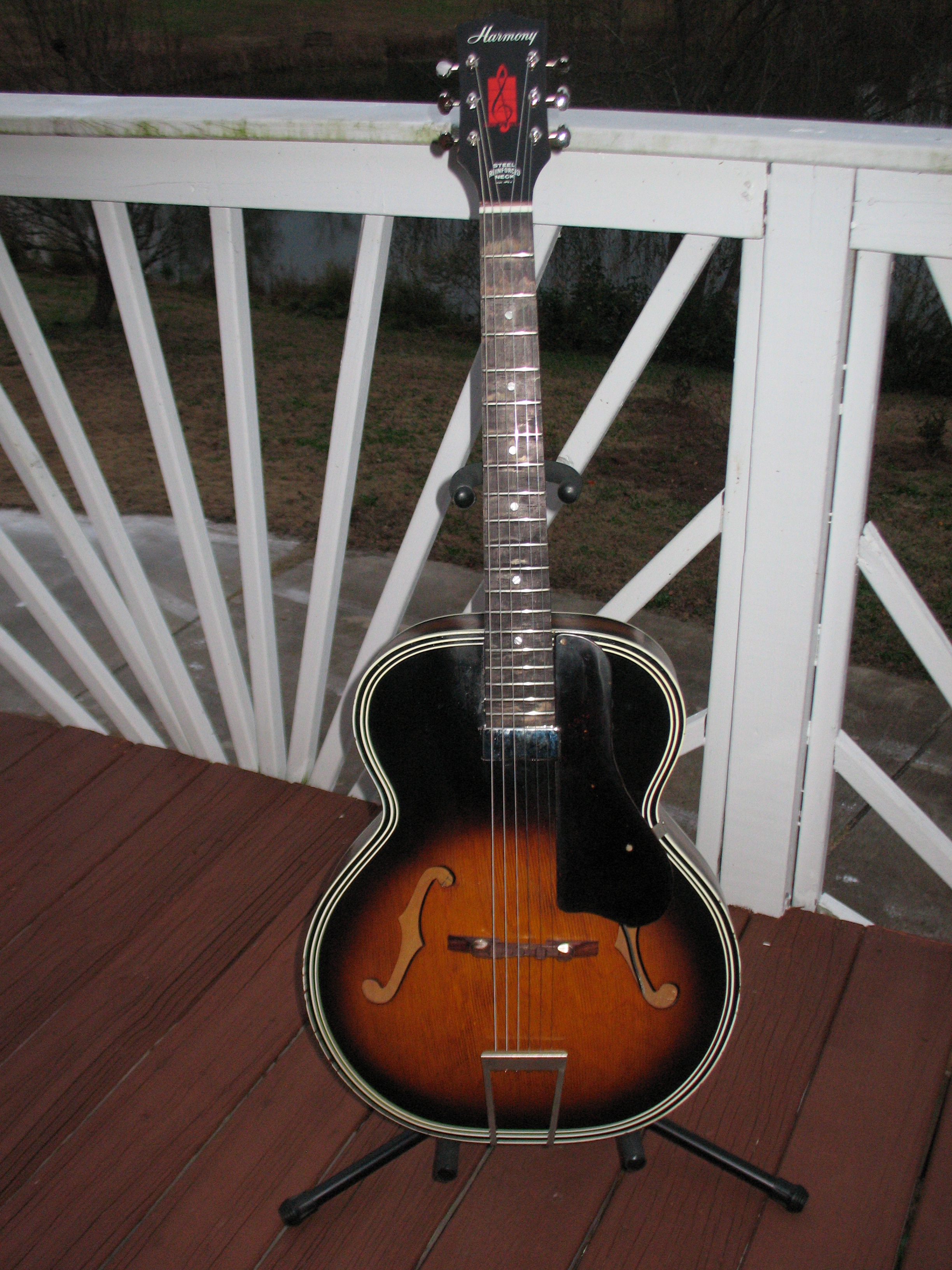
My son repairs and (occasionally) sells guitars and other stringed instruments. A while back, I purchased a “vintage” Harmony archtop guitar from Ebay. I only look at the “vintage—pre 1980s” section on Ebay, because most modern guitars are made of laminated something. He prefers the ones made of solid woods, and the older, the better. When my son rebuilt the guitar, he replaced the cracked pick guard with a new one that he had made, and he added new tuners, a new bridge, and a pick up system, so the guitar could be plugged into an amp. No doubt someone will enjoy it, but that is not the point of my little story.

After he finished it, I took it out to the deck to take a couple of photos, which I put on the local Craigslist, and I labeled it a “Vintage Archtop with a Pickup.” So, a day later, he gets an email from “Joe Joe” who says the guitar is no doubt a nice player, but it is an old, rebuilt guitar, but not a vintage guitar. And, a la Archie Bunker, he said “look it up.” As an English major, I was just a bit peeved.

The term “vintage” stems from winemaking. (Don’t cha love that pun?) A wine is said to be of a certain vintage, based on age and quality. That word is typically a noun. The term vintage, used as an adjective, can also mean old, and if you don’t believe me, look at Merriam Webster online.

To give him credit, Joe Joe (isn’t that a cookie at Trader Joe’s?) was right; there are collectors of vintage instruments who strive to get items from some rather undefined “golden era” and these items should have no modifications. Such instruments do exist, for a price. I think the term collectable would serve better than vintage, but, really, isn’t this just semantics?

Anyway, my son has this nifty guitar for sale, whether it be vintage, old, nice, rebuilt, or some other term.Image