Terms of Enlistment

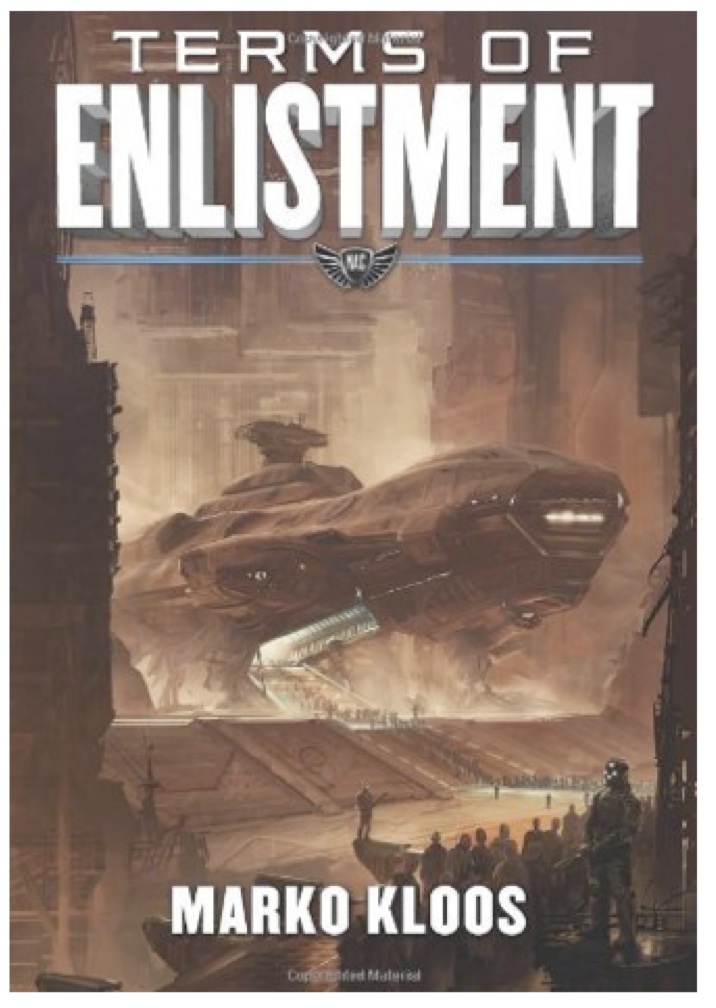
Cover art of Terms of Enlistment by Marko Kloos

Space Opera!

Okay, I’ve never “served” as military folks put it, but I really enjoy reading about the exploits of those who have done so. Perhaps due to watching the exploits of astronauts with military titles in my youth, I still believe that the military will play some role when (or if) mankind actually goes into space and establishes colonies on other worlds. In my own Trinity on Tylos my main character, Major Venice Dylenski, has a military background, but I viewed her as a bit like “Captain” Miles Standish might be viewed in American history. He’s a military guy who is there for security, and my character is the security chief, because someone ought to be in charge of that when landing on uncivilized planets.

In Terms of Enlistment, by Marko Kloos, the military is far more than security; it is the force that keeps the homeworld (earth) and colonies safe. Andrew Grayson is the main character; he grew up in a welfare section of Boston. Desperate to leave the vicious cycle of generations on public assistance, he joins the military. Okay, that is hardly a new plot line, but as Kloos paints his picture of Grayson’s world, readers can easily believe this dystopian view of the “North American Commonwealth.” As a new NAC recruit, Grayson is under quite a lot of pressure. Failure in any area, from taking orders to passing tests, will cause him to “wash out” and go right back to eating welfare rations and watching his folks succuomb to treatable illnesses. Thus, there is an additional layer of suspense added to the usual risk/reward of enlistment. Once our hero gets through basic, he can expect a five-year hitch, then go back home with cash, and education, and a fresh start.

(spoiler alert)

However, once Grayson gets through basic, instead of being posted to a naval (spacegoing) vessel, he is placed into the TA (territorial army) and tasked with policing the very sorts of places that he sought to leave. However, as the yarn rolls along at its brisk pace, Grayson faces domestic enemies with courage and is able to use his heroism under fire to wangle a transfer to the space navy. Once there, he hopes to be set for his five year enlistment, but an alien species invades, and he has many more opportunities to be heroic, and less and less to return home to, as the government pours all of its resources into saving the colonies, leaving the homeworld to become barely habitable.

While it doesn’t break much new ground, Terms of Enlistment does an excellent job of entertaining the reader. The  main characters are more than stereotypes, and the world building is quite good. I’ve already re-upped for the second novel in the series (Lanes of Departure) and am enjoying it, too.

Terms of Enlistment is a bit like Heinlein’s Starship Troopers, but with less of Heinlein’s political agenda. Fans of space opera and/or military fiction would be wise to check out this well-written novel. Oh, and it is rather long, so for $3.99 it really is a bargain, too.
The Martian— a quick review and some commentary

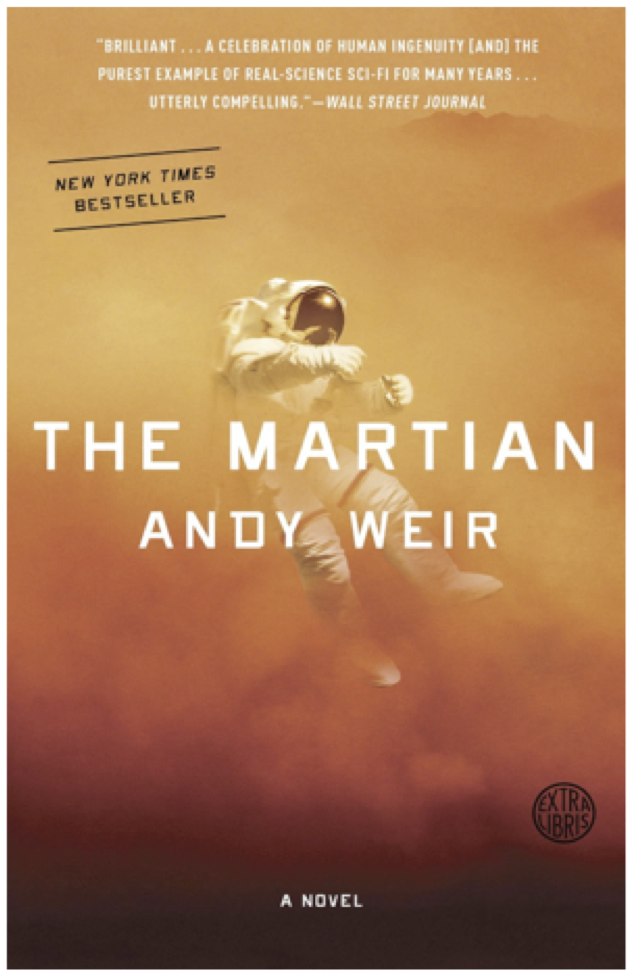
The MARTIAN coverOften, I choose to read indie published books rather than those from the “big six” publishers, because I find the content of indie books to be a bit more raw, unpolished, and (sometimes) unique. Yes, I am disappointed from time to time (as in my previous post) but I keep trolling for new authors and books. However, recently, Goodreads sent out a newsletter and the science fiction book of the year was Andy Weir’s The Martian. The blurb caught my eye so I bought it, but didn’t begin immediately, as I was slogging through a book on SEO (search engine optimization) at the time. Over the weekend, I began The Martian, and I was hooked. Like from the first page, I was seriously into the story.

The plot is not a new one. An astronaut is marooned on Mars. His fellow crew members are on the way home, believing that he is dead. But, this astronaut is determined and a heck of an engineer, so he keeps finding ways to use what is at hand to survive. After a while, the NASA folks figure out he is still alive, so they are trying to figure out how to get him home. Yes, it is really suspenseful. But sometimes it is laugh out loud funny, because the main character is quite a character.

Actually, this book was so engaging that I began to question my quest for good indie books. If the big guys are publishing this kind of science fiction, then I should be looking at the best seller lists again. So, after finishing the book, I did a wee bit of research and learned that Weir’s book was originally self-published via Amazon’s Kindle Direct (yeah!) and only after it sold thousands (at 99 cents, because that’s Amazon’s minimum price) in the first three months did big publishing come calling. Now, it is the basis for a movie starring Matt Damon.

The book is cool. Weir’s evolution as a writer is seriously cool. Many of the self-published and small press published writers, including yours truly, would love to have this sort of rags to riches experience. The impediment to that is having a really great book. The Martian is such a book. So, my suggestion is read it now and try to wait for the film version. Gravity won an Oscar, so the way is paved for another near future space adventure to do well at the box office.

Black Hole Bounty— a review

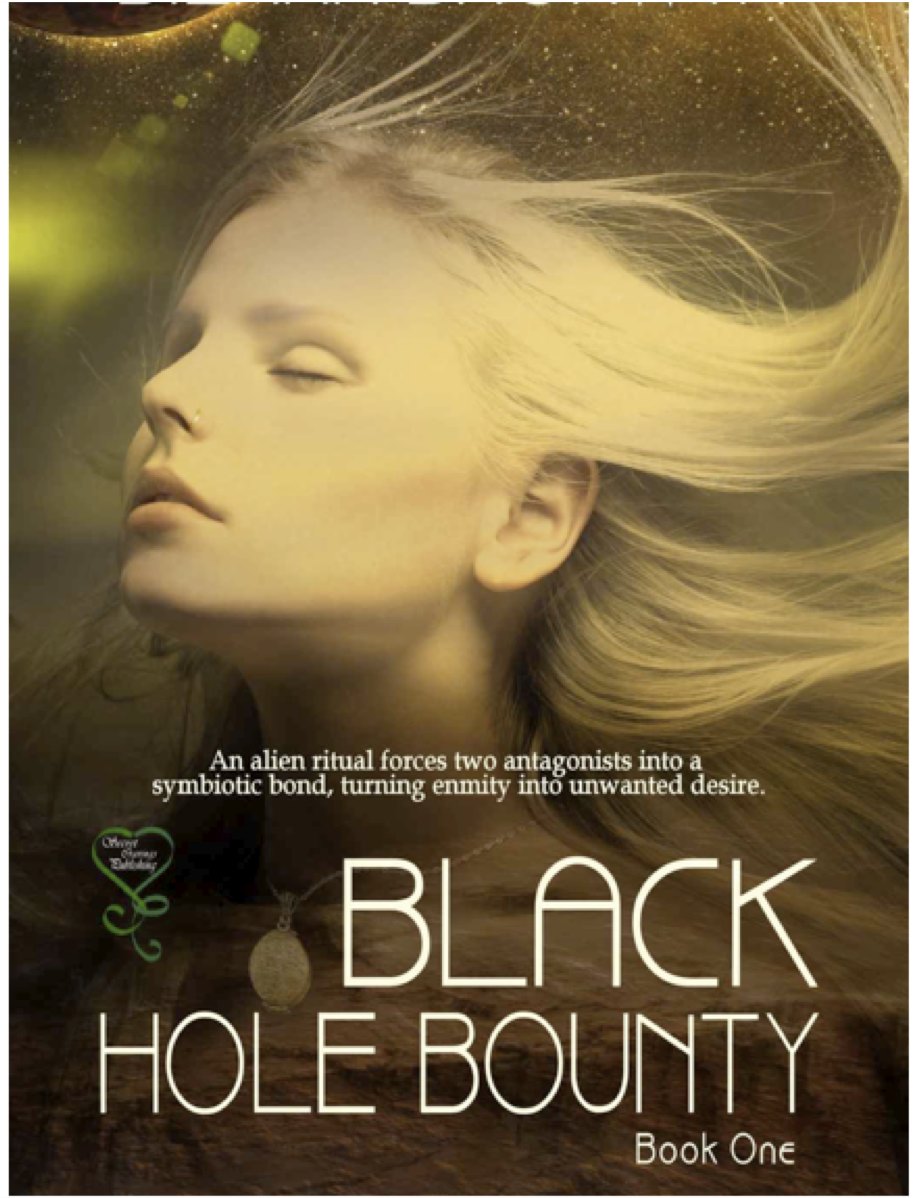
Black Hole Bounty coverRecently, I read Sienna Bronwyn’s Black Hole Bounty, which was a little more erotic than the romances that I normally read, but this one was quite good. The heroine, Jerusa, is different (an albino of Central American origin) who wears a nose ring and is scared of heights. Actually, she’s scared of lots of things…but that’s what a big part of what makes her an interesting heroine. She’s already married and has a daughter, and that’s atypical as well. The plot is not as far from the norm (for science fiction romance) as are the characters, so I’ll call it character driven fiction. It’s also rather funny, because the POV character is, well, quite a character. Still, this story is an action/adventure, and Jerusa never runs out of beings who make her afraid. Often, she has every reason to be scared silly.

As some of the reviewers stated, the worst thing about this story is that it is first in a series and the other entries are not yet available. Some authors are great at writing a series where each story can stand alone, but lots of writers are not bothering with that these days, and that’s annoying, but again, not unusual.

If Ms. Bronwyn can get part two of this series out before I forget all about the story, then I will be happy to purchase it. So, dear author, get busy.

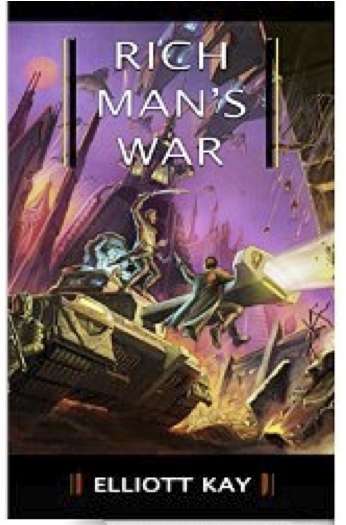
Rich Man’s War— a review

Rich Man's War cvrA couple of entries back I reviewed Poor Man’s Fight by Elliot Kay, and I really did like that book. Okay, in part, I liked it because it is in one of my favorite sub-sub-genres— a coming of age military science fiction story. But, that book was well-written and highly entertaining, and such books are sometimes too formulaic. Rich Man’s War is the sequel, and it does take up shortly after the events of the first novel in this series. The action, once it really gets going, is almost non-stop in PMF, but RMW is a more complex story, so it doesn’t move with the vim and vigor of the first one. Worse, it is quite easy to get bogged down in the “who is this part about, friend or foe” because the battles are large scale, so the cast of characters has grown exponentially.

Still, I am glad for the sequel to PMF. Somehow, readers just knew that Tanner Malone had a career ahead of him, and there is a natural desire to see the character evolve. Both Tanner and some subordinate characters from the first novel are important characters here, but in this entry, the corporations which have pretty much made Archangel inhabitants into economic slaves are the enemy. The plot development is organic, that is, what happens in this novel often has roots in the first one. I do not believe that RMW stands alone particularly well, so do read the first book first.

That said, I did enjoy the further adventures of highly decorated war hero Tanner Malone, and it is a good read if not a great one.

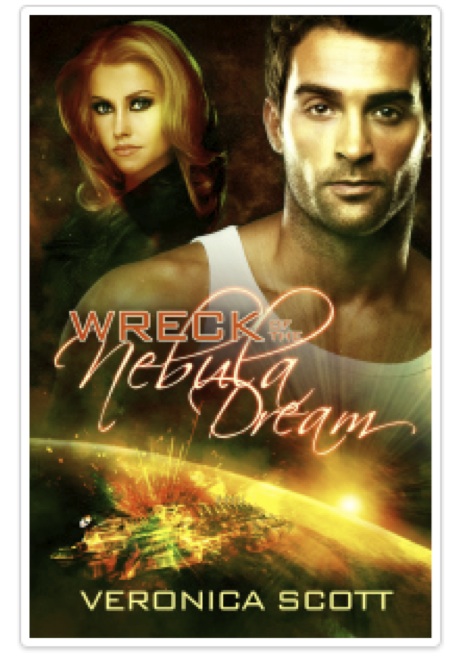
Wreck of the Nebula Dream— a review

Wreck of Nebula Dream coverDo you remember all the obstacles faced by the survivors of the Poseidon Adventure? Did you cringe at the fate of the passengers left to die on the Titanic? Did your skin crawl when reading about the “medical experiments” performed on holocaust victims? I remember those emotions, and they all come into play when reading Veronica Scott’s space opera, the Wreck of the Nebula Dream. This book is one heck of a bargain, and it lacks the usual problems associated with Amazon Digital Services as publisher. The only down side is that something like 60% of the apostrophes are turned the wrong way.

Although not a perfect story, this one is darned close. The hero is, well, heroic, but not arrogant. The heroine is a great side kick. There are kids, a bit of fantasy and magic, and some stock characters, too. The story does take a little while to get going (in media res would have helped this author) but once the disasters start happening, one thing leads to another, and the action is constant. I really liked this novel.

While it is available in print, I read the Kindle version, and I didn’t get much sleep the night I purchased it. That is not a complaint, but I think I need a nap now….