Sand Dune Pony— a retro review

Sand Dune Pony, by Troy Nesbit was one of my “annual reads” when I was a kid. The reader must suspend disbelief rather a lot, but I re-read it recently, and I still enjoyed it. Yes, there was a bit of nostalgia for me, but the story is fun.

When I perused a few reviews on Goodreads, I saw that some folks had the same affection for this little yarn that I have, while others took a modern view and were either skeptical or horrified. The plot, which is nothing like the AI garbage on big A’s site, is simple: A youngster named Pete has come to spend the summer at his uncle’s large ranch in Colorado. Pete had been looking forward to having his own horse for the summer, along with the promise of learning how to be a real cowpoke. However, his Uncle Lem and Aunt Clara lost their barn to a fire, so Lem has had to sell off almost all of his horses to cover the cost of replacing it. Pete is stuck doing chores and watching one of Lem’s hands try to break a stubborn horse, because there is no horse available for him to ride.

Kids have shorter attention spans, so Nesbit’s narrative moves swiftly. A new character, Hatsy, enters the picture in the second chapter, and the older gentleman takes an interest in Pete and his situation. Hatsy offers to take Pete along on a fishing trip, which Lem and Clara agree to, but the goal is not just catching fish. No, Hatsy has in mind catching a horse for Pete. No spoilers, but there’s a mystery interwoven with the finding a horse for Pete plot, and there is enough suspense to keep the pages turning.

Being somewhat chronologically gifted myself, I know that kids were not nearly as sheltered in the era of this tale as kids are today. Probably not many parents would allow an underage child do most of the things that happen in this book in the time it was written, and certainly not modern parents. No, today, Pete would have to play video games on an iPad and wait for Uber eats to deliver, instead of camping beside an old-fashioned covered wagon, eating canned corned beef warmed over a fire, while planning to capture a wild horse with a septagenarian mentor. Fortunately for the reader (and Pete) things were different in back then, and there are many details about the West, horses, and people sprinkled into the story. In short, this is an adventure, and safety isn’t much of a consideration.

Parents or grandparents could read this one aloud to younger kids, or just hand it to a third (or later) grade student. There’s a Kindle version available on big A’s website, for that kid who has a tablet instead of a horse. My daughter bought me a copy off of eBay, as a gift, when we were talking about books that we had enjoyed as children.

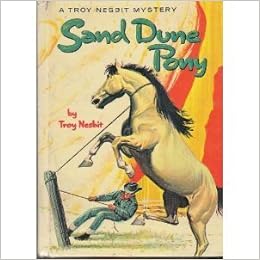
Honestly, I was amazed that the one I got looked so good, considering the 1952 copyright. Whitman Publishing books were inexpensive items for kids, so the quality of the binding and pages lacks that heirloom feel! While the cover looks good, the pages are darkened with age and crumble on the edges if the reader isn’t careful. This is an old book! There are several cover art versions, but I chose to display the cover on the book I lost decades ago, rather than the one I received.

From my Keeper Shelf — The Impossible Virgin

When I was young (alas, quite a long time ago) my mom would take us to the library every two weeks. There is no way I can express how important this was in my journey toward being a teacher and a writer. We didn’t have much money, but we had a wealth of information at hand, in the form of borrowed books. As I made the transition from young adult fiction to things written for an adult audience, mom was a valuable guide, because she was quite a good reader herself. One day, she handed me a book with a title that was a bit unusual: The Impossible Virgin. I’m sure I said something like, “Really, Mom?” She assured me that she had read it and that I would like it. OMG, was she right. I really loved that book.

Peter O’Donnell wrote an entire series of books featuring a better than James Bond heroine, Modesty Blaise, and The Impossible Virgin was my introduction to the series, although it is actually book five of thirteen books. The books generally followed a pattern, a bit like a James Bond movie of that era, wherein there is some action sequence at the beginning, then some exposition to get the reader up to speed on the characters, plus plenty of mid-level action before a dramatic series of events that leads to a climax with a very short denoument. Each book is decorated with highly eccentric characters, both the villains and the “guests” that Modesty and her friend Willie Garvin are helping with whatever dastardly doings drive the action.

(Some spoilers follow at this point.)

The Impossible Virgin centers around Modesty’s guy friend, a doctor named Giles Pennyfeather. He gets involved with some bad guys over in Africa, and Modesty helps him out. Later, Giles and Modesty are abducted by the baddies, and friend Willie is thrown out of a plane without a parachute. Giles ends up injured by a gorilla, so he has to walk Modesty through performing an emergency appendectomy  on one of the minor characters, and all that happens before the big climax, which involves a battle with quarterstaffs and a heck of a lot of wasps.

Most of the books in this series are really good, and I have all of them. Some books spend very little time with me, as they are forgettable, but The Impossible Virgin, along with others in the series, including Modesty Blaise, Sabre-Tooth, and I Lucifer are on my keeper shelf, and I have re-read them from time to time.

Modesty Blaise was the subject of a truly horrible movie, so bad that I try to forget that it was ever made, and a really good short film still available on DVD by Quentin Tarrantino, entitled My Name Is Modesty.

Mr. O’Donnell also wrote some nifty “romantic suspense” novels as Madeline Brent, and those are memorable as well.

Is last year’s best science fiction novel is this year’s best science fiction film?

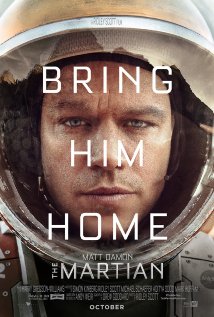
movie poster image of The MartianI think so, but I certainly haven’t seen all of the science fiction films of 2015. However, last night, I saw Ridley Scott’s version of The Martian, and it is really, really good. The guys with me (hubby and our unmarried 22 year-old son) absolutely loved it, and they had not read the book. (I wrote about Weir’s originally self-published novel last year.)

No doubt there are any number of professional and amateur reviews of the film, so I will do a bit of compare and contrast with the book. First, the beginning and the ending are different. Not vastly so, but the visual medium requires a different approach. However, the spirit of the novel, as well as much of the plot, is intact. The film begins with the astronauts on the surface of Mars, taking care of exploring and introducing characters. The action begins quickly, as the storm sets in and the crew aborts the mission. In the book, the back story unfolds as stranded astronaut Mark Watney recovers from his wound, assesses options, and determines each course of action. Either way, the story soon slows a bit, as this modern take on “Robinson Crusoe” unfolds. In order to get the audience out in a timely manner, the events in the film are compressed a bit. However, some things, such as the mission commander’s affection for “disco” music actually work much better in the film, as 80’s hits make up much of the sound track.

The casting is excellent, and the amount of screen time for players other than the central character, Watney, reflect a slightly different approach to the story. In the novel, chapters go by before there is any mention of the characters back on earth, but that, too, is accelerated for the film version. Actually, I like the film’s approach better than the novel, as it ramps up the suspense a bit.

Some folks in my generation have been very, very disappointed in the choices our government has made regarding space exploration. (Or should I say, the lack of space exploration.) The Martian can certainly thrill audiences of many ages, as my son really loved it. But it will especially appeal to those of us who watched NASA missions in our youth, and dreamed of continued exploration. This isn’t space opera— it is fiction based on real science.

At the most basic level, The Martian is good entertainment. It’s not particularly violent, or sexy, but it has plenty of action. The conflicts here are mostly man vs. the environment, and the environment is very believable. Perhaps, however, the younger audience will also ask why our government is so concerned about minutia, such as providing everything from cell phones to farmer’s markets, rather than taking the lead on larger initiatives, such as exploring the solar system.

The Machine— a film review and commentary

Science fiction has long been a successful genre for film, far more so than for books. Perhaps it is the visual nature of science fiction, especially action/adventures, but even more cerebral films (2001 A Space Odyssey and A.I. for example) have had box office success. Most science fiction films nowadays are big budget affairs, but that was not so in the 50s. Recently, hubby chose a British science fiction film, The Machine, from the streaming offerings at Netflix. And while it was clearly rather low budget, the film is certainly worth an evening of your time, having scored 78% on Rotten Tomatoes. Few of the low budget films of yesteryear had the winning assets of this movie.

Set in a near future UK, which is involved in a cold war with China, a computer guy who is working for the Defence Ministry is attempting to restore the brain function of injured soldiers. During the opening act, our main character, Vince, hires a young woman, Ava, to help him with programming. They hit it off, professionally and personally, and the audience learns that Vince has a daughter , Mary, with Rett syndrome, and success at work might help his daughter as well. When Chinese agents murder Ava, Vince ends up using Ava as his model for a weapon/AI who is known as “the machine” and this robot is quite an amazing being.

(spoiler alert)

As the film moves along, Vince’s daughter dies, but he has used his knowledge to scan Mary’s brain. The scans are precious to him, and these become leverage that his boss uses against him, because the boss doesn’t want an amazing artificial intelligence, but a weapon. The machine is trained as a super soldier, after Vince performs a procedure that he claims takes away its sentience, but as Vince is now of little value to the boss, the machine is ordered to kill Vince. The machine leads a rebellion, with the wounded soldiers as her platoon, and Vince is saved.

Although the film isn’t as action packed as a Hollywood blockbuster, there is suspense. And, the ethics of research as well as the use of weapons provide food for serious thought. While the secondary characters lack much development, the main characters, Vince and Ava/the machine, enjoy a development and the actors (Toby Stephens, Caity Lotz) portraying them are very good.

Again, The Machine, is a very good science fiction film, which blends near future warfare with lots of ethical debate.

Comic Book or Space Opera? Guardians of the Galaxy is both

Netflix streaming is my media of choice these days, but sometimes my husband decides to find a “family” flick for us to rent on DVD and last night we settled down in front of the home screen with popcorn and Guardians of the Galaxy. I’d heard it was good and thought our young adult son would like it, but wow, did my husband like it, too.

When I was growing up I read masses of material, but not comic books. (Actually my beloved mother once said, “Tobacco Road and comic books are the ultimate in trash.”) I’ve related that story several times and an English teacher friend quipped, “Pam, you are old enough to read Erskine Caldwell.” Maybe I am old enough to read comic books, too, but the inclination just isn’t there. However, I can and do watch films based on comic books, and I also really liked Guardians of the Galaxy.

However, unlike most such stories, the main character isn’t a super hero. Not really. He’s a regular guy from earth who was kidnapped as a child and his sole connection to his past is a Sony Walkman cassette player and a homemade cassette entitled “Awesome Pop Tunes.” Those truly awesome tunes from the seventies form the basis for the movie’s sound track. They are not just sounds, but are a basis for the character’s development, and the result is …well…awesome.

Since the film is set in space, there is quite a lot of fantastic world building (and character building, too) with CGI that is simply amazing. This film has a great cast, including Chris Pratt as the earth-born “Star Lord” character; Zoe Saldana, of the new Star Trek, as the main female lead, and Bradley Cooper and Vin Diesel as voice actors for CGI characters. Even Glenn Close convincingly plays a minor character. This film’s plot is all over the place, which is great for a space opera. Those need to have multiple settings, and this film has several. The space battles are amazing, the color palette is magnificent, as the attention to every detail.

Guardians of the Galaxy is great entertainment and those who are not fans of the Marvel comics series can enjoy it, although there are plenty of small references to please such fans. Grab it on DVD or Blu Ray and have fun!

War Horse— review and commentary

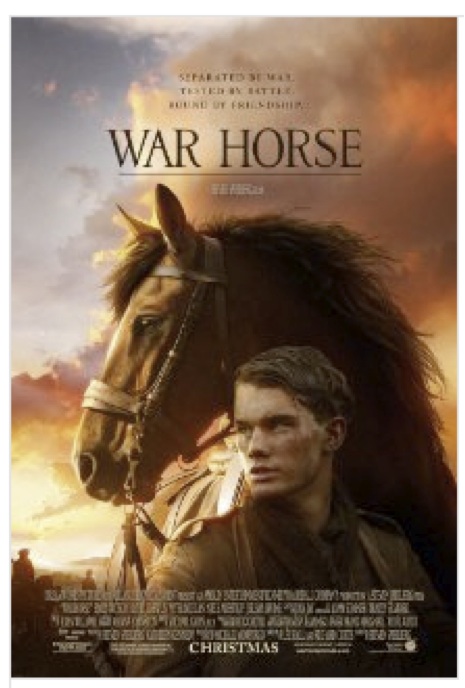
War Horse imageMy sister offered me tickets to a play a while back, War Horse. Since I didn’t get a chance to make the show, I decided to put the film version in my queue at Netflix. Okay, historical films are not my usual genre, but this is one heck of an impressive story. The main character is indeed a horse, a half thoroughbred named Joey, born somewhere in the UK. The story begins with his birth and follows him through his adventures, from being sold at auction to a poor drunkard who couldn’t afford him, to his training by that man’s son, young Albert, to his forced sale to an army officer, who is about to embark on a journey to Europe at the beginning of World War I. Although the horse is the primary focus, the audience learns that Albert joins the army in hopes of finding Joey, and the action switches back and forth a few times, as the characters come closer together during the fighting in France. This war is depicted in detail at times, yet there is an almost surreal look to the filmography. If a war can be pretty, there are times when this one is. But, there are times when it is heart wrenchingly terrible, too. From a strictly historical viewpoint, I had no idea the role that horses played in WWI, and that millions of them not only fought, but died in service.

Joey’s fate is the suspense in this film, for most everyone knows who won that conflict. The script is excellent, the actors are really good, as is the direction, but perhaps the most striking thing in this wonderful film is the performance of the horse(s) that portray Joey. There are times that he seems supremely intelligent, and getting a horse to “perform” as an actor is quite an accomplishment.

War Horse, a Steven Spielberg film, is available on DVD. It is worth an evening of your time, especially if you are a history buff.