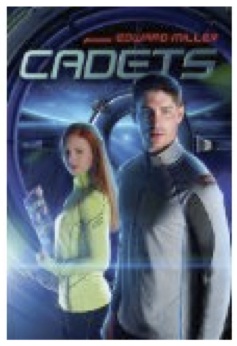
 While I prefer more sophisticated military science fiction, readers of all ages should enjoy Cadets, which is an entertaining read. The story follows a group of cadets, who are forced into growing up quickly when a menace from outside the solar system wipes out virtually all of the Earth’s defense force. The characters are not as complex as those readers would find in a space opera by David Weber or Elizabeth Moon, but for the intended audience, this yarn is quite good. The military strategy won’t impress adult readers, either. Still, it is suspenseful, with a bit of Independence Day style peril. A good read, with no worries for the parents.
Short Reviews of my Summer Reading (thus far)
I’ve read a few new (or new to me) titles, which could all be loosely grouped into the sub genre of science fiction romance. These titles were chosen because the authors are favorites of mine.
First, I read the novella “The Day Her Heart Stood Still” by Susan Grant. This yarn, originally published in a collection, is now available as a stand alone from Amazon’s Kindle Store. Grant’s early works, especially the suspense filled Contact and the light-hearted time travel novel Once a Pirate are my all time favorites by Grant. TDHHSS is just as light-hearted as the latter, but is more like Contact in subject matter. Anyway, it is the story of an astronaut’s encounter with an extra terrestrial, and since the format is short, the love story happens at a whirlwind pace. As I read it, I kept thinking it would have made a great stand alone novel. And, Grant is especially good at connecting with her readers, so she has a neat back story on the story on her website/blog.
Pauline Baird Jones is a fabulous writer, and there are a some wonderful examples of her creativity in her sequel to a sequel, Kicking Ashe. The book which began this series, The Key, is one of my favorite science fiction/romance stories. While I liked the sequel, Girl Gone Nova, I didn’t love it. Maybe it has been too long since I read those yarns, but somehow the Kicking Ashe story didn’t really work for me. However, Jones’ character development and prose is as entertaining as ever, and this story has earned great reviews and a Galaxy award over at SFR. Maybe it was just me….
Another series in this genre that I have enjoyed is by Janet Miller, and it all began with Promises to Keep, followed by the first book I read in the series, Beloved Enemy. I seemed to have missed Beloved Traveler, but I enjoyed Beloved Stranger quite a bit. All of these books are far more romance than science fiction, but in a day and age when marriage between men and women is more and more ephemeral, the idea of mating for life is something to admire or even fantasize about. Indeed, the whole Gaian concept of “attachment” of males to females is a bit more fantasy than science fiction, but I have enjoyed the stories in this series and I do recommend them to true romantics.
I’ve read a few other items too, but nothing worthy of a review. Still, the hottest part of the summer is yet to come, so I will probably be reading rather than out sweating….
Wreck of the Nebula Dream— a review
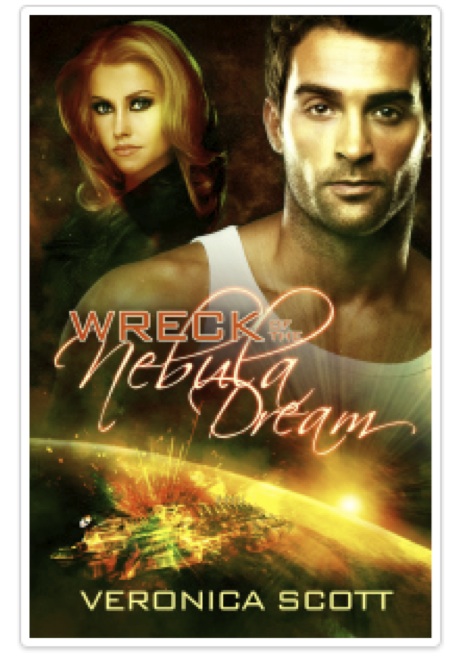 Do you remember all the obstacles faced by the survivors of the Poseidon Adventure? Did you cringe at the fate of the passengers left to die on the Titanic? Did your skin crawl when reading about the “medical experiments” performed on holocaust victims? I remember those emotions, and they all come into play when reading Veronica Scott’s space opera, the Wreck of the Nebula Dream. This book is one heck of a bargain, and it lacks the usual problems associated with Amazon Digital Services as publisher. The only down side is that something like 60% of the apostrophes are turned the wrong way.
Although not a perfect story, this one is darned close. The hero is, well, heroic, but not arrogant. The heroine is a great side kick. There are kids, a bit of fantasy and magic, and some stock characters, too. The story does take a little while to get going (in media res would have helped this author) but once the disasters start happening, one thing leads to another, and the action is constant. I really liked this novel.
While it is available in print, I read the Kindle version, and I didn’t get much sleep the night I purchased it. That is not a complaint, but I think I need a nap now….
Star Trek Into Darkness— yes, another review!
More than two years have passed since I went to see a movie at a theatre. Oh, I have watched films, of course, but Netflix and Amazon Prime are my usual ways to see movies these days. For the new Trek flick, I made an exception.
Mostly, I enjoyed this new entry into the universe of Star Trek. While I am old enough to have seen Shatner and Nimoy doing the original series first on its first run, I fully understand that if Trek is to reach current audiences, then it had to go through the reboot process. That, of course, means that many of the characters and/or situations will be revisited, but they will be “different” in some manner. And so it is with this yarn.
Here is the usual spoiler alert.
The opening is entertaining, but it trivializes Kirk’s decision to save Spock, while it presents a spectacle for the eyes. Almost immediately, Kirk is busted from Captain to cadet, which is hardly how the military works. After a crisis that is really not all that major, Kirk is promoted to first officer, and after his mentor is slain, he’s back to captain. This is in the space of a few minutes of screen time, and not a lot longer than that in real time.
There is a scene on Kronos, the Klingon home world, but these fierce warriors have little to do, which is a disappointment. In the Star Trek universe, Klingons are awesome, but not in this film. After capturing the evil Mr. Harrison, Kirk assaults him with his fists. Yeah, he is the commander of the gi-normous star ship in the opening scene, but he resorts to fisticuffs.
I could go on, but I think I have given sufficient evidence for my complaint about this film. Do understand that it is well-cast, exciting, and a visual feast. It pays homage to TOS, which is pleasing to older fans, and I count myself among them.
Over a decade back, I read Donald Maass’ How to Write the Breakout Novel. In this highly instructive book, Literary agent Maass lets aspiring novelists in on several techniques for success, but one of the most important is to make every crisis a bigger threat, to make every hero larger than life. For a novel to “breakout” it must raise the stakes.
Kirk and company seem to have lowered them in this film. Before it was released, there was some discussion of using terrorism as a plot device, as it seems to be an over arching theme for our world. Since entertainment is one of the chief exports of our country, it is important that movies, even Trek, sell tickets worldwide and not just stateside. But, by blowing up a Star Fleet “Archive” and shooting up a meeting of Star Fleet brass, rather than threatening a planet, a star system, or a galaxy, this film does the opposite of what Maass advises aspiring novelists. It certainly does not raise the stakes.
Worse, the movie shifts away from an important premise that comes straight from Trek creator Gene Roddenberry, who was oft quoted as “looking for intelligence on the other side of the television screen.” Trek fans will have plenty of lines and situations to revisit in this tale, but little to stimulate their brains. That is unfortunate, because this film succeeds in many areas. Writing is just not one of them.
Investment Biker— a review
 While touring the Barber Motorsports Museum in Alabama, I came upon a display of two rather battered BMW touring bikes, on a round platform, with a sculpture of the world suspended over them. In a museum where even hundred-year-old motorcycles are preserved in showroom condition, these two road warriors stood out. The information spread around the platform indicated that the bikes were used by Jim Rogers and his companion, Tabitha Estebrook, as they went on an around the world trip, on motorcycles.
When I got home, I bought the book that Rogers wrote about his trip, Investment Biker. As a fairly young man who had made his money on Wall Street, Rogers takes his reader on a ride around the world, and into the world of finance. At first, I was rather annoyed, because I wanted to read about the bikes and the sights, but not about the price of commodities. However, as Rogers explained how his trip through Europe, Asia, Africa, Southern America, and other regions influenced his trading, I gained respect for his reasoning in investing in some areas, while steering clear of others.
That said, there are motorcycle tales aplenty, from having a hole in a piston welded in a remote village, because the closest BMW dealer was thousands of miles away, to spills along a road with gravel pieces the size of baseballs for a road surface.
Since this journey occurred a couple of decades back, there are sections which read more like history, such as his observations about why the Soviet Union appeared to be crumbling. And, I am sure that Rogers might want to retract some of his political predictions, should he ever have a second edition.
Still, I am really glad I read Investment Biker. Many of the reviewers on Amazon seemed disappointed that this book is about travel on a motorcycle, rather than investment advice. I wanted to read about adventure, and this book has plenty of that. Most of the moto-journalism I have read has been inferior. Rogers writes well, and his vision and experiences are inspiring.
The Hunger Games— the movie (a review)
Okay, just about everyone has already reviewed this film,or the novel that spawned it. While I haven’t read the book, I enjoyed the film. And, I am grateful to author Collins for her contribution to science fiction, and to young adult fiction. As an experienced reader, I found the tale somewhat predictable, but none-the-less exciting.
The Hunger Games is another dystopia, with political and social overtones for our times. Clearly, she was influenced by what is termed “entertainment” by television network execs. If nothing else, the reality tv genre is slammed by this tale. Science fiction is a marvelous vehicle for getting those concepts over to a mass audience. Between the success of the books in this series and this film version of the first novel, Collins is reaching many, many people.
Actually, any author would do well to write for the YA market, because the freshest ideas are there. Let’s face it, authors for the adult market are publishing beyond theirs deaths (via ghost writers) so the publishing houses are not willing to develop new talent.
I wouldn’t have picked this film, but my young adult daughter suggested that we watch it together via netflix, and I both the film and her take on it. While the death scenes were not as gory as I had feared, it was realistic enough. Families with middle school aged kids could certainly find fodder for some interesting discussions after viewing it.
The Hunger Games is a good story, with some morality questions for viewers.
 Visions and Revisions