Alarm of War— The Other Side of Fear

A while back, I wrote a positive review of Kennedy Hudner’s Alarm of War. Perhaps its greatest downside was that it clearly was intended to have a sequel. For a few months, I checked Amazon, hoping that Hudner had released the second part, but after a while, I quit looking. Then, as I reviewed my “keeper” files, I saw Alarm of War and looked again. Low and behold, Alarm of War, Book II: The Other Side of Fear was published in 2014. Finally, I had the sequel, but alas, it’s really part II of a trilogy. So, I am back to waiting.

However, it would be remiss to not review the second book. So, here’s a true confession: I went back and re-read the Alarm of War because it had been so long that I was certain I needed a refresher. Good plan, as I enjoyed it almost as much the second time. Once I had swiped the last page, I jumped right into The Other Side of Fear, and it wowed me from the opening scene.

While there are some stereotypical situations and characters, there is plenty of depth to Hudner’s ensemble of main characters, who met as they went through basic training during the first novel. My favorite is Emily Tuttle, a former history teacher with a brilliant grasp of military strategy. Other main characters include Grant Skiffington, the favored son of an admiral; Hiram Brill, a geeky guy who instinctively puts together intelligence into workable prophecies; and Marine sergeant Maria Sanchez, who is super gung ho, but reads books and likes to hang out with the nerd, Hiram. These characters all had intertwining adventures in the first book and book two immediately picks up the action.

Rather than write a bunch of spoilers, I will say this: Mr. Hudner’s series reminds me quite a lot of the early works of David Weber, the creator of the great Honor Harrington series. But, by using the ensemble, rather than centering on one character, Hudner is able to bring in various aspects of his universe, but keep the reader’s interest. At times, Weber spends more time explaining his villains than his heroine, and that has always bothered me. As a huge fan of military sci fi in general, and Honor Harrington in particular, it is hard to say this, but, “Move over, Mr. Weber.” Kennedy Hudner is writing some seriously kick-butt military sci-fi. Really.

As of this writing, the first book is a bargain at 99¢, and The Other Side of Fear is $3.99. My gosh, so much entertainment for less than the price of a movie ticket!

Wild Irish Heart— quick review and comments

Irish romanceWhile I don’t often read romance, February is the month to do so, now isn’t it? This novel is a bit of mystery, but with plenty of romance. It is not, however, one where a major sexual encounter happens before a third of the book is over. FYI!

Tricia O’Malley’s Wild Irish Heart (The Mystic Cove Series Book 1) begins the “Mystic Cove Series,” and it is a pleasant read, if not a compelling one. Our heroine, Keelin O’Brien, has been reared in Boston, by her successful real estate agent mother, who left Ireland and Keelin’s dad behind long ago. For reasons that are a bit of a mystery to Keelin, her mother doesn’t talk about the past, especially about Ireland. Soon, the reader learns that Keelin herself is a bit of a mystery, too, because she has a power that most of us don’t have.
When an ancient book arrives with a note which simply says, “It is time,” Keelin decides to go to Ireland, on an extended visit with the family that her mother shunned long ago. Thus begins her dual quest: to learn her past, and to see how her gift fits into her future. There are not many surprises on this journey, but Keelin does struggle to figure out how her attraction to a certain fellow that she meets early on will fit into her new life. Or is she somehow mistaken, and this isn’t the guy for her?

This novel has some supernatural elements, but it is mostly a bit of a mystery wrapped up in romantic garb. And it is a nice read for the month which features Valentine’s Day.

BTW, I read the Kindle version, as it was featured as a freebie a while back, and as of this post, the current price is 0.00. According to Amazon, it is also available in paperback and as an Audible book, if you like that format.

Star Wars: The Force Awakens

Since Star Wars The Force Awakens has broken lots of records for attendance, there are no doubt too many audience reviews for mine to matter. There are several elements that make this a film worth watching, and fans are mostly happy with it, at least in part due to the items (in my own order of excellence) enumerated here:

#1 The Score! John Williams’ score was instrumental in turning the original Star Wars from a mere comic book B movie into a box office bonanza. For the other films his compositions have kept the audience entertained, and Williams’ music is just as important here ever. For those not into classical music, the technique he uses is called leitmotif, wherein each character or plot device has it’s own musical theme, all interwoven into the whole. This is an operatic technique that helps the audience be even more emotionally involved the happenings on screen. It’s very cool, and it works beautifully in Episode VII.

#2 The respectful treatment of the aging stars of the original series. Although there is considerable exposition prior to the appearance of the famous trio, each character is given his (or her) moment on screen. The audience has a chance to see what’s happened during the passage of time, and the situation of each is organic in regards to their characters and situation way back when the Jedi returned in Episode VI.

#3 The new characters are interesting. Writing is hard work, and creating characters that readers (and/or viewers) care about can be difficult. In Poe Dameron, Rey, and Finn, the writers have given us a new generation of action characters. Hey, there’s even a cool new droid, BB-8. Compared to the characters in Episodes I, II, and III, these new guys are…oh, let’s be real. There is no comparison with those films. The new kids seem to be worthy successors, however. The actors do an excellent job of bringing them to life, too.

#4 Real “special effects” rather than CGI. Don’t get me wrong, computer generated effects have their place. But when Yoda ceased to be a puppet and became a glowing figure out of a computer game, his personality shifted from cute and quirky to something less interesting. This Star Wars has the look and feel of the original, but with more money. No doubt the prop masters were kept very busy during filming, but there is a difference when the actor is doing lots of stuff against a green screen vs. real props and sets.

#5 Good vs. Evil is central to the story line. For audiences to care, the good guys have to be mostly good, but have enough flaws for us to identify with them. The bad guys should be so bad that even Oprah wouldn’t try to understand them, instead she’d just shoot ’em.

The links are present for those who want to know more about certain aspects of the film, but that’s my take on the new Star Wars movie, which I recently saw with hubby and our young adult son.

On “Conversate” is it a real word?

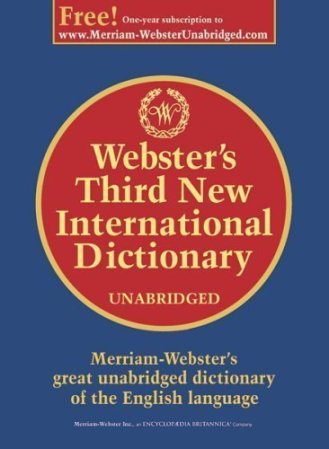
Webster's 3rd

When I was an undergrad, this was the definitive measure of whether or not a word was acceptable English.

Okay, I’m wearing my “English Instructor” hat when I write this post, and no, “conversate” isn’t a real word. Not yet, anyway. However, since the word is beginning to appear in a variety of contexts, from print to the courtroom, this non-word is going to be a candidate for real word status in the future. Right now, it is best classified as slang. Maybe it will be like “groovy” and become a relic of the era, or maybe it will make it into common usage. But don’t use it in formal writing if you want to project the image of being educated. Just don’t.

How do words become accepted? Traditionally, via being used in print. As print becomes less and less the standard of usage, and electronic documentation becomes the standard, probably many non-words will gain status. And English is has always been more open to accepting new words than many other languages, so “conversate” might make it into whatever lexicon determines acceptable usage. Other non-words have made it into standard usage, including “normalcy,” “software,” and even “couch potato” so it is just a matter of time and usage.

Until then, if you are searching for alternatives to “conversate” go back to basics; try talk or converse. They mean exactly the same thing, are both verbs, and the spell checker won’t try to change them into something else.

By Pamela/Pilar Posted in writing