 I recently read a post on SFReader/SFWatcher stating that there are only 20,000 regular readers of science fiction. That’s fewer folks than live in my home county here in Georgia, making this a really astonishing statistic. The webmaster at SFR/SFW is now paying for movie reviews, in hopes of growing the website. No compensation is offered to reviewers of novels, of course.
When I was taking Mythology in Literature during grad school, one of our texts was by Joseph Campbell, who says that science fiction is mythology for modern people. If science fiction is so important culturally, why aren’t more people reading it, and what might attract a larger readership?
In 2004, Business Week ran an article entitled ScFi: Novel Inspiration which lists four valid reasons for reading science fiction. They include looking for new inventions, understanding the social consequences of invention, learning the lexicon of the future, and inspiring young minds. As America stagnates, and it really is doing just that, I wonder if our lack of wonder is at fault.
While science fiction does more than explore invention, that is one important aspect of it. A website called Technovelgy.com lists almost two thousand ideas which began within the pages of science fiction. Most people know that Captain Nemo’s ship beneath the sea predates the submarine, but how many folks know that Verne also predicted live news conferences, retro-rockets, and was the first to postulate that space travelers would have to deal with being weightless?
One of my favorite SF authors, Robert A. Heinlein, employs 3-D television, exoskeletons for the military, and smart lanes on the highway. All of these are in the later stages of development, and will be as much a part of our future as the “pocket phone” (which he used in “Assignment in Eternity” in 1953) is today.
Recently Fortune magazine published an article about the dearth of math and science students in the United States. Of the 8,000 students who graduated from U. S. colleges with a Ph.D in engineering this spring, two-thirds were foreign nationals. Just a few years ago, most of those students might have stayed in America, but today, the majority will return to their home countries, because the opportunities to use the skills they just learned are there, and not here.
“The fastest-growing college majors in America as of 2007, says the U.S. Education Department, were parks, recreation, leisure, and fitness studies, as well as security and protective services.” (Fortune, July 29, 2010) As Americans turn their collective backs on science (and science fiction) our nation will continue down the road to economic ruin.
In my research on why readers don’t enjoy science fiction, a number of reasons were mentioned, including:
“It’s too hard to read.”
“The future in science fiction literature is too dark.”
“The science is bad.”
All of those reasons might have some merit, but there is a reason, which should have no merit, that I encountered while promoting Trinity on Tylos: There is a social stigma associated with reading science fiction. Ouch!
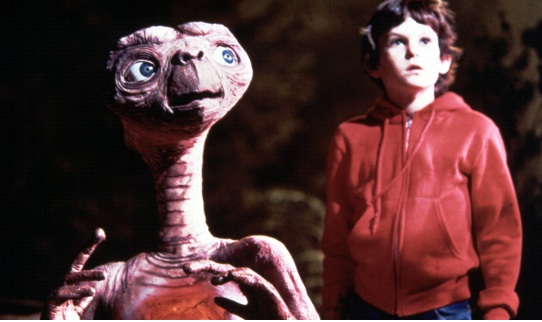
Oddly, people who see movies such as Avatar, The Dark Knight, or Jurassic Park don’t seem to feel that society is shunning them when they view science fiction on the big screen. In fact, many of the top grossing films of all time are either science fiction, fantasy, or have some ties to speculative literature. Now, the question is, how do we get those youngsters to make the leap from looking, to reading, and on to inventing?
That question is far more important than expanding market share for science fiction, which is stuck at a mere six percent of book sales. What America must accomplish, to expand the job market and our economy, is to expand the minds of our younger citizens. Science fiction should have a role in that, but someone, somewhere, must introduce it to them, and the earlier, the better.


