Star Wars: The Force Awakens

Since Star Wars The Force Awakens has broken lots of records for attendance, there are no doubt too many audience reviews for mine to matter. There are several elements that make this a film worth watching, and fans are mostly happy with it, at least in part due to the items (in my own order of excellence) enumerated here:

#1 The Score! John Williams’ score was instrumental in turning the original Star Wars from a mere comic book B movie into a box office bonanza. For the other films his compositions have kept the audience entertained, and Williams’ music is just as important here ever. For those not into classical music, the technique he uses is called leitmotif, wherein each character or plot device has it’s own musical theme, all interwoven into the whole. This is an operatic technique that helps the audience be even more emotionally involved the happenings on screen. It’s very cool, and it works beautifully in Episode VII.

#2 The respectful treatment of the aging stars of the original series. Although there is considerable exposition prior to the appearance of the famous trio, each character is given his (or her) moment on screen. The audience has a chance to see what’s happened during the passage of time, and the situation of each is organic in regards to their characters and situation way back when the Jedi returned in Episode VI.

#3 The new characters are interesting. Writing is hard work, and creating characters that readers (and/or viewers) care about can be difficult. In Poe Dameron, Rey, and Finn, the writers have given us a new generation of action characters. Hey, there’s even a cool new droid, BB-8. Compared to the characters in Episodes I, II, and III, these new guys are…oh, let’s be real. There is no comparison with those films. The new kids seem to be worthy successors, however. The actors do an excellent job of bringing them to life, too.

#4 Real “special effects” rather than CGI. Don’t get me wrong, computer generated effects have their place. But when Yoda ceased to be a puppet and became a glowing figure out of a computer game, his personality shifted from cute and quirky to something less interesting. This Star Wars has the look and feel of the original, but with more money. No doubt the prop masters were kept very busy during filming, but there is a difference when the actor is doing lots of stuff against a green screen vs. real props and sets.

#5 Good vs. Evil is central to the story line. For audiences to care, the good guys have to be mostly good, but have enough flaws for us to identify with them. The bad guys should be so bad that even Oprah wouldn’t try to understand them, instead she’d just shoot ’em.

The links are present for those who want to know more about certain aspects of the film, but that’s my take on the new Star Wars movie, which I recently saw with hubby and our young adult son.
On “Conversate” is it a real word?

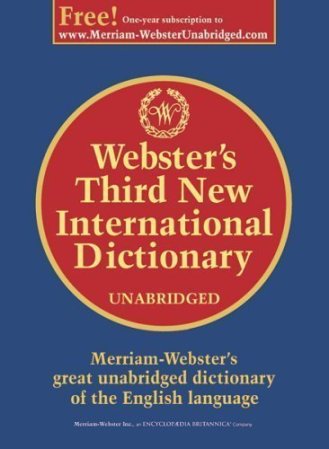
Webster's 3rd

When I was an undergrad, this was the definitive measure of whether or not a word was acceptable English.

Okay, I’m wearing my “English Instructor” hat when I write this post, and no, “conversate” isn’t a real word. Not yet, anyway. However, since the word is beginning to appear in a variety of contexts, from print to the courtroom, this non-word is going to be a candidate for real word status in the future. Right now, it is best classified as slang. Maybe it will be like “groovy” and become a relic of the era, or maybe it will make it into common usage. But don’t use it in formal writing if you want to project the image of being educated. Just don’t.

How do words become accepted? Traditionally, via being used in print. As print becomes less and less the standard of usage, and electronic documentation becomes the standard, probably many non-words will gain status. And English is has always been more open to accepting new words than many other languages, so “conversate” might make it into whatever lexicon determines acceptable usage. Other non-words have made it into standard usage, including “normalcy,” “software,” and even “couch potato” so it is just a matter of time and usage.

Until then, if you are searching for alternatives to “conversate” go back to basics; try talk or converse. They mean exactly the same thing, are both verbs, and the spell checker won’t try to change them into something else.

By Pamela/Pilar • Posted in writing

Infinity Lost— a quick review

I’m in the midst of a semester of teaching writing, and I generally read and write less when faced with lots of student papers. However, I did spend a couple of evenings with Infinity Lost by S Harrison. The main character is Finn, the only child of a reclusive industrial tycoon. Finn is an innocent, but as the story unfolds, she is not just a teenage girl. Certainly, science fiction is a favorite genre, and this entry by a new-to-me author is quite interesting.

There are some neat concepts in this story. At times, it was a bit confusing, but mostly, the author does a very good job of describing interesting technology. there is quite a bit of suspense, too. Actually, I began thinking that this novel reads well, but it might be a better screen play than a novel. It is the first entry in a trilogy, and I suppose there might be a film in the making.

What’s selling from my “used” collection? Old grammar books!

I’ve been selling off my “teacher” stuff for about five years. During my on and off teaching career (at both private and public schools, in grades 6 through college) I did manage to accumulate a lot of books. One thing that surprises me is that really old books do sell, especially grammar books. Today, I received notice to ship an eleventh grade grammar text, published in the early 80s. Believe it or not, that one is modern. For whatever reasons, during the mid 80s, grammar began to gradually fall out of fashion in the classroom. Budgets seemed tight, and textbook price inflation was just getting started. Our school, like many in that era, bought new lit books, and each of those generally had lots of ancillary materials, including “daily grammar” lessons— usually one concept illustrated via a handout or a transparency for an overhead projector, and grammar books were either not used, or we used old ones. My friend, Janet, used a set of Warriner’s until the covers came off. Then she got the administration to find her some more of the same one on eBay. Until I left teaching high school, I used the same ones, over and over. I taped them together each August, and hoped they would make it another year.

My current teaching gig is as an adjunct at a local technical college. (For readers outside of Georgia, you would probably term it a “community college.”) Anyway, our institution pays for students to take self-paced grammar lessons online. The reason we do it that way is that we never know how much grammar the students might have already mastered, so they take assessments and are required to do lessons based on the topics they did not pass initially. From my experience, there are many students who have to take all of the lessons (known as modules) which is probably due to their teachers having been trained in the “non-grammar” era. The lessons are quite basic, including each part of speech, sentence structure, and so forth.

From time to time, I do sell grammar books, usually really old ones, and that lets me know that some people are either teaching themselves, or someone else, English grammar. I’m glad, because I see a lot of bad grammar in student writing these days. Actually, I see it in many other places, too!

Are Teachers Professionals?

As I’ve cruised news sites lately, there have been some articles about teacher in NY who was “tardy” more than a hundred times and yet managed to keep his job. This seems to be an outrage to the press, but I think it is much ado about a minor problem. If your doctor is ten minutes late arriving at his office, you are probably glad that is all. Same thing for the judge who hears your divorce. Why is that? Because they are professionals, that’s why. According to the articles I read, the teacher was never late to class. So, who suffered because the teacher liked to dawdle over breakfast? Not the students, apparently.

So why is this a big deal? The teacher went to arbitration, stating that he had only once been later than 10 minutes, and that was due to a broken down car. And the teacher kept his job. Certainly, being punctual is a virtue that the teacher should demonstrate, but if teachers are professionals and they do a good job in the classroom, then “punching a time clock” should not even occur.

Many years ago, when I first began teaching, there was a “sign in” sheet in the front office, and we would all have to line up to jot down our names. Then, we got a new principal who said, “You are professionals, and I expect you to be professional in all of your dealings with students, parents, and anyone else you encounter in your work. I am going to treat you as professionals, and professionals don’t line up to sign in or punch a time clock.” Cool. And, as I recall, we didn’t have any problems with instructors being late. Instead, we reported directly to our classrooms to help students, instead of waiting to sign that sheet of paper on a clipboard.

The news media should report on good and bad aspects of education. But leave the “tardy” teacher story alone. It’s a stupid story.