Voyage Through the Stars—and Back in Time!

Image

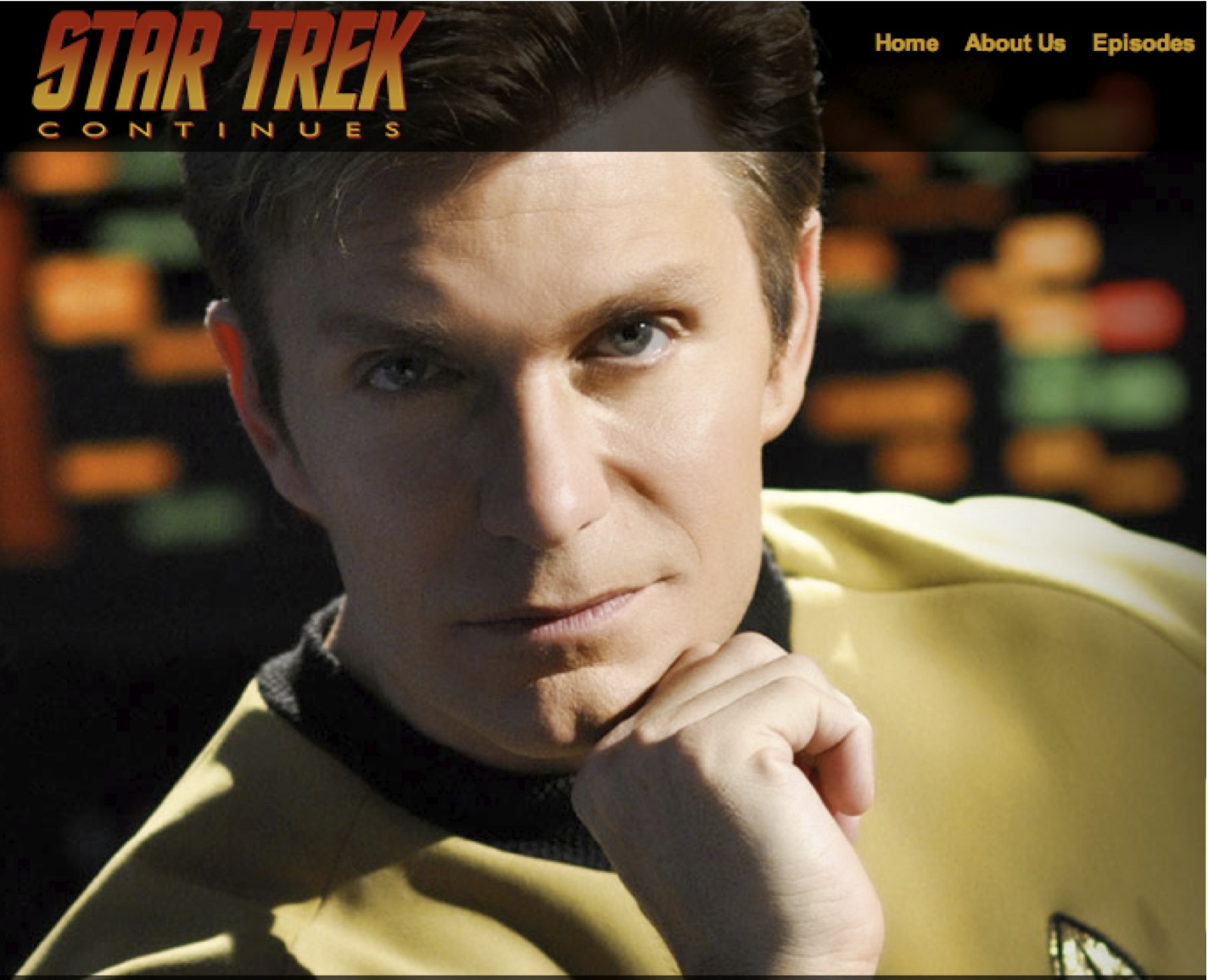
My husband stumbled upon an episode of “Star Trek Continues” and after just a few minutes, we were hooked. This upscale “fan film” site is really something to see. There are only a couple of full episodes, but a fully funded Kickstarter campaign from last year should fund at least a couple more episodes. We really liked the loving homage of this effort. Seeing new episodes with the same music, similar storylines, familiar costumes and props, and amazingly original looking sets make this nothing like the “reboot” movies.

These free online videos, which do include some shorter “vignettes” are made by a not-for-profit-entity, filming in Kingsland, Georgia, in a warehouse with 10,000 square feet of sets built to look just like the sets from 40+ years back. The actors do not just dress and look somewhat like the original series characters, but add their own interpretations as well. And, get this: the actor portraying Chief Engineer Scott is James Doohan’s son, Chris. That casting choice is far more authentic than the reboot’s Simon Pegg. Kirk is portrayed by Vic Mignogna, a voice actor and director, and Todd Haberkorn is Spock.

At first, seeing these different actors portraying well known (and loved) characters seemed odd, but after a few minutes, we were more interested in the story line than the actor’s faces and voices. There are some new characters, too, as the premise is that STC is telling the tales from years four and five of the “five year mission” that was only three years long in the original series. Had the series continued, no doubt new characters would have come along, so this concept works well.

Fans of TOS should check out Star Trek Continues, because it is quite entertaining. My husband and I are hoping for many new episodes. And, as residents of Georgia, we are wondering if they are going to have another open house, as they did a couple of years back. I’d love to see those sets!

Escape from Zulaire

Image This new tale from Veronica Scott is a very good read, but it does share a lot (perhaps too much) with the last really good story by this author that I reviewed a few months back. The heroine is saved by a military trained hero, who is quite heroic, but not arrogant. The setting is far from earth, there are kids, natives, and a bit of spiritualism. There is action aplenty, and thus suspense, with sufficient romance to keep the core audience involved. That summary works for Escape from Zulaire, but it also works for the Wreck of the Nebula Dream.

I read the Kindle version, and it was in pretty good shape for a self published novel. There were only a couple of misspellings and the main character’s name was not capitalized once. Still, I have seen far worse, in books that cost more.

Both books work for me, but if I read this same plot again, I might start getting a bit frustrated. Ms. Scott, I love your writing, but change it up a bit. Please!

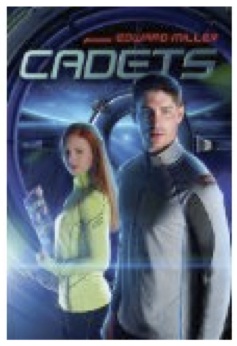
Cadets, a space opera entry for young adults

Cadets CoverWhile I prefer more sophisticated military science fiction, readers of all ages should enjoy Cadets, which is an entertaining read. The story follows a group of cadets, who are forced into growing up quickly when a menace from outside the solar system wipes out virtually all of the Earth’s defense force. The characters are not as complex as those readers would find in a space opera by David Weber or Elizabeth Moon, but for the intended audience, this yarn is quite good. The military strategy won’t impress adult readers, either. Still, it is suspenseful, with a bit of Independence Day style peril. A good read, with no worries for the parents.

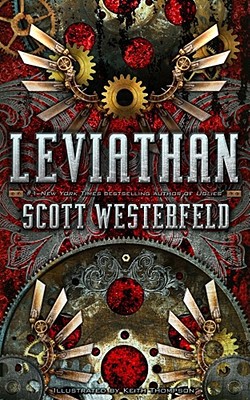
Leviathan review

Image

A couple of years ago, I purchased a copy of Scott Westerfield’s novel, intended for a young adult audience, for my son. Alas, he never read it, but that is not a judgment against the book, as my son tends to read books with video game tie-ins.

Since I was assigned a book presentation, (that’s a new term for report, y’all) I pulled Leviathan off the shelf. The book itself is inviting. The cover is amazing in its detail, and the form of the book is slightly non-standard, being just a bit taller and narrower than the norm. The paper is high quality, and the print is just a little wider than normal, which required adjusting the “leading” as the book was formatted for print.

Leviathan is an alternate history set in the era of World War I, written for a young adult audience in a genre known as “steampunk,” and is the beginning of a trilogy. The novel has two point-of-view characters, Aleksander Ferdinand, the (fictional) prince of the Austro-Hungarian Empire, who is forced to flee after the assassination of his parents, Archduke Franz Ferdinand and his wife, Sophie. The other point-of-view character is Deryn Sharpe, a commoner, a young woman who disguises herself as a boy so she may join the British Air Service. As the war unfolds, these characters provide insight into two forces in the war. The dualities do not stop there, however, for the British forces of this alternate history have bred various beasts to be both servants and machines of war, such as the Leviathan of the title. The Austro-Hungarian forces rely upon large mechanical warfare machines, such as the walker that Alek has been learning to pilot.

From the moment that young Alek is awakened by trusted old retainers, his story is suspenseful, but not unfamiliar. Count Volger guides Alek literally and spiritually toward a safe haven, as he pilots a huge walker, one of his army’s machines of war, as enemies of his father and of the empire seek to kill him. Alek is not on a hero’s quest so much as he is making the transition from innocence to experience. Nevertheless, there are times when he is heroic, such as his efforts to assist the stranded crew of the Leviathan, when it is wounded and lands near his hideaway in Switzerland.

Young Deryn, too, is on a journey, and while her adventures are also important to the plot, there is far more humor in her part of the story, as her character is propelled though the air via the large creature/ship of the title. The British forces use any number of genetically altered beasts as machines of war. Also, through Deryn, Westerfield makes some pertinent comments on the nature of humanity, such as her weary observation that the young airmen “endlessly competed to see who could spit farther, drink rum faster, or belch the loudest.”

By and large, I found this novel to be well crafted, but there are a couple of annoyances. First, the author substitutes words, such as “barking” for another four-letter word that is universally used as a vulgarity these days. Secondly, the initial swapping back and forth between point-of-view (POV) characters was a bit distracting, but after the first chapter, each POV character is on stage until the next chapter.

Westerfield alternates his POV characters in each chapter until the two meet upon a barren snow covered mountain, roughly half way though the 400 plus page novel. Alek saves Deryn from being trapped in the snow; then she promptly turns him in to her superiors. He is briefly held prisoner, but the British forces have far more to worry about than a mysterious young man from a mountain village. Ultimately, Alek is released so he can assist the crew of the leviathan, so the prince of Austro-Hungary and the crew of the great ship must cooperate to escape from the approaching German forces.

Westerfield’s Leviathan begins with a gripping first chapter and enough action to keep most readers entertained. Although I have not read much young adult literature, this author’s skill is such that I just might read more of his work.

A Brief History of Science Fiction, and why a good title is so important.

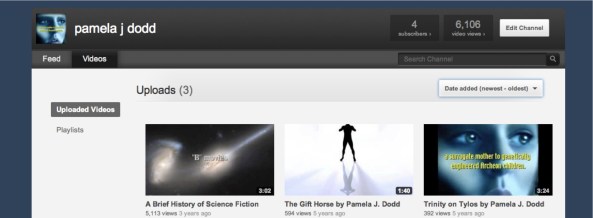
My Youtube Channel has three videos on it, and I created them for marketing purposes, but mostly because I had taken a class in MovieMaker, and I wanted to practice what I learned. As a Mac user, I made them with iMovie, but the programs are similar.

First, I made a video for my then recently published Trinity on Tylos. That title, although I like it, hasn’t been a winner for me. Some people think it is about religion, due to the first word, and it certainly isn’t. I guess I could have titled the book “Love Triangle in Outer Space” but that has even less of a ring to it. Anyway, after five years, the video has only about 500 views. My second video was for my debut novel, The Gift Horse, and since I didn’t have any nifty space images from NASA to use, I spent about $10 on stock images. While The Gift Horse has sold far better than my second novel, the video lags behind.

My third video was my first attempt at three channel video making: In addition to a music track, I recorded myself reading a script. Then I had to put the video together. For me, that was an arduous task, perhaps because so much time had gone by since I took the class. However, this third video needed a title, and I gave the matter about fifteen seconds of thought and used “A Brief History of Science Fiction.” In my mind this is lazy; I obviously adapted the title of Stephen Hawking’s brilliant work, A Brief History of Time. The title proved to be much more successful than the ones I chose for my books, because this video has been viewed over five thousand times. Of course its success may be because it is a bit more ambitious.

I wanted to be succinct, but I also wanted to incorporate much of what I have learned during years of studying literature, as well as my interest in science fiction, and I spent a bit of time on the script. A few months ago, I noticed that my video was cited in an online article on the history of science fiction. I was impressed that anyone would watch the video enough times to be able to quote it.

For anyone who is interested, here is the script, which is close to the recording. I think I skipped a few sentences in order to match the voiceover with the music track, but it is close.

I love science fiction, in print and on the screen. Here is my very brief history of the genre.:

 • Many literary scholars name Mary Shelley’s Frankenstein as the first science fiction novel.

 • Some of Nathanial Hawthorne’s short stories have science fiction thems, especially those which deal with the problems associated with man interfering with nature. The Birthmark, Dr. Heidegger’s Experiment, and Rappaccini’s Daughter all share that cautionary message.

 • British author H. G. Wells and French author Jules Verne gave us turn of the century classics including The War of the Worlds, The Invisible Man, Journey to the Center of the Earth & Twenty Thousand Leagues under the Sea.

 •Edgar Rice Burroughs produced fantasy and adventure, but his Martian settings help form the under-pinings of later space operas.

 During the first half of the twentieth century, several new magazines became the most important venue for scientific fiction writiers. Amazing Stories and Astounding Science Fiction provided the publishing forum for such writers as Isaac Asimov, Robert A. Heinlein, and Arthur C. Clarke. This period is considered to be the beginning of the Golden Age of science fiction.

 While those authors were producing science based fiction, the less than scientific stories seemed more apt to become the basis for Hollywood “B” movies, and such stories as “The Blob” and “The Day the Earth Stood Still” terrified movie audiences during the decade of the 1950’s.

 Despite some serious efforts in the movie world, it took a television show to bring science fiction into the mainstream. Although it lacked a movie sized budget, Star Trek made travel through space seem more plausible than ever before. The govenment run space program of the 1960’s no doubt helped lend some plausibility to the journeys of the Enterprise, but Trek creator Gene Roddenberry’s futuristic vision entranced a generation.

 While science fiction began to flourish on the screen, in print, it became increasingly channeled into separate genres, with “hard” and “soft” science fiction being the over-arching labels. Works which kept science and the scientific method at the forefront became known as hard science fiction, but stories which concentrated on the human reaction to advancing technology became known as soft science fiction.

 In the following decade, George Lucas kicked space opera into box office bucks with Star Wars. Authur C. Clarke’s 2001 A Space Odyssey and the book based upon it exemplfy the integration of the best of hard and soft science fiction, while the Battlestar Galactica, followed the more popular trend of space operas making the move to the small screen.

 In the past two decades, many of the box office champions have owed much to science fiction. Print publishers have not been able to replicate the success of the movie studios, but science fiction contines to thrive, especially with smaller presses. My own novel, Trinity on Tylos, owes quite a lot to the great writers who created the genre known as science fiction.
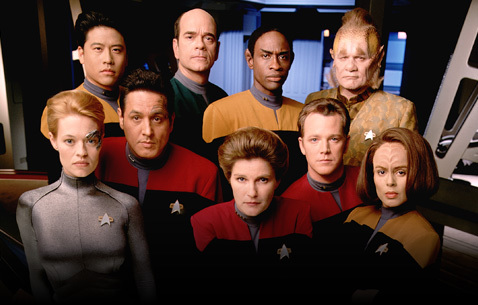
Star Trek Voyager— Still a Marvelous Journey

While exploring the science fiction archives of Netflix, I noticed Star Trek Voyager among the offerings. Not only did I watch most of those Star Trek episodes first run, I’ve seen the original series (TOS) and the next generation (TNG) many times since those now venerable shows went into syndicated re-run status. But I had not seen much of Voyager since it originally aired on the now defunct UPN network. I’m surprised at how well it has held up. That is the beauty of futuristic science fiction, isn’t it? Since no one knows exactly what our world or even our galaxy will be like in a few hundred years, this late ’90’s version is still worthy.

Basically, the plot of this version of Star Trek is that a new Federation ship, Voyager, is thrown some 70,000 light-years away from known space, while chasing a band of rebels. Due to the destruction of the rebel’s ship, as well as heavy casualties on Voyager, the crews combine, under the leadership of Captain Janeway, and set off for home. Star Trek Voyager combines many typical science fiction themes, but the underlying one is even older— the journey. Like Odysseus, the crew of Voyager meets new friends and enemies along the way.

When it was in production, critics complained about many aspects of the show, and some of those criticisms are still valid. Yes, the first female captain to command a weekly journey into space sometimes makes “silly” decisions. But Kate Mulgrew does a good job of portraying a new captain, on a new ship, in a situation that she is certainly not prepared for, shepherding her crew as they make their seven-year journey through the Delta Quadrant. The other characters were interesting, as well. For the most part, Voyager was blessed with extremely good acting and good special effects. The scripts are more uneven, but some of them are quite good. I think that, taken as a whole, Voyager is better than any other Star Trek series, apart from the original, which is set apart by its iconic status.

Voyager was not without its faults, however, and critics seemed to love pointing out the flaws. Yes, they should have run out of shuttle craft long before they built the Delta Flyer, because those little rascals kept blowing up. Maybe those fancy replicators which remain off-line except for emergencies were used to replicate shuttle craft. Running out of shuttles would probably constitute an emergency. And, despite what some critics have said, Captain Janeway does not threaten self-destruction in every episode. I know, because I have watched most of them in the past couple of months. She does have more than one episode where she bellows, “All hands, abandon ship.” Still, a weekly series calls for at least one crisis a week, so all that drama is necessary to keep viewers entertained.

One of the more interesting ploys by the producers of Voyager was eliminating one female cast member (the character Kes) and introducing a “sexy” gal in a catsuit instead (Seven of Nine.) But, if a science fiction show can intelligently use sex appeal, then the evolution of Jerri Ryan’s Borg sex symbol must qualify. As her character assimilates human characteristics, the writers were able to explore many aspects of humanity. And fiction has long served as a means of discussing human behavior without taking it on too directly. While this series stars an ensemble cast, Seven of Nine was a character with plenty of room for growth, and the writers did not disappoint. Apart from a few two-part episodes, each 45 minute story can stand alone, but there were many “story arcs” which allow greater character development (of villains as well as principals) and more complex plots. By the time the series ends, and I did not want it to end, each character is like an old friend.

For fans who discovered Star Trek via the big screen reboot of a couple of years ago, or for anyone who missed Voyager originally, this series offers great science fiction entertainment, without feeling dated. It is available on DVD and via online services such as Netflix. Viewers will be treated to action, adventure, and fascinating people.