The Machine— a film review and commentary

Science fiction has long been a successful genre for film, far more so than for books. Perhaps it is the visual nature of science fiction, especially action/adventures, but even more cerebral films (2001 A Space Odyssey and A.I. for example) have had box office success. Most science fiction films nowadays are big budget affairs, but that was not so in the 50s. Recently, hubby chose a British science fiction film, The Machine, from the streaming offerings at Netflix. And while it was clearly rather low budget, the film is certainly worth an evening of your time, having scored 78% on Rotten Tomatoes. Few of the low budget films of yesteryear had the winning assets of this movie.

Set in a near future UK, which is involved in a cold war with China, a computer guy who is working for the Defence Ministry is attempting to restore the brain function of injured soldiers. During the opening act, our main character, Vince, hires a young woman, Ava, to help him with programming. They hit it off, professionally and personally, and the audience learns that Vince has a daughter , Mary, with Rett syndrome, and success at work might help his daughter as well. When Chinese agents murder Ava, Vince ends up using Ava as his model for a weapon/AI who is known as “the machine” and this robot is quite an amazing being.

(spoiler alert)

As the film moves along, Vince’s daughter dies, but he has used his knowledge to scan Mary’s brain. The scans are precious to him, and these become leverage that his boss uses against him, because the boss doesn’t want an amazing artificial intelligence, but a weapon. The machine is trained as a super soldier, after Vince performs a procedure that he claims takes away its sentience, but as Vince is now of little value to the boss, the machine is ordered to kill Vince. The machine leads a rebellion, with the wounded soldiers as her platoon, and Vince is saved.

Although the film isn’t as action packed as a Hollywood blockbuster, there is suspense. And, the ethics of research as well as the use of weapons provide food for serious thought. While the secondary characters lack much development, the main characters, Vince and Ava/the machine, enjoy a development and the actors (Toby Stephens, Caity Lotz) portraying them are very good.

Again, The Machine, is a very good science fiction film, which blends near future warfare with lots of ethical debate.
Bertrice Small’s The Kadin

Author Bertrice Small’s obituary in the New York Times piqued my interest in her writing. I’m not sure if I read any of her books back when I read historical romance, but somewhere in a stack of books that a friend passed along to me is her Skye O’Malley. Quite honestly, it is on a shelf downstairs, with a lot of other books that I may never get around to reading. However, a brief look at Small’s book list led me to begin with her debut novel, a “harem” romance called The Kadin. I downloaded it from the Kindle store, and there are a few rough spots where the file didn’t translate too well, but over all, it was in good shape.

I was prepared to not like the novel. The reviews on Goodreads (something like 1900 plus) were mostly good, but there were any number of bad ones. Actually, the reasons for the bad reviews are some of the aspects that I liked best. Instead of being a slice of life, The Kadin is the whole life of Lady Janet Leslie; at least from the age of four, when her father legitimizes her, the offspring of an affair with a local peasant; until her death. Thus, it is far more than a romance. When our main character is a young teenager, her father is appointed ambassador to some obscure Middle Eastern nation and while there she is abducted and sold as a slave. Her purchaser is the chief eunuch of a harem, and young Janet, renamed Cyra, is groomed to be the young sultan’s favorite. For the most part, the eunuch’s plan goes well, but there is sufficient political intrigue between Cyra and her Selim, as well as Cyra and the other harem inhabitants that the plot never really drags, and the novel is some 400 plus pages.

Bertrice Small has the reputation of writing rather sexual romances, but The Kadin precedes that aspect of her writing. While her main character is very strong, she is swept away into the role of harem slave and never really protests that. Modern readers often bring modern mores into their analysis of fiction. Some of those one and two star reviewers seem to expect Janet/Cyra to rebel and somehow turn the sixteenth century into the twentieth at least, which amuses me. Others believe Small’s portrait of harem life, while quite fictional, has too many details. Who cares what they ate or wore? Well, actually, I care. Details help readers get into the story, and I really enjoyed getting into this novel. If it reminded me of anything, it has a lot in common with Angelique in Barbary, but that’s an even older story and is the best “harem slave” story I have ever read.

The Kadin is more than a romance and is almost diametrically opposed to modern chick lit. My time with it was a bit like watching great old movie that I had somehow missed seeing the first time around. I enjoyed it, and while it isn’t a great book, it is a really, really good one.

The Martian— a quick review and some commentary

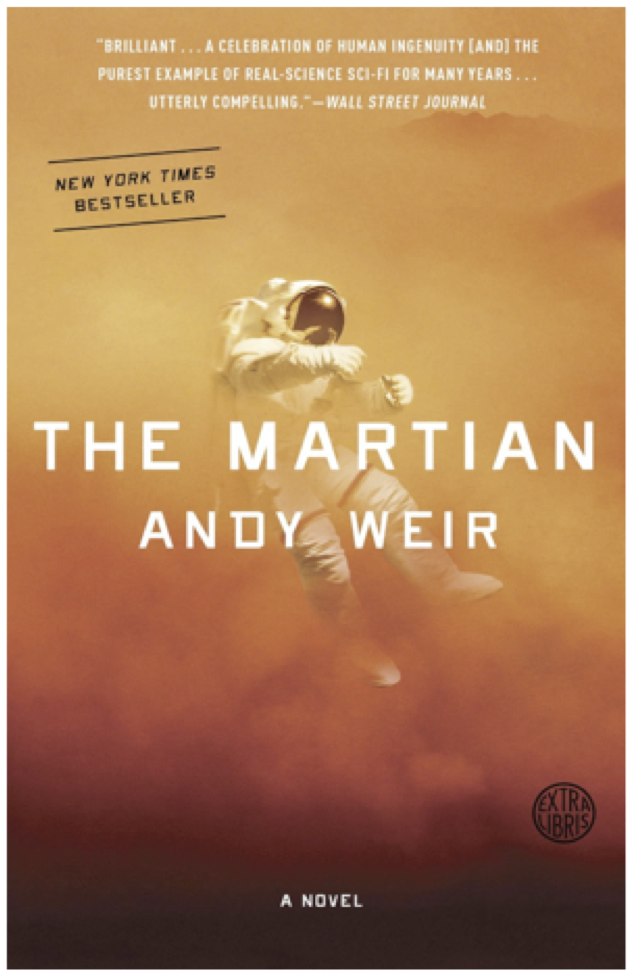
The MARTIAN coverOften, I choose to read indie published books rather than those from the “big six” publishers, because I find the content of indie books to be a bit more raw, unpolished, and (sometimes) unique. Yes, I am disappointed from time to time (as in my previous post) but I keep trolling for new authors and books. However, recently, Goodreads sent out a newsletter and the science fiction book of the year was Andy Weir’s The Martian. The blurb caught my eye so I bought it, but didn’t begin immediately, as I was slogging through a book on SEO (search engine optimization) at the time. Over the weekend, I began The Martian, and I was hooked. Like from the first page, I was seriously into the story.

The plot is not a new one. An astronaut is marooned on Mars. His fellow crew members are on the way home, believing that he is dead. But, this astronaut is determined and a heck of an engineer, so he keeps finding ways to use what is at hand to survive. After a while, the NASA folks figure out he is still alive, so they are trying to figure out how to get him home. Yes, it is really suspenseful. But sometimes it is laugh out loud funny, because the main character is quite a character.

Actually, this book was so engaging that I began to question my quest for good indie books. If the big guys are publishing this kind of science fiction, then I should be looking at the best seller lists again. So, after finishing the book, I did a wee bit of research and learned that Weir’s book was originally self-published via Amazon’s Kindle Direct (yeah!) and only after it sold thousands (at 99 cents, because that’s Amazon’s minimum price) in the first three months did big publishing come calling. Now, it is the basis for a movie starring Matt Damon.

The book is cool. Weir’s evolution as a writer is seriously cool. Many of the self-published and small press published writers, including yours truly, would love to have this sort of rags to riches experience. The impediment to that is having a really great book. The Martian is such a book. So, my suggestion is read it now and try to wait for the film version. Gravity won an Oscar, so the way is paved for another near future space adventure to do well at the box office.

Only Human— a review

Only Human is my second Chris Reher novel, but this is actually book 3 in the series, which features  Nova Whiteside, a military pilot in some future universe. For me, neither the plot nor the characters were as novel this time as they were in the first one, but this is a good book. It begins with Nova being rather bored at a training facility; however, readers are briefly introduced to her father, Colonel Whiteside. Before readers have a chance to get bored along with Nova, she is transferred (perhaps a bit of a promotion, but no change in rank) to the Vanguard, and she is specifically assigned to a Delphian officer, and they are off on a journey. At first they don’t get along so well, but as the action develops, so does the main character’s affection for her commander.

In an effort to avoid spoilers, I’ll just close by saying the main character is engaging, and there is a good bit of action and suspense. Fans of hard science fiction may have trouble with this story, as some aspects are rather like Star Trek, but that usually doesn’t bother me. There are enough editing glitches to keep this from being a five star novel, but for an indie author, it is quite good. Fans of military fiction and/or strong heroines should enjoy the further adventures of Nova Whiteside.

A Galaxy Unknown— the sequels

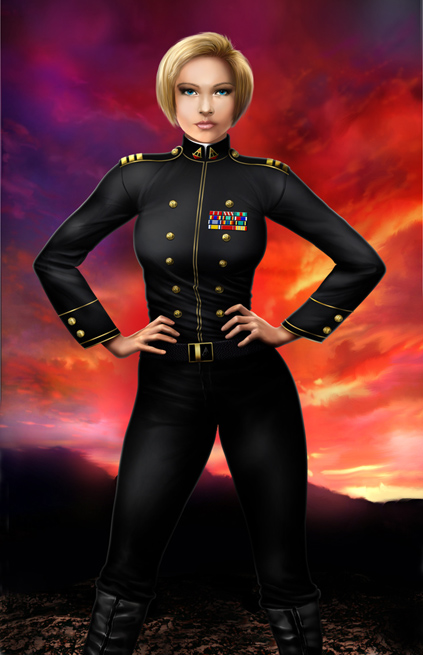
Jenetta Carver image

This is an update as well as a review. A while back, I read Thomas DePrima’s A Galaxy Unknown, and despite some serious flaws, I was so taken with the main character and the “universe” of its setting that I immediately began reading the sequels. Somewhere around book five, I had had enough. The main character seemed way too perfect and the rest of the characters were just there to heap praise upon her. So, I read lots of other stuff, but after running out of new stuff, one night I began re-reading the series. And, when reading them back to back, they seemed a bit better. Or maybe, I got used to the annoying stuff. Anyway, having caught up with where I left off, I just downloaded book 7, so I am clearly enjoying the series.

Space opera, especially the theme sometimes called “galactic empires” is a favorite of mine. Lots of indie authors give this genre a try, so I seldom run out of reading material. However, some of it isn’t particularly entertaining. Jenetta Carver’s exploits clearly owe something to another favorite character (Honor Harrington) but while David Weber’s works have become ever so much complex, DePrima’s stories have not. So, these novels are certainly light reading, but for me that is a plus. If I want to think, think, think when I read, I can always pick up one of hubby’s law books.

If you like space opera with a dash of romance, do try Trinity on Tylos, my stand alone novel. (Right now, it is cheap, too!) But, if you want a series, with very little romance, but a strong heroine, DePrima’s A Galaxy Unknown (and its many sequels) is pretty good.

Lacuna— a review

Lacuna cover

I got Lacuna, by David Adams, as a Kindle freebie. Not because I write review, but because that’s the price. Really.

And, it is a space opera, which is among my favorite genres.

The description (blurb) from Amazon begins thusly:

“Never again attempt to develop this kind of technology.”

It is with these words that an unknown alien attacker destroys the Earth cities of Tehran, Sydney and Beijing. Fifty million people die… and nothing is ever the same again.

That’s a cool blurb, and the beginning of the book is riveting. Unfortunately, it goes downhill from there. (spoilers ahead) Many of the Amazon reviewers mention that the plot, especially the main character’s actions, are just not aligned with military protocols. Too true. Worse, the alien fighter pilot (a really cool character) is also not quite believable, either.

Honestly, there is much to like about this book, including plenty of action, a heroine who is dynamic and not American, and a reasonably good job of editing.  However, for readers who insist that plots and character development not require vast suspension of disbelief, then this book is not gonna work.

I’m tempted to buy book 2 in the series, which is no doubt why Adams is giving away book 1. But, if it is as out of touch with reality as the first one, I will probably be mad at myself.